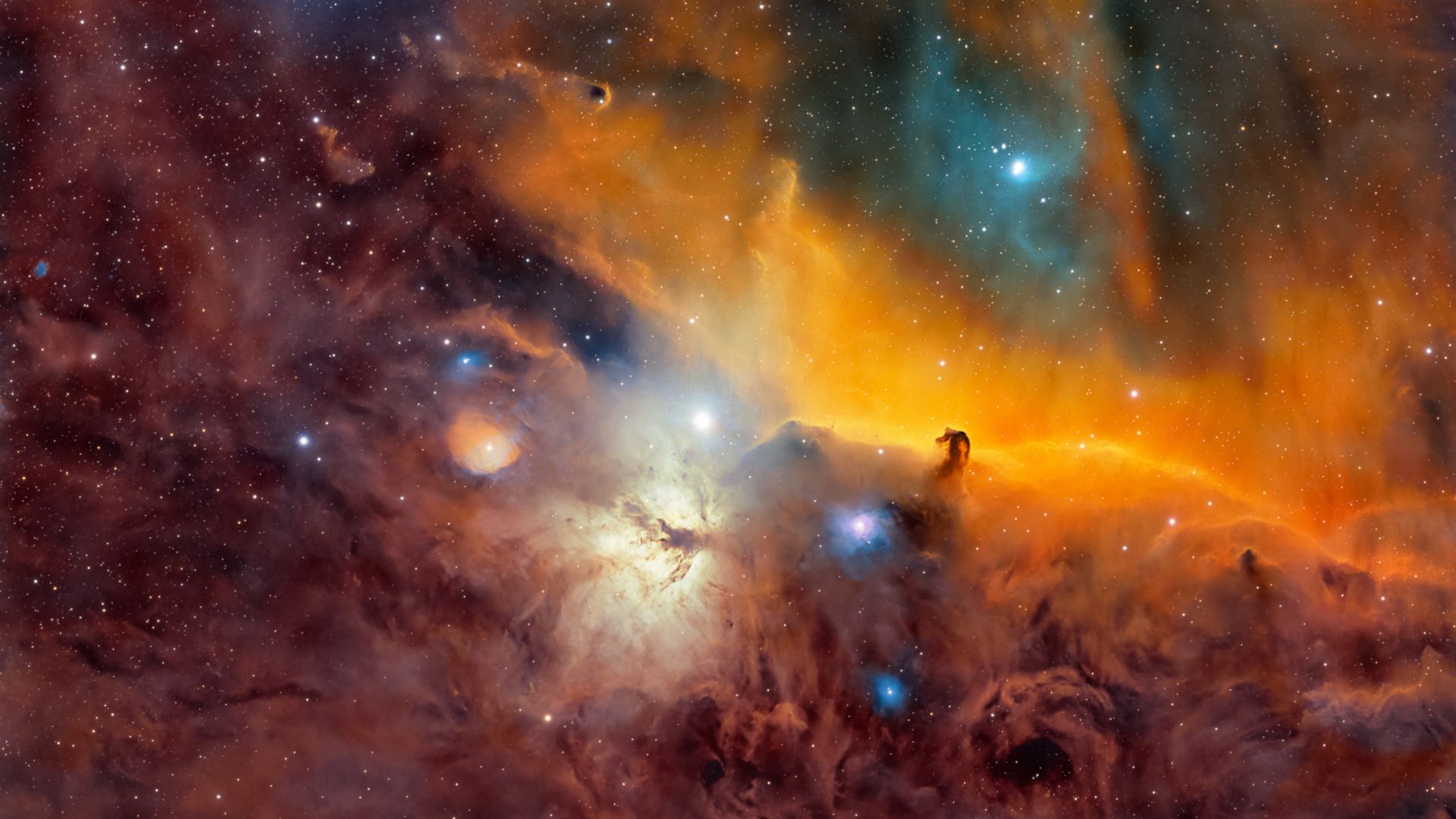
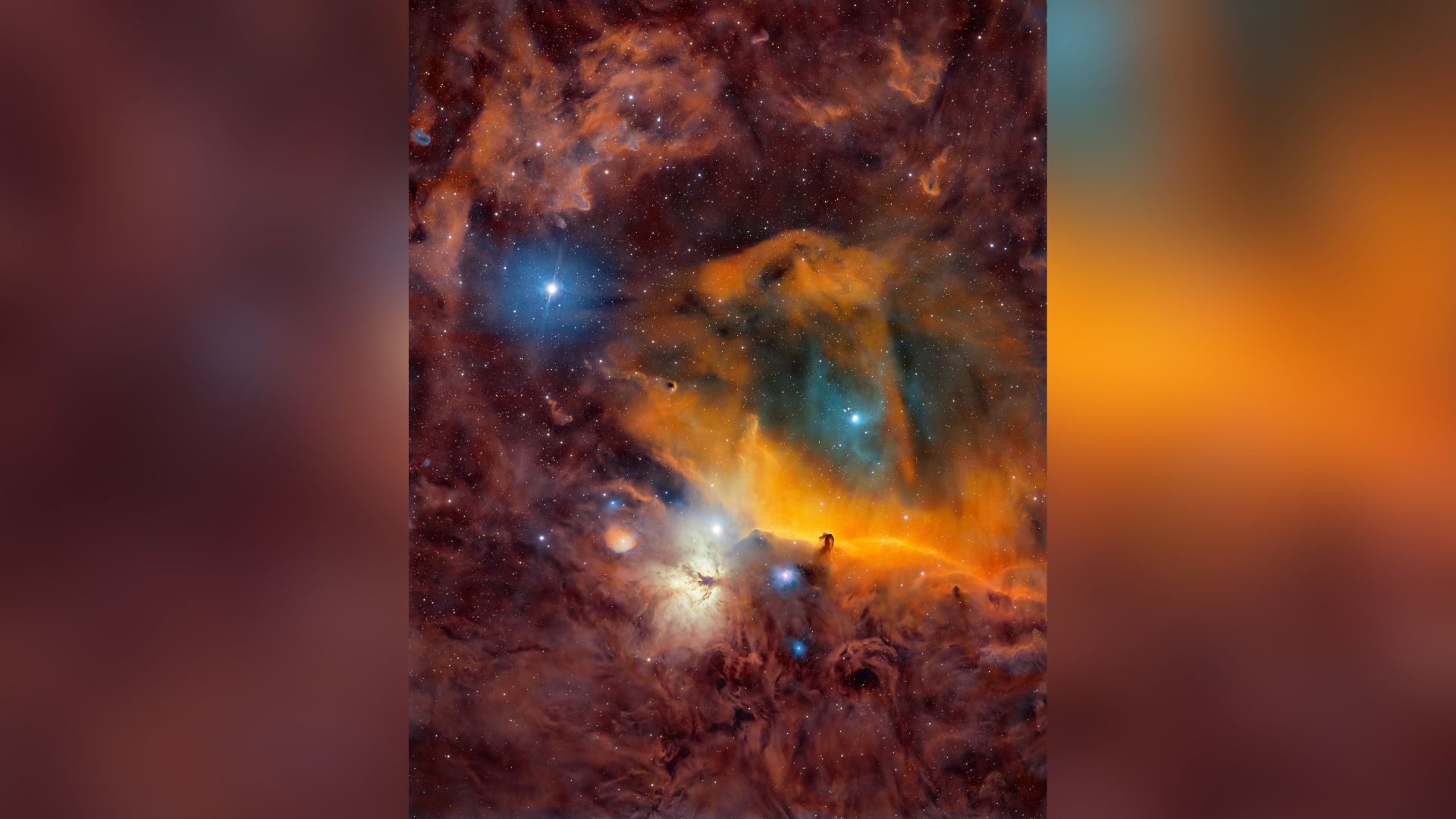
Astrophotographer Greg Meyer has shared a breathtaking new view of the iconic Horsehead Nebula (Barnard 33) rearing its head 1,600 light-years from Earth in the constellation Orion.
Meyer's image reveals the dark equine silhouette of opaque dust for which the nebula is named, backlit by glowing hydrogen gas energized by the ultraviolet radiation of nearby stars.
The intricate structure of the nebula has been examined by some of the most powerful observatories ever created — including the Hubble Space Telescope and the James Webb Space Telescope — revealing the secrets of the star-forming region while also highlighting its beauty. In some images — such as those captured by the Spitzer Space Telescope — the iconic horsehead-shape disappears entirely, transforming the familiar nebula into something alien, and new.
The bright light of Alnitak, the easternmost star in Orion's Belt, illuminates the Flame Nebula (NGC 2024) to the left of the Horsehead, while Alnilam — the middle star in the hunter's belt — glows blue-white in the upper left.
ZWO ASI533MC Pro
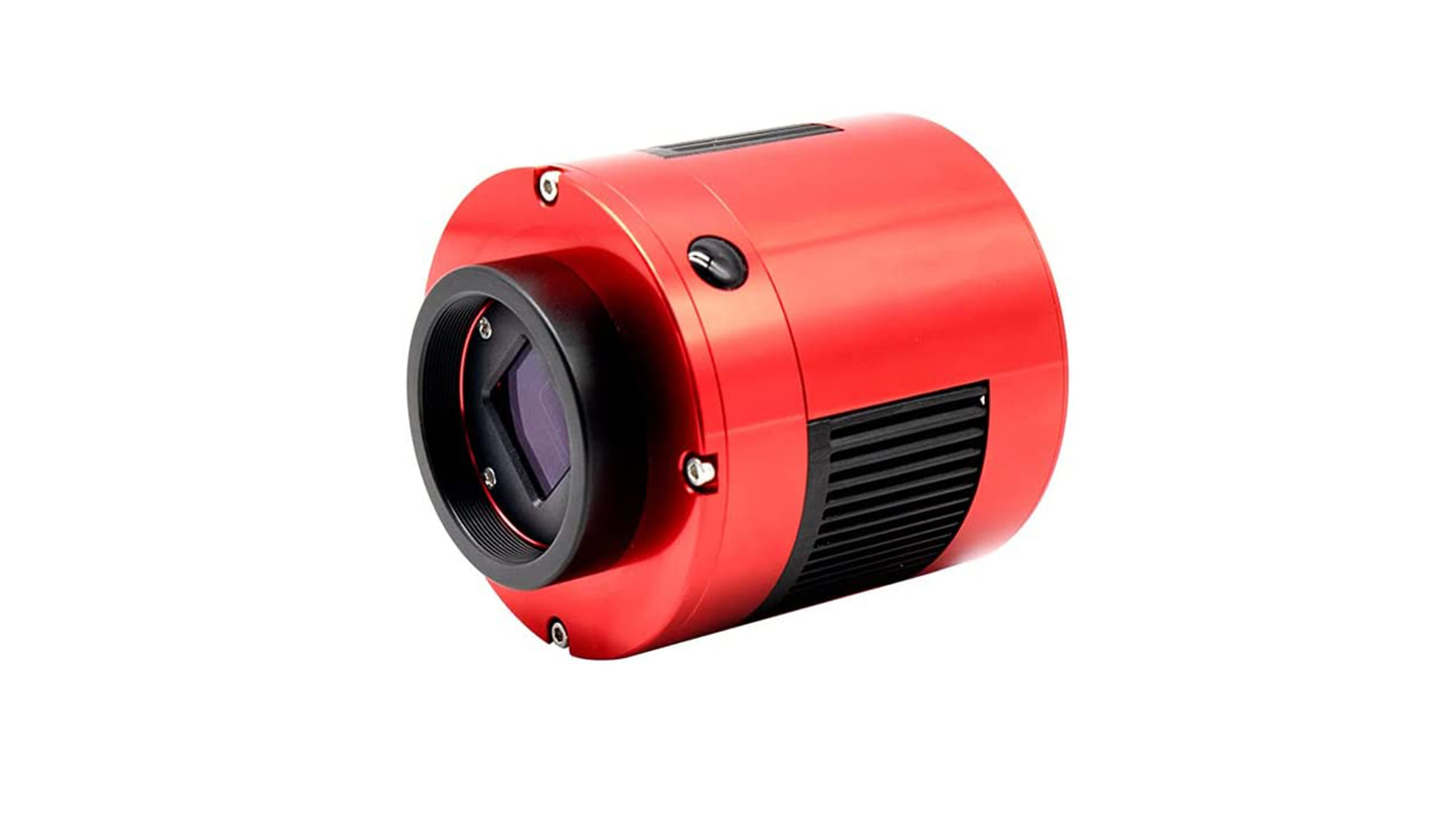
The ZWO ASI533MC Pro camera is the best dedicated astro camera out there, in our opinion. It features zero amp glow, 80% quantum efficiency and a 20FPS frame rate. It also features a 9MP sensor and you can check out our ZWO ASI533MC Pro review for a more in-depth look.
Meyer imaged the Horsehead Nebula over several nights running through November 2025 to March 2026 using a Radian Raptor 61 mm telescope paired with an astronomy camera and accessories as Orion shone in the sky over Phoenix, Arizona.
Meyer then stacked over 115 hours of image data to create the final result. He opted for a blend of established color palettes before manually adjusting the hues using the astrophotography software PixInsight, along with Adobe Photoshop and Lightroom.
"I really started going down a rabbit hole," Meyer told Space.com in an email."I like this color combo with some complementary colors, something different".
Want to capture gorgeous photos of the night sky for yourself? Then be sure to check out our beginner's guide to imaging the Milky Way, along with our roundups of the best cameras and lenses for astrophotography.
Editor's Note: If you would like to share your astrophotography with Space.com's readers, then please send your photo(s), comments, and your name and location to spacephotos@space.com.