Astronomy Photographer of the Year 2013 – winning pictures
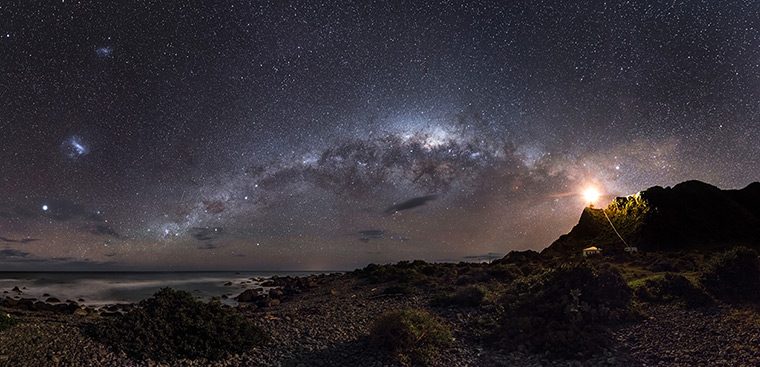
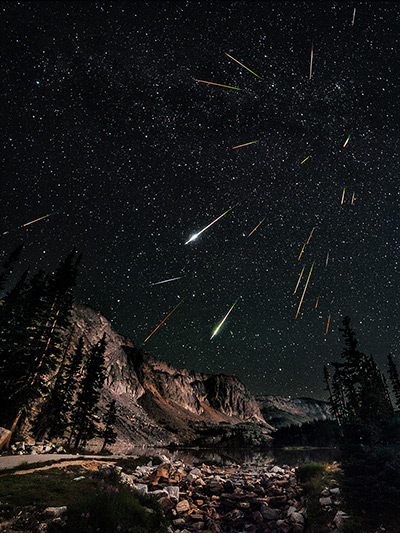
Winner, Earth & Space, and Overall Winner: 'Guiding light to the stars' by Mark Gee (Australia). The skies of the southern hemisphere offer a rich variety of astronomical highlights. The central regions of the Milky Way, 26,000 light years away, appear as a tangle of dust and stars in the central part of the image. Two even more distant objects are visible as smudges of light in the upper left of the picture. These are the Magellanic Clouds, two small satellite galaxies in orbit around the Milky Way Photograph: Mark GeeHighly Commended – Earth & Space: 'Snowy range Perseid meteor shower' by David Kingham (USA). A great deal of careful planning, a long night of photography and hours of painstaking image processing have gone into creating this startling composite image of the Perseids. They get their name from the constellation of Perseus from which they appear to come. However, even at the peak of the shower it is impossible to predict exactly when or where the next meteor will appear. The photographer has combined 23 individual stills to convey the excitement and dynamism of this natural firework display Photograph: David KinghamWinner – Robotic Scope: 'The Trapezium Cluster and surrounding nebulae' by László Francsics (Hungary). The Orion Nebula is often described as a 'stellar nursery’ because of the huge number of stars being created within its clouds of dust and glowing gas. As dense clumps of gas collapse under their own gravity any remaining debris settles into a dark disc surrounding each newly formed star. One of these 'protoplanetary discs' can be seen silhouetted against the bright background of glowing gas in the central star cluster of this image. Within the disc, material will condense still further, as planets, moons, asteroids and comets begin to form around the starPhotograph: László Francsics
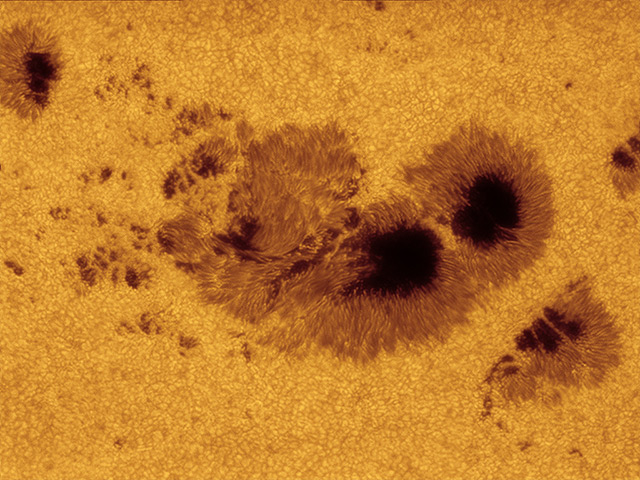
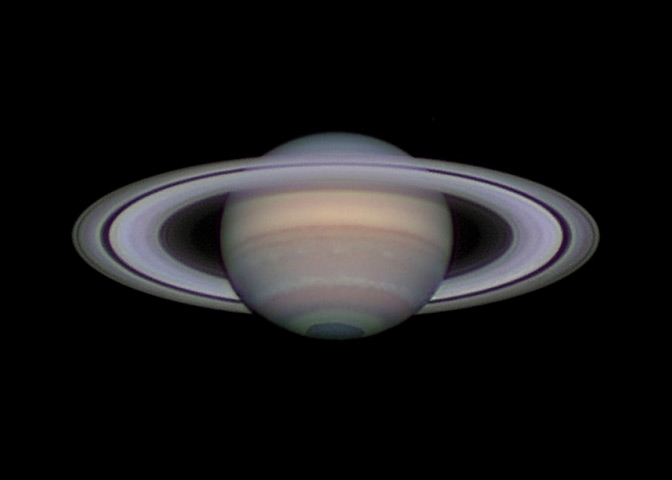
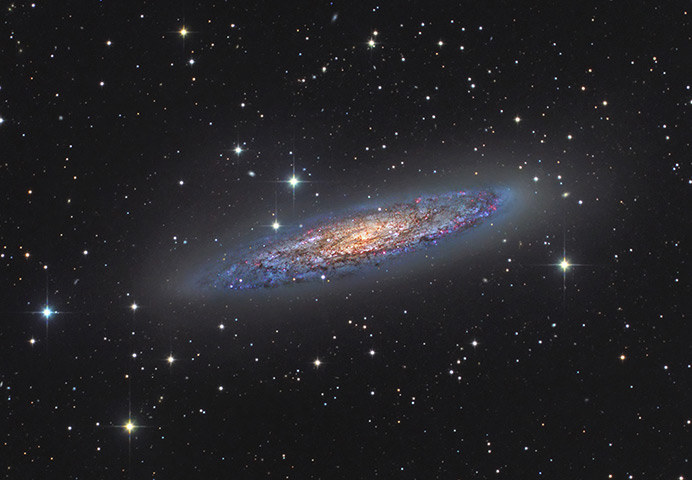
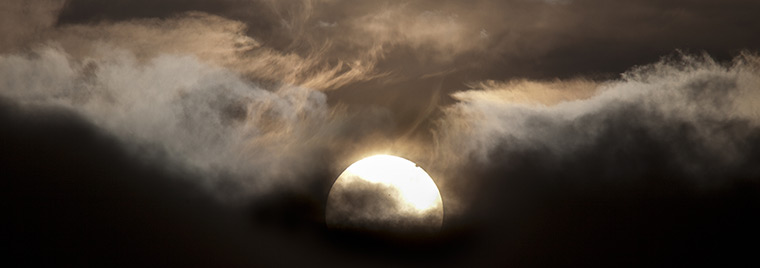
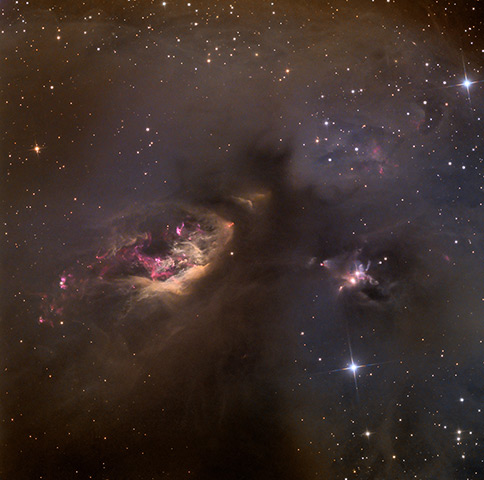
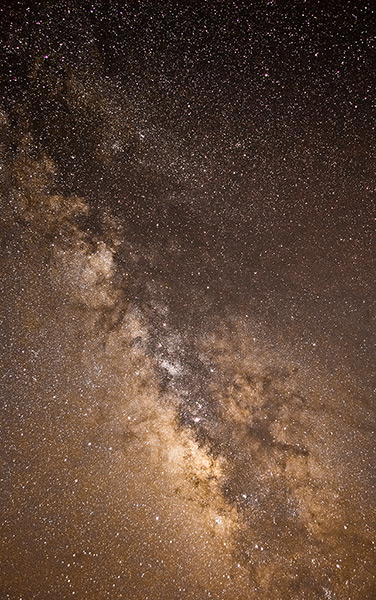
Runner up – People and Space: Ben Canales (USA). Appearing like a column of smoke rising from the horizon, a dark lane of dust marks the plane of the Milky Way. This dust plays a vital role in the life story of our galaxy. Formed from the ashes of dead and dying stars, the dust clouds are also the regions in which new stars will formPhotograph: Ben CanalesHighly Commended – Earth & Space: 'A quadruple lunar halo' by Dani Caxete (Spain). All of the light that reaches the ground from space must first travel through the Earth’s atmosphere. During its journey the light can be altered by all sorts of atmospheric phenomena. Tiny ice crystals high above the ground refract the moonlight, here diverting it into a number of beautiful haloes Photograph: Dani CaxeteRunner up – Deep Space: 'Rho Ophiuchi and Antares nebulae' by Tom O’Donoghue (Ireland). The smoky appearance of the dust clouds in this image is fitting, since the grains of dust that make up the nebula are similar in size to particles of smoke here on Earth. The dust can reflect the light of nearby stars, as seen in the blue and yellow regions. It can also block and absorb the light of more distant stars, appearing brown and black in this image. To the right a bright star is ionising a cloud of hydrogen gas, causing it to glow red, while below it far in the distance, is a globular cluster containing thousands of starsPhotograph: Tom O'DonoghueEarth and Space – runner up: 'Green energy' by Fredrik Broms (Norway). The shifting lights of the Aurora Borealis can take on many shapes and forms as they are moulded by the Earth’s complex magnetic field. Here, sheets and planes of glowing gas appear to be twisted into a giant vortex above Grøtfjord in NorwayPhotograph: Fredrik BromsWinner – Our Solar System: 'Corona composite of 2012: Australian totality' by Man-To Hui (China). This image is a demonstration of both precision timing and rigorous post-processing. It gives the viewer a window onto the elusive outer atmosphere of the sun – the corona. A natural dimming of the sun’s blinding brightness, courtesy of the moon, reveals the ghostly glow of gas that has a temperature of one million degrees Celsius. For centuries total solar eclipses were the only way to study this hidden treasure of the sun. By photographing this event, the breathtaking experience of viewing a total solar eclipse is captured indefinitelyPhotograph: Man-To HuiRunner up – Our Solar System: 'Magnetic maelstrom' by Alan Friedman (USA). The darkest patches or 'umbrae' in this image are each about the size of Earth, with the entire region of magnetic turmoil spanning the diameter of 10 Earths. This image captures rich details directly around the sunspots, and further out in the so-called 'quiet' sun where simmering hot plasma rises, cools and falls back. This produces a patchwork surface like a pot of boiling water, but on an epic scale – each bubbling granule is about the size of FrancePhotograph: Alan FriedmanWinner – People and Space Category: 'Moon silhouettes' by Mark Gee (Australia). This is a deceptively simple shot of figures silhouetted against a rising moon. By photographing the people on the observation deck from a great distance, the photographer has emphasised their tiny scale compared with the grandeur of our natural satellite. Close to the horizon, Earth’s turbulent atmosphere blurs and softens the moon’s outline and filters its normal cool grey tones into a warmer, yellow glowPhotograph: Mark GeeHighly Commended – Our Solar System: 'Saturn at opposition system' by Damian Peach (UK). This incredibly sharp portrait brilliantly captures the jewel of our solar system, revealing the subtle banding around the orb that results from the planet’s weather. It also shows the exquisite gradation of brightness and colour in the planet’s rings. The ultra-faint inner ‘D-Ring’ and outermost Encke gap are clearly visible. The hexagonal storm at the North Pole – a scientific curiosity – shows off three of its angular kinks. Images with this much clarity challenge our ideas of what can be achieved with amateur telescopes Photograph: Damien PeachHighly Commended – Deep Space: 'Floating metropolis – NGC 253' by Michael Sidonio (Australia). First discovered by astronomer Caroline Herschel in 1783, NGC 253 is a rare example of a 'starburst galaxy' with new stars being formed at many times the rate in our own galaxy, the Milky Way. Its mottled appearance comes from extensive lanes of dust that thread through the galactic disc. These are studded with many red clouds of ionised hydrogen gas, marking the sites where new stars are being bornPhotograph: Michael SidonioWinner – The Sir Patrick Moore prize for Best Newcomer: 'Venus transit, Foxhunter’s Grave, Welsh Highlands' by Sam Cornwell (UK). For those lucky enough to see it, the transit of Venus was one of the astronomical highlights of 2012. As the planet took just six hours to cross the face of the sun, cloudy weather was a potential disaster for observers … the next transit will not take place until 2117. Here, the final moments of the transit are revealed by a chance gap in the clouds, allowing the photographer to capture the picture of a lifetime. Extreme care should always be taken when photographing the sun as its heat and light can easily cause blindness and damage digital cameras. Specialist solar filters are available to allow photography and observations to be carried out safelyPhotograph: Sam CornwellWinner – Deep Space: 'Celestial impasto: Sh2 - 239' by Adam Block (USA). Structures like this often seem unchanging and timeless on the scale of a human lifetime. However, they are fleeting on astronomical timescales. Over just a few thousand years the fierce radiation from the stars in this nebula will erode the surrounding clouds of dust and gas, radically altering its appearance Photograph: Adam BlockWinner – Young Astronomy Photographer: 'The Milky Way galaxy' by Jacob Marchio, aged 14 (USA). This young astrophotographer has focused on one of the most spectacular vistas looking towards the very centre of the galaxy, capturing the glow of tens of billions of stars painting streaks of light across the sky. Dark lanes of interstellar dust and gas are seen in silhouette against the brilliance of the Milky Way’s dense bulge, while myriad clusters and star nurseries are sprinkled across the scene Photograph: Jacob MarchioHighly Commended – Young Astronomy Photographer: 'The waxing crescent moon by Jacob Marchio, aged 14 (USA). The moon seems to be emerging from the interplanetary darkness, and the young photographer has captured the contrast been the dark, lava-filled lunar 'seas' and the mountainous southern highlandsPhotograph: Jacob MarchioHighly Commended – Our Solar System: 'Ring of fire sequence' by Jia Hao (China). The moon’s orbit about the Earth is not perfectly circular, so that at different times it can be slightly closer or further away than usual. If the moon passes in front of the sun when it is at its furthest point, it will appear to be too small to entirely cover the solar disc. This is an ‘annular eclipse’ in which a ring, or annulus, of the sun remains visible. This composite shot shows the progress of an annular eclipse in May 2013. Close to the horizon the distorting effects of Earth’s atmosphere can also be seenPhotograph: Jia Hao
Sign up to read this article
Read news from 100's of titles, curated specifically for you.