Astronomy Photographer of the Year 2011 shortlist – in pictures
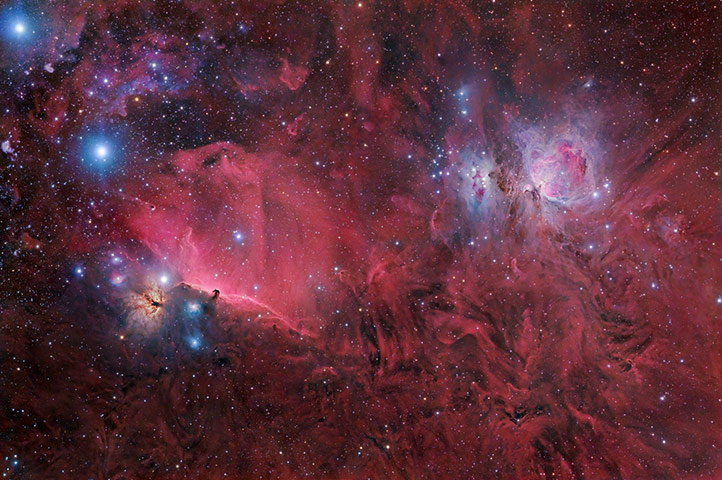
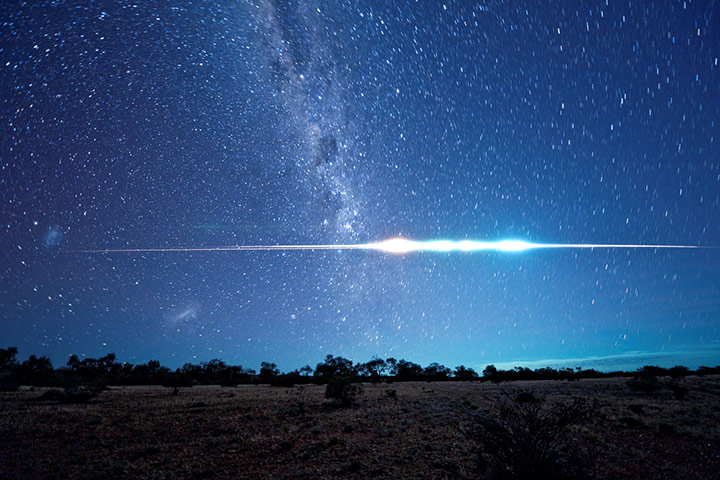
M31 Andromeda Galaxy (NGC 224) by Terry Hancock. M31 is a spiral galaxy around 2.5m light years from Earth in the constellation Andromeda. The galaxy is visible to the naked eye on moonless nights as a smudge of light and is the most distant object visible without a telescope. But the photographer from Michigan, USA, used the observatory in his backyard to reveal an enormous swirling spiral of billions of stars, glowing gas and dark dust. Andromeda will be even more impressive in 4.5bn years’ time, when it is expected to collide with our own galaxy, the Milky Way Photograph: Terry Hancock/The Royal ObservatoryOrion Nebula Area by Fabian Neyer. A deep image of part of the constellation of Orion showing swirling pink clouds of hydrogen and dark clumps of interstellar dust. The Orion Nebula is the bright patch of light to the right: one of the brightest nebulae in the sky, it is clearly visible to the naked eye on winter nights and lies about 1,350 light years from Earth. Also visible are the bright stars of Orion’s Belt (left) and the tiny silhouette of the Horsehead Nebula, against the pink hydrogen clouds, centre leftPhotograph: Fabian Neyer/The Royal ObservatoryHayabusa over the Sky II by Kouji Ohnishi. The Hayabusa spacecraft was captured over Southern Australia during its re-entry on 13 June 2010. It was launched in 2003 on a mission to visit the asteroid Itokawa and reached its destination in 2005, touching down and before returning to Earth with precious samples of asteroid dust. Glowing with the heat of re-entry, the capsule sped across the sky from right to left, its colour and brightness changing as it passed through different layers of the atmospherePhotograph: Kouji Ohnishi/The Royal Observatory
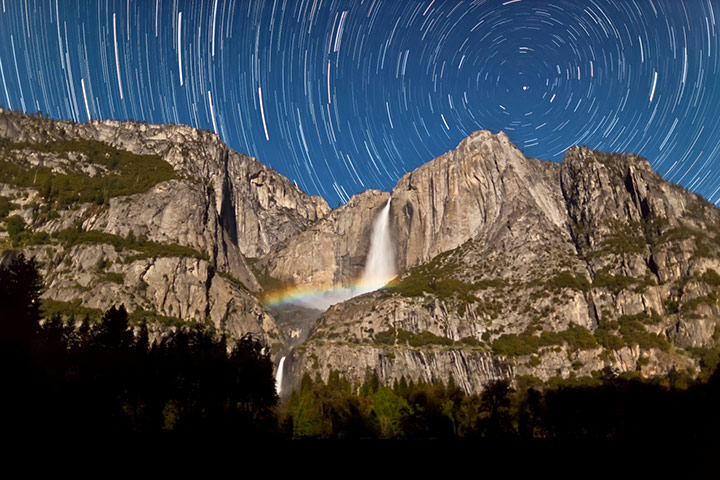
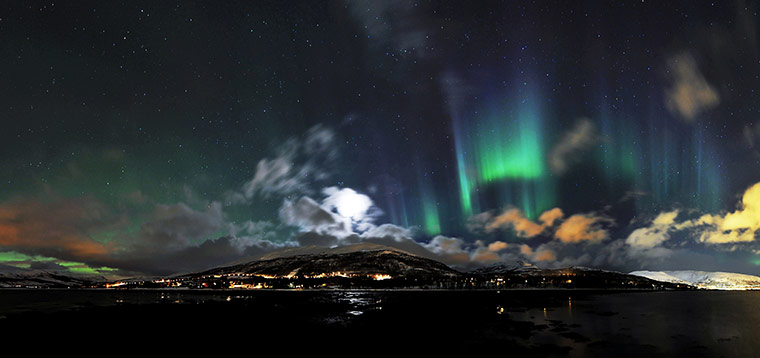
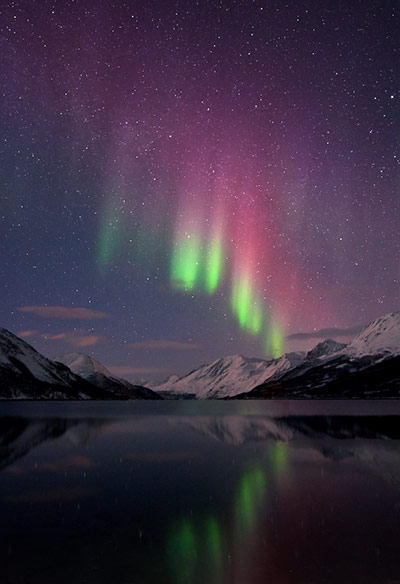
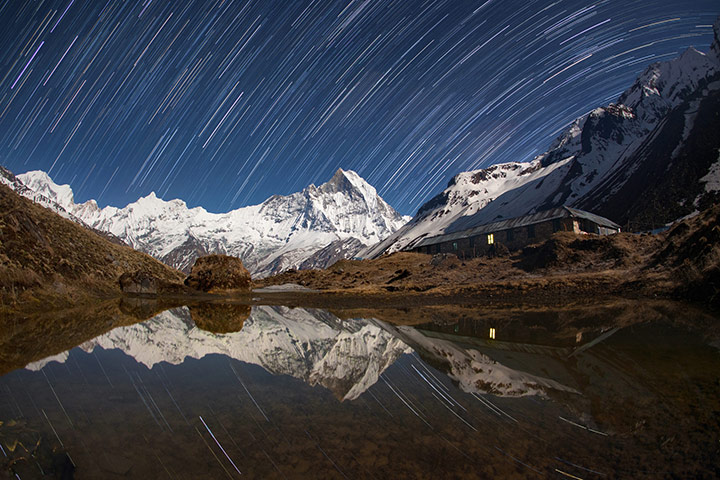
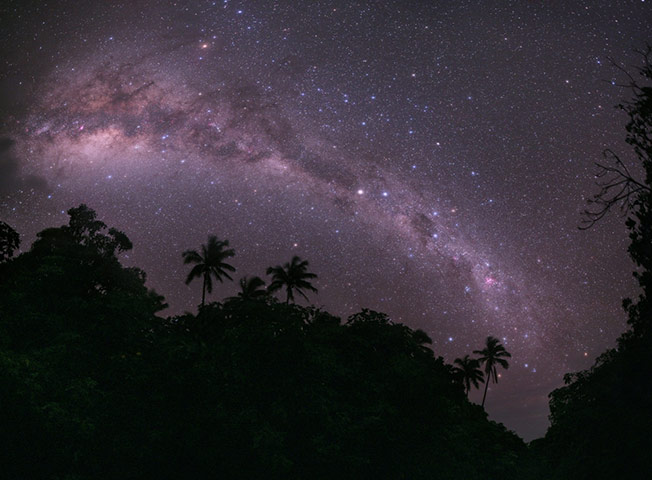
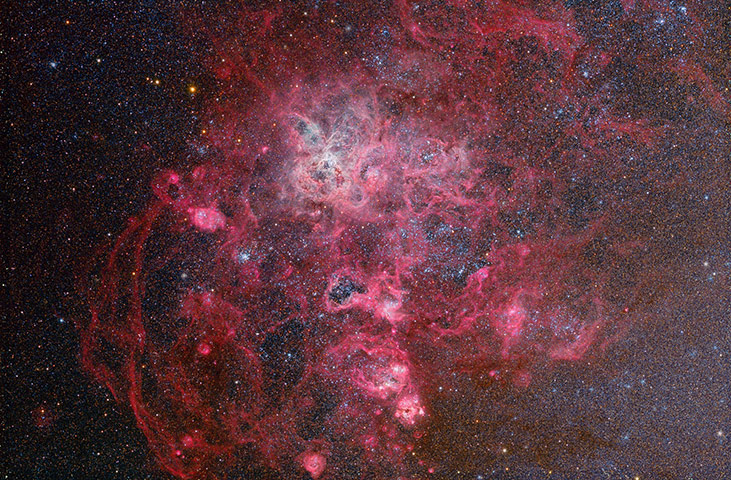
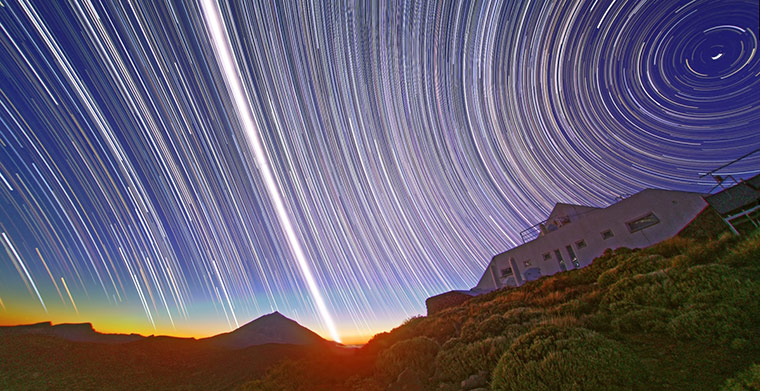
Yosemite Falls Moonbow Star Trails by Jeffrey Sullivan. The long exposure gives the illusion of daylight, but it’s the light of the full moon which is creating a rainbow in the mist of Yosemite Falls in Yosemite National Park, California. The star trails were achieved using more than 500 individual exposures over the course of several hoursPhotograph: Jeffrey Sullivan/The Royal ObservatoryLiving in the Universe by Fredrik Broms. This panorama over the island of Kvaloya in Norway showcases a variety of different astronomical objects and phenomena. A curtain of Northern Lights (aurora borealis) shimmers in our atmosphere while at the centre of the image a bright moon is partly obscured by clouds. Much farther from Earth, the Pleiades star cluster twinkles above the moon, and other distant stars complete this dramatic scene, high above the Arctic Circle. The panorama comprises four imagesPhotograph: Fredrik Broms/The Royal ObservatoryExcited to Ground State by Ole C Salomonsen. The aurora borealis over mountains in Ulsfjord, Norway. The title refers to the physics behind this dazzling natural lightshow. Particles in the solar wind collide with gas molecules high in Earth’s atmosphere, transferring some of their energy and boosting the molecules' electrons into an ‘excited’ state. As the electrons return to their normal or ‘ground’ state, the molecules emit light of a characteristic colour: green for oxygen and red for nitrogen, the two main gases in our atmospherePhotograph: Ole C Salomonsen/The Royal ObservatoryColourful Moon-3 by Eddie Trimarchi. To the naked eye the moon appears in monochrome shades of grey, but different distributions of minerals in the lunar rock and soil give it very subtle colour variations that have been enhanced to make them visible in this unusual imagePhotograph: Eddie Trimarchi/The Royal ObservatoryAnnapurna Sanctuary by Anton Jankovoy. Star trails above the Annapurna mountain range captured from base camp in the Annapurna Conservation Area in Nepal, 4,130 metres above sea level. The long exposure reveals the stars moving across the sky as the Earth rotates, their light trails reflected in the lakePhotograph: Anton Jankovoy/The Royal ObservatoryMangaiaOePan by Tung Tezel. The southern Milky Way viewed over the hilltops outside the village of Oneroa on the coast of Mangaia in the Cook Islands. The panorama was created using nine 30-second exposures. Moisture in the atmosphere created the diffusion and colour effects of the starsPhotograph: Tung Tezel/The Royal ObservatoryThe Spider’s Web (Tarantula Nebula and Vicinity) by Marcus Davies. A view of the Tarantula Nebula, which is 3,000 light years across. The Tarantula lies 170,000 light years from Earth within the Large Magellanic Cloud, a satellite galaxy of our own Milky Way galaxy. The picture is dominated by the enormous structure of gas that threads the space between the stars with skeins and clumps of glowing hydrogen. The Tarantula is a gigantic stellar nursery where thousands of new stars are being born, some as much as 130 times as massive as our own SunPhotograph: Marcus Davies/The Royal ObservatoryEquinox by Juan Carlos Casado. This time-lapse image shows the rotation of the Earth from the vantage point of Ecuador on the day of the Equinox in 2010. As the sun passed overhead then sank into the west it burned a bright path across the middle of the sky in this long-exposure image. Then, as the sky darkened, the stars became visible, the Earth’s spin making them trace their own circular paths about the north and south celestial polesPhotograph: Juan Carlos Casado/The Royal Observatory
Sign up to read this article
Read news from 100's of titles, curated specifically for you.