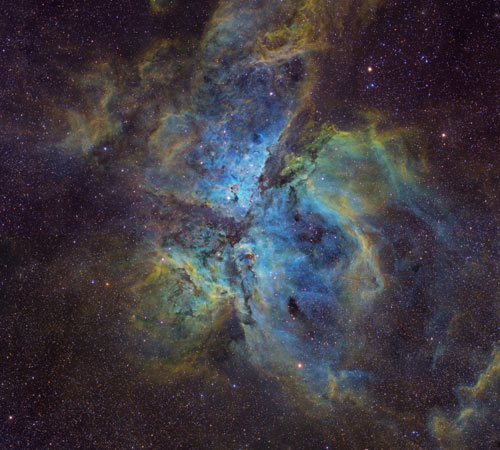
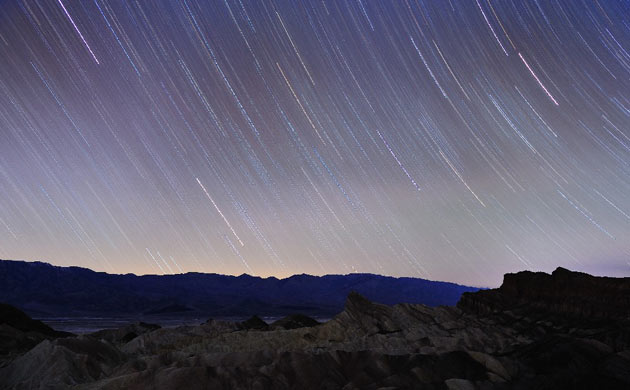
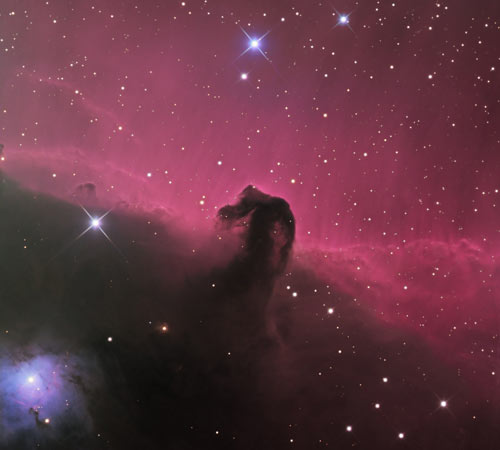
Part of Eta Carina, a vast nebula or cloud of dust and gas from which a new generation of stars is condensingPhotograph: Thomas Davis/Royal Observatory GreenwichTrails were left by stars as the Earth rotated during this 40-minute exposure in Death Valley, California. The three distinct lines extending from the horizon on the left are stars in Orion’s BeltPhotograph: Nikhil Shahi/Royal Observatory GreenwichThe Horsehead Nebula (centre) is a dark cloud of gas and dust in the constellation Orion. The gas, dust and other materials condense to form dense knots, which will eventually become stars and planetsPhotograph: Martin Pugh/Royal Observatory Greenwich
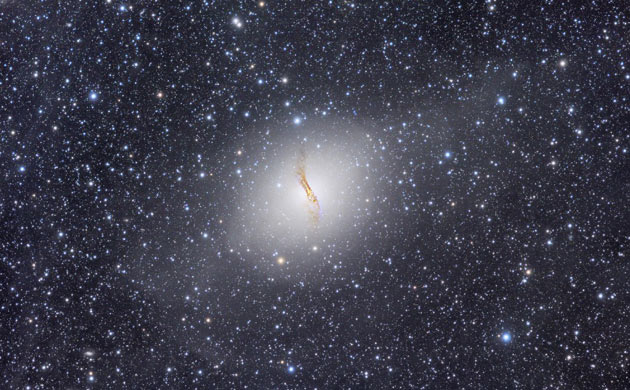
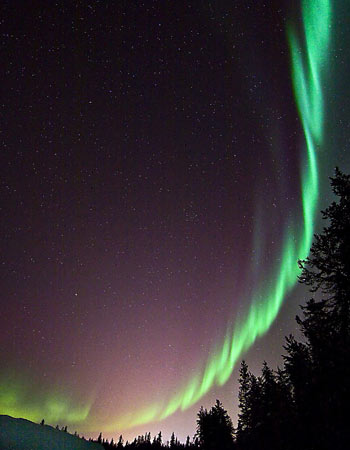
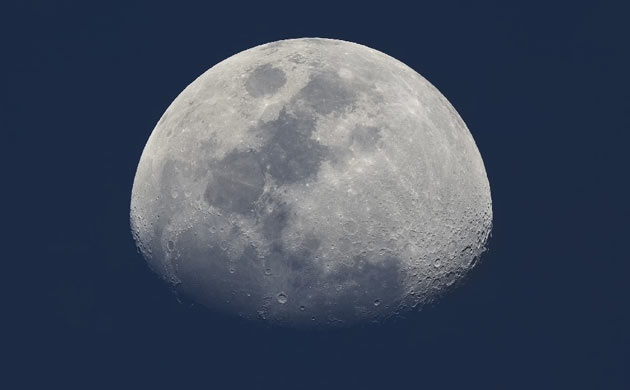
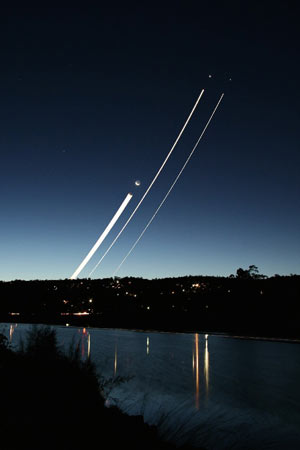
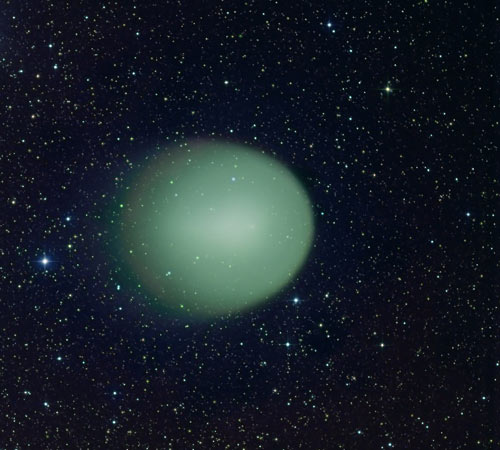
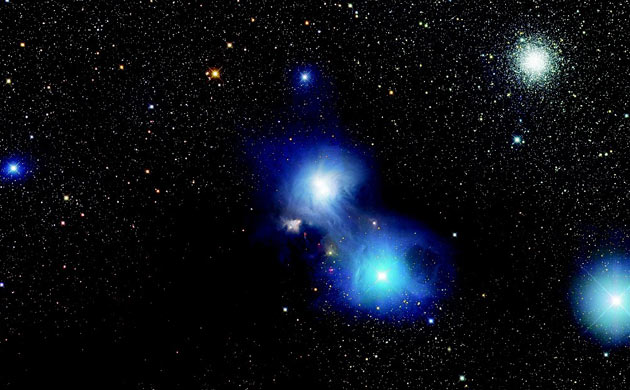
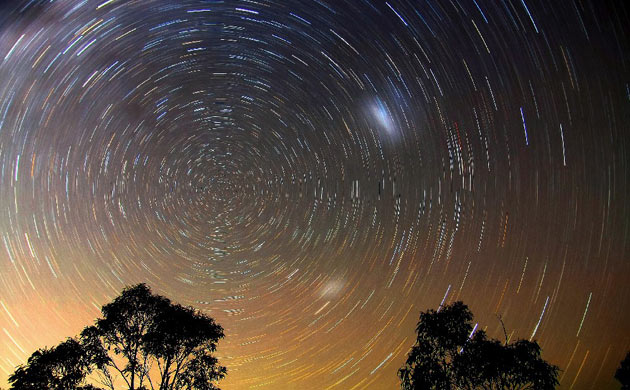
All the stars individually visible in this image are in our own Milky Way, while the galaxy Centaurus-A in the centre is millions of light years beyond. Centaurus-A has merged with another, smaller galaxy and the debris from this collision forms the rusty brown band of dust across its middlePhotograph: Michael Sidonio/Royal Observatory GreenwichThe Northern Lights or aurora borealis. Auroras are caused when particles in the solar wind collide in the Earth's upper atmosphere. The planet's magnetic field funnels the particles down over the poles, giving rise to glowing curtains of coloured lightPhotograph: Karl Johnston/Royal Observatory GreenwichThe dark areas in this photograph of the moon are vast plains of solidified lava known as lunar seas (maria) because they were once believed to be filled with waterPhotograph: Michael O'Connell/Royal Observatory GreenwichVenus, Jupiter and the moon rise at sunset over the Nepean river, New South Wales, Australia. Exposure time: two hoursPhotograph: Vincent Miu/Royal Observatory GreenwichComet Holmes, whose orbit lies between Mars and Jupiter, can be seen roughly every seven years. The nucleus of a comet is a 'dirty snowball' just a few kilometres across, surrounded by a tenuous cloud of glowing dust Photograph: Nick Howes/Royal Observatory GreenwichTwo 'blue-reflection nebulae' – clouds of dust that scatter the light of nearby stars. They are associated with young stars not more than a few million years old. A much older globular cluster of thousands of stars can be seen top rightPhotograph: Martin Pugh/Royal Observatory GreenwichAs the Earth spins during this 30-minute exposure the stars make trails around the sky’s south pole over Blue Mountains, Australia. The orange glow is caused by light pollutionPhotograph: Ted Dobosz/Royal Observatory Greenwich
Sign up to read this article
Read news from 100’s of titles, curated specifically for you.