
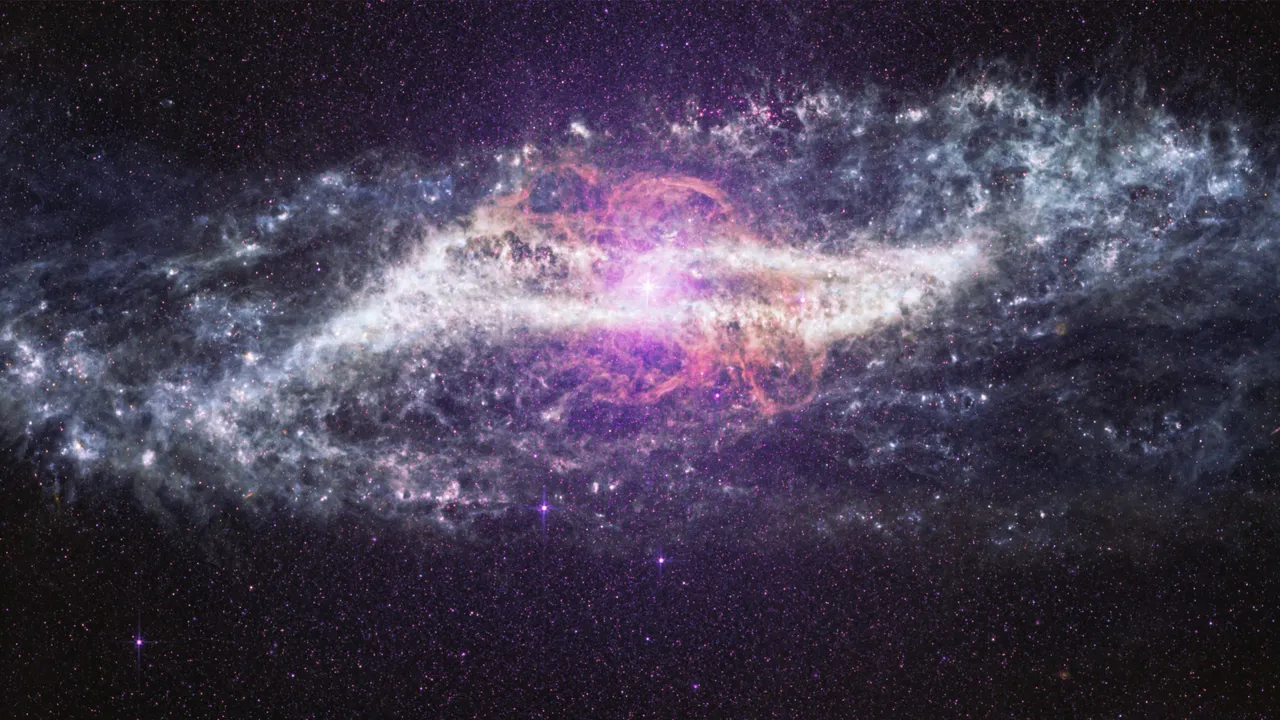
Images captured by the James Webb Space Telescope (JWST) have revealed new secrets about a nearby galaxy, leaving European Space Agency (ESA) astronomers with all sorts of questions about its mesmerizing structure and glistening star formations.
Centaurus A (also known as NGC 5128) is located 11 million light-years away from Earth and has been well documented by scientists since its discovery in 1826. However, vibrant cosmic dust shrouding the galaxy’s central region made it difficult to observe, and even the Hubble Space Telescope couldn’t provide detailed enough images.
But unlike Hubble, JWST features a Mid-Infrared Instrument (MIRI) that cuts through the hazy space gases, which the ESA says exposes the galaxy’s inner workings and a prime case of “galactic archaeology”.
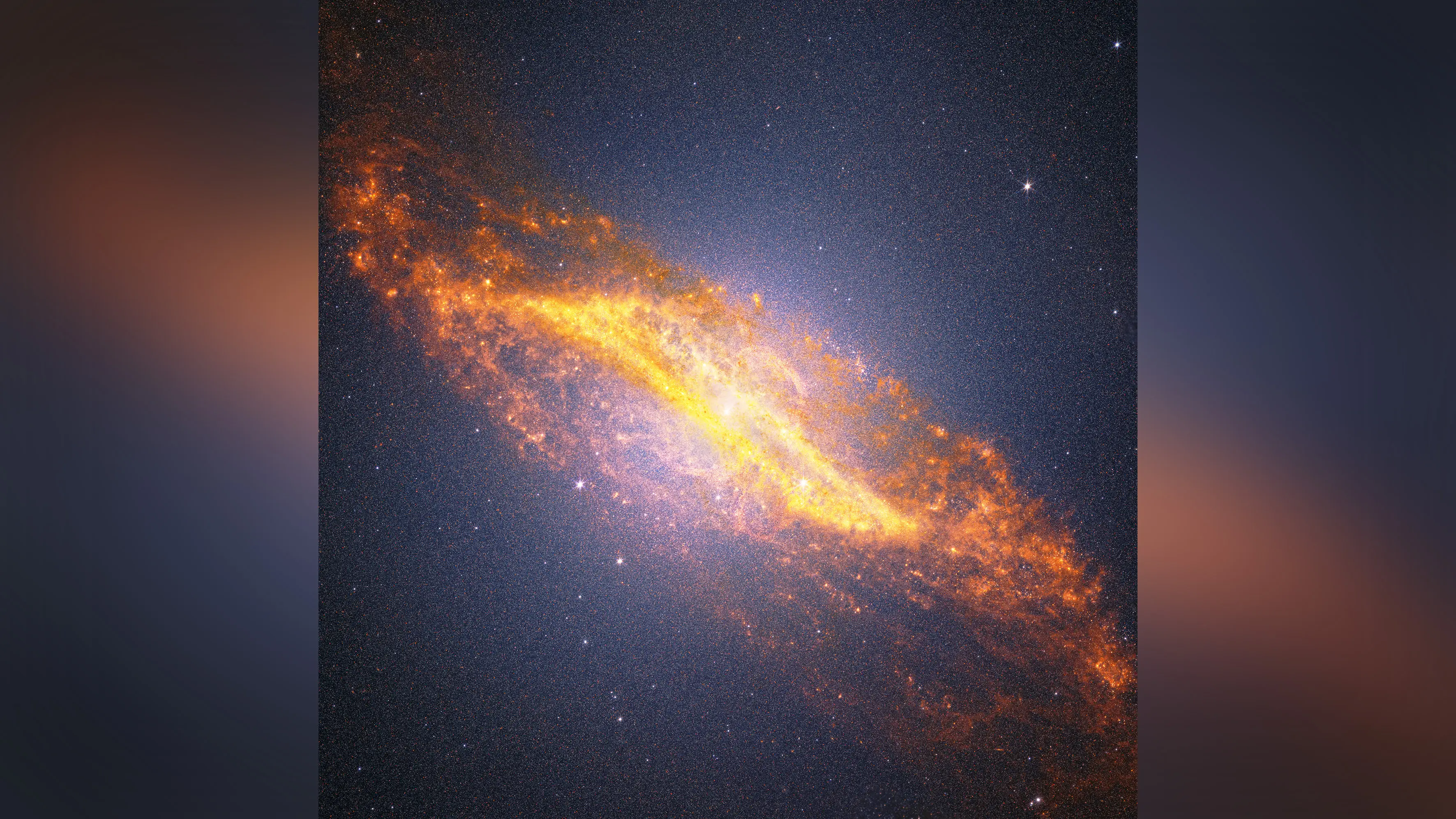
Most notable to the astronomers is the “warped” parallelogram-like band of light peppered with stars stretching across the center of NGC 5128, while wisps of material flow outward like clouds.
This formation was revealed by combining images from the MIRI with those captured by the NIRCam (Near-Infrared Camera), with the ESA thinking it could have been the result of a cosmic collision with another galaxy billions of years ago.
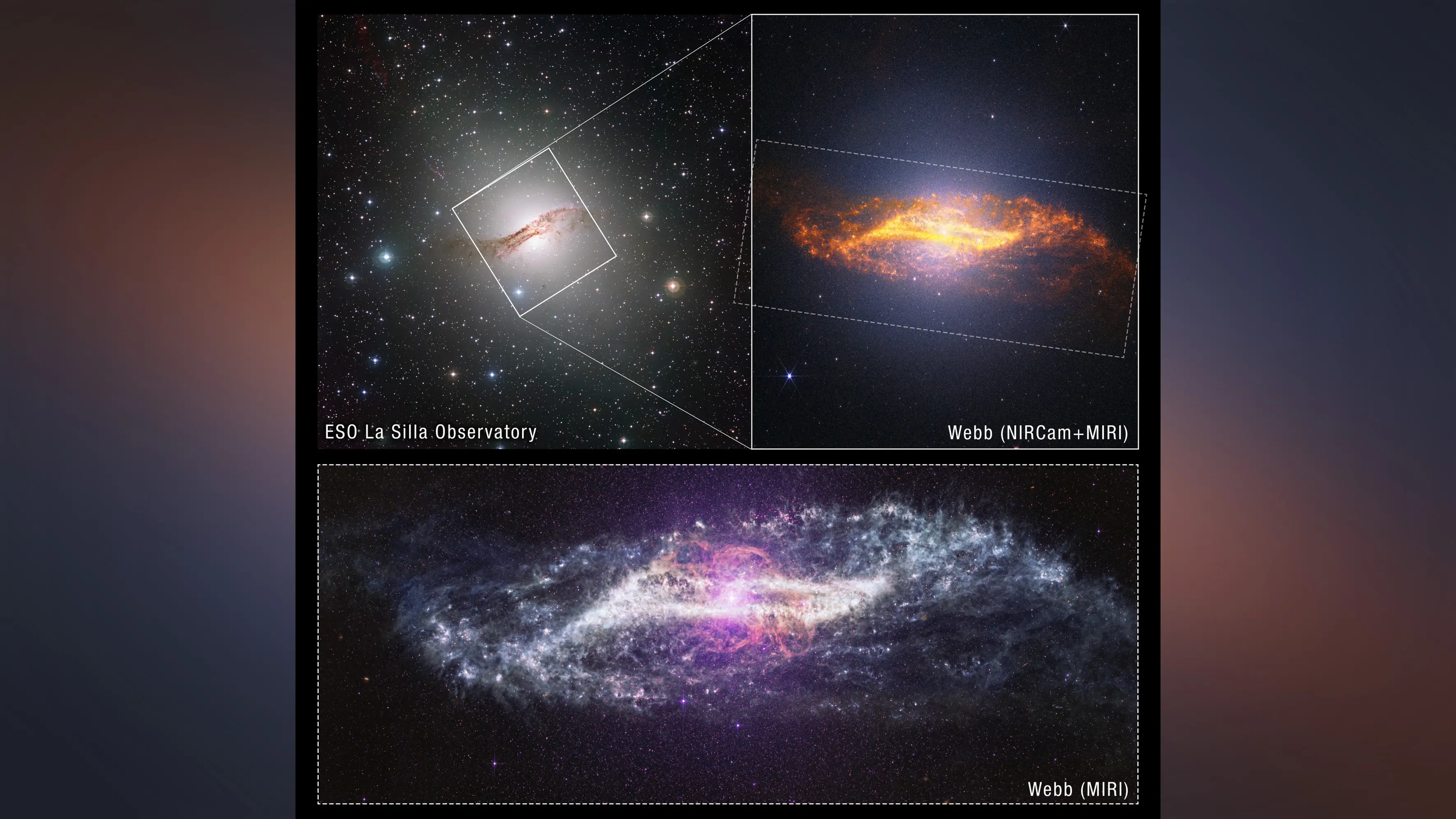
The astronomers also used James Webb’s spectroscopy instruments to determine how the black hole at the center of Centaurus A influences the galaxy as a whole. While the researchers are certain it can trigger new star formation by compressing gas, and also limit this by pushing cosmic material away, the “complex” answers continue to elude them.
Even though the ESA astronomers have been left scratching their heads, they’ve said that the new images have enabled them to trace dust, resolve millions of stars and reveal the motion of gases in unprecedented detail, transforming Centaurus A into a “vivid record of cosmic history”.
You might also like
Read our take on the best cameras for astrophotography. We break down the tools and lenses to shoot night skies in detail.