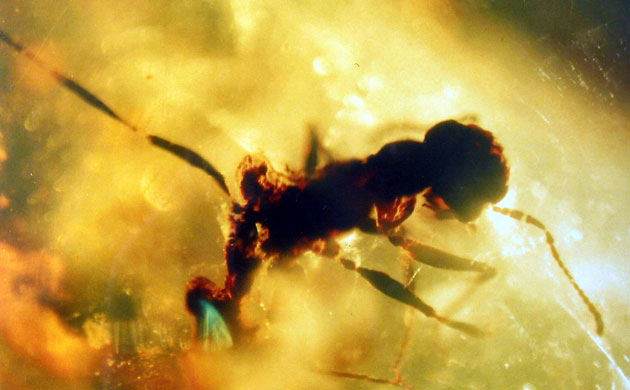
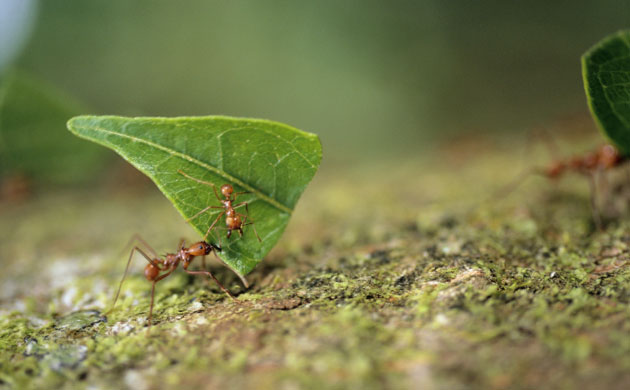
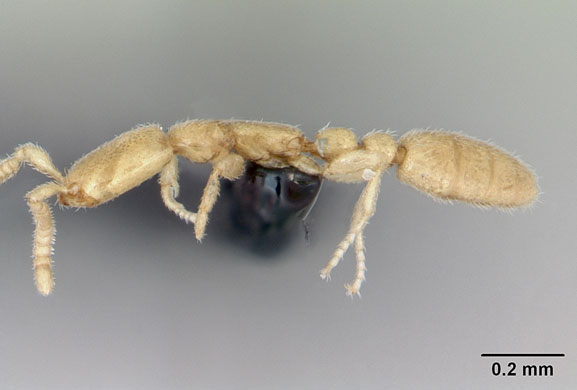
This ant, encased in an amber, is believed to be an ancestor of modern ants and is the oldest example of an ant in Japan. It was found by amateur natural scientist Chisato Suzuki in northern Japan. The amber dates from the later years of the cretaceous period, making this 5mm-long insect 85m years oldPhotograph: Kyodo/APA leaf-cutting ant transports a leaf section, as well as another ant, in the Monteverde Biological Cloud Forest Preserve in Costa RicaPhotograph: Michele Westmorland/CorbisLeptanilla revelierii, one of the smallest members of the ant family. There are 14,000 species of ant in the world - with probably an equal number yet to be found - whose combined weight is equal to that of the word’s entire population of humansPhotograph: April Nobile/California Academy of Sciences
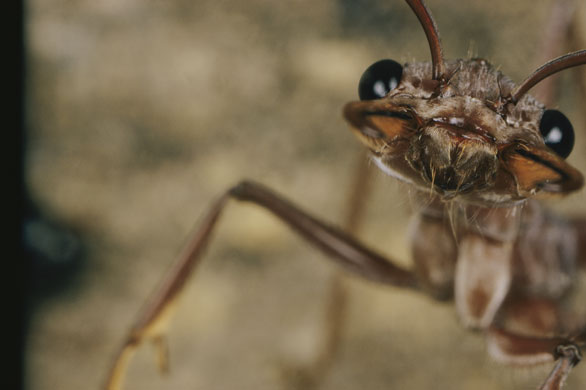
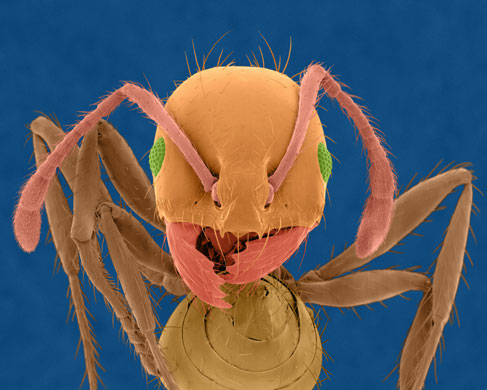
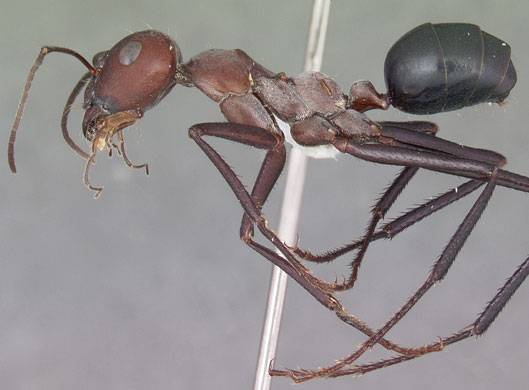
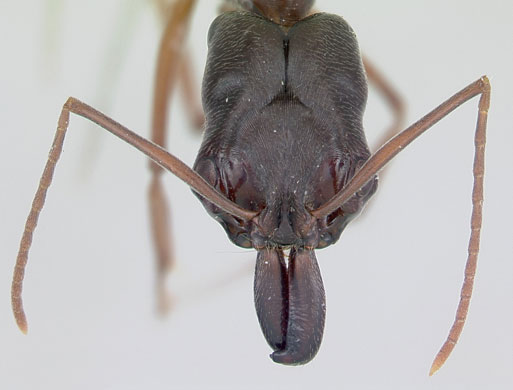
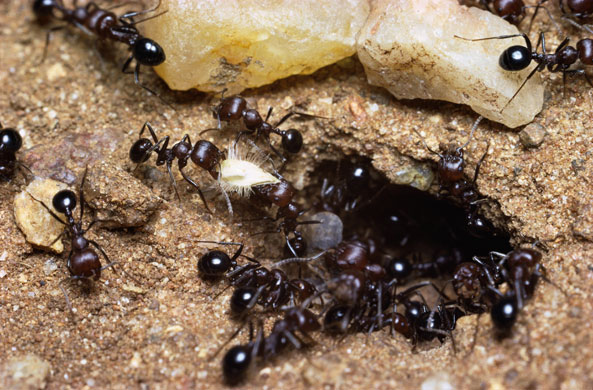
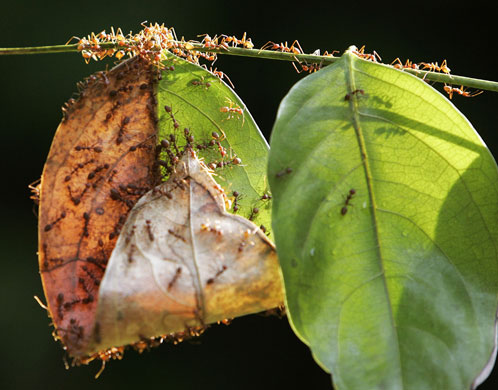
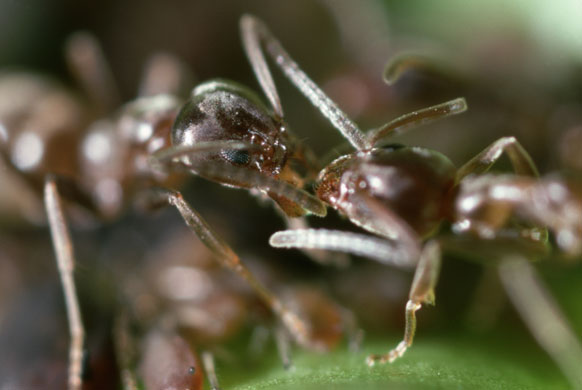
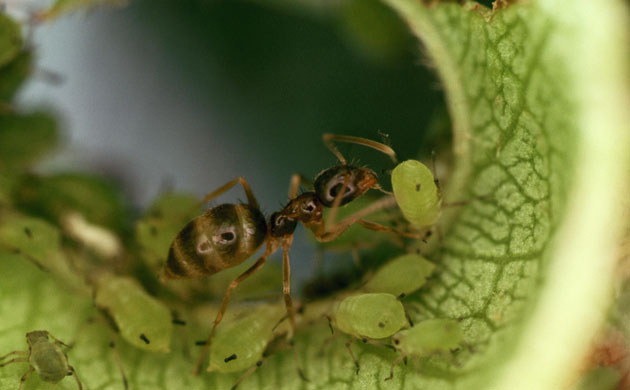
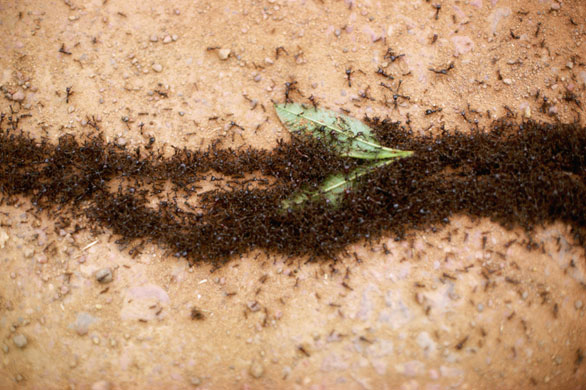
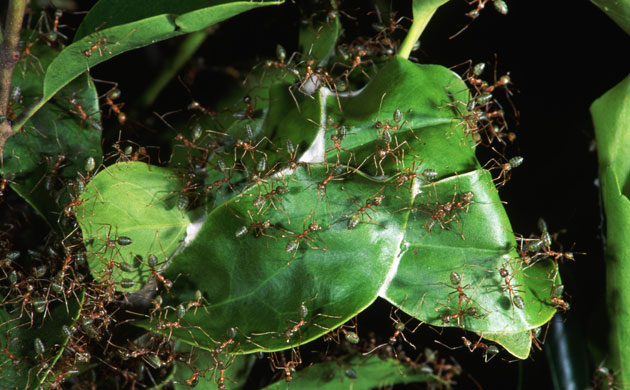
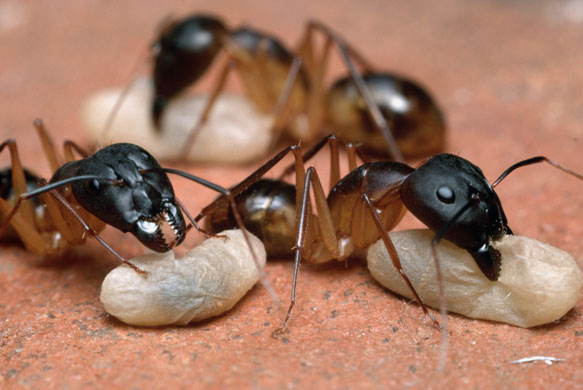
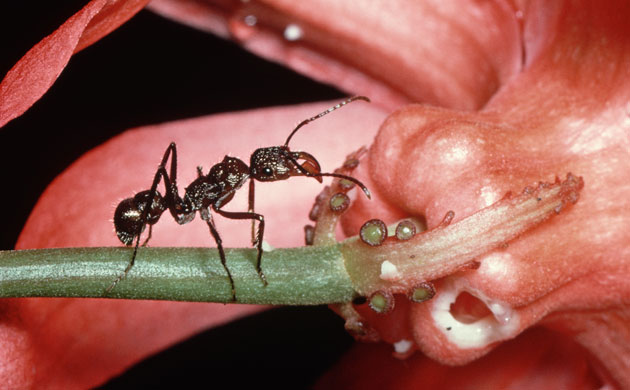
An extreme close-up of a bulldog ant of Australia. These can grow to 5cm long and each one packs a lethal stingPhotograph: Robert F. Sisson/Getty ImagesA red imported fire ant (Solenopsis invicta) at a magnification of x12. It's most likely this species was imported into the US from South America. Fire ants live and do most of their foraging for food through underground tunnels. They can cause nasty bites in humans and kill other prey such as fellow invertebrates, young birds, small mammals, and reptilesPhotograph: Visuals Unlimited/CorbisCataglyphis nodus, the Sahara desert ant, is a desert-dwelling ant and one of the most heat tolerant organisms known Photograph: April Nobile/California Academy of SciencesOdontomachus bauri, trap jaw ants, have the fastest moving predatory appendages within the animal kingdom. One study of this species recorded peak speeds of between 126-230kph (78-143mph)Photograph: April Nobile/California Academy of SciencesHarvester ants collecting grass seeds in South Africa Photograph: Anthony Bannister/CorbisA colony of weaver ants build their nest from leaves in Kuala Lumpur, Malaysia. Weaver ants get their name from their habit of binding fresh leaves with silk to form their nests. Their lifecycle spans a period of 8 to 10 weeksPhotograph: Zainal Abd Halim/ReutersArgentine ants exchange aphid dew in San Luis Obispo, CaliforniaPhotograph: George D. Lepp/CorbisMay 1988, California, USA --- An argentine ant is farming aphids on a young leaf.Photograph: George D. Lepp/CorbisA swarm of army ants, a predatory ant whose colonies can number up to 20m, in the Dzanga-Ndoki National Park, Central African RepublicPhotograph: Martin Harvey/CorbisA thick line of nomad ants in GabonPhotograph: Carl Purcell/CorbisGreen weaver worker ants join together to defend their nest in Queensland, AustraliaPhotograph: Patricia Fogden/CorbisSpotted sugar ants transport cocoons in South AfricaPhotograph: Anthony Bannister/CorbisA ponerine ant guards extra floral nectaries of a passion flower in Costa RicaPhotograph: Patricia Fogden/Corbis
Sign up to read this article
Read news from 100’s of titles, curated specifically for you.