Aston Martin is planning to raise up to £150m from investors to move into new models such as crossover SUVs, luxury sedans and electric cars.
The British marque, favoured by James Bond, is working on plans to issue new shares or bonds to its backers, according to a Reuters report, as it extends its turnaround plan for a further three years, to 2020.
The lossmaking carmaker had previously pencilled in a return to profitability in 2017. Crossover SUVs – a cross between a family car and a sports car – sedans and hybrid models all feature in its plans. “It’s an expansion from the current model range,” a source told the news agency.
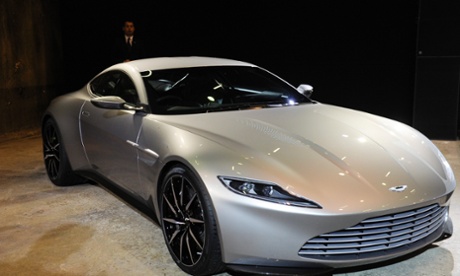
At a lavish party in London last week, Aston Martin’s new chief executive Andy Palmer unveiled a DB10 concept car that will feature in the next Bond film, Spectre. “It will come as no surprise when I say that the year ahead is going to be busy across the board,” the former Nissan executive told guests.
Aston Martin has been held back by ageing models and a lack of investment, in a British luxury car industry dominated by Tata-owned Jaguar Land Rover, its next-door neighbour in the Warwickshire village of Gaydon. Aston Martin has missed out on a luxury car boom that involved the global market almost doubling in five years. Last year Aston Martin delivered 4,200 cars, far short of its peak of 7,300 before the financial crisis in 2007.
The firm’s main backers are Kuwait’s sovereign wealth fund Investment Dar and Milan-based private equity firm Investindustrial, which together control 93% of Aston Martin, after several capital raisings since Ford sold the company in 2007. A further 5% is held by Daimler, as part of a partnership struck last year for the German firm to supply Mercedes engines. Daimler, which lacks a British luxury brand to counter VW’s Bentley and BMW’s Rolls-Royce, has expressed interest in greater involvement with Aston Martin.
Aston has already begun updating its models under a £500m investment strategy drawn up in 2012, when Investindustrial acquired a 37.5% stake for £150m. Its plans include the replacement of the £120,000 DB9 in late 2016.




.png?w=600)