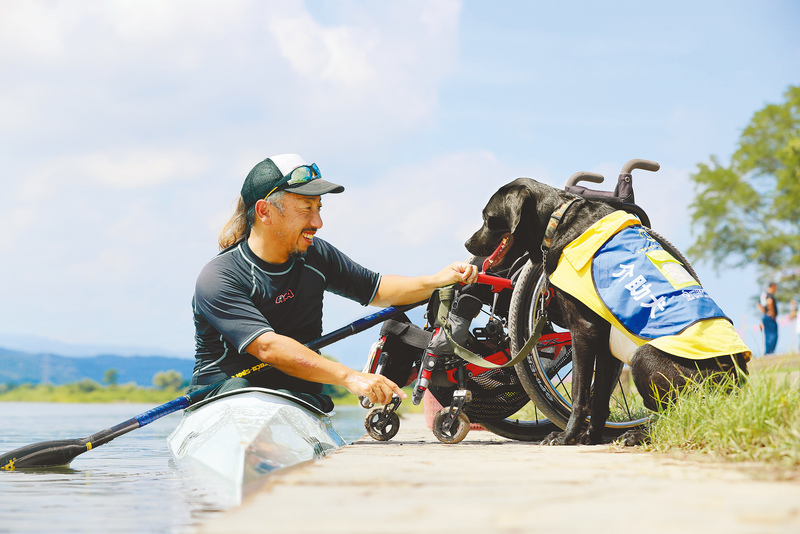
As Nobuyuki Wagatsuma pulled his canoe up to the bank of the Narusegawa river while training in Kami, Miyagi Prefecture, his service dog, Grape, who had been watching him paddle from the riverside, looked up at him.
"Grape's an important partner, that gave me a chance," said Wagatsuma, 47, as he wiped away sweat.
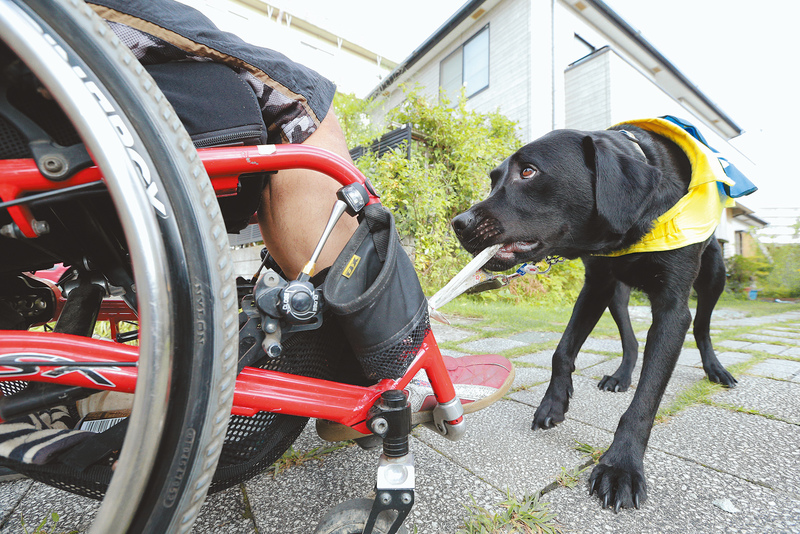
Slipped discs put Wagatsuma in a wheelchair and forced him into unemployment. Although he began playing sports to survive his darkest days, it was Grape, who was dispatched from the Japan Service Dog Association, that made Wagatsuma become more proactive about going out to train.
Wagatsuma is now a Japan Canoe Association For Disabled designated player for the 2020 Tokyo Paralympic Games, and is aiming to become a member of the national team in both canoeing and badminton.
Supporting daily lives
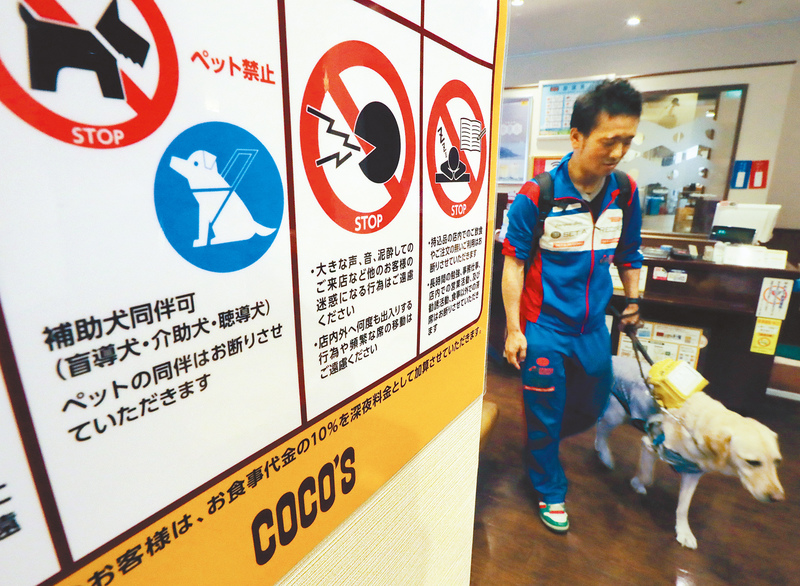
Assistance dogs support people's daily lives and include service dogs, guide dogs and hearing dogs.
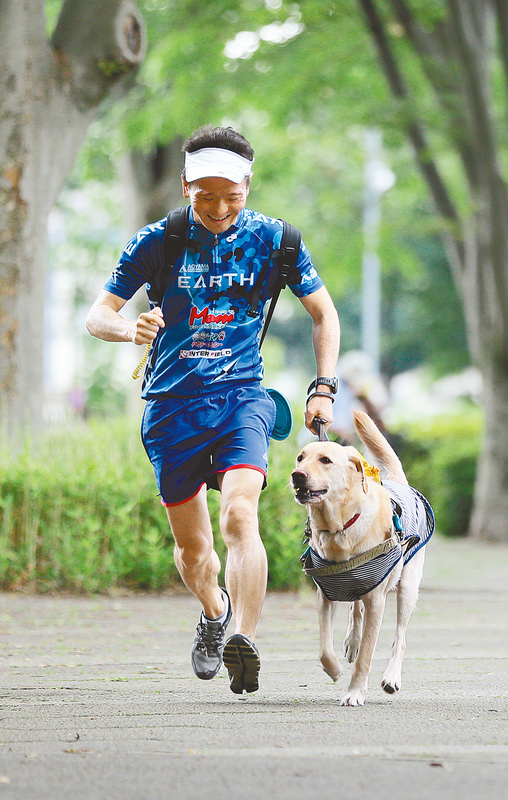
Ryu Nakazawa, 38, who signed a contract as an athlete with a foreign-affiliated medical company, is aiming to participate in the Tokyo Paralympics' triathlon, along with his guide dog, Deneb. He began suffering from fading vision at age 27 due to glaucoma. Since 2014, he has lived in Nishitokyo, Tokyo, with Deneb, who was trained at the Japan Guide Dog Association.
"Deneb gave me great psychological support to make me feel that I can safely go out. I don't know if I could have kept training as far as I have without Deneb."
According to the nonprofit organization Japanese Service Dog Resource Center, it takes six months to two years and costs about 3 million yen to train an assistance dog. Because assistance dog organizations lack sufficient funds and personnel, they dispatch many fewer dogs than are needed.
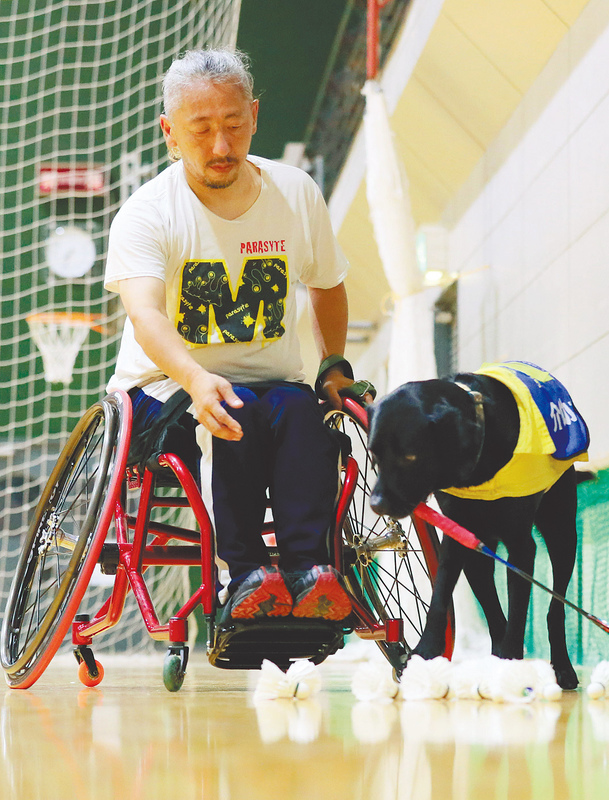
A survey by the Health, Labor and Welfare Ministry showed the number of assistance dogs working nationwide as of July was 1,082, slightly fewer than the previous year.
In May, Wagatsuma received a letter from his daughter Hiiragi that read, "I was very happy to see you becoming more willing to take on many things after you got Grape."
"My days became more fulfilling than before I had a disability," Wagatsuma said, before paddling away.
Read more from The Japan News at https://japannews.yomiuri.co.jp/