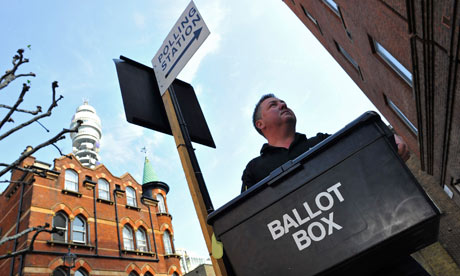
Ask a passer by in the street how often they reflect on the workings of local democracy, or more importantly how often they engage in the process, and the answer is likely to be "not much".
The lack of community involvement in local government decisions is a dangerous thing, and I believe it is the duty of town halls up and down the country to do all they can to address this. Here in Southwark we are pioneering a new way of increasing that involvement.
Last year we set up a democracy commission to carry out a radical shakeup of local politics, and examine every aspect of how we involve the public in our decisions. This process was greatly informed by "community conversations", focus groups and community meetings. We went out and about in the borough and asked people who live and work here what they thought of the state of democracy in Southwark. It was an insightful process.
The commission then came up with a series of ideas to make the nuts and bolts of the council's democratic business more open, more transparent, and more interesting to the wider public. Among the recommendations to transform full council meetings were:
• alternating council assembly meetings between different venues in Southwark to ensure maximum participation and involvement by the community.
• giving each meeting a theme of interest to local people, including a debate led by the relevant cabinet member and with a clear link to a decision-making process.
• reducing the number of signatures that a resident needs to bring a petition and trigger a council debate from 2,500 to 1,000.
• investigating whether we could broadcast meetings live online or on a community radio station.
• going out and about in the borough before each debate to hear the views of residents, and feed them in to the discussion.
• creating a clearer link to our local area forums, called community councils.
• holding informal sessions at the beginning of full council meetings to allow residents to hear about and discuss the theme, and mix with members.
• previewing meetings with a better use of traditional communications and social media.
So far we have taken our council assembly out of the town hall and on to the road, where a packed school hall was the scene of our July full council meeting. With sport demonstrations from our London Youth Games medallists, an impromptu poetry reading while council was in session, and an unprecedented turn out by the local community, we considered it a huge success.
Our next step is to hold another assembly somewhere else in the borough; we may not return to the town hall again, so long as our new way of working keeps attracting new people to local democracy and generating interest.
The more we can offer the community improved ways to participate and the more we can ensure councillors are easily held to account, then the more chance the public have of their voices being heard – and the more chance the answer to our questions from that passerby in the street is likely to be "quite a lot" rather than "not at all".
Log on to southwark.gov.uk/democracy for more information.
Councillor Ian Wingfield is deputy leader of Southwark council
This content is brought to you by Guardian Professional. Join the local government network for more comment, analysis and best practice