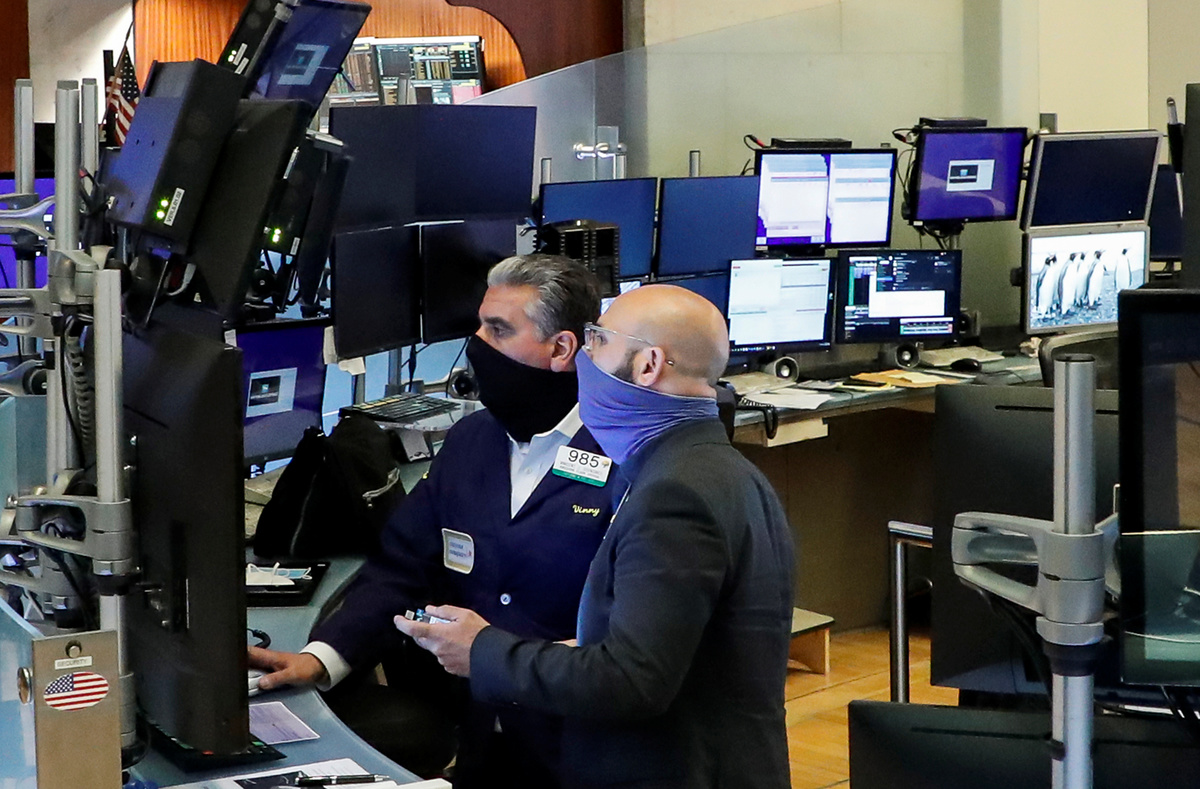
A gauge of global equities rebounded on Monday after the Federal Reserve widened its program of buying corporate debt, while crude oil rose on signs fuel demand is recovering and as investors grapple with how to assess the economic reopening.
Stocks jumped after the Fed said its secondary market corporate credit facility would now include an indexing approach to account for all U.S. corporate debt that satisfied minimum rating, maximum maturity and other criteria.
The purchases, which will start on Tuesday, will complement the other asset purchases made by the facility, which began buying shares of broad-based exchange-traded funds in mid-May.
"The Fed just wants to make sure there's plenty of liquidity in every market," said JJ Kinahan, chief market strategist for TD Ameritrade in Chicago. "In theory it should help keep liquidity in the markets."
The Fed and other major central banks halted a steep plunge in equity markets in March by enacting a number of fiscal and economic stimulus programs that helped restore investor confidence by ensuring markets remained liquid.
Markets are likely to be volatile as investor impatience with wanting to see a rapid opening of businesses from the coronavirus-induced lockdowns is met with the reality that it will take time for the economy to recover, Kinahan said.
Fears of a second wave of COVID-19 infections had earlier rocked world markets, knocking down oil prices and major equity indices by more than 2% on Wall Street and Europe, and even more overnight in Asia.
MSCI's gauge of stocks across the globe <.MIWD00000PUS> gained 0.14% while the pan-European STOXX 600 index <.STOXX> closed down 0.27%.
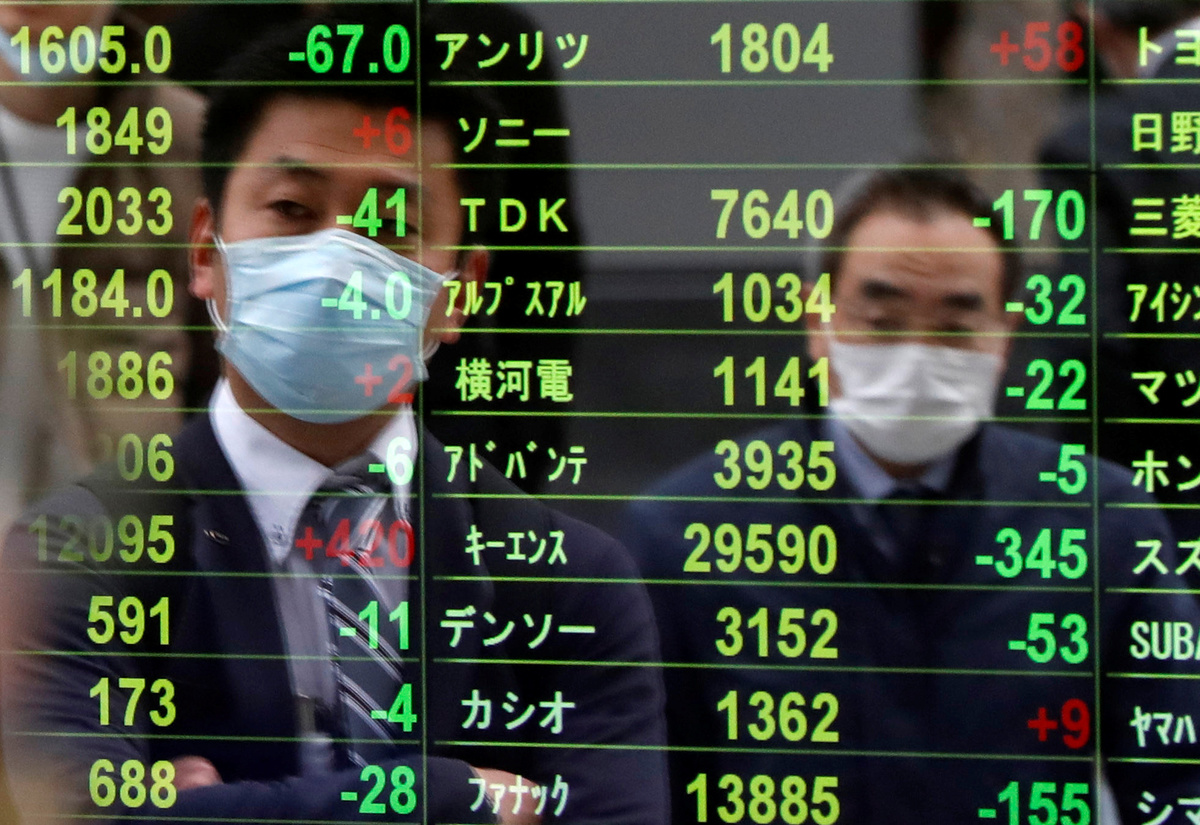
Overnight in Asia, Japan's Nikkei <.N225> fell 3.5% and South Korean shares <.KS11> tumbled 4.8%.
On Wall Street, the Dow Jones Industrial Average <.DJI> rose 157.62 points, or 0.62%, to 25,763.16. The S&P 500 <.SPX> gained 25.28 points, or 0.83%, to 3,066.59 and the Nasdaq Composite <.IXIC> added 137.22 points, or 1.43%, to 9,726.02.
Investors were spooked after China re-introduced restrictions in some areas after Beijing reported its biggest cluster of new infections since February, and new cases and hospitalizations in record numbers also swept through more U.S. states, including Florida and Texas.
Data showed factories in China stepped up production for a second straight month in May, giving investors hope, but also showed sustained contractions in retail sales and investment, suggesting many sectors were still struggling.
News elsewhere also was discouraging. Germany's Economy Ministry said economic output will fall further in the second quarter than in the first, and it warned the recovery later this year and beyond would be sluggish.
"Markets are pricing a too-optimistic recovery, in my opinion, and there could be a reality check coming rather sooner than later," said Stephane Ekolo, an equity strategist at TFS Derivatives in London.
Crude oil cut losses and turned higher on signs members of the Organization of the Petroleum Exporting countries and allies were complying with a production cut, and on signs of rising fuel demand.
Prices rebounded after the energy minister of the United Arab Emirates voiced confidence that OPEC+ countries with poor compliance to agreed cuts would meet their commitments and reported signs oil demand was picking up.
"That seemed to take away some of the market's negativity,"
"It's fear about the coronavirus versus the reality of what's happening on the ground," said Phil Flynn, senior analyst at Price Futures Group.
U.S. crude future <CLc1> rose 86 cents to settle at $37.12 a barrel, while Brent futures <LCOc1> settled up 99 cents at $39.72 a barrel.
U.S. Treasury yields rebounded on the Fed announcement, as investors set aside concerns over the spread of the coronavirus that dented risk appetite and boosted demand for safe-haven bonds.
Benchmark 10-year notes <US10YT=RR> rose 1.4 basis points to yield 0.7133%.
Euro zone bond yields edged down as investors bought safer assets such as government bonds.
Germany's 10-year bond yield <DE10YT=RR> earlier was near a three-week lows at -0.45%.
The dollar fell against a basket of trading currencies.
The dollar index <=USD> fell 0.474%, with the euro <EUR=> up 0.54% to $1.1315. The Japanese yen <JPY=> strengthened 0.01% versus the greenback at 107.35 per dollar.
(Reporting by Herbert Lash; additional reporting by Stephanie Kelly in New York; editing by Jonathan Oatis and Cynthia Osterman)