NEW YORK (Reuters) - Global stocks ended August much as they began the month - under the dark cloud of a potentially worsening trade war.
A closely watched barometer of equities worldwide fell for a second day on Friday after the United States and Canada failed to reach a trade deal and a report that U.S. President Donald Trump was preparing to step up a trade war with Beijing. The news dampened risk appetite and erased some gains from a rally this week.
"It's very hard to see a decisive resuscitation of risk appetite until these tensions are resolved," said Paul O'Connor, head of the multi-asset team at Janus Henderson Investors.
"We have learned to under-react to some of the individual headlines because if you try to extrapolate from any of them you could find yourself in big trouble."
The MSCI All-Country World Index <.MIWD00000PUS>, which measures stocks in 47 countries, shed 0.34 percent for the day, but eked out a 0.7 percent return for the month, including dividends.
The index's modest rise masked a chasm between U.S. and emerging markets. The S&P 500, which includes large U.S. companies, is up nearly 3 percent for the month, while the MSCI Emerging Markets index <.MSCIEF> is down by roughly the same margin.
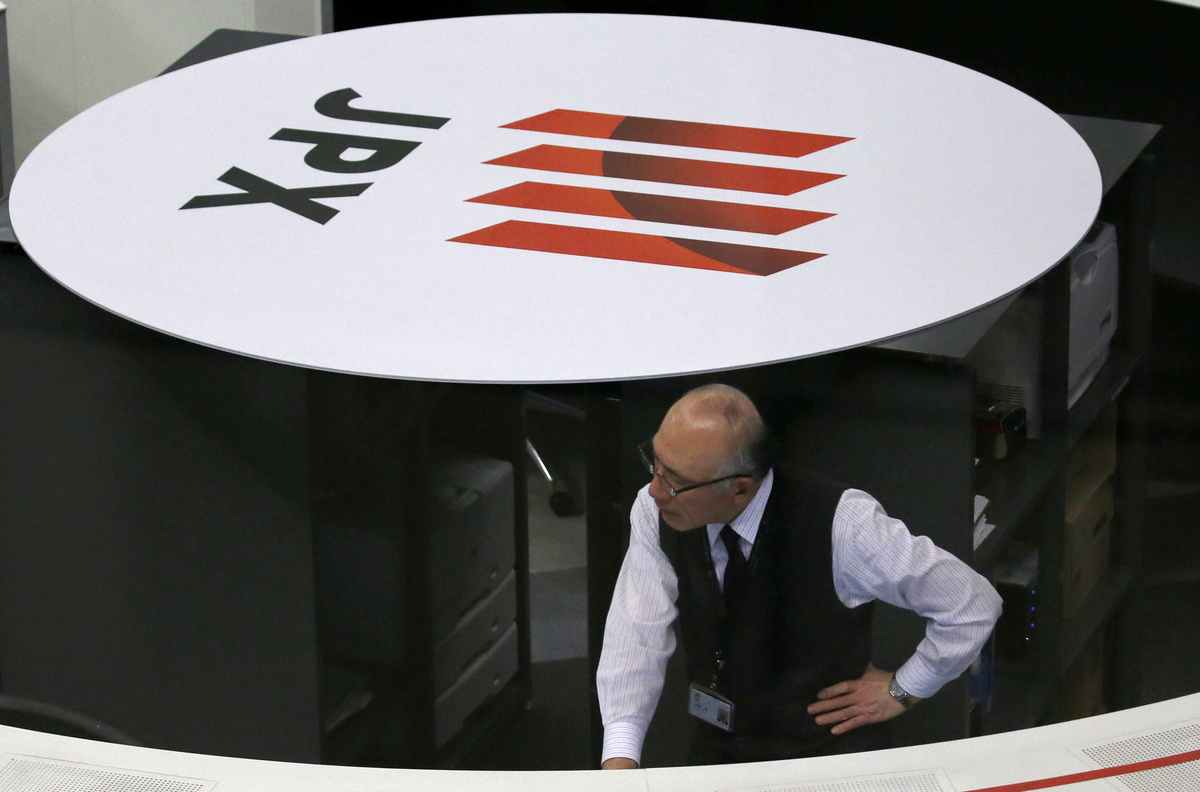
On Friday the Dow Jones Industrial Average <.DJI> fell 22.1 points, or 0.09 percent, to 25,964.82, the S&P 500 <.SPX> gained 0.39 points, or 0.01 percent, to 2,901.52 and the Nasdaq Composite <.IXIC> added 21.17 points, or 0.26 percent, to 8,109.54. [.N]
Canada and the United States failed to reach a deal on Friday to update the North American Free Trade Agreement, with U.S. Trade Representative Robert Lighthizer saying in a statement that U.S. officials would resume talks with their Canadian counterparts next Wednesday. The United States and Mexico, the other NAFTA member, have already come to an agreement.
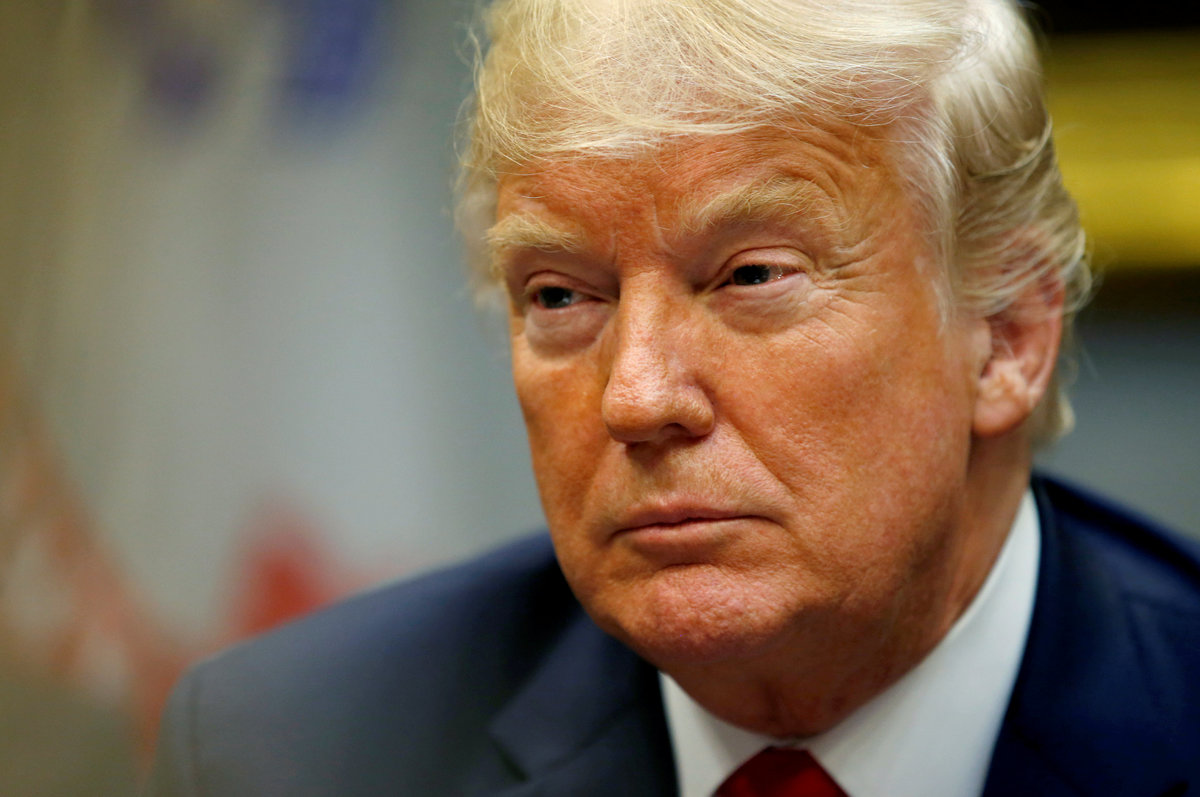
Meanwhile, Trump is ready to impose tariffs on another $200 billion in Chinese imports as soon as a public comment period on the plan ends next week, Bloomberg News reported on Thursday, citing unidentified people. The White House declined to comment.
Trump, in an interview with Bloomberg, also threatened to withdraw from the World Trade Organization if "they don't shape up," a move that would further undermine one of the foundations of the modern global trading system.
Oil, which could see less demand if trade tensions slash economic growth, settled lower. Brent <LCOcv1> was down 0.45 percent to $77.42 per barrel.
Trade anxieties boosted the dollar, seen as a short-term winner if the United States reduces imports. The greenback <.DXY> rose 0.4 percent against an index of its peers.
The Mexican peso lost 0.02 percent versus the U.S. dollar and the Canadian dollar fell 0.50 percent.
EMERGING MARKETS ON EDGE
Broadly, emerging market currencies showed signs of stability even as the posted their fifth straight month of losses in dollar terms. An index of those countries' currencies <.MIEM00000CUS> rose 0.11 percent on Friday.
Currencies in two particularly troubled economies, Turkey and Argentina, strengthened against the dollar <TRY=> <ARS=>.
The Turkish government said it would lower the level of withholding tax on lira bank deposits, while raising it on foreign currency deposits.
Argentine Finance Minister Nicolas Dujovne said Thursday night that the government will announce new economic measures on Monday and target a fiscal deficit below levels agreed with the International Monetary Fund.
There are other trouble spots. The Indonesian rupiah <IDR=> hit a nearly three-year low and approached levels not seen since the 1990s Asian financial crisis even as the country's central bank said it was "decisively" intervening to support the currency. The Indian rupee <INR=> touched a record low.
(Reporting by Trevor Hunnicutt; Additional reporting by Ritvik Carvalho and Helen Reid in London and Hideyuki Sano in Tokyo; Editing by Richard Chang and Chizu Nomiyama)