SYDNEY (Reuters) - Asian shares slid to 6-1/2-month lows on Monday and the yuan plunged as a rapid escalation in the Sino-U.S. trade war drove nervous investors to safe-havens such as the yen, bonds and gold.
U.S. President Donald Trump abruptly decided on Thursday to slap 10% tariffs on $300 billion in Chinese imports, stunning markets and ending a month-long trade truce. China vowed on Friday to fight back.
In response, China's yuan weakened beyond the key 7-per-dollar threshold in a move that threatens to lead to massive capital outflows.
"We could see a more prolonged period of risk aversion," analysts at Singapore-based TD Securities wrote in a note.
"We think the latest development reiterates our view that trade will remain a lingering headwind for the economy and business investment in particular."
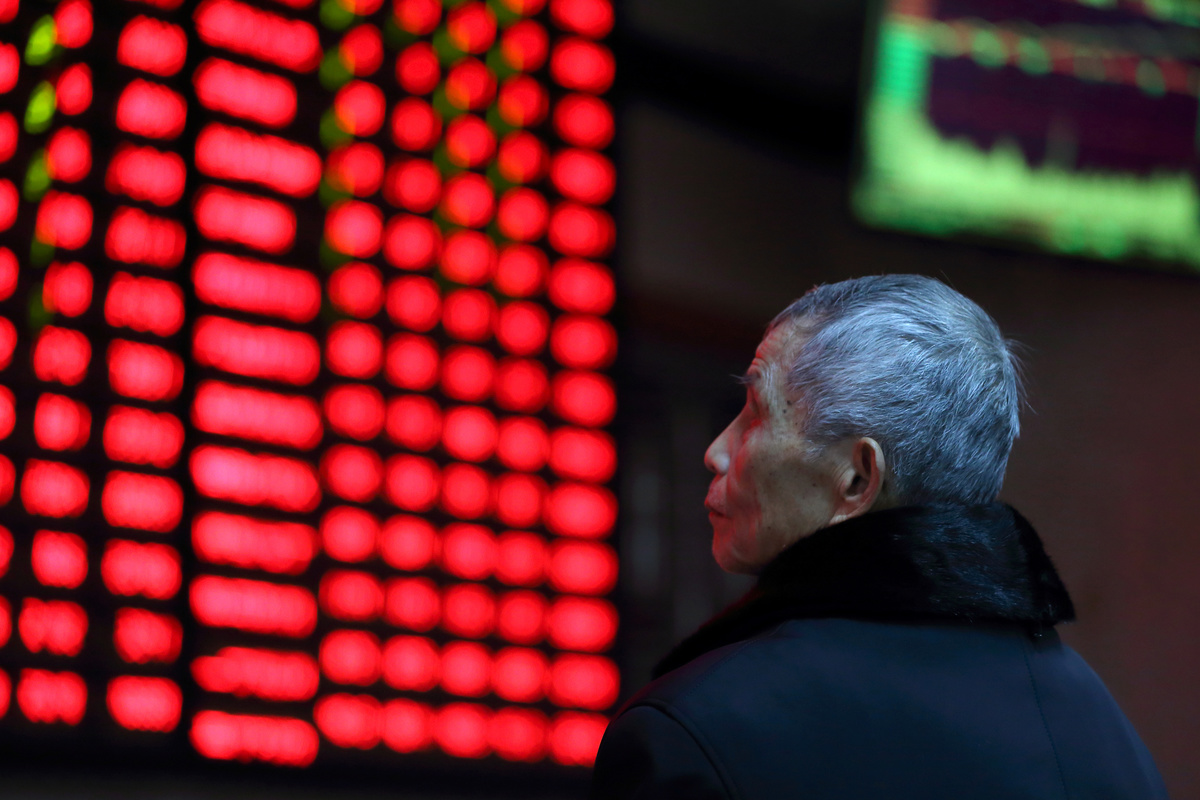
Asian shares sold off broadly with every single market posting steep losses.
Japan's Nikkei <.N225> stumbled almost 2% to the lowest since early June, while Australian shares <.AXJO> slipped about 1% to spend their fourth straight session in the red. South Korea's Kospi <.KS11> tumbled 1.2% to hit the lowest since December 2016.
That left MSCI's broadest index of Asia-Pacific shares outside Japan <.MIAPJ0000PUS> down 1.7% to 495.68, a level not seen since late January and marking the longest stretch of losses since October 2018.
In China, shares opened lower, with the blue-chip index <.CSI300> skidding 1% while Hong Kong's Hang Seng index <.HSI> declined 2.2%.
E-Mini futures for the S&P500 <ESc1> fell 1% in Asian trading.
Oil prices were also pulled down again on demand worries.
The grim mood followed declines on Wall Street on Friday with MSCI's gauge of world stocks <.MIWD00000PUS> posting its largest weekly loss of the year.
The trade war between the world's two largest economies has already disrupted global supply chains and slowed economic growth.
The abrupt escalation capped a critical week for global markets after the U.S. Federal Reserve delivered a widely anticipated interest rate cut and played down expectations of further easing.
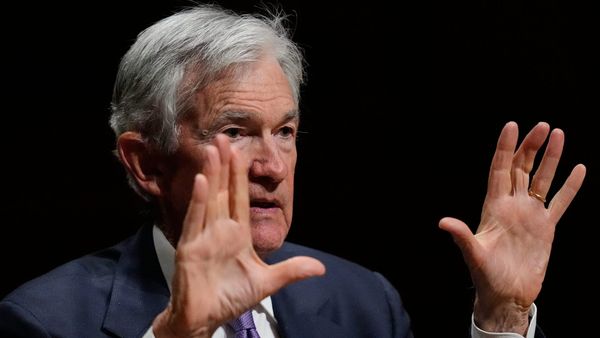
However, investors were not buying Fed Chair Jerome Powell's claim that the 25-basis-point rate reduction was a mere "mid-cycle adjustment to policy".
Futures are now pricing in deeper cuts than before last week's Fed meeting. The terminal U.S. rate <0#FF:> is now seen at 1.22%, 93 basis points below the current effective rate.
TD is forecasting five more cuts from the Fed, amounting to 125 basis points of easing, over next year.
Expectations of further monetary policy easing sent the dollar skidding. It slipped to a seven-month trough of 105.78 against the Japanese yen <JPY=> while the dollar index <.DXY> against a basket of six major rivals inched lower to 97.91 after two straight days of losses.
The Australian dollar <AUD=D3>, a liquid proxy for emerging market assets, slipped to a fresh seven-month trough at $0.6748 after losing 1.6% last week.
The yen and the Swiss franc <CHF=> were boosted by safe-haven demand from the escalating trade tensions. Trump is also eyeing tariffs on the European Union but is yet to make any formal announcements.
The euro <EUR=> held firm after two days of gains against the dollar at $1.1119.
Sterling <GBP=> hovered near 2017 lows at $1.2159, pressured by concerns about Britain exiting the European Union without a deal in place. The pound has been whiplashed since late last month when Boris Johnson, a figurehead for the "leave" campaign in the 2016 Brexit referendum, became the country's prime minister.
Safe-haven assets have been in vogue with yields on benchmark 10-year Treasury notes <US10YT=RR> at 1.7890%, their lowest since Trump's election in November 2016, from 1.8550% on Friday.
German 10-year government bond yields <DE10YT=RR> on Friday dropped to an all-time low of -0.502% and the country's entire government bond yield curve turning negative for the first time ever.
Spot gold <XAU=> firmed to $1,451.61, within striking distance of a recent high of $1,452.60.
Oil extended losses with U.S crude <CLc1> off 26 cents at 55.40 and Brent <LCoc1> down 35 cents at $61.54.
(Editing by Shri Navaratnam and Sam Holmes)