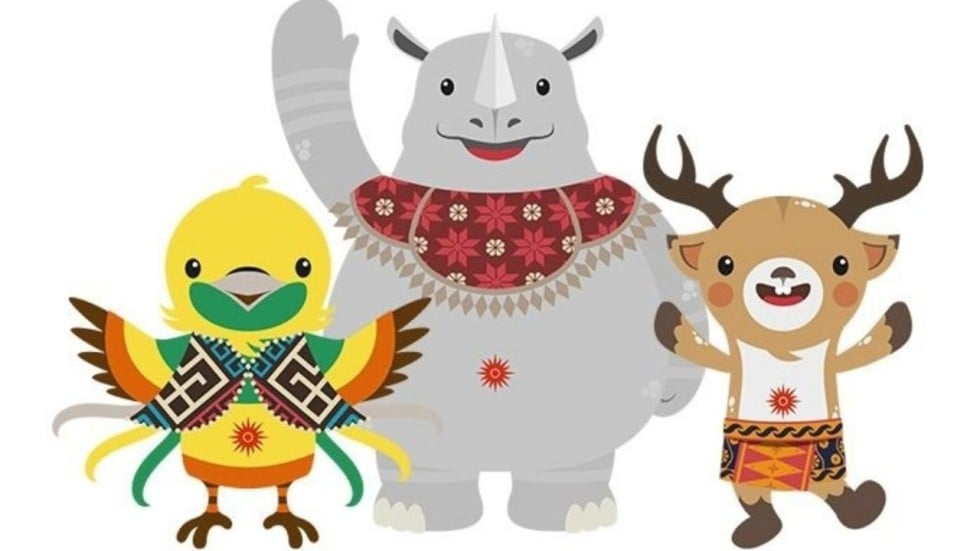
The Asian Games opening ceremony takes place on Saturday and the Asiad’s three mascots are sure to take centre stage in Jakarta’s Gelora Bung Karno Stadium.
This is the 18th Asian Games and the 10th to have an official mascot. While the Olympic Games opted for a mascot in 1968 when Grenoble hosted the Winter Games and the World Cup has been anthropomorphising footballs and animals since World Cup Willie for 1966 in England, the Asian Games did not get on the bandwagon until 1982 when India hosted and unveiled Appu the Elephant.
Despite being late to the party there have been some unforgettable efforts approved by the organising committees.

1982: Appu the elephant – New Delhi, India
As well as the cartoon image, there was a live elephant named Appu that became the mascot of the event. The authorities did not want to make a live animal the mascot but the elephant reportedly captured the public imagination. He fell into a tank in 1992 and was maimed forever but only died in Kerala in his late 20s in 2005.

1986: Hodori the tiger – Seoul, South Korea
Taking his name from “Ho” – the Korean word for tiger (Horangi) – and “Dori” for boy, Hodori is a Siberian or Amur tiger native to the Korea peninsula. Thousands of names were suggested by the public before Hodori was picked. The tiger was also the mascot of the Seoul 1988 Summer Olympic Games which was a frugal move from the hosts.

1990: Pan Pan the panda – Beijing, China
Pan Pan was based on Basi, the globetrotting panda once regarded as the most famous panda in the world until its death aged 37 in 2017 as the world’s oldest captive panda. Pan Pan the mascot has a statue outside the Asian Games Stadium in Beijing, a venue that, unlike the statue, was revamped ahead of the Beijing 2008 Olympics.

1994: Poppo and Cuccu the white doves – Hiroshima, Japan
Poppo and Cuccu represent peace and harmony, with doves being the birds of peace. These were the first games in a non-capital city and the only games to have a male-female pair of mascots. The names, report CNTraveler, sound like doves to the hosts’ ears, adding that costumes of the pair were stolen while on a trip to Beijing. Presumably they were quite easy to find.

1998: Chai-yo the elephant – Bangkok, Thailand
The first games host to be decided by a bidding process, Bangkok had last hosted in 1978 – the final Asian Games before the introduction of mascots. Much like the first mascot in India, they opted for an elephant as if pretending that the first one never existed. The name translates to “Cheers!” in Thai.

2002: Duria the seagull – Busan, South Korea
The port city plucked a seagull out of the air for its mascot, the second species of bird to be immortalised at the Asiad. The seagull is the city bird of Busan and the mascot was meant to offer the pure and dynamic image of the seagull. Seagulls must behave differently in South Korea.

2006: Orry the oryx – Doha, Qatar
The Arabian oryx was extinct in the wild from 1972 until a decade later but was in rude health by the time the Asian Games were held in Qatar. Orry was the first mascot to have a Facebook page and he was also on TV commercials. It certainly proved popular: in 2018, Qatar Airways introduced a different Orry the Oryx as one of the two mascots of its kids club. Orry was also the only mascot to have a 30-foot statue, which people can climb for views of the host city.
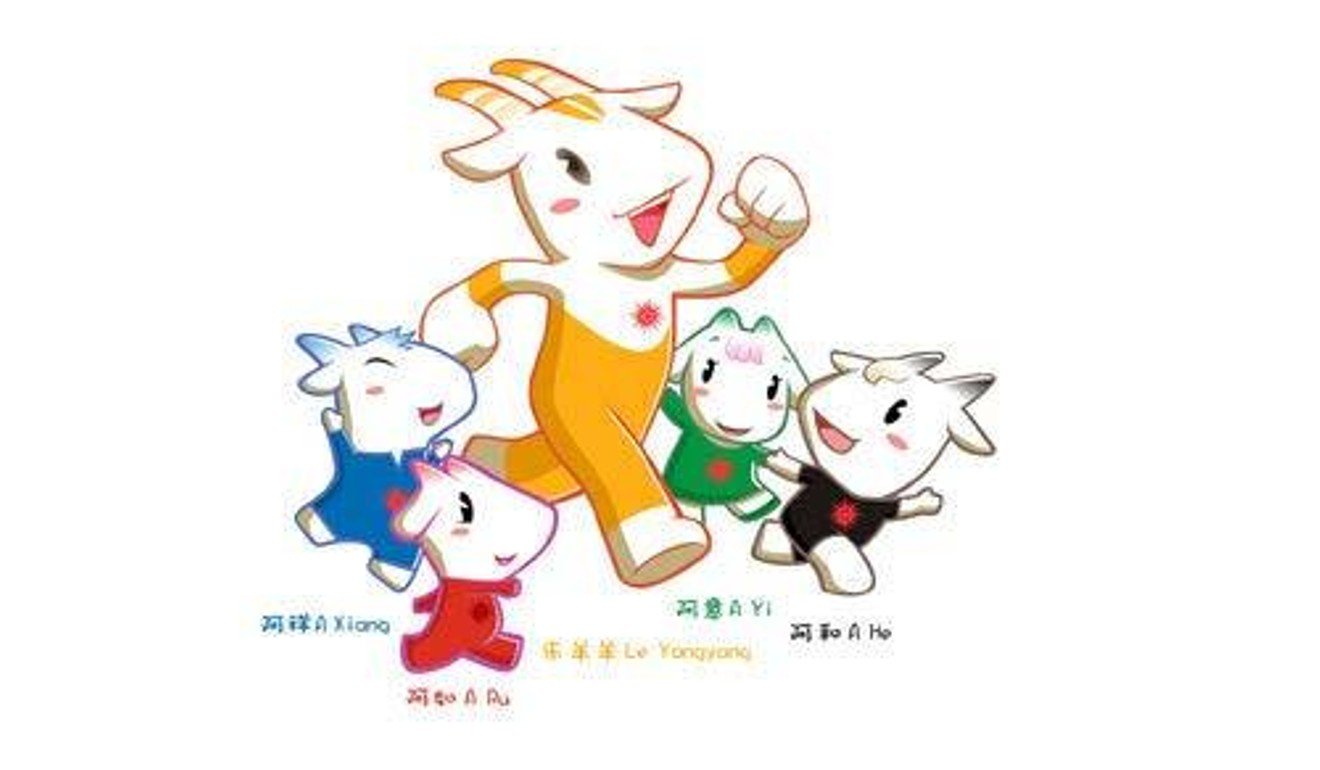
2010: A Xiang, A He, A Ru, A Yi and Le Yangyang the goats – Guangzhou, China
The Goat City, as it is known by some because of the Legend of Five Goats who saved it from famine in the Zhou Dynasty, was the host of the 2010 Asian Games. It makes sense that the mascots were five goats whose names meant “harmony, blessings, success and happiness”. Beijing had a similarly wordy five mascots for the 2008 Olympics and this is the most in Asiad history.

2014: Barame, Chumuro, and Vichuon the three-spotted seals – Incheon, South Korea
South Korea repledged its commitment to mascot-based frugality by reusing the three three-spotted seals of the 2013 Asian Indoor-Martial Arts games. Slick. The names mean “wind”, light” and “dance” in Korean and they are meant to symbolise a future peace between North and South. They live in the harbour and travel freely between North, South and China, to which ferries go daily in case you don’t want to travel by seal.

2018: Bhin Bhin the bird of paradise, Atung the deer, Kaka the rhino – Jakarta and Palembang, Indonesia
These three mascots replaced a single mascot named Drawa that was criticised for looking like a chicken and not representing Indonesia enough. These three represent the east, west and centre of the country and they have dress traditional to each locality.