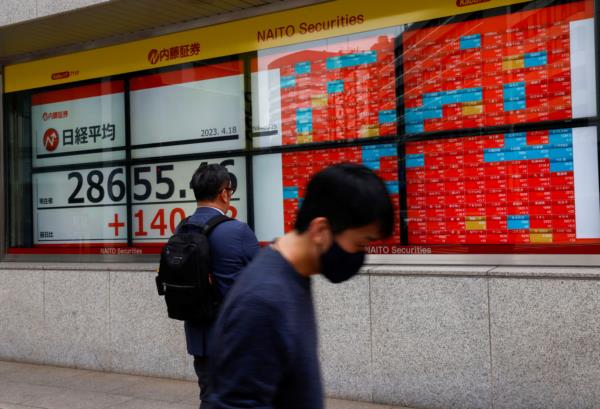
Asia stocks traded sluggishly on Monday, with investors facing a significant amount of event risk in the days ahead. Amidst concerns over new COVID-19 variants and inflation, market sentiment remained cautious.
In mainland China, the Shanghai Composite remained nearly unchanged, as concerns over regulatory crackdowns on the technology sector weighed on investor confidence. Meanwhile, Japan's Nikkei dropped 0.6% in early trade, as the country continued to grapple with a surge in COVID-19 cases ahead of the Tokyo Olympics.
Other Asian markets also struggled to gain momentum. South Korea's Kospi edged slightly lower, while Hong Kong's Hang Seng inched up only marginally. Market participants remained wary as they awaited more clarity on crucial economic indicators and policy decisions.
This week, key events are set to unfold that could impact global markets. In the United States, the Federal Reserve is scheduled to release minutes from its June policy meeting, providing insight into the central bank's stance on monetary policy and potential tapering of bond purchases. Investors will be closely analyzing the minutes for any hints regarding future rate hikes.
Additionally, a slew of economic data is due this week, including reports on inflation, retail sales, and industrial production. These indicators will be closely watched by market participants trying to gauge the pace of economic recovery from the pandemic.
Uncertainty surrounding the global economic outlook persists as concerns over the spread of new COVID-19 variants, such as the Delta variant, loom large. The ongoing vaccination campaigns worldwide are deemed crucial in curbing the impact of these variants, but the effectiveness of the vaccines against emerging strains remains a subject of debate.
Furthermore, inflation continues to be a major point of discussion. As economies recover and demand picks up, price pressures have entered the spotlight. Central banks are monitoring inflation closely, considering whether it is transitory or indicative of a more sustained trend. Any surprises in the upcoming data releases could sway market sentiment and impact investor decisions.
Geopolitical tensions also remain a source of concern. The simmering trade disputes between the United States and China, as well as other geopolitical hotspots, have the potential to disrupt global markets and trigger volatility.
Overall, the caution observed in Asian markets today reflects the unease felt by investors given the multitude of event risks looming ahead. With major economic indicators, central bank minutes, and geopolitical tensions in play, market participants will need to carefully monitor developments and be prepared for potential shocks.




.jpg?w=600)