HANOI -- As the current chair of the Association of Southeast Asian Nations, Vietnam has been frustrated by its inability to host face-to-face meetings amid the outbreak of the novel coronavirus. A foreign ministers meeting scheduled for early August, for example, has been postponed to September.
Vietnam has sought to strengthen ASEAN's unity in opposition to China, supported by strong international criticism over the South China Sea, but the pandemic has derailed these efforts.
-- 'Zero community infections'
In addition to the ASEAN foreign ministers meeting, Vietnam was to hold face-to-face gatherings of foreign ministers at the East Asia Summit (EAS), in which Japan, the United States, China, and Russia participate, and of the ASEAN Regional Forum (ARF), in which North Korea participates. All these were scheduled to be held during the period from this past Friday to Wednesday.
Through these meetings, Vietnam had wanted to show the international community that it had realized face-to-face gatherings amid its success in curbing the spread of the virus and achieving zero community-acquired infections for at least three months.
However, it received a lukewarm response from the participating countries. A Thai government official, for example, said, "In terms of infection prevention, it's not good for national delegations to get together in one place."
Countries concerned have agreed to postpone the events, but Vietnam has not officially announced a delay. An ASEAN diplomatic source said, "I assume Vietnam is emphasizing its position that the meetings are in the process of being scheduled and can be held at any time."
-- United against China
Vietnam's insistence on face-to-face talks has been prompted by heightened international debate on the South China Sea since July, resulting in the increased encirclement of China.
China has forged ahead with the militarization of the South China Sea in recent years, for example by establishing administrative districts there. On July 13, U.S. Secretary of State Mike Pompeo issued a statement denying China's claims to maritime rights and interests, saying its actions were "completely unlawful."
With the support of such ASEAN members as the Philippines, Malaysia and Indonesia, the United States held a foreign and defense ministerial meeting with Australia at the end of July, keep step on taking a tough stance against China.
Vietnam sees this trend as an opportunity, and is expected to organize face-to-face discussions with relevant countries and take the lead in promoting solidarity against China.
-- South China Sea
Vietnam is eager to achieve results from its policy against China within the year, or within the period that it chairs ASEAN. This is partly because the deadline for drawing up a Code of Conduct in the South China Sea (COC) to be concluded by ASEAN and China is approaching next November.
Vietnam wants the COC to include a ban on the construction of artificial islands and the establishment of an air defense identification zone, with a view to deterring China's actions. As the ASEAN chair, Vietnam hopes to take the initiative in the meetings and gain an advantage in drawing up the code.
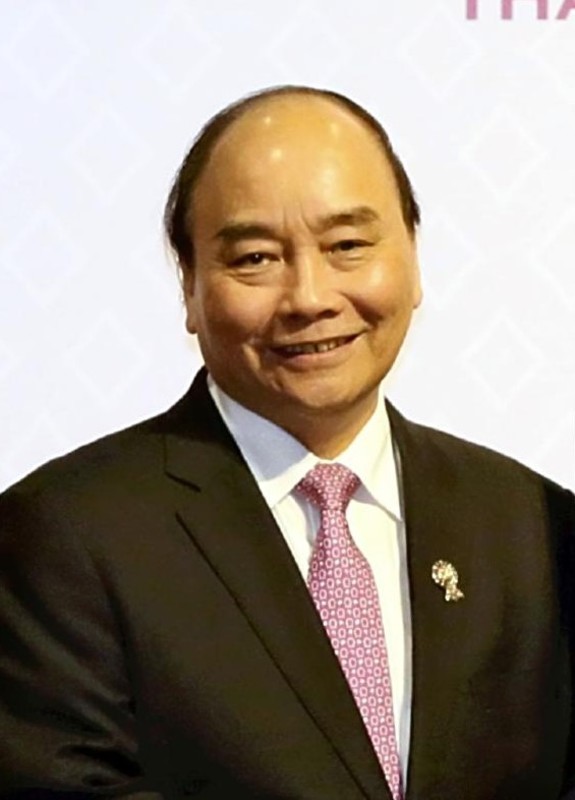
Another reason is that the Vietnam Communist Party is scheduled to convene in January next year. Prime Minister Nguyen Xuan Phuc -- who is seen as a possible successor to President Nguyen Phu Trong, the party's general secretary -- plans to handle the meetings to demonstrate his diplomatic skills.
However, there is no prospect of the situation involving the coronavirus improving, and the number of infected people in Vietnam has been increasing since the end of July.
A diplomatic source said, "In addition to the meeting in September, it may not be possible to hold a face-to-face summit meeting in November either."
Read more from The Japan News at https://japannews.yomiuri.co.jp/