President Donald Trump said on Saturday that he would issue a travel warning for the hard-hit New York area to limit the spread of the coronavirus, backing off from an earlier suggestion that he might try to cut off the region entirely.
"A quarantine will not be necessary," he said on Twitter.
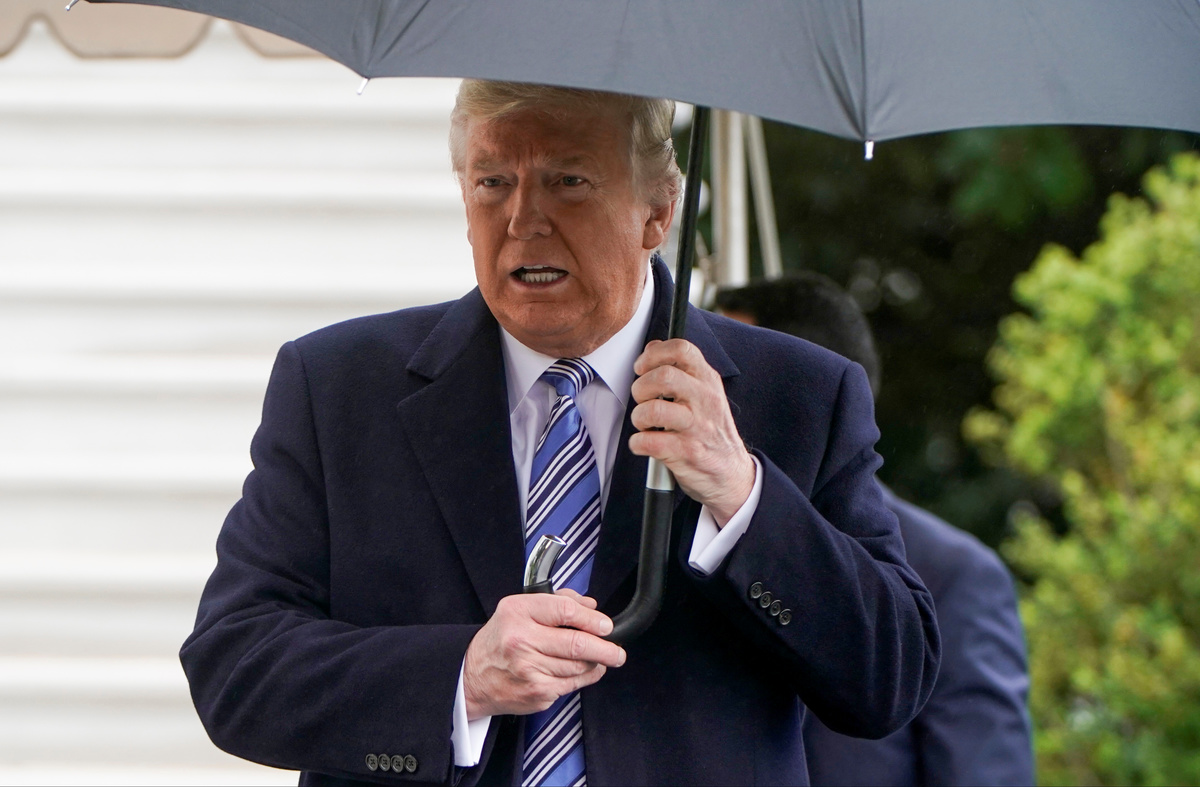
Trump's announcement came as the U.S. death count crossed 2,100, more than double the level from two days ago. The United States has now recorded more than 122,000 cases of the respiratory virus, the most of any country in the world.
Since the virus first appeared in the United States in late January, Trump has vacillated between playing down the risks of infection and urging Americans to take steps to slow its spread.
Trump said on Saturday afternoon that he might impose a ban on travel in and out of New York and parts of New Jersey and Connecticut, the U.S. epicenter of the disease, to protect other states that have yet to bear the brunt. He offered few specifics.
Critics promptly called the idea unworkable, saying it would cause chaos in a region that serves as the economic engine of the eastern United States, accounting for 10 percent of the population and 12 percent of GDP.
"If you started walling off areas all across the country it would be totally bizarre, counter-productive, anti-American," New York Governor Andrew Cuomo said on CNN.
Hours later, Trump dropped the idea, saying he would instead ask the U.S. Centers for Disease Control and Prevention (CDC) to issue a "strong Travel Advisory" that would be administered by the three states' governors.
The CDC later warned the states' residents against non-essential domestic travel for 14 days. It said the warning did not apply to employees of "critical infrastructure industries" including trucking, public health and financial services.
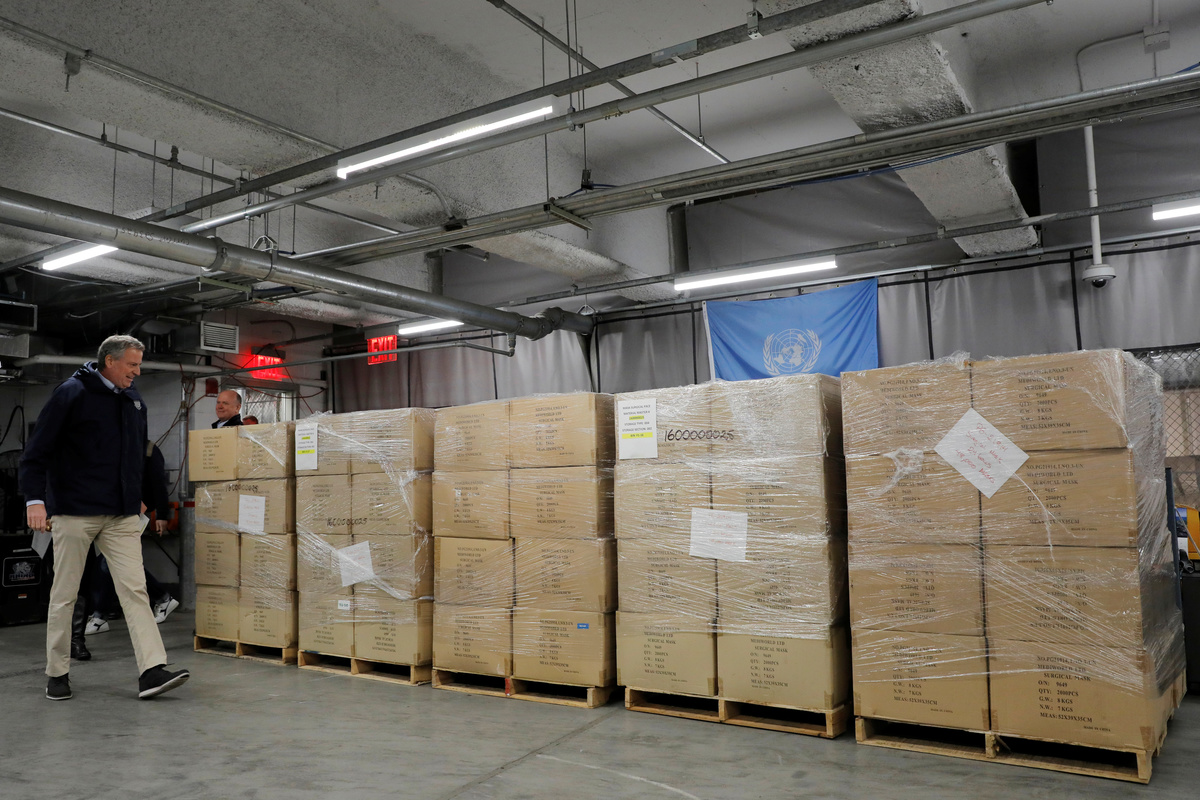
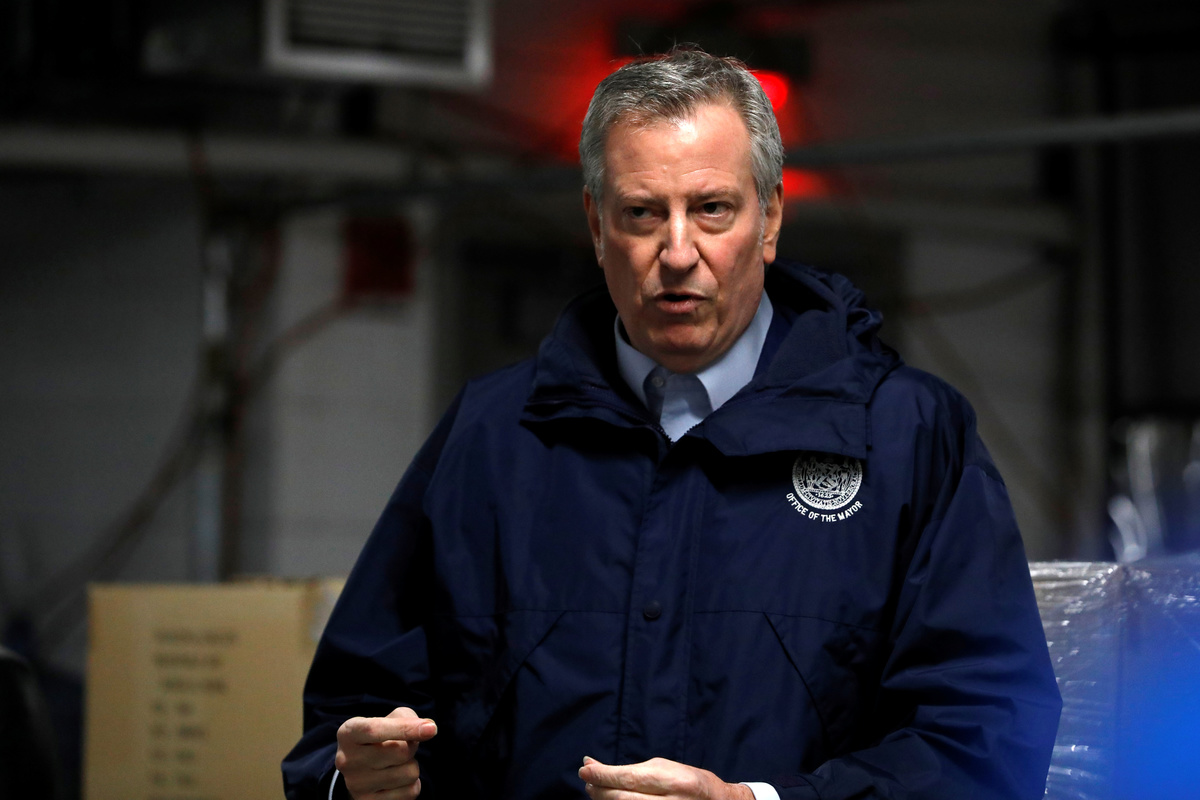
It was the latest reversal for Trump, who has been reluctant to order U.S. companies to produce much-needed medical supplies, despite the pleas of governors and hospital workers.
Tests to track the disease's progress also remain in short supply, despite repeated White House promises that they would be widely available.

On Saturday, Trump appeared to soften his previous comments calling for the U.S. economy to be reopened by mid-April. "We'll see what happens," he said. Graphic: U.S. coronavirus - https://graphics.reuters.com/HEALTH-CORONAVIRUS-USA/0100B5K8423/index.html
Though Trump has apparently opted not to impose checkpoints on highways and airports leading out of New York, some states have imposed limits of their own.
New Yorkers arriving in Florida and Rhode Island face orders to self-isolate if they intend to stay, and the governors of Pennsylvania and West Virginia have asked visiting New Yorkers to voluntarily self-quarantine.
New Hampshire Governor Chris Sununu on Saturday asked all visitors to his state who don't come for work reasons to voluntarily self-quarantine.
New coronavirus cases in China leveled off after the government imposed a strict lockdown of Wuhan, the epicenter of the disease.
The body count continues to climb in Italy, where authorities have blocked travel across the country and prevented people from leaving their houses for all but essential reasons.
Any travel restrictions, voluntary or not, might be too late.
The number of coronavirus patients in California hospitals increased by more than one-third overnight, Governor Gavin Newsom said.
Officials in Louisiana, where Mardi Gras celebrations late last month in New Orleans fueled an outbreak, reported 17 additional deaths and 569 new cases on Saturday.
The disease has proven most fatal among the elderly, but Illinois Governor J.B. Pritzker said on Saturday that an infant had died in his state. Graphic: Tracking the spread of the global coronavirus - https://graphics.reuters.com/CHINA-HEALTH-MAP/0100B59S39E/index.html
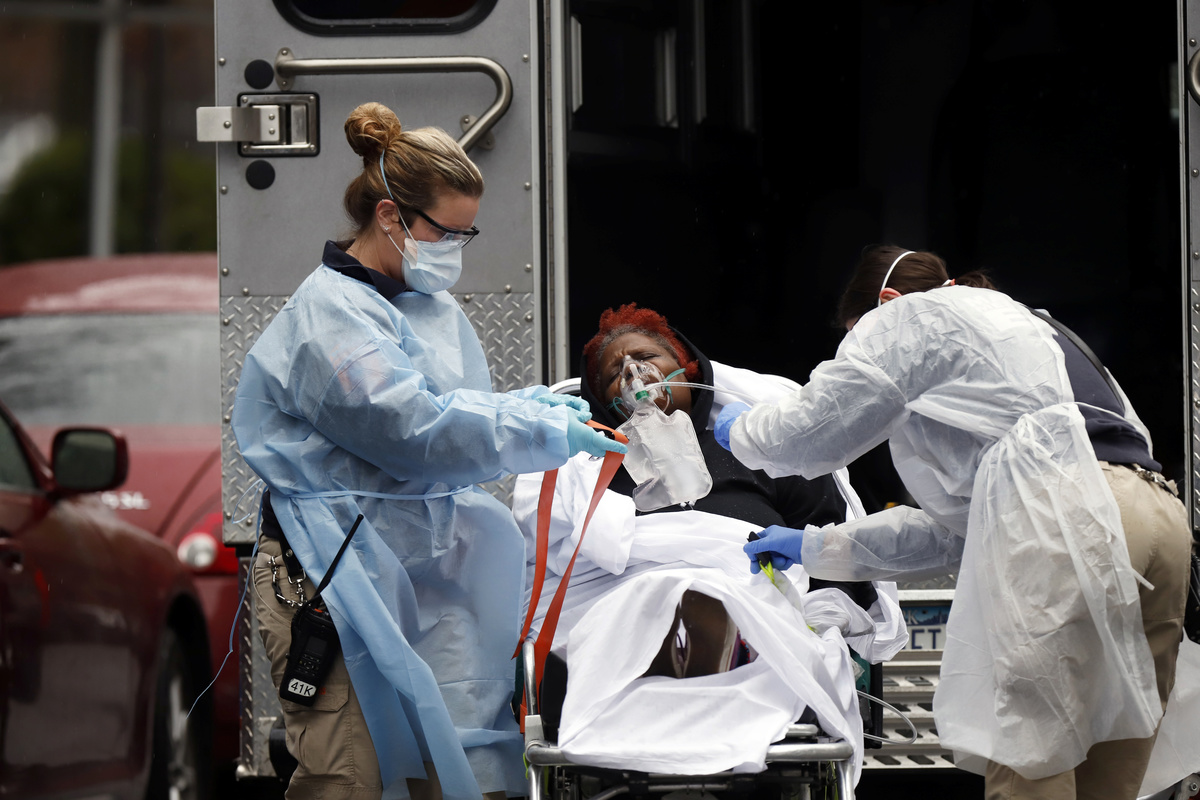
American healthcare workers are appealing for more protective gear and equipment as they face a surge of patients.
Doctors are also especially concerned about a shortage of ventilators, breathing machines needed for those suffering from COVID-19, the pneumonia-like respiratory ailment caused by the highly contagious novel coronavirus.
Hospitals have also sounded the alarm about scarcities of drugs, oxygen tanks and trained staff.
On Saturday, nurses protested outside the Jacobi Medical Center in New York, saying supervisors asked them to reuse their masks, putting their own health at risk.
One medical trainee at New York Presbyterian Hospital said they were given just one mask.
"It's not the people who are making these decisions that go into the patients' rooms," said the trainee, who spoke on condition of anonymity.
(Additional reporting by Brendan Pierson, Maria Caspani, Jonathan Stempel and Gabriella Borter in New York, Joel Schectman, Andy Sullivan, Raphael Satter and Michelle Price in Washington, and Lisa Shumaker in Chicago; Writing by Andy Sullivan; Editing by Daniel Wallis)