Get all your news in one place.
100’s of premium titles.
One app.
Start reading
Reuters
Reuters
Business
Nidal al-Mughrabi

As temperatures soar, desperate Gazans try any means to beat heat

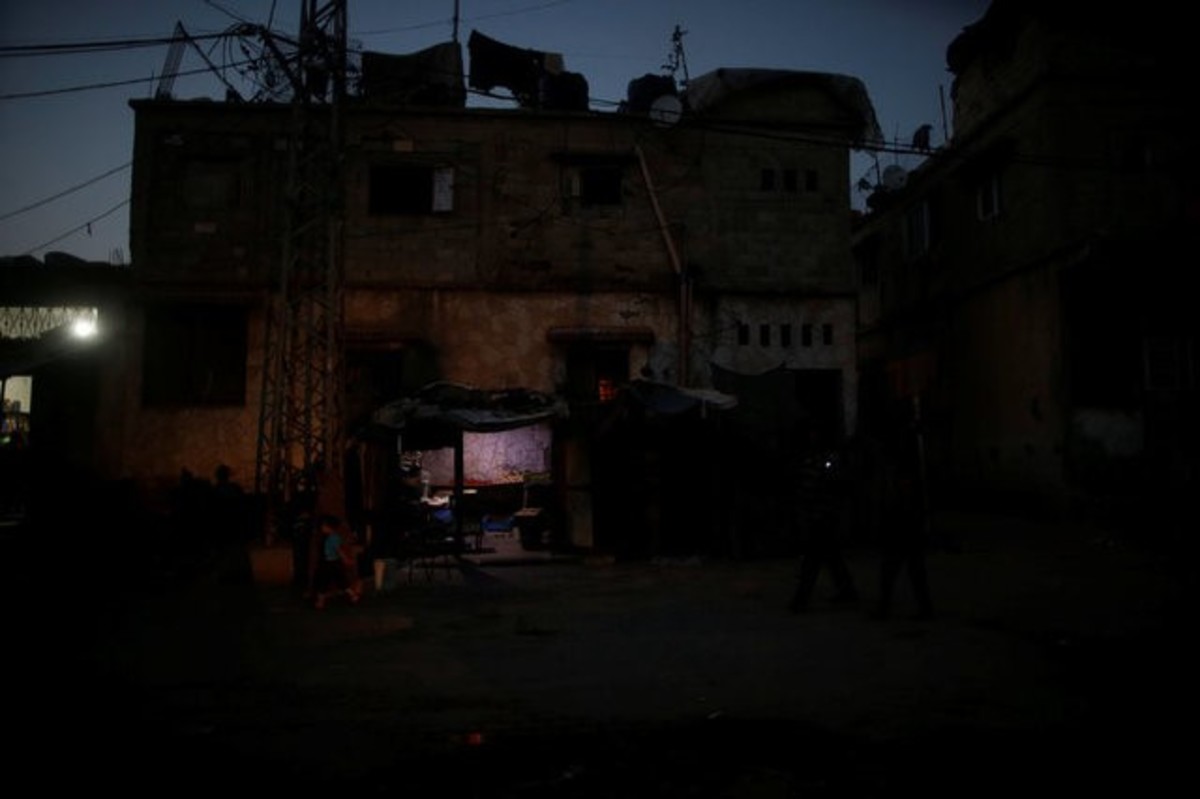
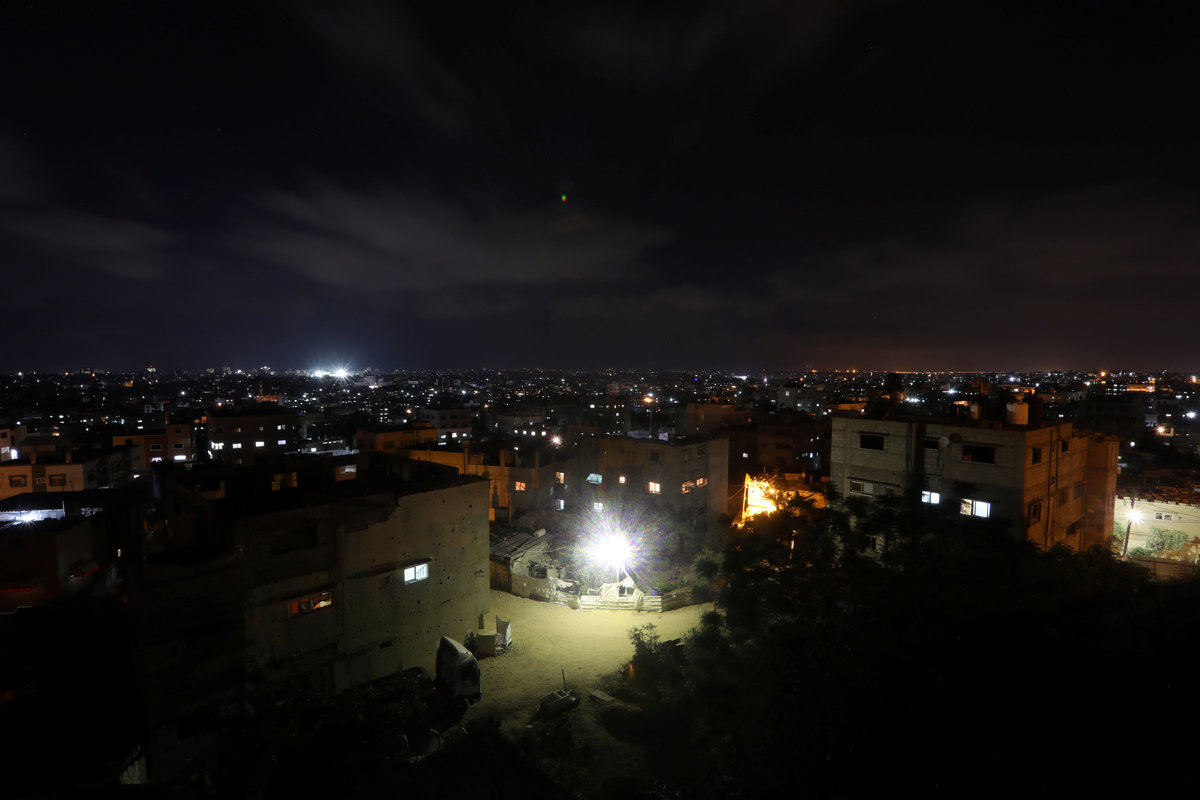
Buildings are seen at night in Gaza City, July 18, 2017. REUTERS/Mohammed Salem

GAZA (Reuters) - As Middle East summer temperatures soar above 35 degrees Celsius (95 Fahrenheit), Gazans are struggling to stay cool amid a power crisis, with less than four hours of electricity a day and little chance to run fans and air-conditioners.

The power crisis is affecting health and sanitation - because sewage treatment plants can't run, raw sewage is pouring into the Mediterranean - and now the elderly and sick are desperately trying to handle the heat.
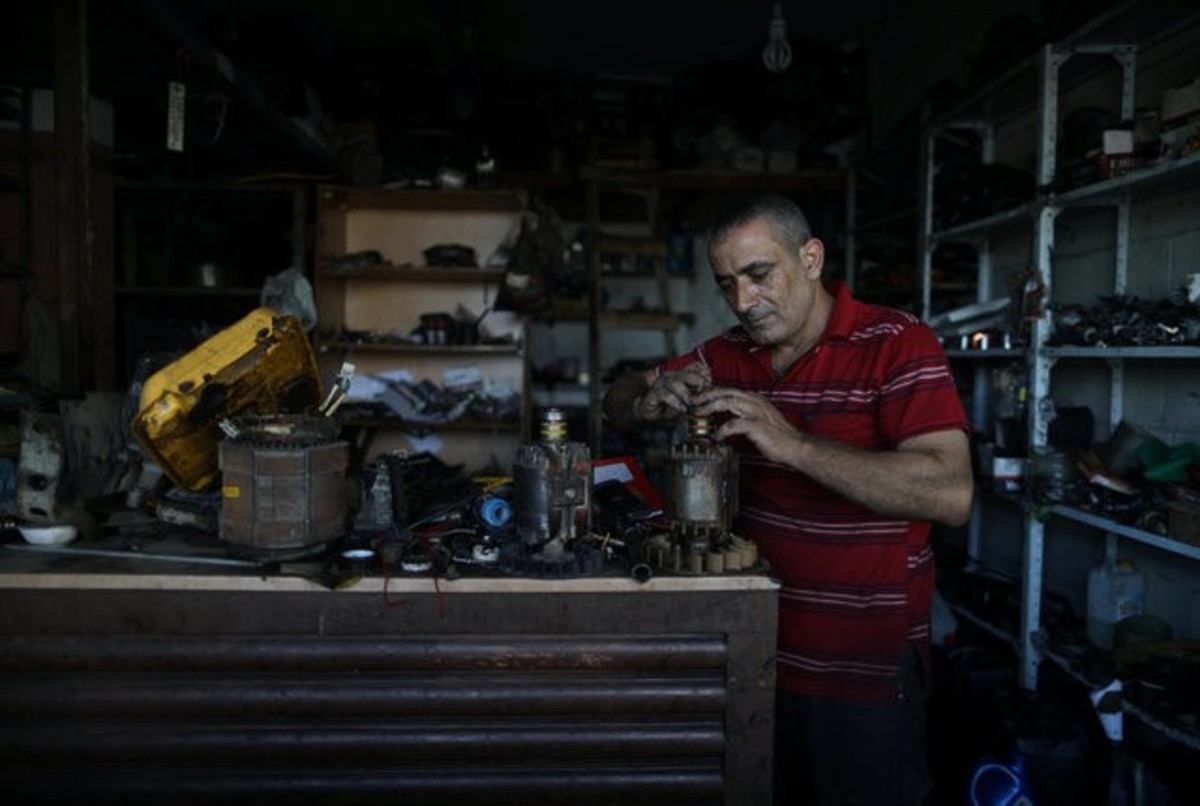
A Palestinian man works at his workshop as he fixes mobile power generators in Gaza City, July 9, 2017. REUTERS/Mohammed Salem

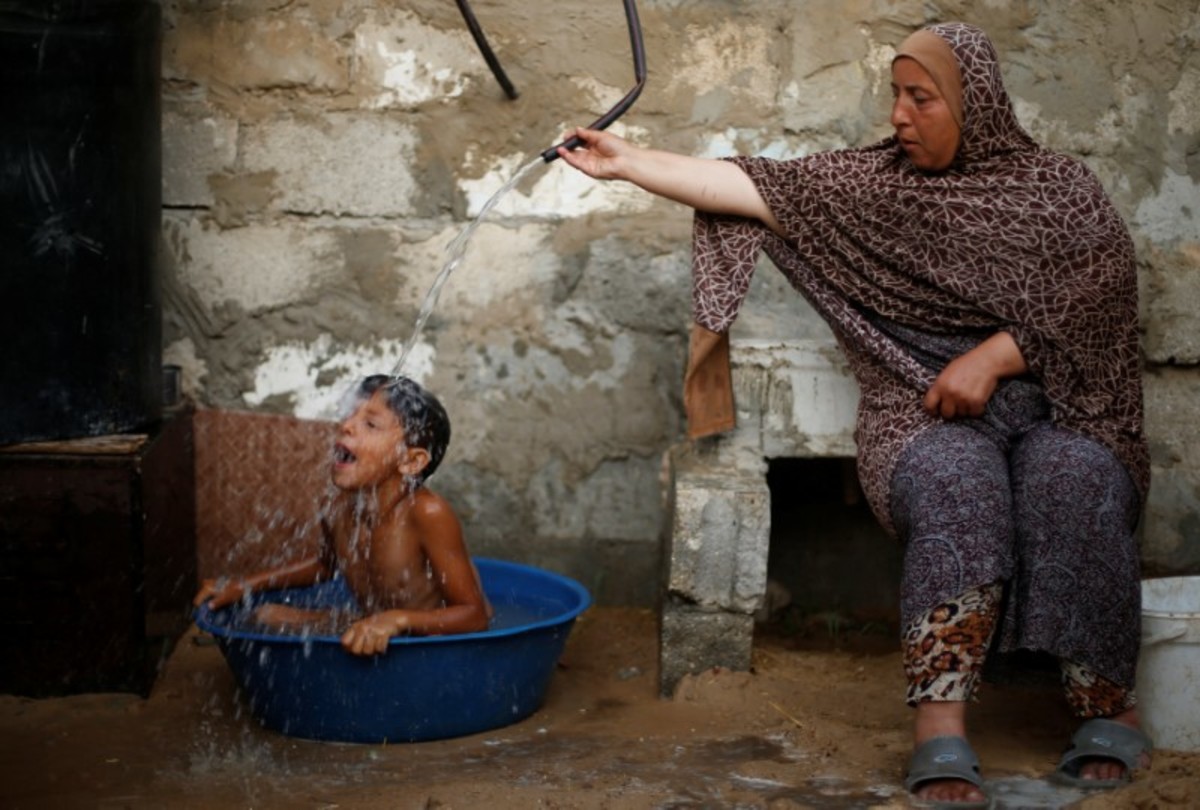
Plastic trays and scraps of cardboard are doubling as hand-held fans. Precious piped water is hosed over children and work animals. Those trying to sleep have abandoned clammy mattresses, preferring the relative cool of bare tiled floors.

Hoping to pressure the Islamist Hamas group to relinquish control of Gaza, Palestinian President Mahmoud Abbas has reduced his administration's payments to Israel for the electricity it supplies to Gaza. That has left the 2 million Palestinians there with only a few hours of power a day.

Hospitals and other emergency facilities have made do with back-up generators. Few ordinary Palestinians have that option.
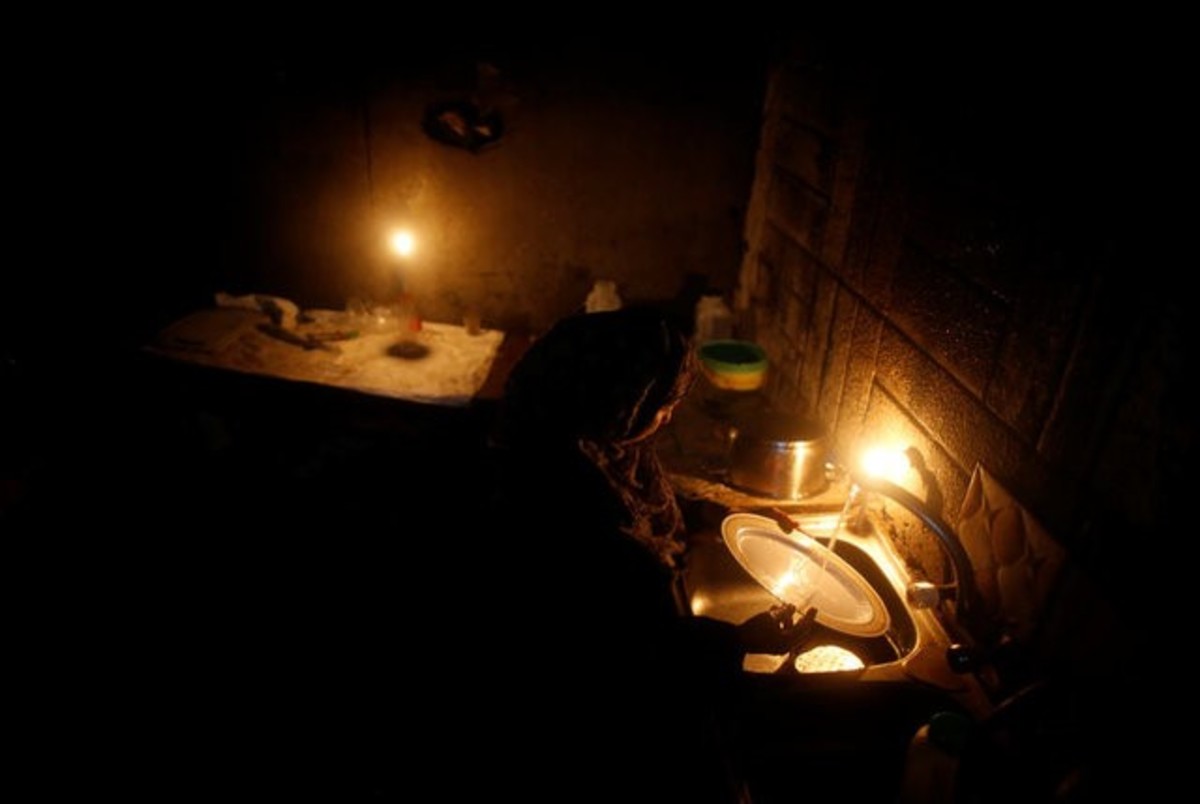
A Palestinian woman washes dishes in her kitchen as she uses a candle light during a power cut in Beit Lahiya town, in the northern Gaza Strip, July 13, 2017. REUTERS/Mohammed Salem

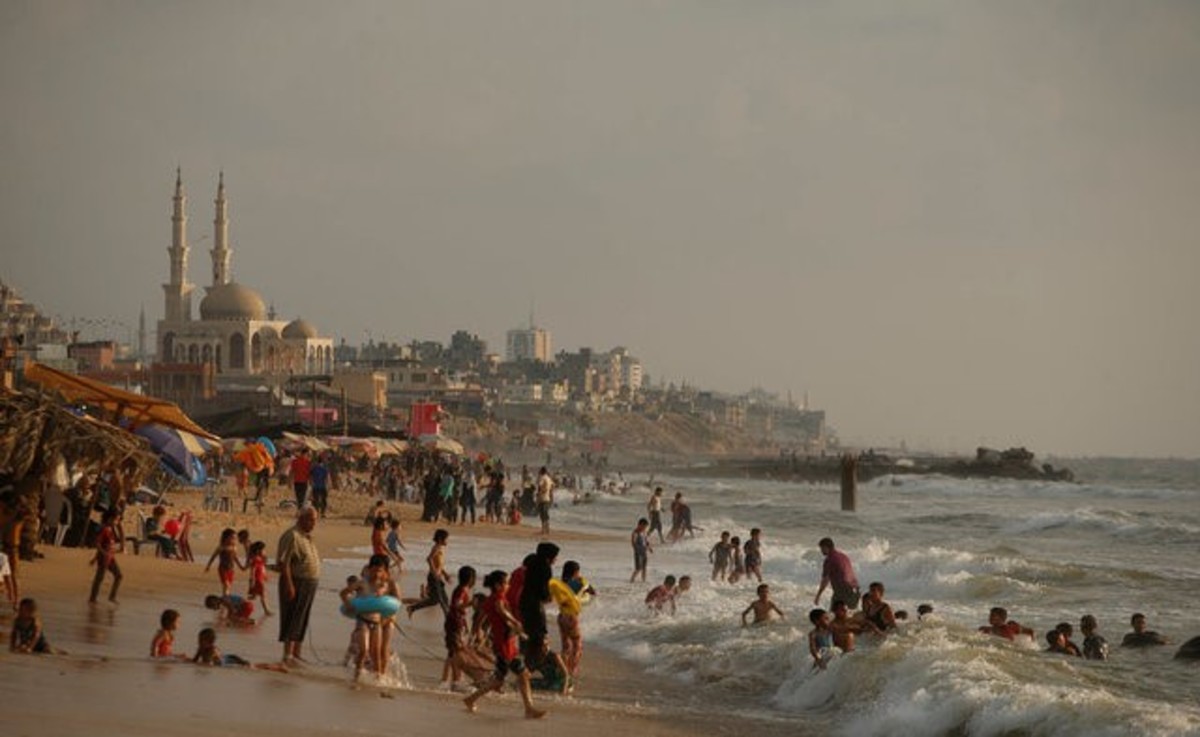
A family excursion to the beach that might elsewhere have been a delight was, for Sabah Joudah, a forced decision, especially when having to put up with the sewage problems.

"We came here to entertain the children, even though the sea is polluted," she told Reuters as the dirty surf lapped close by. "It is summer and there is no electricity; no water and no fans are working in our homes. It is very tough, very tough."

Environment officials say disruptions at sewage treatment facilities have meant more than 100,000 liters of untreated wastewater is discharged along the coast daily. Around 75 percent of the seawater is polluted.
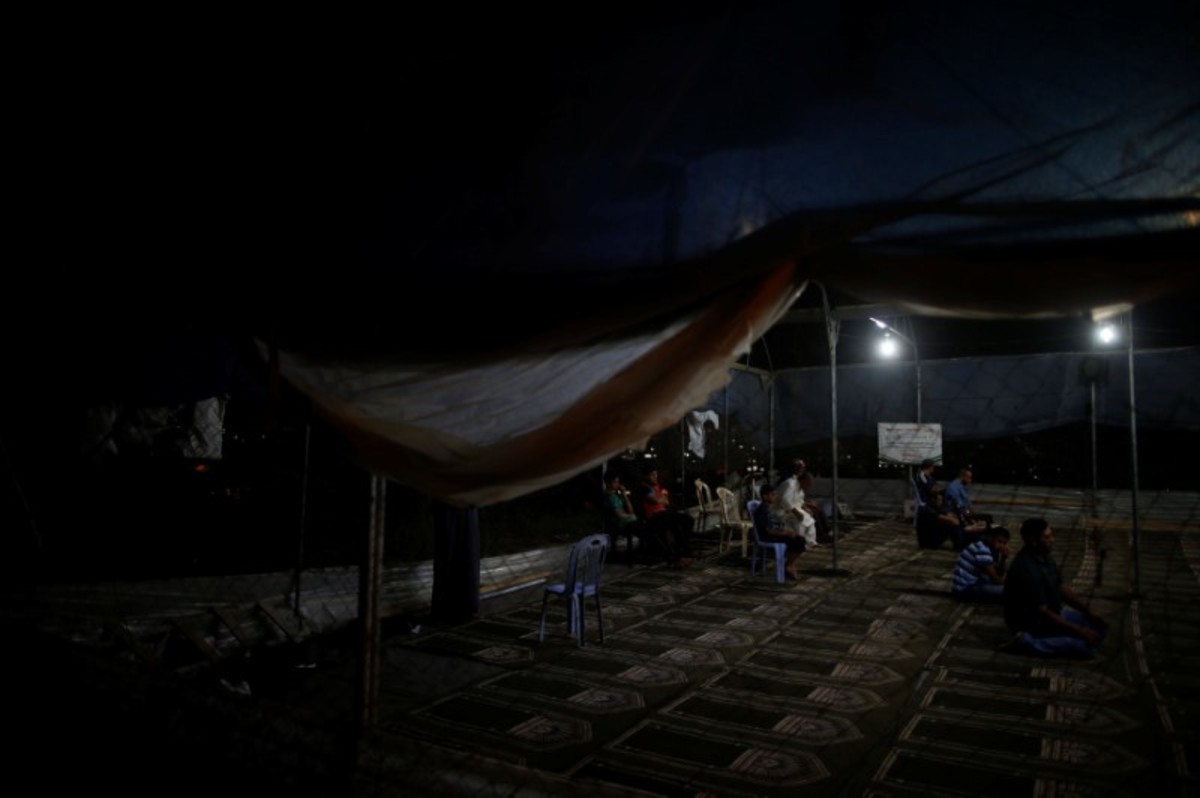
Palestinians pray in a makeshift mosque lit by battery-powered lights during a power cut in Gaza City, July 18, 2017. REUTERS/Mohammed Salem

Swimming there frequently leaves children with skin inflammations and abdominal complaints, parents say.

In the southern town of Khan Younis, a woman bathed her children in a bucket in the street, while a man doused his horse with water.

One Khan Younis couple, the Abu Mehsens, both suffer from high blood pressure and said they were so beleaguered by the heat that simply fanning themselves could be too much effort.
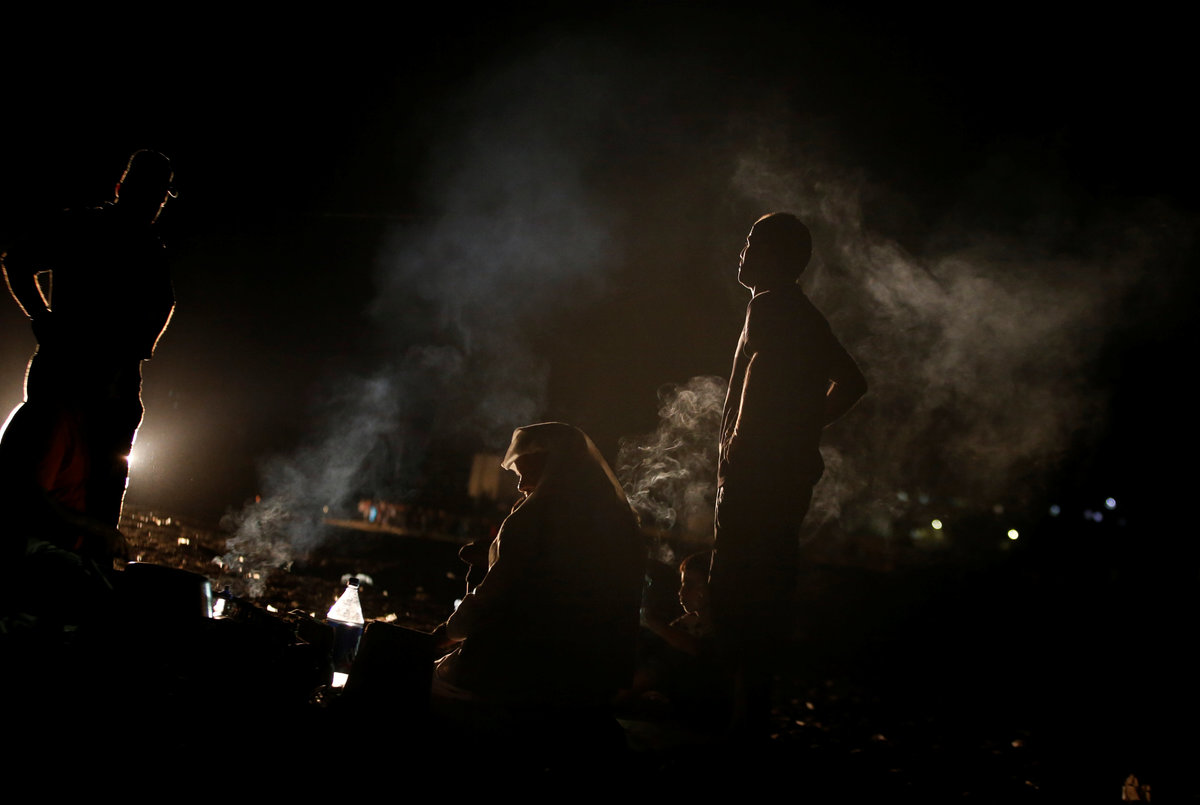
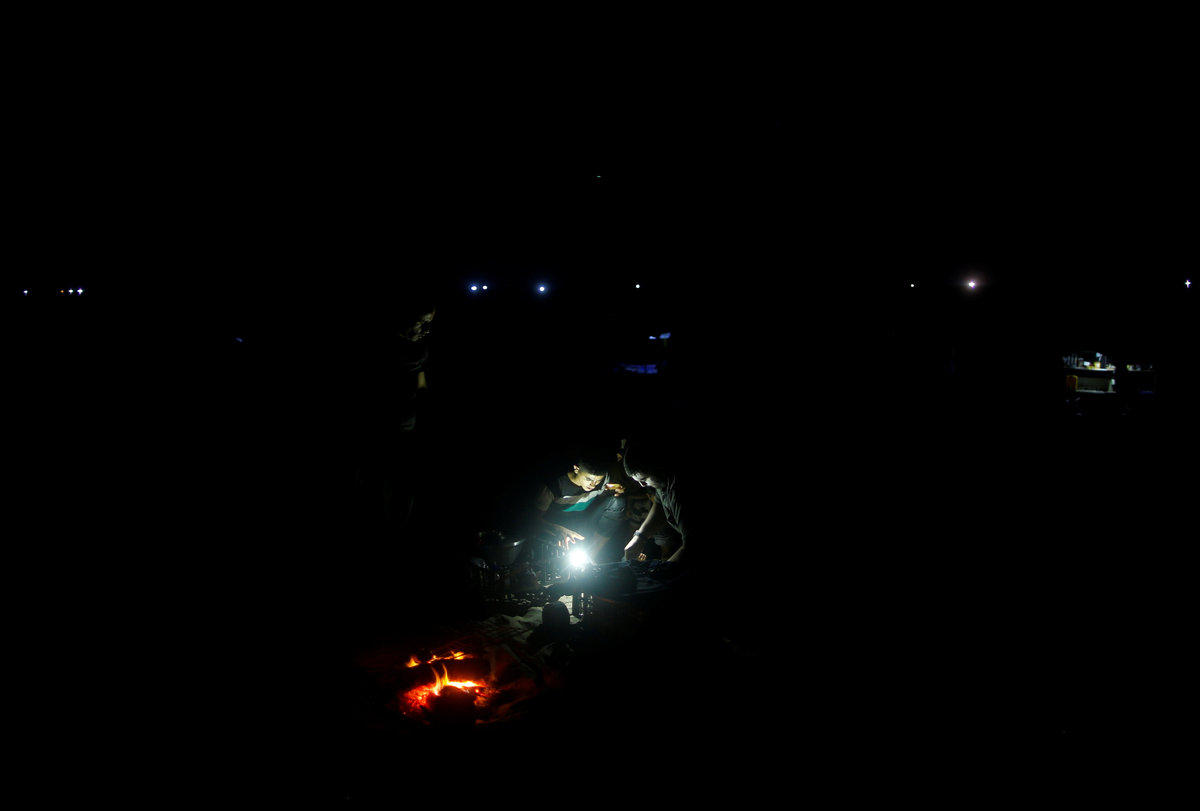
Members of a Palestinian family prepare food on a fire on a beach during a power cut in the northern Gaza Strip, July 12, 2017. REUTERS/Mohammed Salem

"When we get tired we rest for a bit before we start fanning again," Jihan Abu Mehsen said. "We do so all day long."

The situation has hurt Gaza's meager retail sector, with vendors saying that sales of electrical appliances have tanked. One exception has been cheap rechargeable fans, which can be stored, with full batteries, in anticipation of the power cuts.

"People have turned to alternative power, using batteries," said appliance salesman Mahmoud Abu Hamda. "Sometimes they use trays and sometimes even the covers of kettles instead of electric fans. This has impacted us very much."
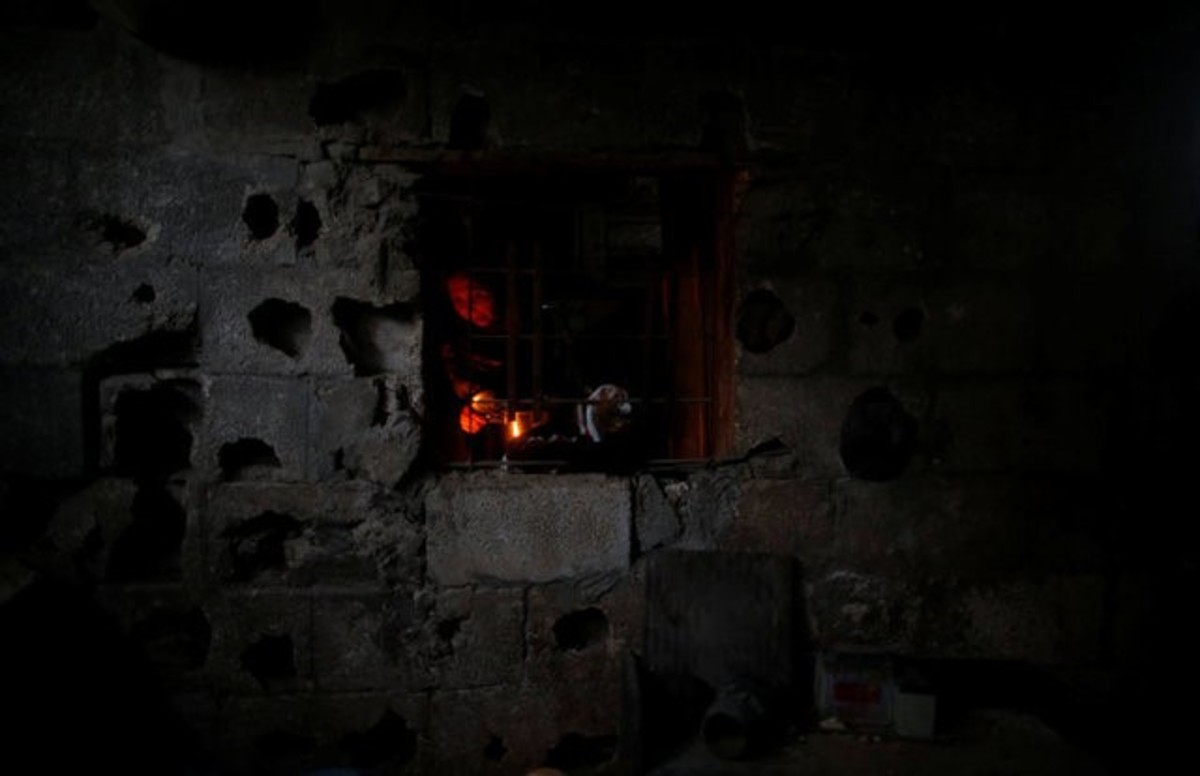
A Palestinian woman is seen from the window of her kitchen as she uses a candle light to prepare food during a power cut in Beit Lahiya town, in the northern Gaza Strip, July 13, 2017. REUTERS/Mohammed Salem

(Writing by Nidal al-Mughrabi; editing by Mark Heinrich)
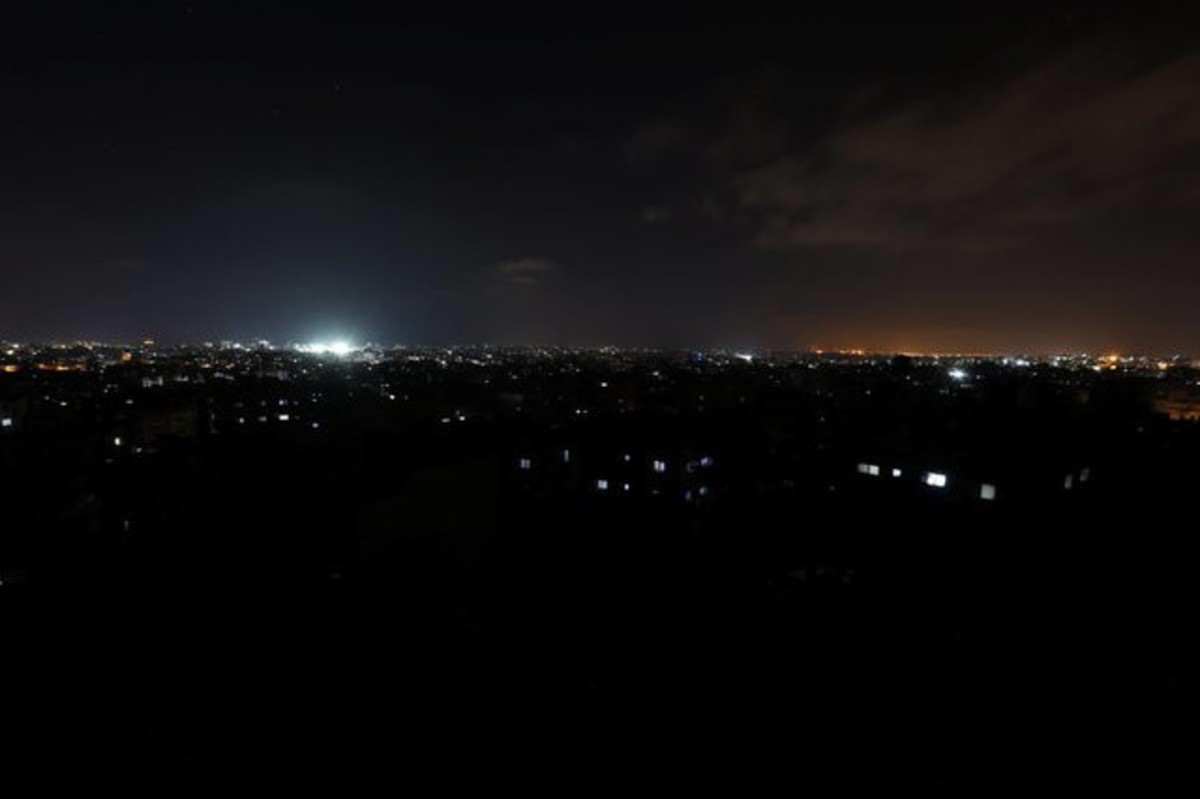
Buildings are seen at night during a power cut in Gaza City, July 18, 2017. REUTERS/Mohammed Salem
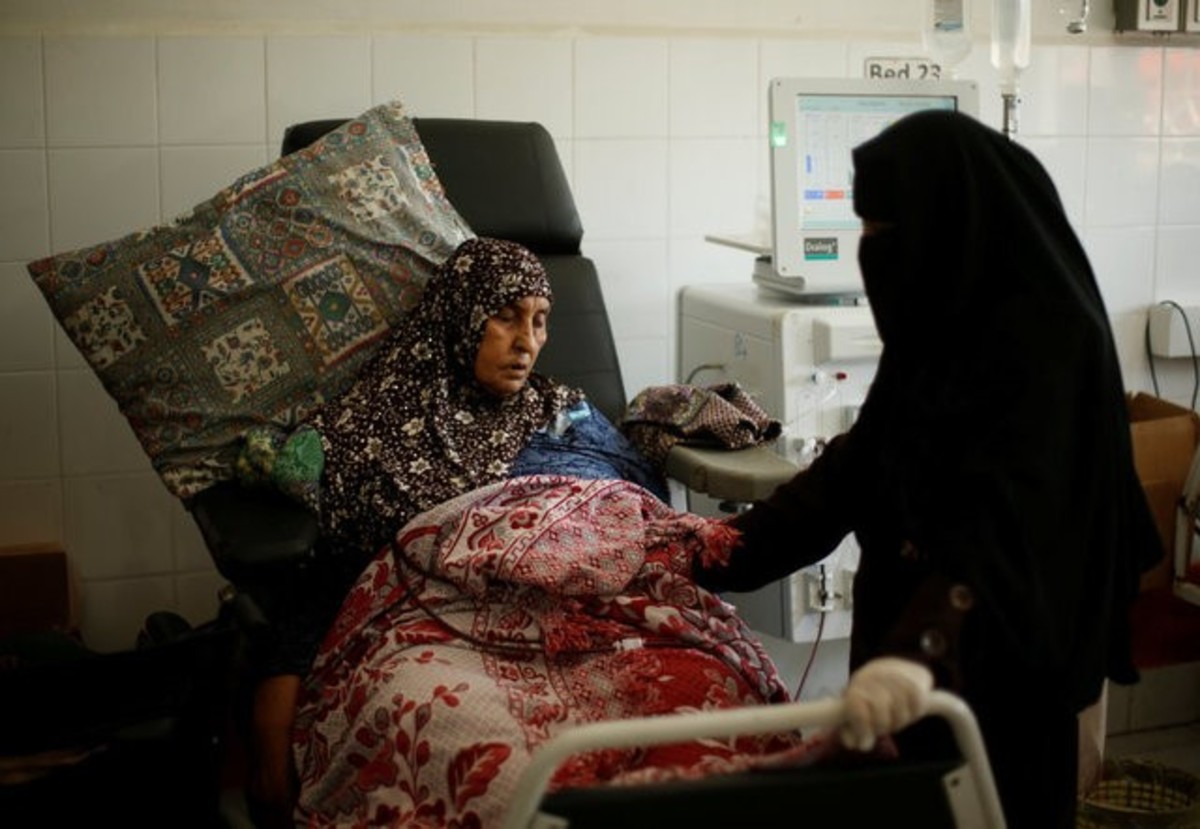
A Palestinian woman undergoes kidney dialysis at Shifa hospital in Gaza City, June 12, 2017. REUTERS/Mohammed Salem
Palestinians make food during a hot weather on a beach during a power cut in the northern Gaza Strip, July 12, 2017. REUTERS/Mohammed Salem
A Palestinian vendor sells fruits and vegetables during a power cut in a makeshift shop lit by battery-powered light in Beit Lahiya town, in the northern Gaza Strip, July 13, 2017. REUTERS/Mohammed Salem
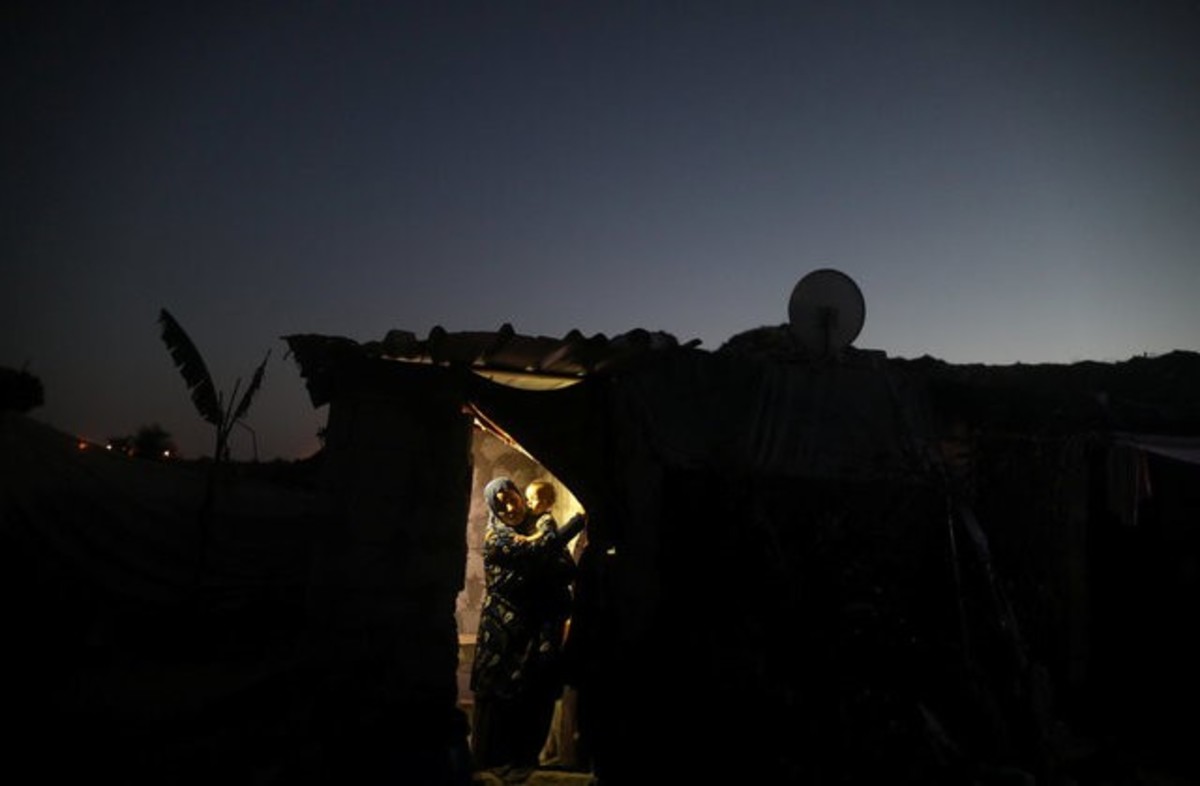
A Palestinian woman holds her child as she walks out of her house lit by a torch during a power cut in Khan Younis, in the southern Gaza Strip, July 3, 2017. REUTERS/Mohammed Salem
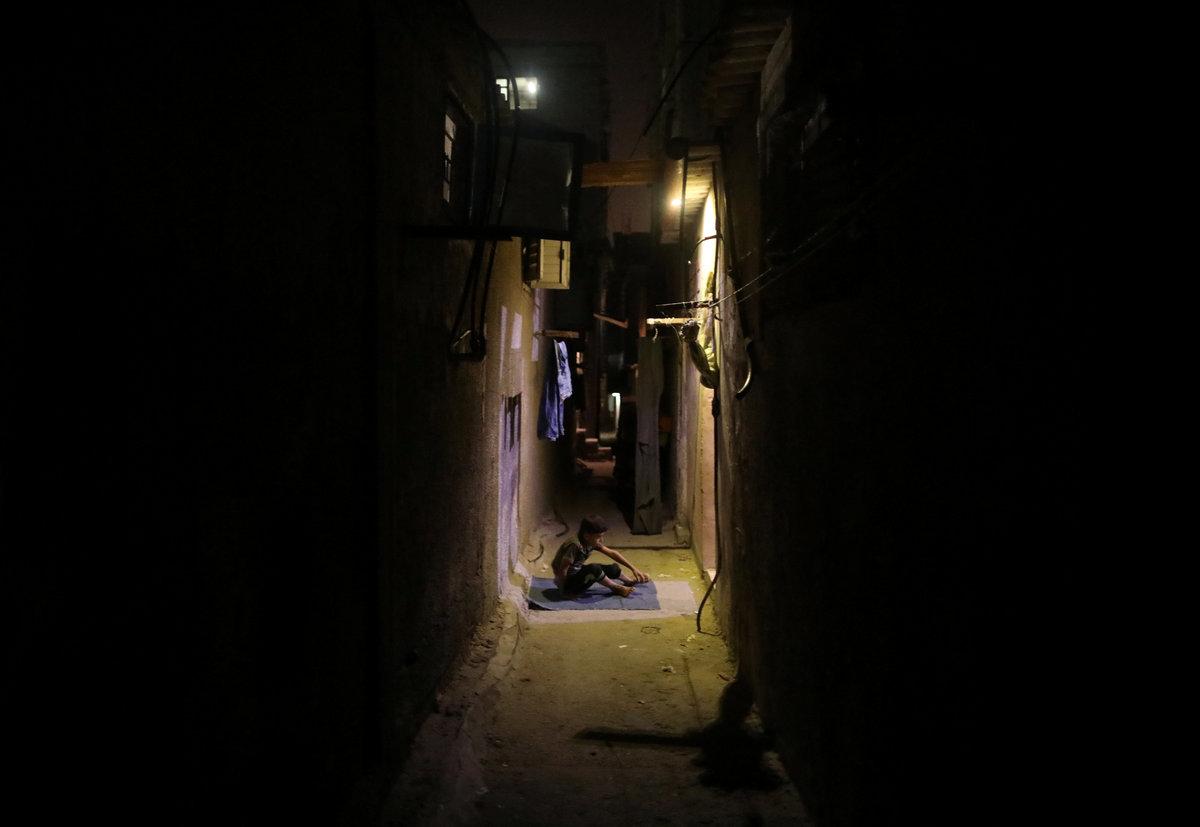
A Palestinian boy sits outside his family house as he escapes from the heat during a power cut, in Shati refugee camp, in Gaza City, July 2, 2017. The house is lit by battery-powered LED light bulbs. REUTERS/Mohammed Salem
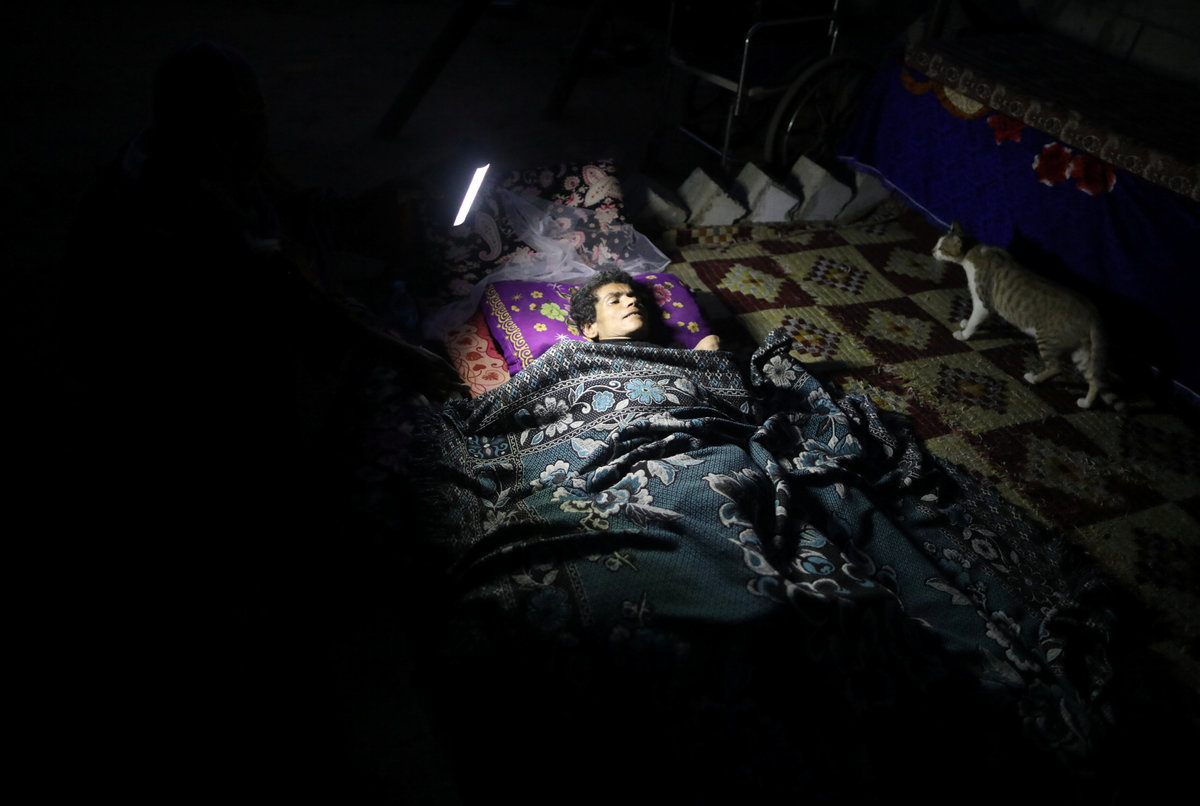
A disabled Palestinian woman lies on a mattress, as her relative holds a torch to show her to the photographer during a power cut in Khan Younis in the southern Gaza Strip, July 3, 2017. REUTERS/Mohammed Salem
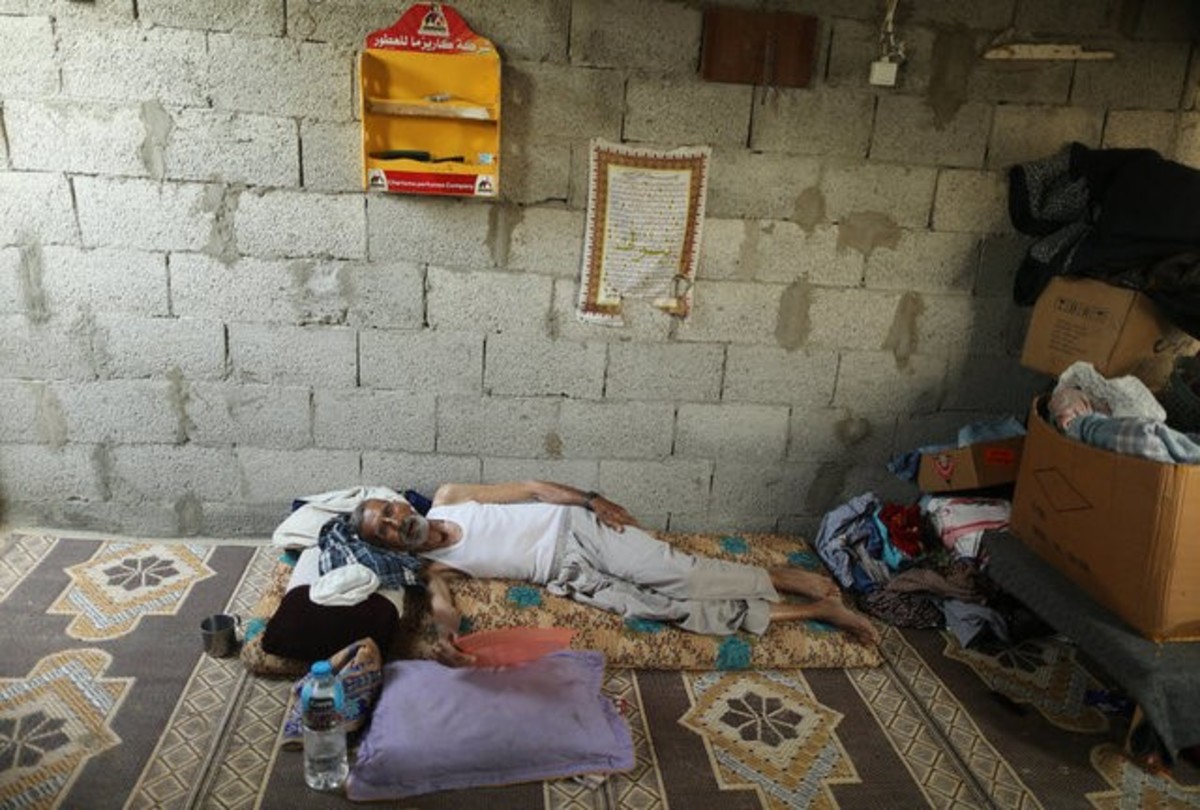
A Palestinian man uses a plastic tray to cool himself from the heat during power cut in his house in Khan Younis, in the southern Gaza Strip, July 3, 2017. REUTERS/Mohammed Salem
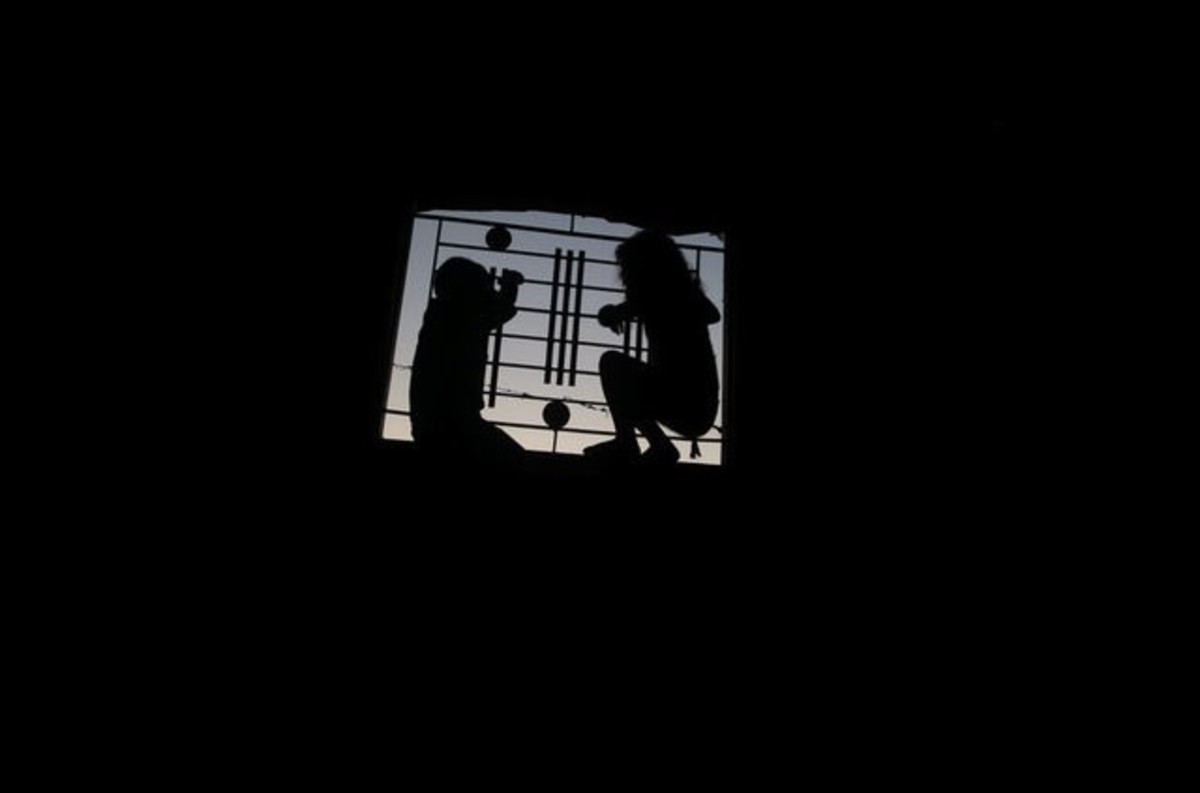
Palestinian children look out of the window of their family house during a power cut in Khan Younis, in the southern Gaza Strip, July 3, 2017. REUTERS/Mohammed Salem
Palestinians swim in the Mediterranean Sea in Beit Lahiya town, in the northern Gaza Strip, July 6, 2017. REUTERS/Mohammed Salem
A Palestinian woman bathes her son with water from a tank, filled by a charity, inside their dwelling in Khan Younis, in the southern Gaza Strip, July 3, 2017. REUTERS/Mohammed Salem
Sign up to read this article
Read news from 100’s of titles, curated specifically for you.
Already a member? Sign in here
Related Stories
Top stories on inkl right now
One subscription that gives you access to news from hundreds of sites
Already a member? Sign in here
Our Picks
Fourteen days free
Download the app
One app. One membership.
100+ trusted global sources.