Driverless cars and drones have stolen all the tech headlines in the past few months, fuelled by the Google PR machine and high-profile public testing in the UK. But the stark reality is that they are at the end of the rainbow that is the next phase of the digital revolution.
If the past 10 years were about digital disruption as first the computer-based information superhighway and then the mobile app economy challenged some of the more conventional business, the next decade will be about the transformation of the old, as everything and anything becomes connectable and connected to a nebulous internet of things (IoT).
A recent government report (pdf) suggested that drivers will be passengers in their own cars by 2030. The importance for marketers is not the driverless aspect of this, but that most, if not all, of these cars will be connected – that means that millions of people will be spending hours in traffic jams, constantly connected.
The average UK driver spends 235 hours a year in their car. The transformational shift that mobile connectivity has had on commuters and media consumption is clear for anyone getting on a train between 6:30-8:30am Monday-Friday anywhere in the UK. That connectivity is coming to 50bn devices worldwide by 2020 from mobiles to TVs, from fridges to fire alarms, from posters to product packaging, from drones to doors.
We live in a world where Google dominates search and connected video consumption (through YouTube), Facebook dominates social connections and Apple dominates paid for content on connected devices. Power and influence still reside with a small group.
The vision of a more democratic distribution of knowledge has offered a chance for a new generation of players to build castles in the bits and bytes; these players control what people see (through their algorithms), have an astonishing view of human behaviour (through their access to data) and have huge reserves of money to tinker around until they find commercial value from the companies they buy.
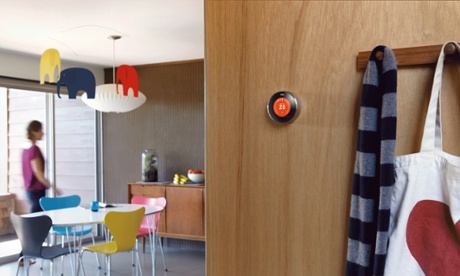
These players haven’t built power bases to just let go of them during the connected living transformation. The importance of the potential in connected living is clear for the oligarchs of the internet (Bruce Sterling’s phrase, not mine). Google have bought Nest; Apple bought Beats; at least one commentator has also suggested that Apple may be eyeing up Tesla ; Facebook bought Oculus Rift, moves to an app economy and buys Atlas to gain greater control across consumer data. In fact, soon we’ll need to consider the impact of the internet of “unthings” as the investments in Oculus Rift, Samsung’s Gear, Sony’s Project Morpheus and Google’s more prosaic Cardboard take root.
So what opportunities should marketers be worrying about:
- If the internet of things turns everything into a connected screen, we need to work out how context affects creative development process and products. Each of these power-players is transforming how people consumer audio-visual content. This affects which creative formats are most effectiveStart signing off work on your mobile phone. If it doesn’t work for you, it won’t for the public.
- If the internet of things will produce infinitely more gargantuan data, don’t get distracted by the big data hype. Focus on how to maintain some semblance of control over data about your customers and develop executable plausible provocations from that data. There is simply too much data to worry about what happens when everything is connected.
- If the internet of things can transform all your real estate into an opportunity for a connected experience, think about your packaging and product. Where does your connected packaging take people? And will they really want to go there?
- If the internet of things will make everything connected then everything will be shoppable. Plenty of advertisers are playing around with shoppable advertising and content (Burberry are making great strides here, as are ASOS and others, but connectivity potentially shrinks the funnel between exposure and purchase in ways that no one has really mastered yet.
If everyone is connected, then we need to start thinking of communications as one connected system where each exposure creates an opportunity for another. Anyone who is just starting to explore this when others are running around shouting “Look, no hands”, will be in an awful lot of trouble.
Chris Binns is managing partner and head of engineering at MediaCom
To get weekly news analysis, job alerts and event notifications direct to your inbox,sign up free for Media Network membership.
All Guardian Media Network content is editorially independent except for pieces labelled “Brought to you by” – find out more here.