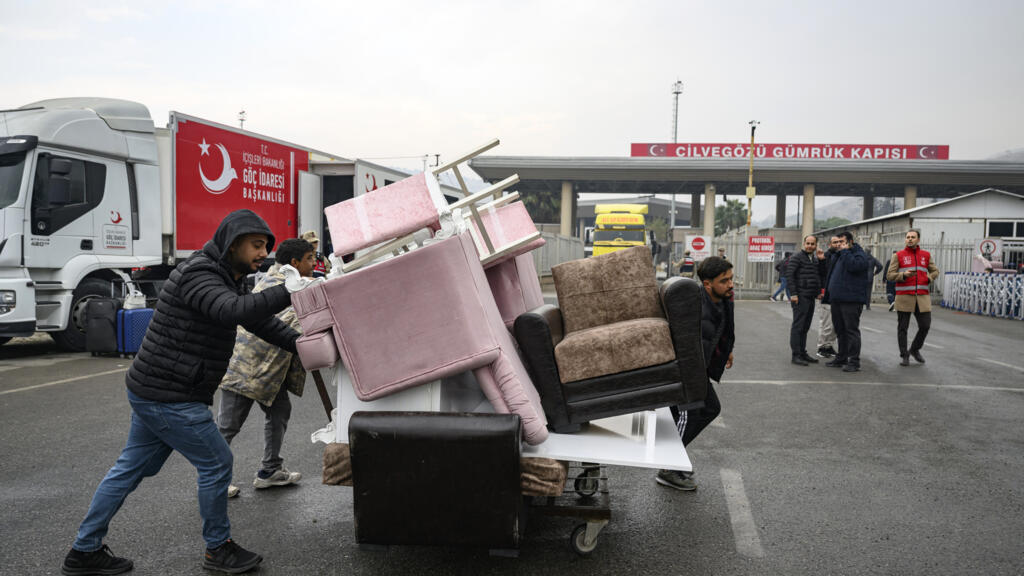
While polls say the majority of Turkish people welcome the departure of Syrians displaced by the civil war, Turkey's business owners are feeling the pinch with the loss of their workforce.
With the end of the Syrian civil war, Turkey claims that nearly a million refugees who were living there have already returned home.
Their departure is being welcomed by the Turkish government, amid growing public animosity over the presence of more than 3 million refugees.
But for many Turkish companies, Syrians are an economic lifeline – as seen in Gaziantep, an industrial city close to the Syrian border.
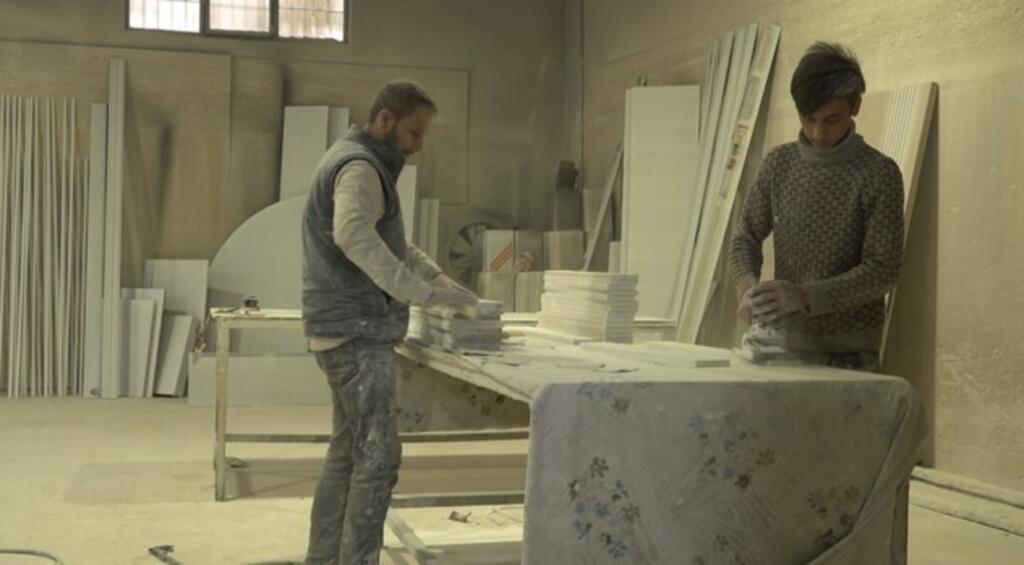
The Inci Boya company is one of hundreds of small factories and workshops in the city. With a couple of dozen workers, hundreds of pieces of furniture are spray-painted each day. With long hours in air thick with dust, it’s arduous, dirty work. As in many factories in Gaziantep, Syrians make up a large share of the workforce.
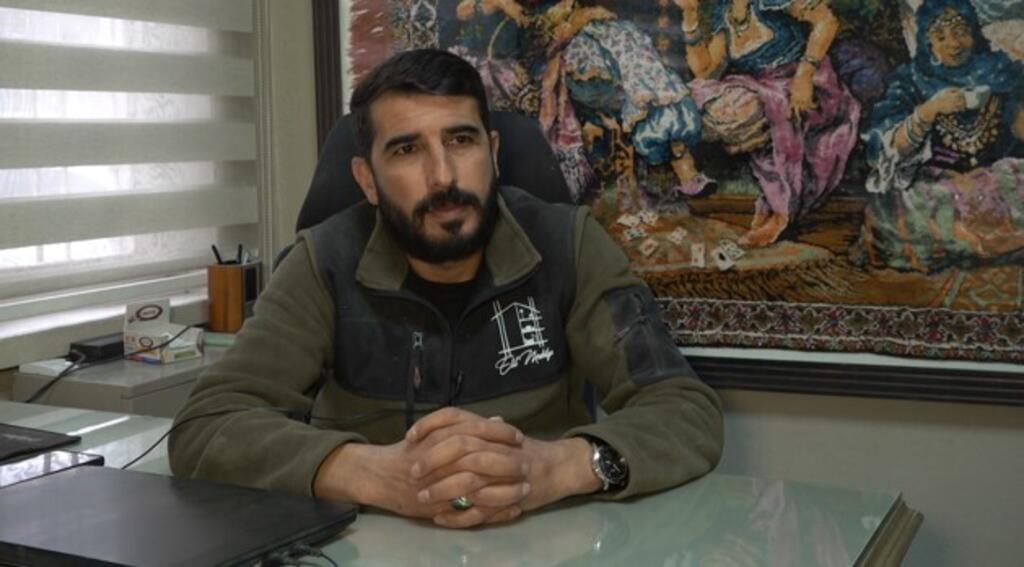
“I can't get people from my own community to work in my sector,” explains owner Halil Yarabay. "Many workshop owners and many businesses are unfortunately experiencing this.”
He blames societal changes, “Our children, our youth... they consider such work beneath them. They consider they’ve failed in their family's eyes by working with their hands as a furniture maker or a mechanic.”
French journalist arrested in Turkey while covering pro-Kurdish protest released
Realities of returning
But local authorities claim nearly 100,000 Syrians have already left the city – including including several who worked at Inci Boya.
During a welcome tea break, the topic of going home is on everyone’s tongue. Ahmed Hac Hussein has been working there for more than five years. He, too, is thinking of leaving.
“Many people are returning, I have a relative who moves a family back to Syria every day,” he said. “For me, I lived in Aleppo for 35 years. I have so many friends there, I haven't seen them for 14 years. I have three sisters there, and I haven’t seen them either. I want to go.”
However, Hussein, who lost his home in the war, acknowledges that the economic realities in Syria make returning difficult.
“You need to have money to pay the monthly rent. You need a job, but there is no work. My brother went back to Aleppo, but he says business is too slow.”
Listening is Hussein's son, Ibrahim, who started working here a year ago after leaving school. He feels differently: “I grew up here; this place became my second home. I love it here a lot. I was two years old when I came here, and I never went back. I don’t want to go back.”
Demographic time bomb
Turkish companies such as Inci Boya will be hoping many Syrians feel the same as Ibrahim, claims Atilla Yesilada, Turkey’s economic analyst for consultancy Global Source Partners.
He says around 900,000 Syrians work in small businesses and factories across Turkey.
“They’ve filled all the low-paying jobs. Without Syrians, business owners say they'll go bankrupt, since that keeps costs down."
This reliance on Syrian workers, and their departure, also comes as Turkey faces a demographic time bomb. “The birth rate has declined substantially. The Turkish birth rate is 1.5, and you know, replacement is 2.1," Yesilada added.
He warns the outlook for Turkey is grim, given the experience of other countries. "[The birthrate is] coming down significantly, and it's been going down for 20 years.… [the example of] China shows that there is nothing you can do about it.”
Turkish President Recep Tayyip Erdogan recently called on families to "serve the nation" by having at least three children. His minister of family and social services claimed nearly half of Turkish families didn't have children.
To attract workers, visa and work permit restrictions were lifted last year for all Turkic Central Asian nations.
Turkey blocks calls for regime change in Iran as protests escalate
Rising costs
But at the Inci Boya factory, owner Halil Yarabay is already counting the cost of Syrians leaving, and says a bidding war to keep these workers is beginning.
"Labour costs are rising. Employees we paid 10,000 TL a week now cost up to 15,000," he said.
Some larger companies in Gaziantep – such as Tat Holding, which makes furniture and sweets among many other products – are even considering following their workers back to Syria, says its CEO Salih Balta.
"Syria is close to Gaziantep and allows us to produce and export at up to 35 percent lower cost," he explained.
Balta claims that producing in Syria – a member of the Arab League – would allow his company to export tax-free to 17 Arab countries under its free trade agreement. “For us, the Gulf countries are a very important market," he said.
Gaziantep, along with many cities across Turkey, has seen protests against Syrian incomers. Several polls have found that the majority of people want them to return. But this could ultimately prove a double-edged sword, as businesses face growing economic pain over the loss of their Syrian workforce.