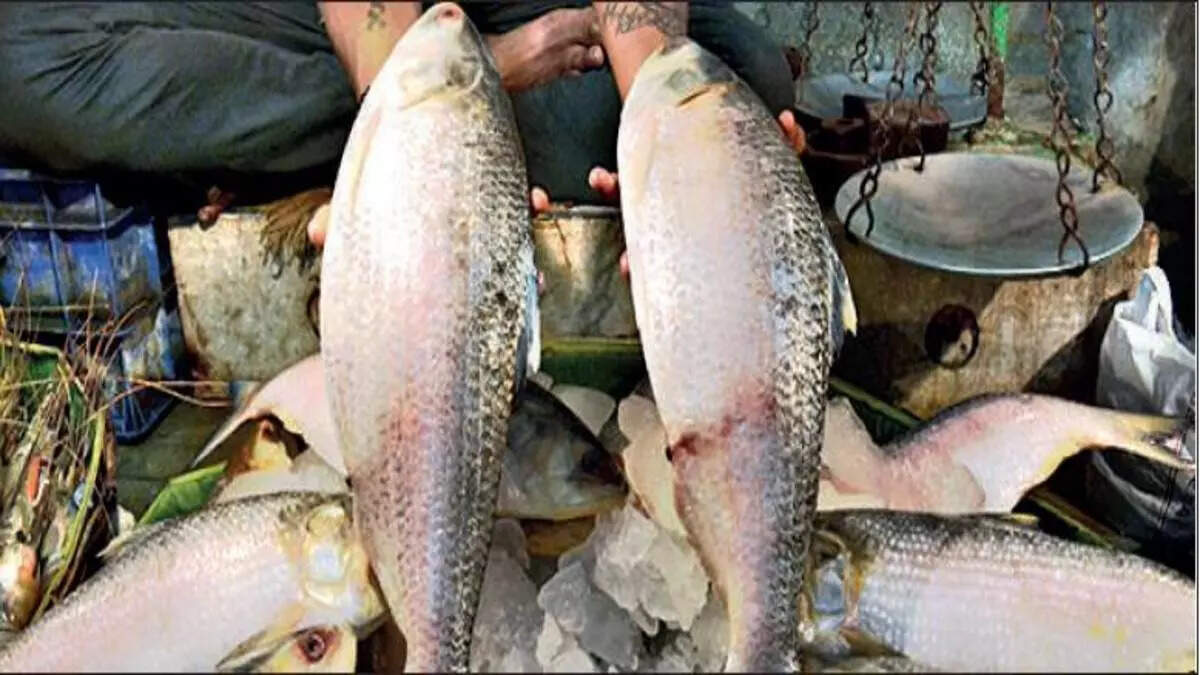
KOLKATA: The dearth of hilsa in Indian waters has spawned the smuggling of this much sought-after delicacy from neighbouring Bangladesh. With most aficionados unable to satiate their hunger for the hilsa this year due to poor availability, the smuggled fish is fetching over Rs 3,000 a kg in the city.
A freshly netted smuggled hilsa weighing around 2kg is a gastronomic delight on which even an average Kolkatan is ready to splurge even if that means cutting down on the month’s food bill. “We are often puzzled to see unlikely customers picking up hilsa weighing more than 2 kg, paying over Rs 6,000 for it. Of course, the taste is guaranteed,” said a fish vendor at Lake Market.
Sunirmal Adhikari, a teacher residing in Kalighat, is one such hilsa-lover. He couldn’t resist the temptation of taking home a 1.5-kg fish, spending a mini fortune knowing fully well that he would have to survive on eggs and vegetarian meals for the rest of the month.
“I just couldn’t resist it. Just the sight of the silvery hilsa is making me salivate. I am sure it will be heavenly,” Adhikari told TOI at a city market.
According to vendors, the hilsa is mostly smuggled through the riverine border of Angrai and Hakimpur. Some quantities come in through the Hili border of north Bengal.
Since its export is banned by Bangladesh, the fish is hidden under other varieties in boats to elude the enforcement authorities on either side. Recently, the BSF seized a huge cache of hilsa at a border check point.
Hilsa is such a craze on either side of the border that it has become a handy tool of diplomacy between the two nations. Bangladesh premier Sheikh Hasina banned hilsa export to India after the Bengal government opposed the Teesta wate-sharing pact in 2012 on the apprehension that it would dry up the river in north Bengal.
Ever since the ban, the availability of hilsa in city markets has declined sharply and the supply of the smuggled Bangladeshi variety is erratic. “This year, smuggled fish has hit the city markets at the fag-end of the hilsa season. The supply has been quite steady for the past six-seven days and the fish is flying off the baskets,” said Bablu Naskar, a fish vendor at Lake Market.
Bengal’s fisheries minister Akhil Giri admitted that some hilsa from Bangladesh “is coming to the city markets” though it is much less than what the demand is.
According to those in the fish trade, it is their own greed that has led to the drying up of hilsa catch in the Ganga over a period of time. “We have ourselves to blame for this predicament. Our fishermen did not abide by the government’s ban and recklessly netted juvenile hilsa. Now the fish has deserted this stream and is swimming to a safer haven in Bangladesh waters to lay eggs. Our 5,000-odd trawlers venture into the waters and bring back juvenile hilsa to recover the fuel costs. But this is suicidal,” said Bijon Maity, secretary of the Kakdwip Fishermen’s Association.
Bangladesh on the contrary puts enormous impetus on the conservation of the fish and catching juvenile hilsa or fishing during its breeding period is meted out with stringent punishment.