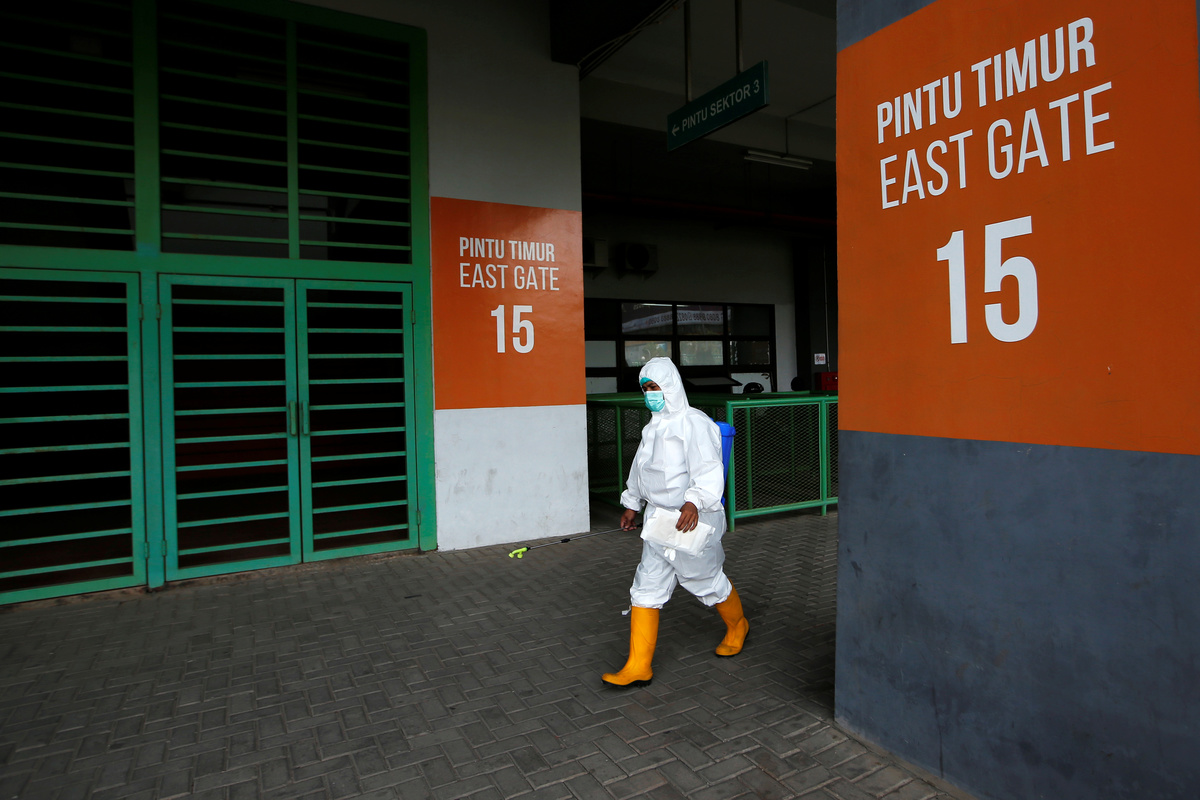
Doctors in Indonesia’s capital warned on Thursday the coronavirus pandemic is “not under control” with Jakarta intensive care units nearing full capacity and the city ordering new lockdown measures amid a spike in infections.
Indonesia posted a record high 3,861 positive cases on Thursday, while the capital has recorded more than 1,000 new coronavirus cases on average each day this month, placing considerable strain on hospitals in the world’s fourth most populous nation.
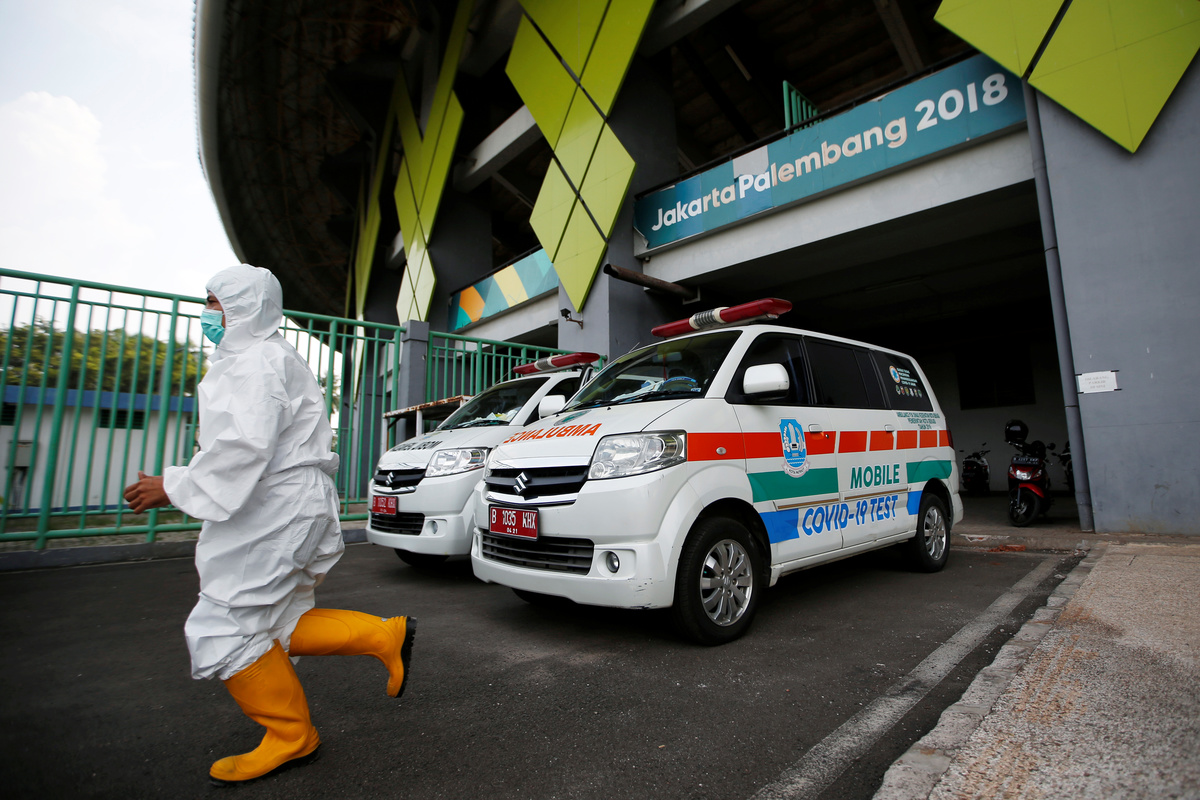
The occupancy rate of isolation rooms at 67 coronavirus referral hospitals is currently at 77%, while the ICU occupancy is 83%, according to the Jakarta administration.
“It is like we have been running a marathon since March, we are exhausted,” said Erlina Burhan, a pulmonologist from Persahabatan Hospital, “This is not to be underestimated. The situation is not under control.”
The number of patients being treated for suspected cases of COVID-19, the respiratory disease caused by the coronavirus, tripled from July to August at Persahabatan, Jakarta’s main referral hospital.
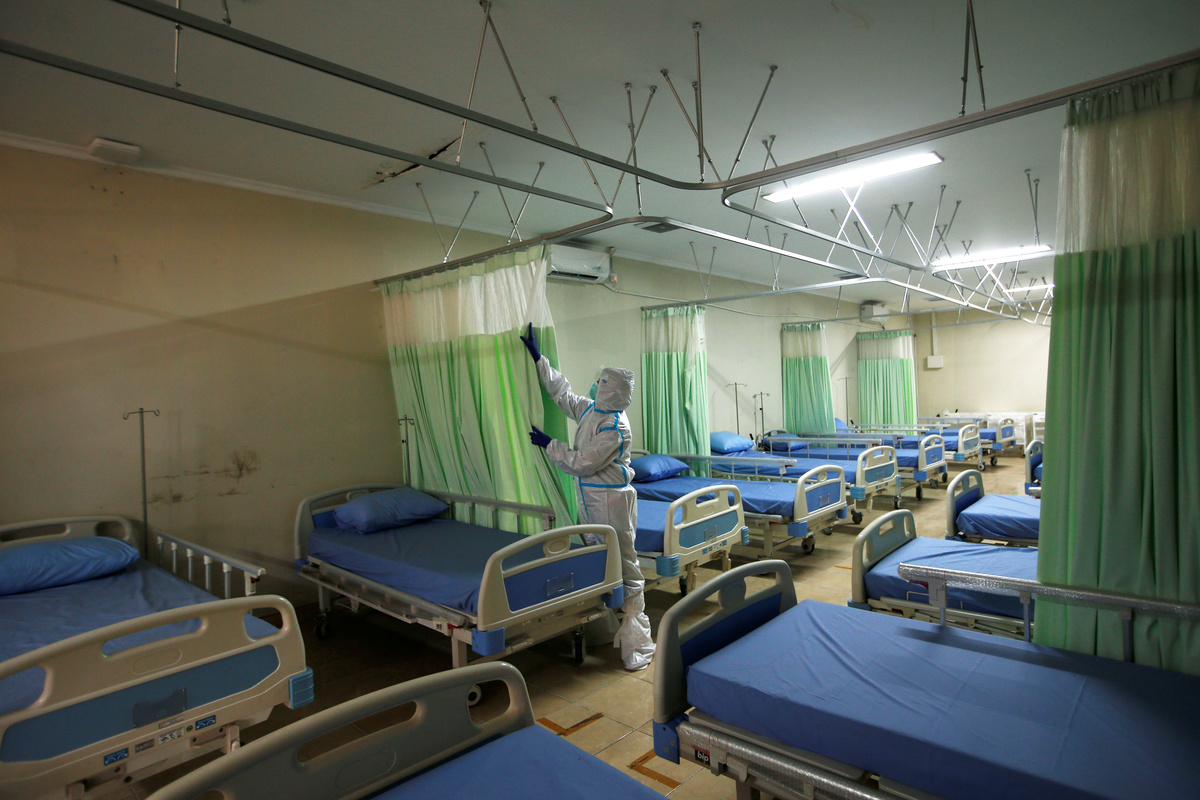
"The government should anticipate the rise in cases by adding more medical facilities in hospitals… but the need of the medical workers needs to be anticipated as well," Halik Malik, spokesman for Indonesia's medical association, told Reuters, acknowledging that pressure on the health system was high.
"Doctors are forced to work overtime, fatigued amidst the low protection," he added.
Fears that the city's healthcare system may be soon pushed to brink saw Jakarta Governor Anies Baswedan on Wednesday reimpose lockdown measures starting Sept. 14, with residents told to work, study and pray at home.
“Right now, this is an emergency — more pressing than the start of the pandemic,” he said.
Without tighter social restrictions, hospitals may be forced to turn coronavirus patients away by as early as next week, data from the Jakarta government showed.
Indonesia has been battling the pandemic since March, drawing criticism from public health experts for prioritizing economic over public health concerns.
The Southeast Asian nation has recorded more than 203,000 cases of the coronavirus and 8,336 deaths, the highest COVID-19 death toll in East Asia.
On Wednesday Baswedan told Jakartans: “Please don’t go out, don’t leave home and do not leave Jakarta unless necessary”.
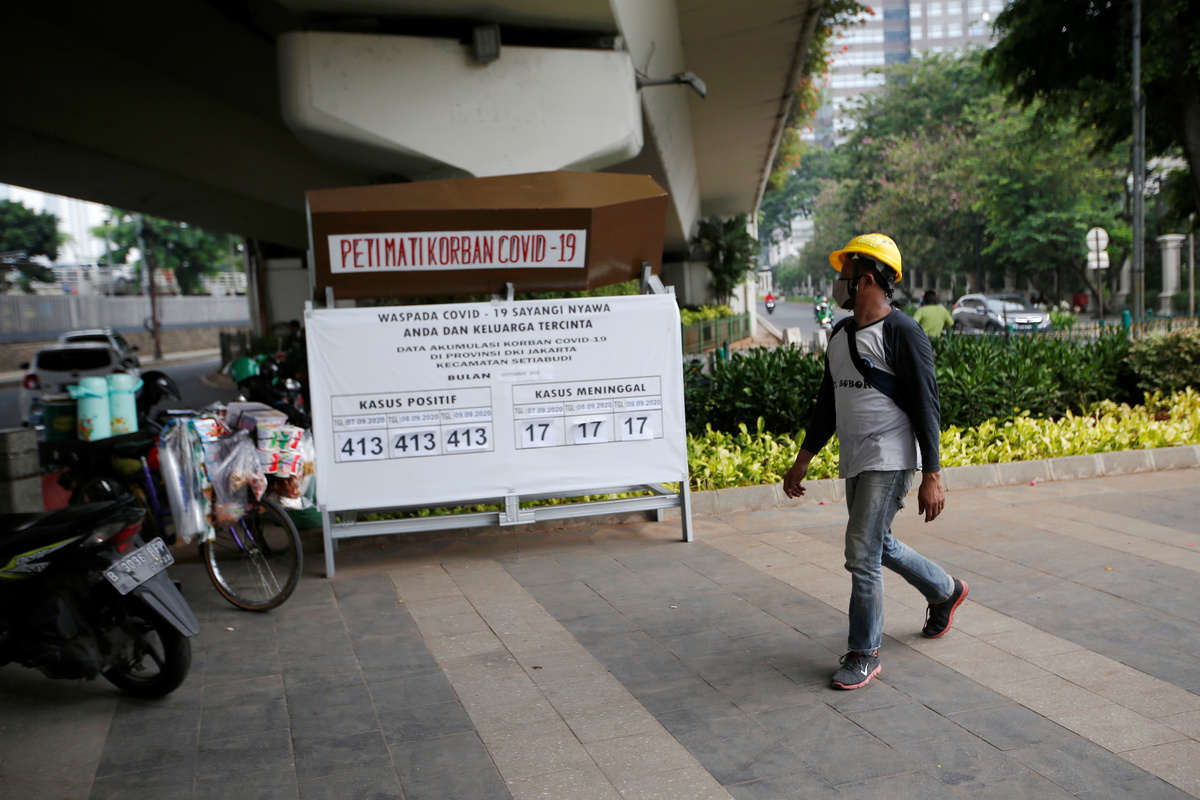
On the streets of the capital, where residents walked past mock coffins intended to scare them into maintaining health protocols, news of the buckling healthcare system was met with trepidation.
“The situation is scary, a healthy person can suddenly fall sick and when they want to look for a hospital, they would get the news… (that there are not enough hospital beds),” said Sumaidi, an employee at a printing store.
“I can’t stop thinking about that.”
Indonesia's main stock index <.JKSE> fell 5% to hit its lowest level since late June following the governor’s announcement, triggering a 30-minute trade halt, while the central bank intervened to stabilize the rupiah exchange rate <IDR=>.
For millions who work in the informal sector, the lockdown brings a fresh economic blow.
“For sure our income will be impacted,” said Fredy, a motorcycle taxi driver, “Now it is great if we can get 50,000 rupiah (US$3.40) every day, but from Monday onwards we will suffer again.”
Tutum Rahanta, an executive with the association of shopping center tenants, pleaded for the city administration to allow malls to remain open.
“We were already sick the first time they brought large-scale social restrictions and now that we're recovering during relaxation, (restrictions) are reinstated,” he said. “Things will get worse”.
(Additional reporting by Fransiska Nangoy, Maikel Jefriando and Stanley Widianto; Writing by Kate Lamb; Editing by Kim Coghill)