As Greek islands heave under influx, refugees turn to old river route
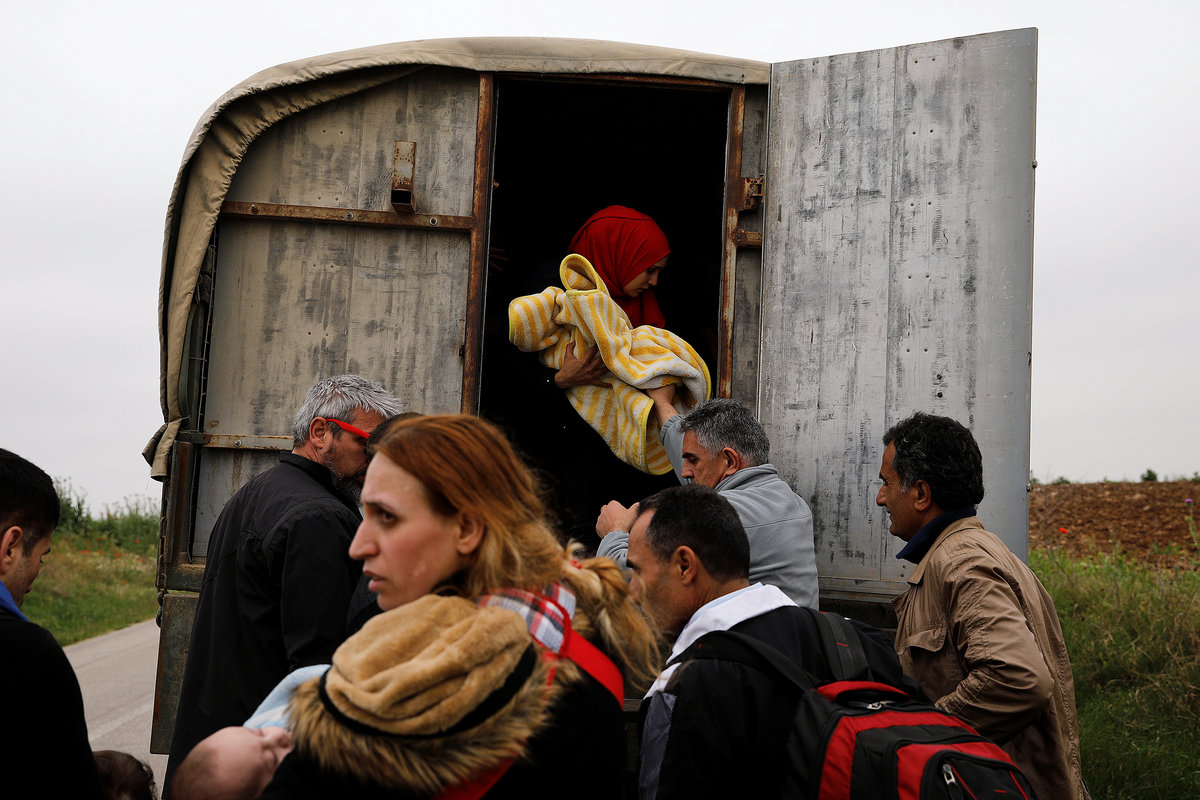
Syrian refugees who crossed the Evros river, the natural border between Greece and Turkey, board a police truck transferring them to a first reception centre, near the village of Nea Vyssa, Greece, May 2, 2018. REUTERS/Alkis Konstantinidis
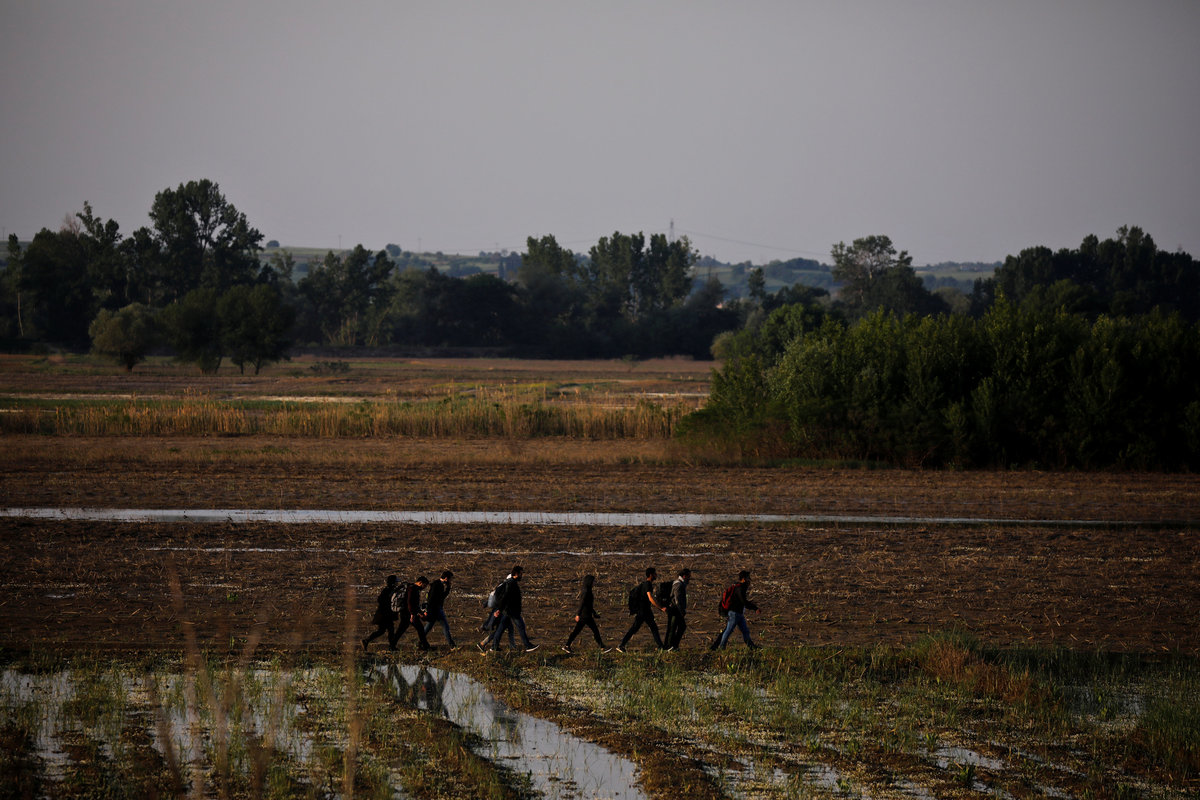
GREEK-TURKISH BORDER, Northern Greece (Reuters) - As dawn breaks over the waterlogged plain along the border Greece shares with Turkey, an all-too familiar outline of refugees emerges through the morning haze, picking their way through a road well travelled by thousands before them.
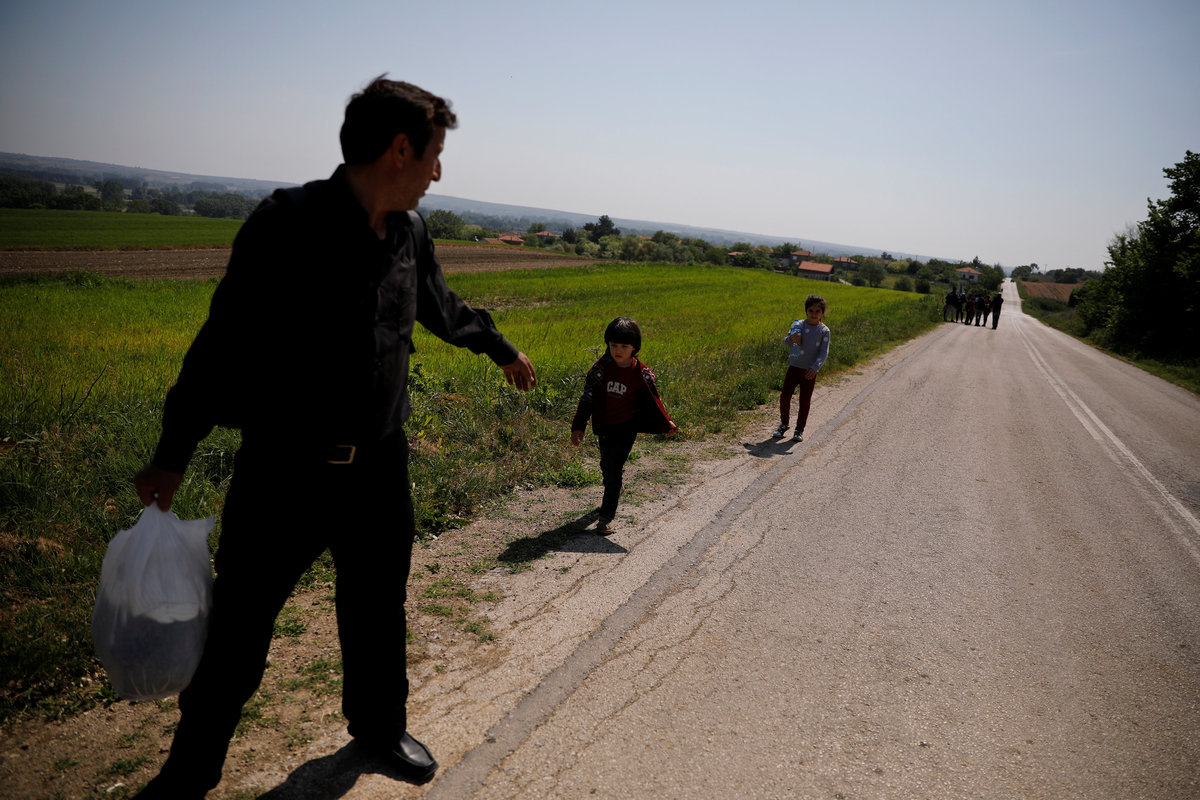
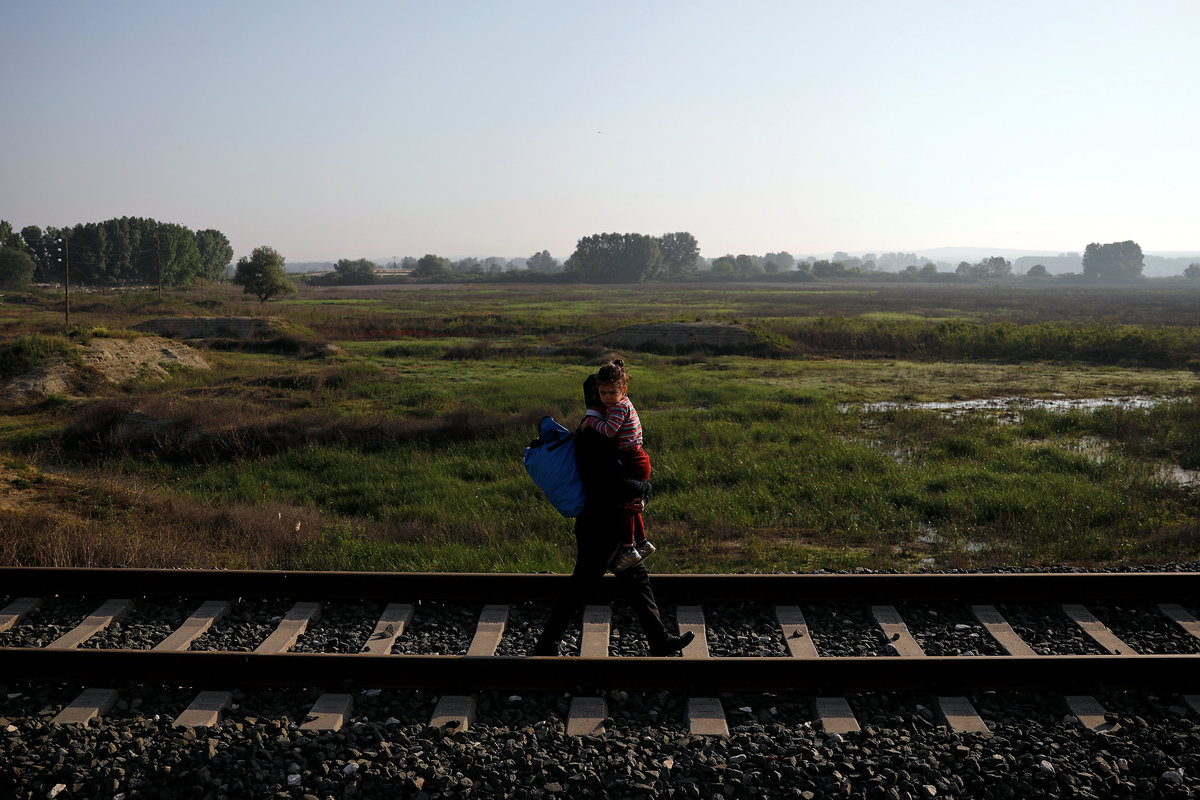
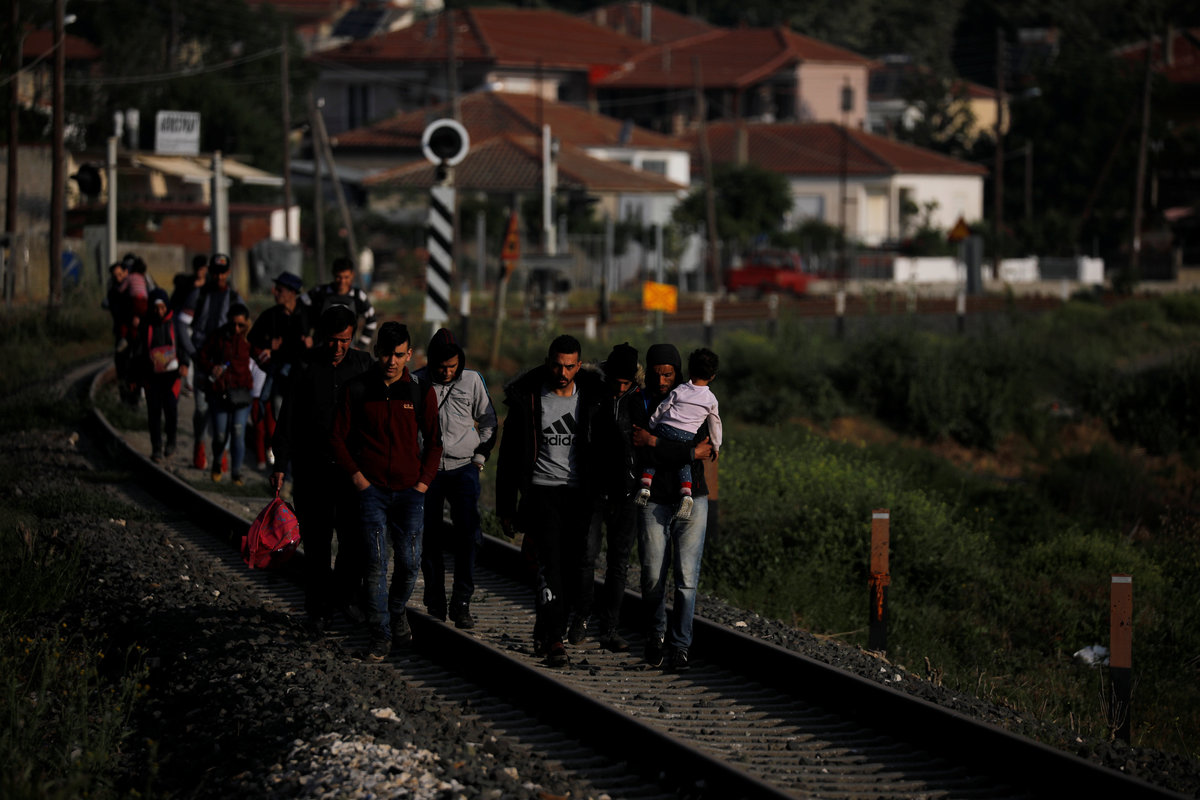
Young parents carrying infants and widowed women following railway tracks they hope will lead them to a town have become a common sight in the fields at Greece's north-eastern border region with Turkey.
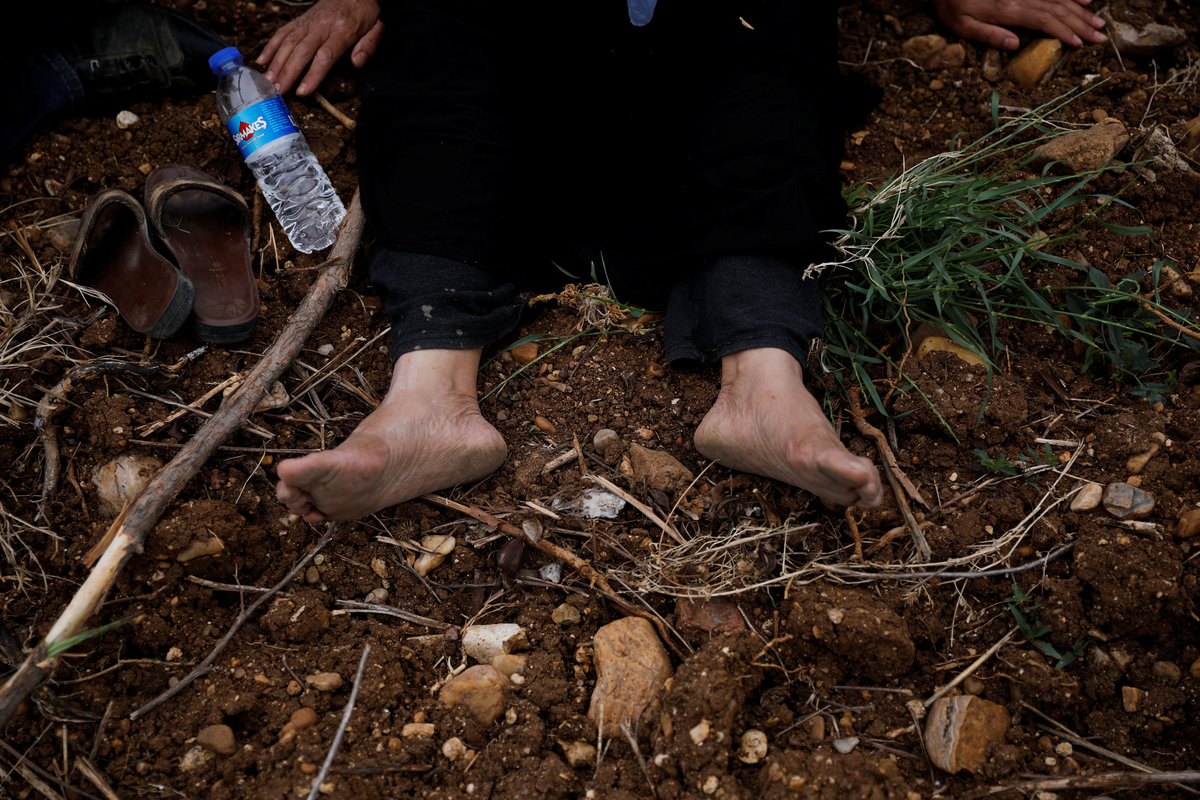
A Syrian refugee who crossed the Evros river, the natural border between Greece and Turkey, rests in a field as they wait for the police to arrive and transfer them to a first reception centre, near the village of Nea Vyssa, Greece, May 2, 2018. REUTERS/Alkis Konstantinidis
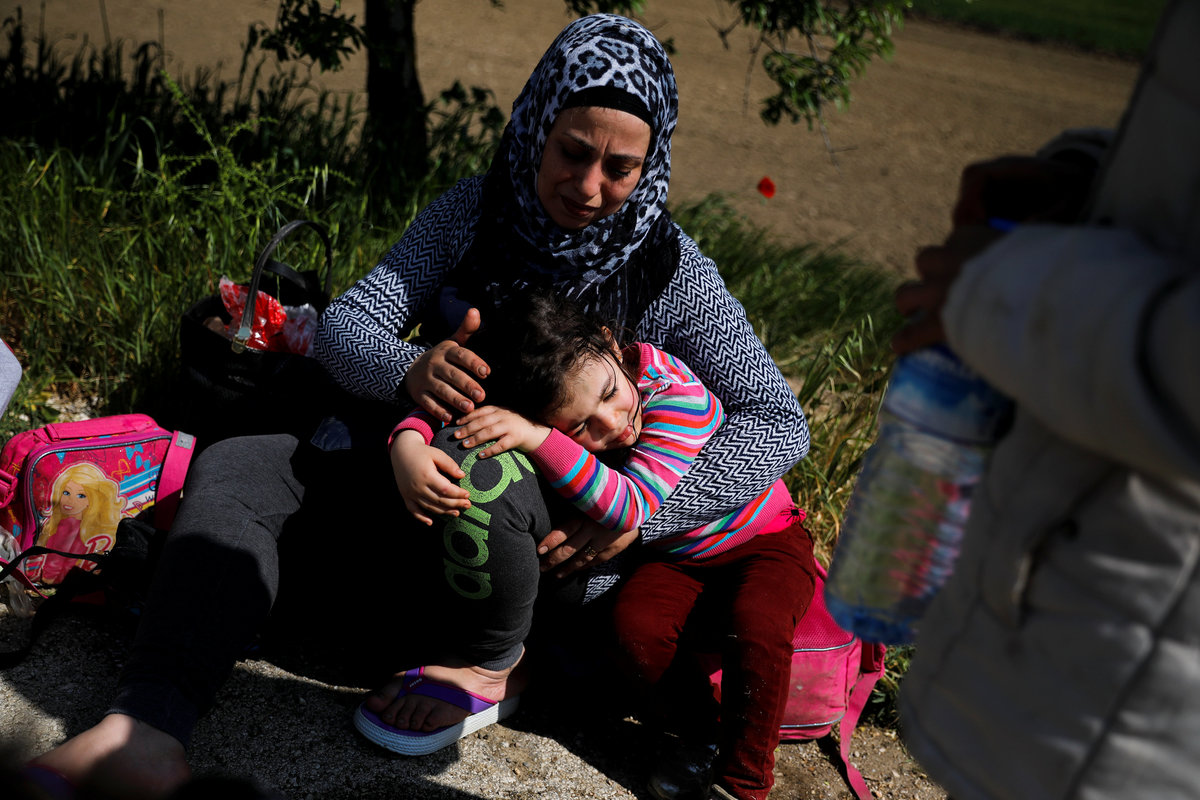
"Do not send us back because we ran away from a war," pleaded Maya, 28, from the Syrian city of Aleppo. When a Reuters team caught up with her, she, her father, her sister and her six children had been walking for 13 hours.
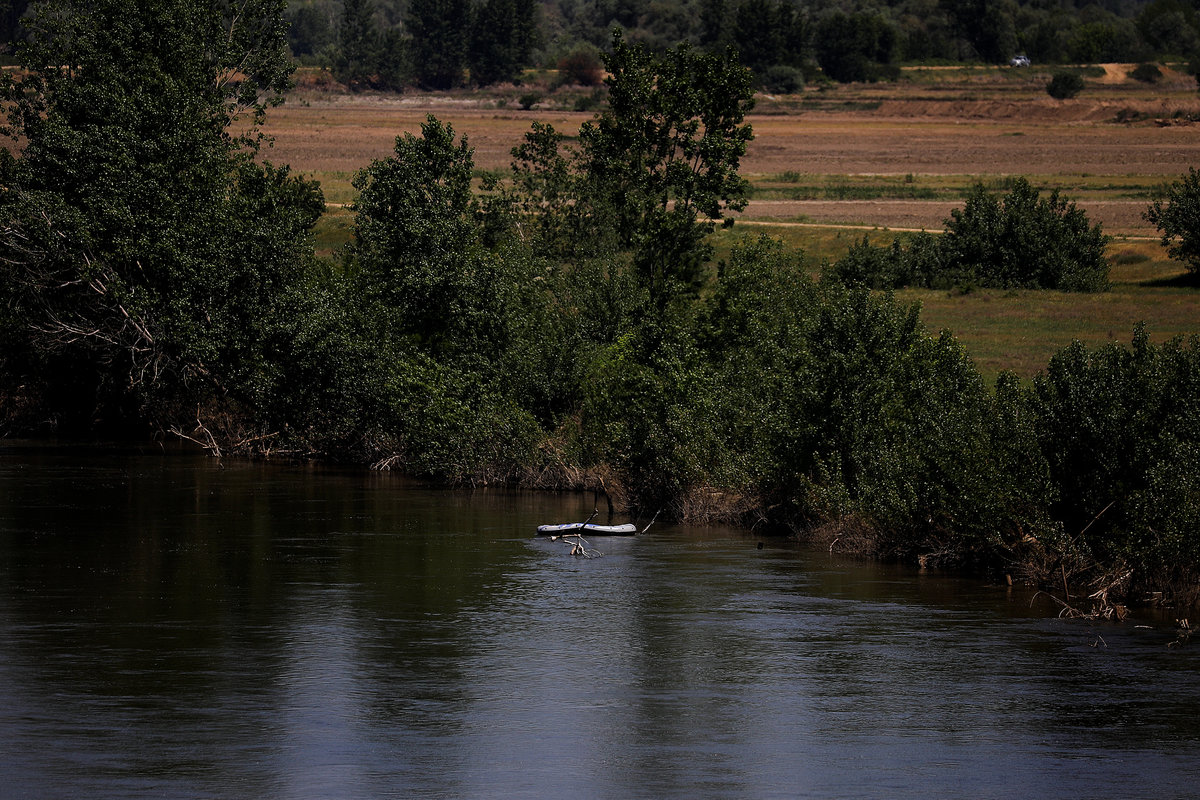
Two years after a sea passage used in a mass migration wave from Turkey to Greece's islands was effectively sealed, more and more refugees are re-discovering an old smugglers' route through the watery land border splitting the two countries.
In April alone, at least 2,900 people arrived in Greece via Evros, the river border separating Greece from Turkey. That equals half the estimated arrivals for 2017 overall, United Nations refugee agency UNHCR said on April 27.
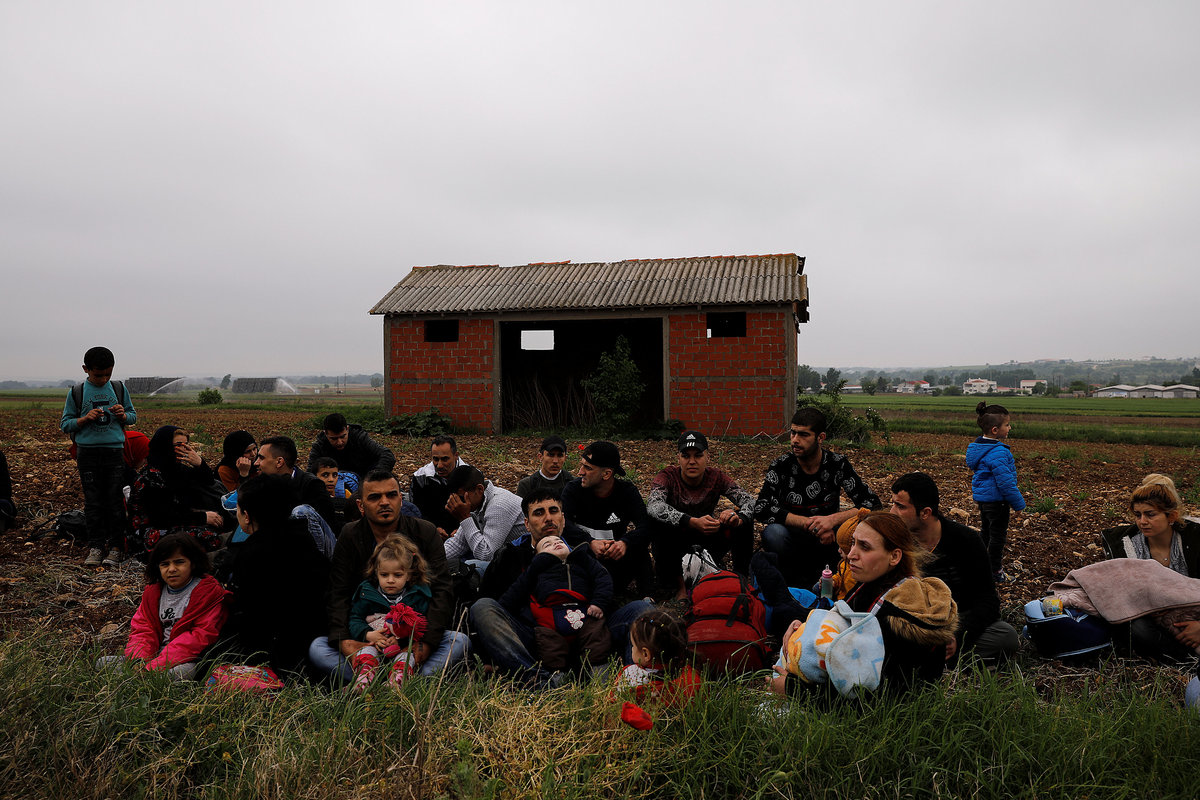
Syrian refugees who crossed the Evros river, the natural border between Greece and Turkey, rest in a field as they wait for the police to arrive and transfer them to a first reception centre, near the village of Nea Vyssa, Greece, May 2, 2018. REUTERS/Alkis Konstantinidis
NEW ROUTE, REVISITED
Police and local government officials in the region are worried at the trend. A burst in arrivals, they say, more or less mirror an upsurge in hostilities in either Iraq or Syria.
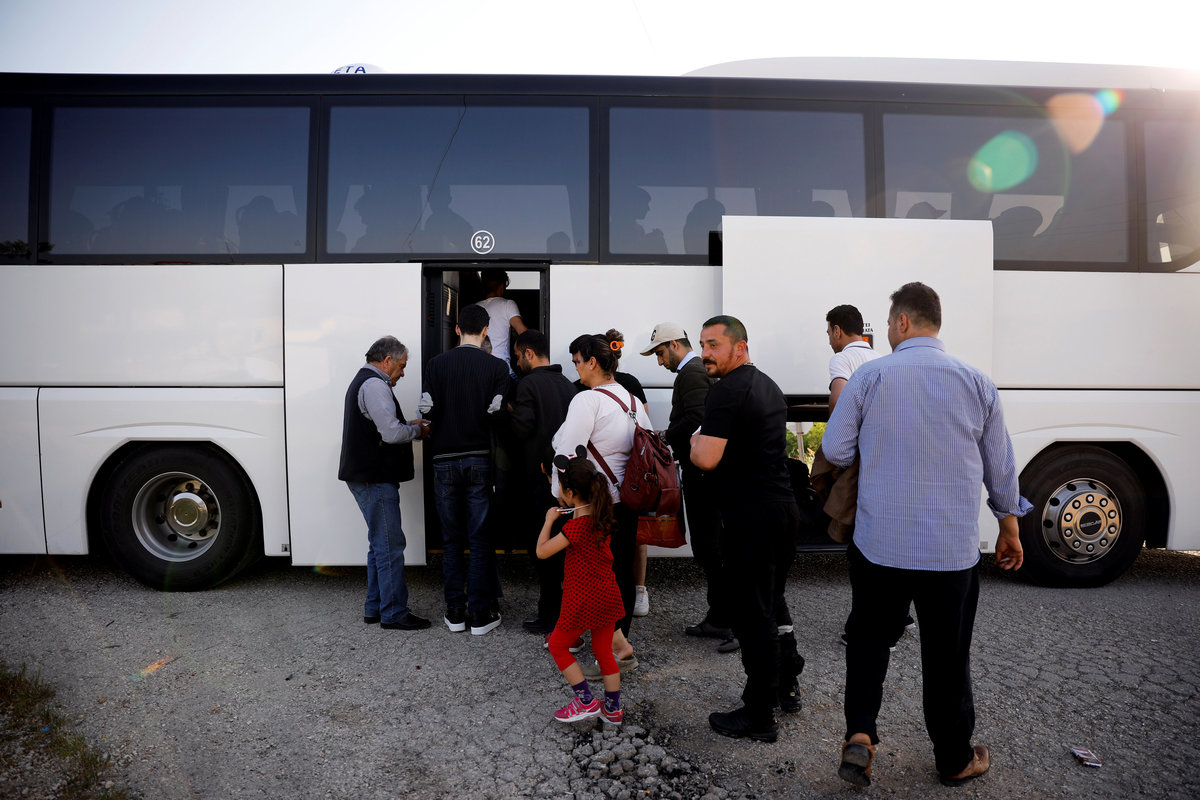
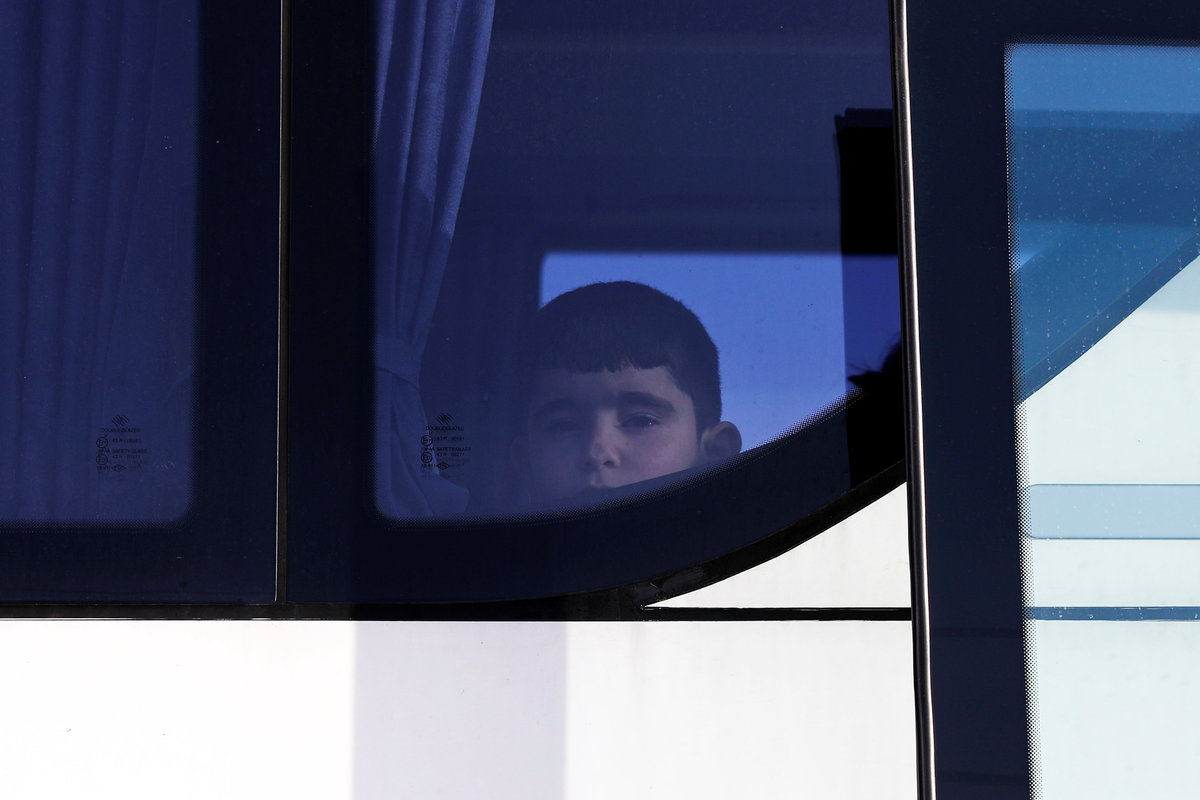
Refugees and migrants prepare to board a bus to Thessaloniki after leaving a first reception centre in the village of Fylakio, Greece, April 30, 2018. REUTERS/Alkis Konstantinidis
Nearly a million refugees and migrants crossed from Turkey to Greece's islands in 2015, but that route all but closed after the European Union and Ankara agreed to stop the flow in March 2016.
Under the deal, anyone who crosses to the Greek islands must qualify for asylum or face deportation to Turkey. The accord effectively turned five Aegean islands into cramped holding camps for more than 15,000 people unable to leave until their claims are processed.
The land border does not appear to fall under the agreement, but a UNHCR official cautioned at jumping to conclusions the exclusion actually diverted the migrant flow elsewhere.
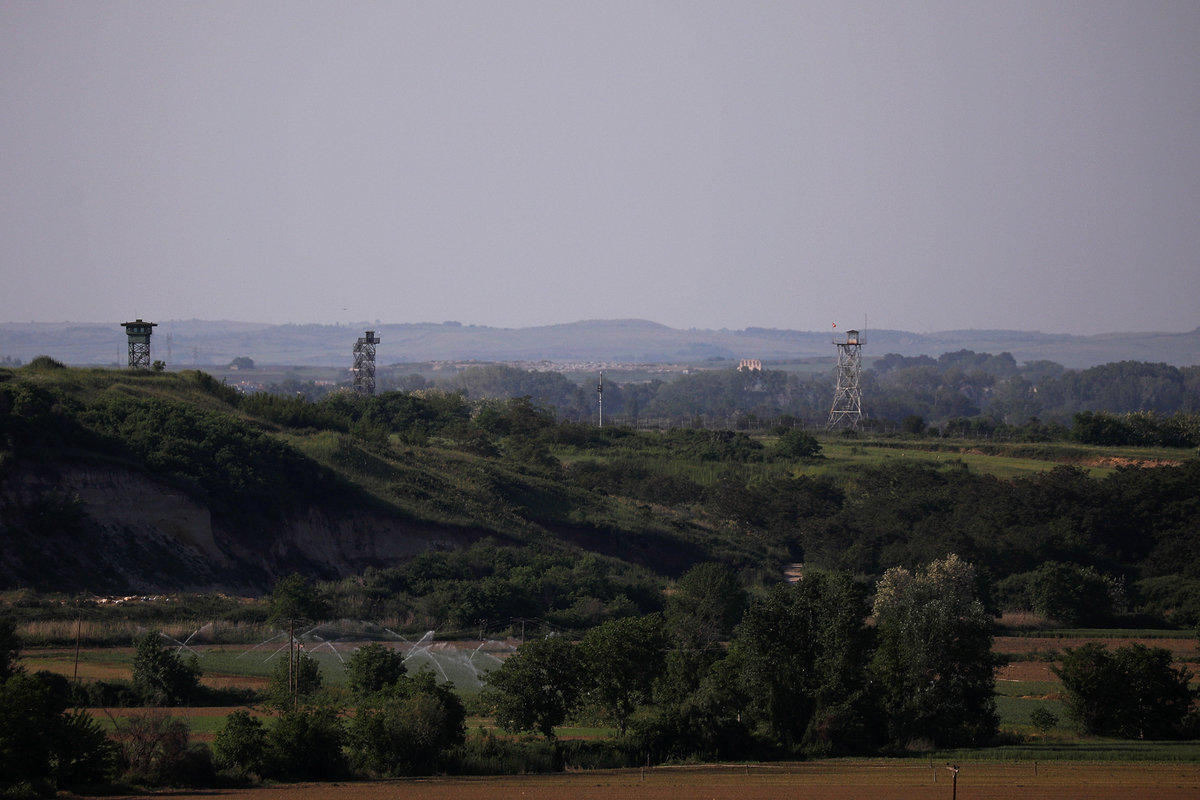
Two Greek Army watchtowers (L) and one Turkish Army watchtower are seen at the borderline between Greece and Turkey, near the village of Nea Vyssa, Greece, April 30, 2018. REUTERS/Alkis Konstantinidis
Aid workers and police officials told Reuters those who arrive via the Evros river are taken to be registered, and then given a three month resident permit. Theoretically, they are free to move around Greece - unlike those on the islands.
TREACHEROUS WATERS
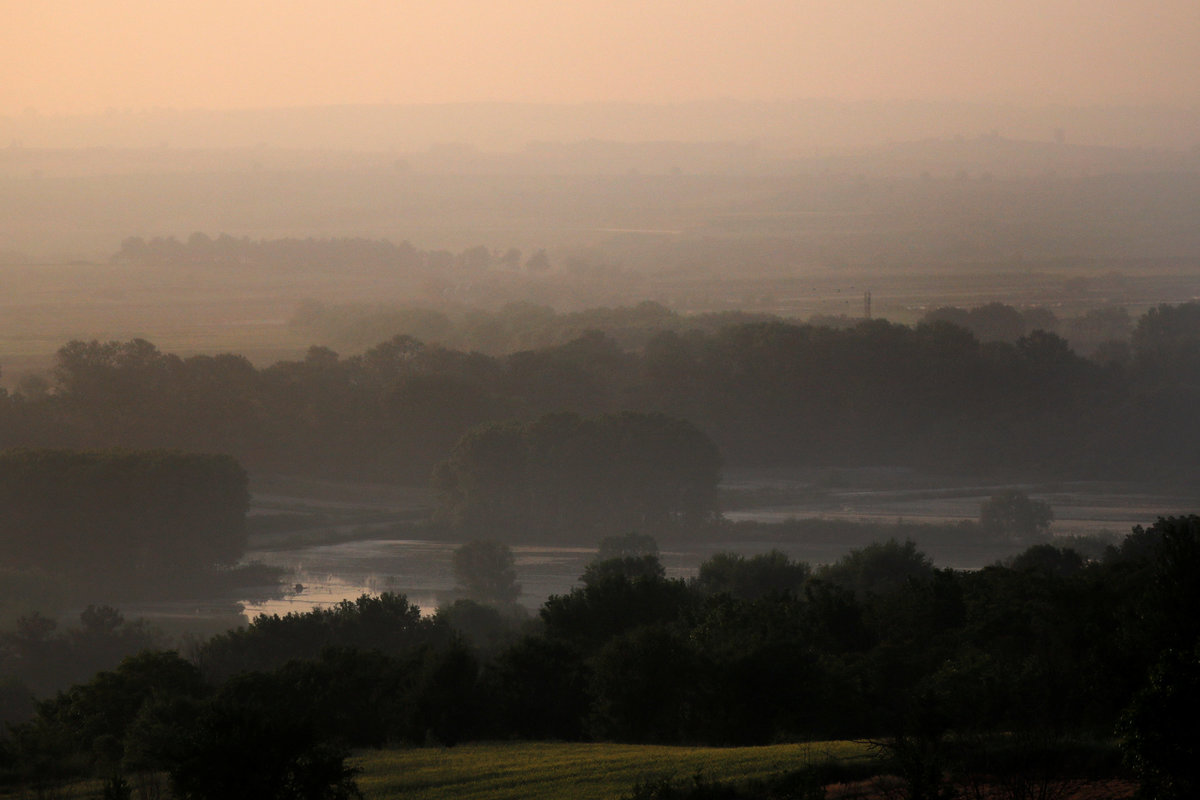
A view of the Evros river, the natural border between Greece and Turkey, with Turkey seen in the background, near the village of Pythio, Greece, May 1, 2018. Picture taken from the Greek side of the border. REUTERS/Alkis Konstantinidis
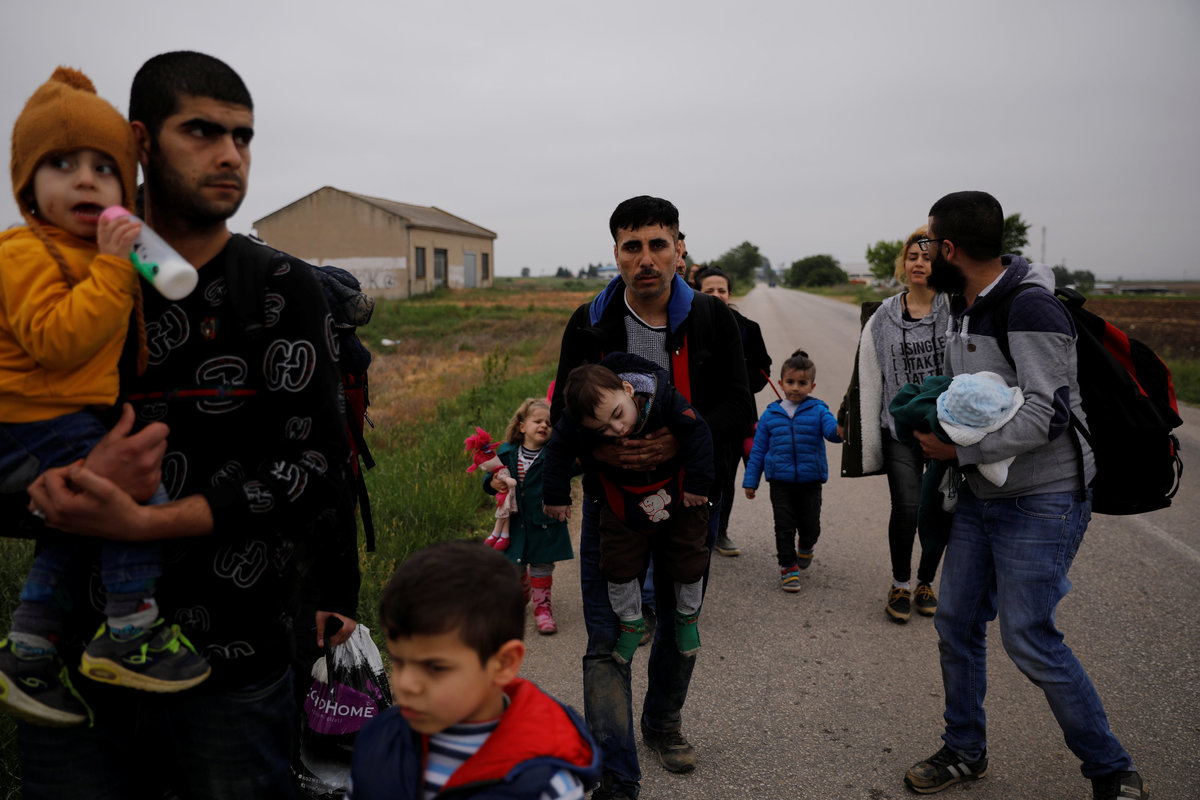
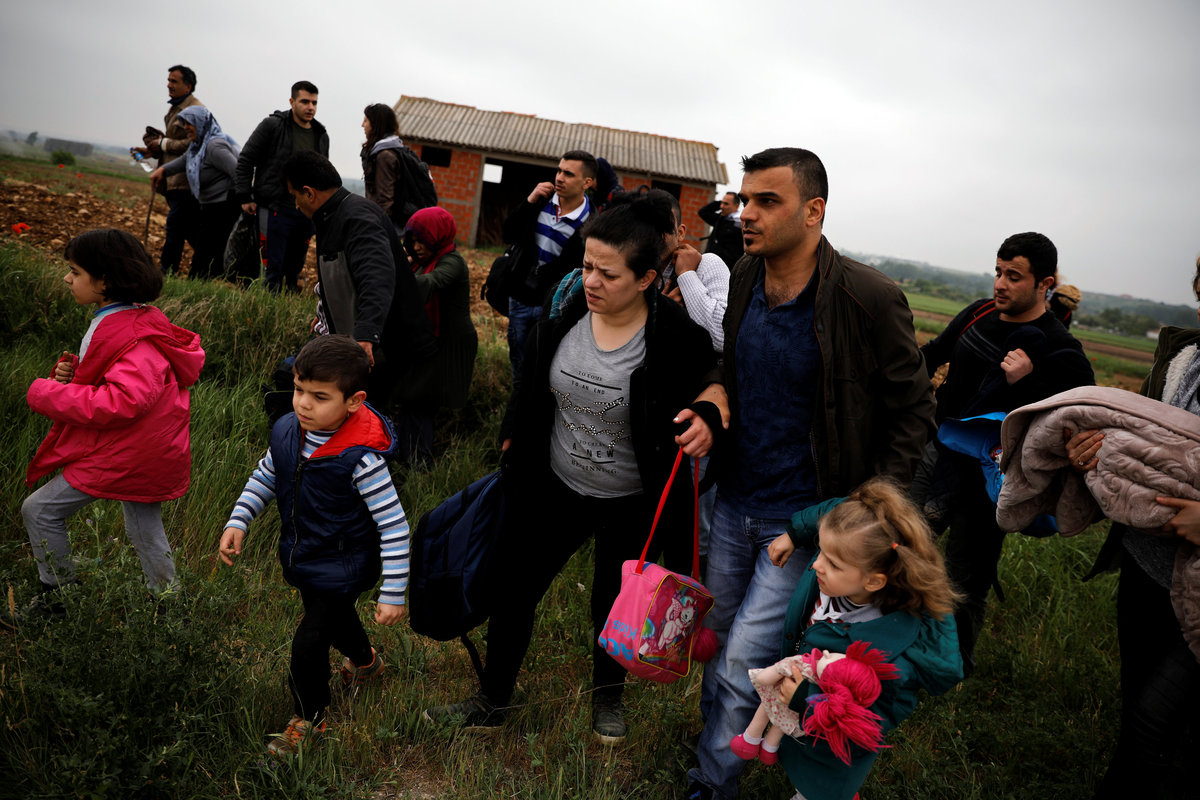
About thirty-five refugees from the besieged Syrian city of Afrin took a country road close to the community of Nea Vyssa early in the morning of May 2.
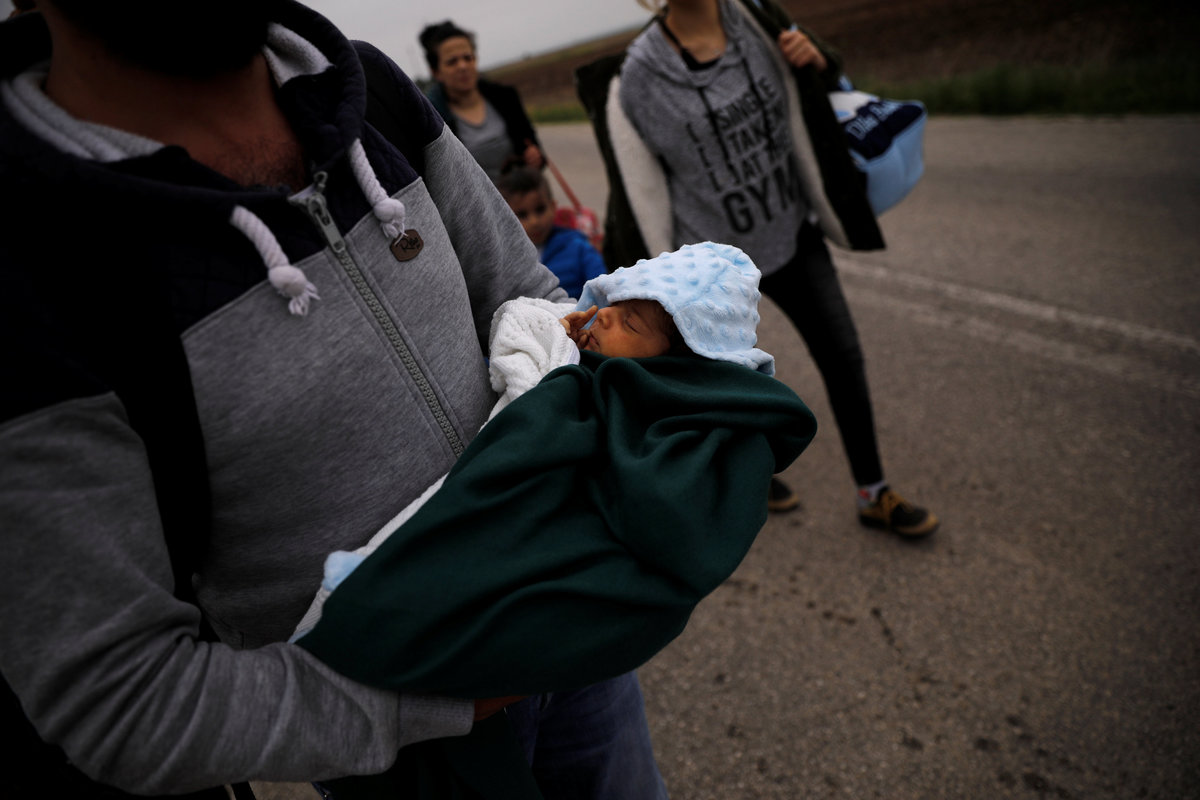
One man cradled a month old baby, Abdu, in a small blue swaddling blanket. A second man strode, a blank look in his eyes as a sleeping toddler bounced around in the pouch he had strapped to his front.
Beyond that, a small blonde girl in pigtails and pink rubber boots scowled as an adult pulled her along the road, clutching a pink ragdoll.
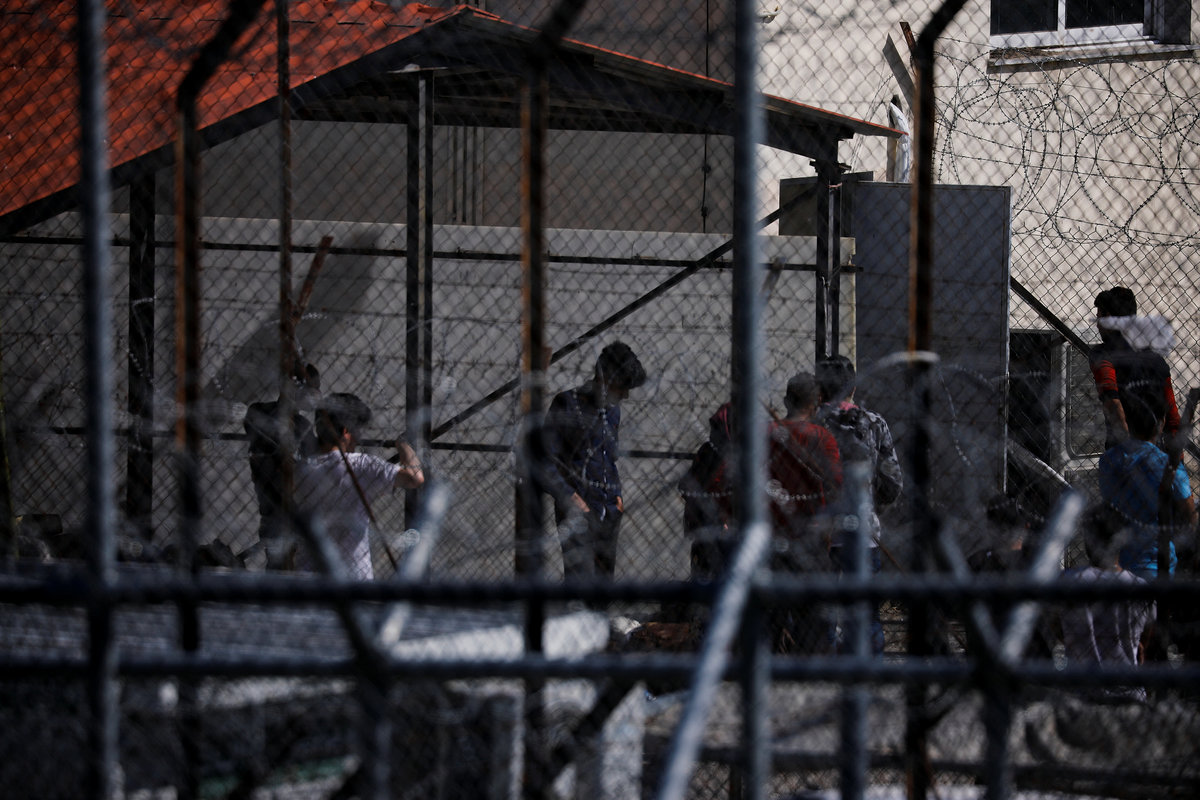
Refugees and migrants who crossed the Evros river, the natural border between Greece and Turkey, are seen at a first reception centre at the village of Fylakio, Greece, May 1, 2018. REUTERS/Alkis Konstantinidis
It can take about five to six minutes to paddle one's way across the Evros river, compared to a harrowing journey in the open seas on overcrowded rafts. Yet the fast-moving waters are treacherous.
Before the sea corridor between Turkey and Greek islands became a grave for hundreds of refugees in 2015, Evros had claimed at least 1,500 lives over the past 18 years.
Twelve deaths in the first quarter of the year have outpaced all of 2017 put together, when 8 people drowned, said associate professor of forensic medicine Pavlos Pavlidis.
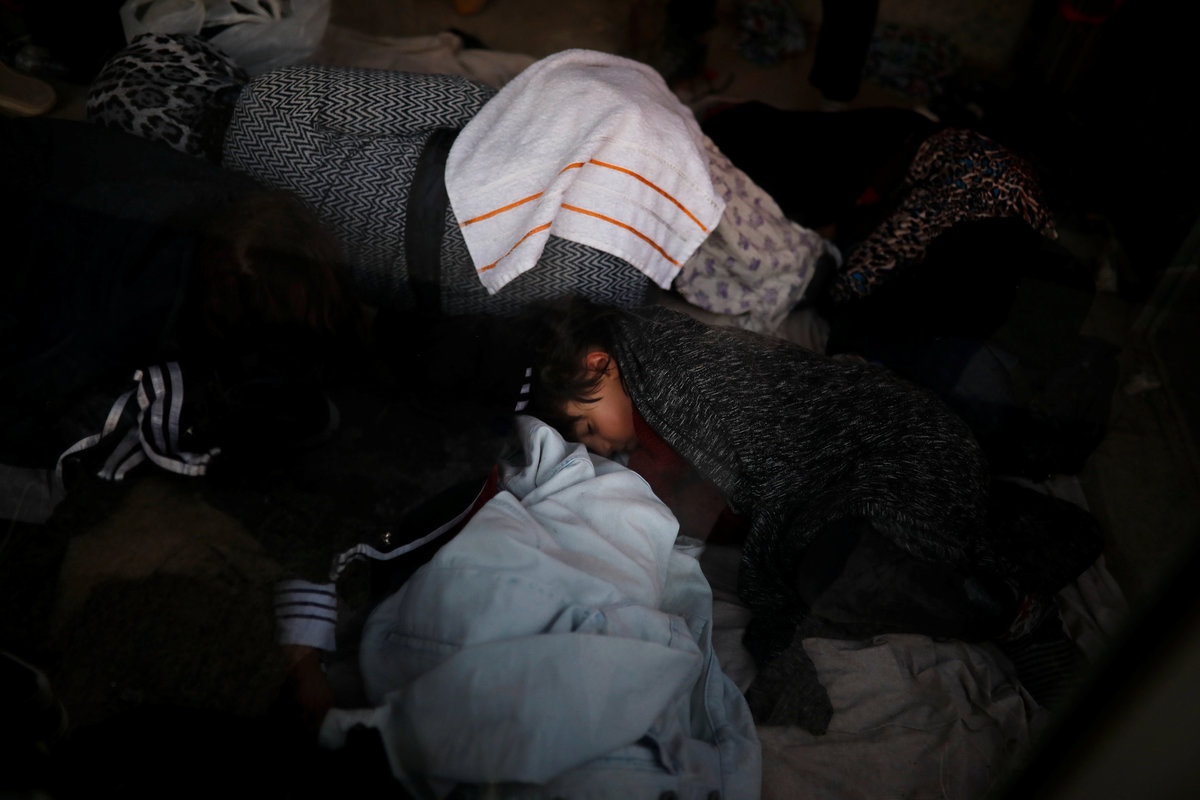
A Syrian refugee family who crossed the Evros river, the natural border between Greece and Turkey, sleep at a train stop in the village of Pythio, Greece, May 1, 2018. REUTERS/Alkis Konstantinidis
"I can only hope the number stays there ... but we expect the worst has yet to come because the influx has risen," he told Reuters.
(Writing By Michele Kambas; Editing by Richard Balmforth)
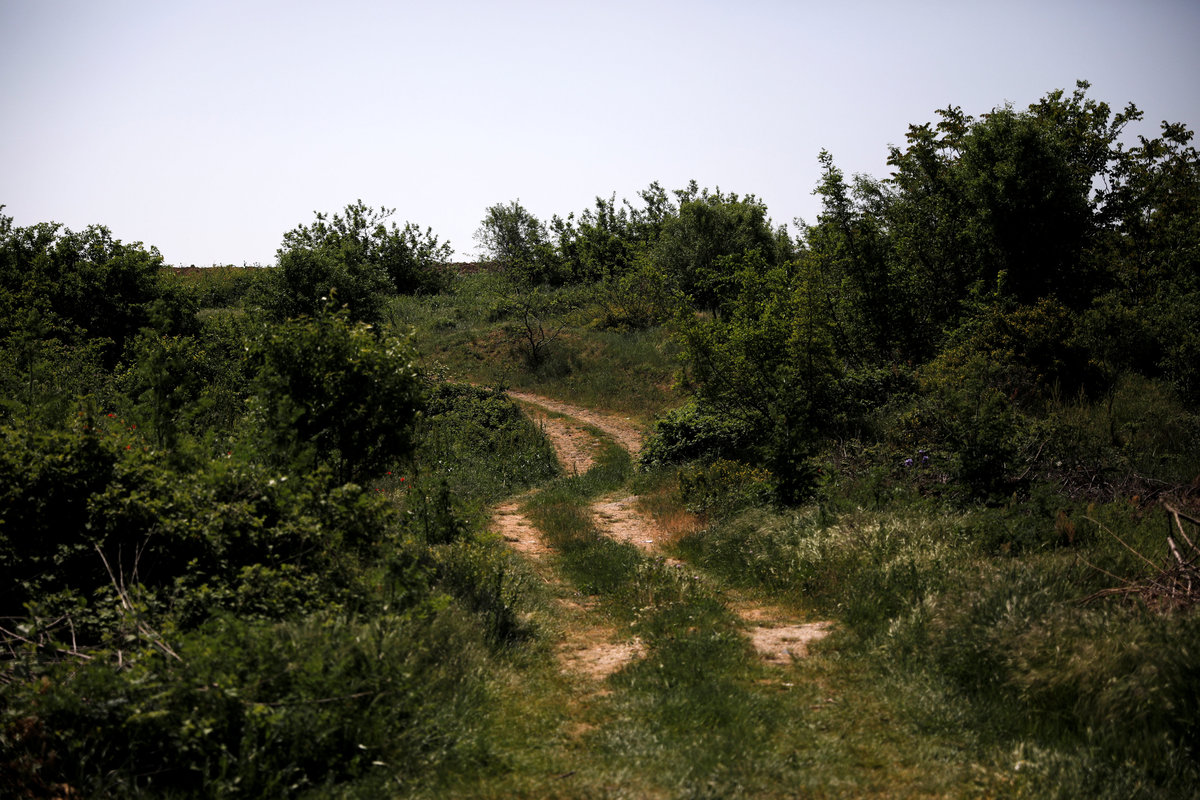
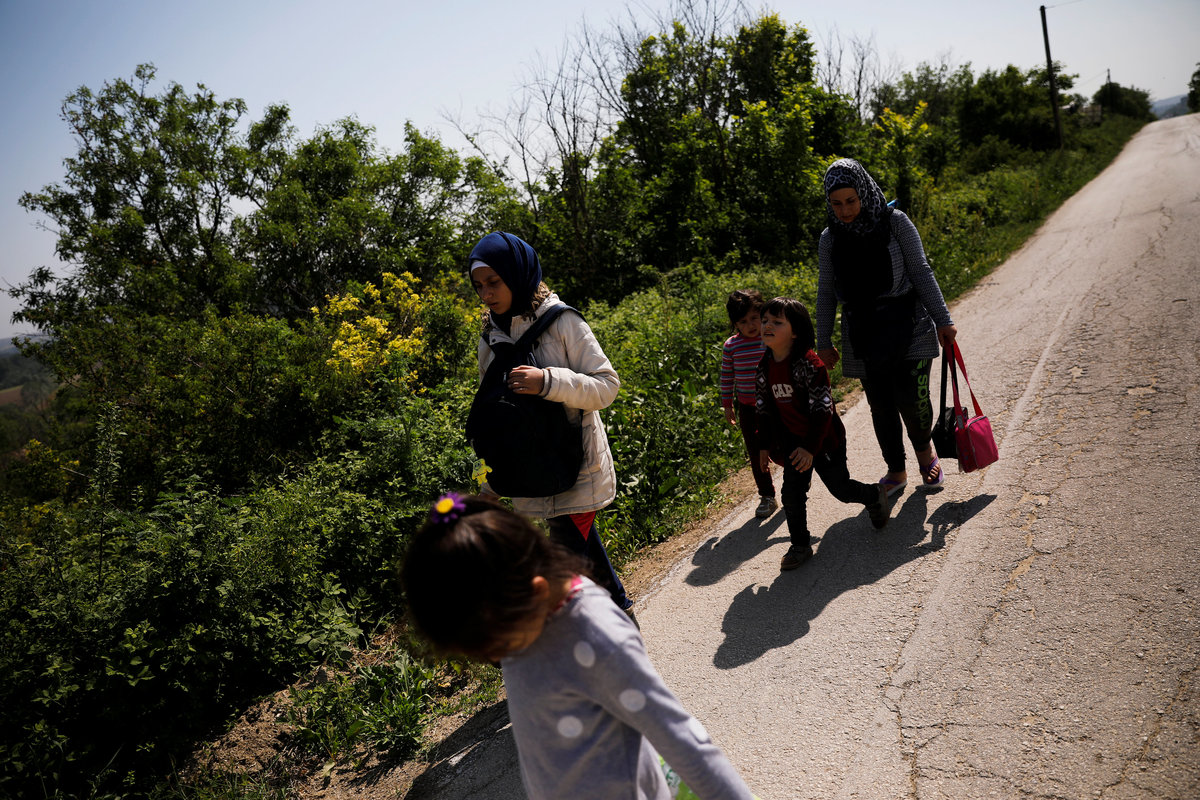
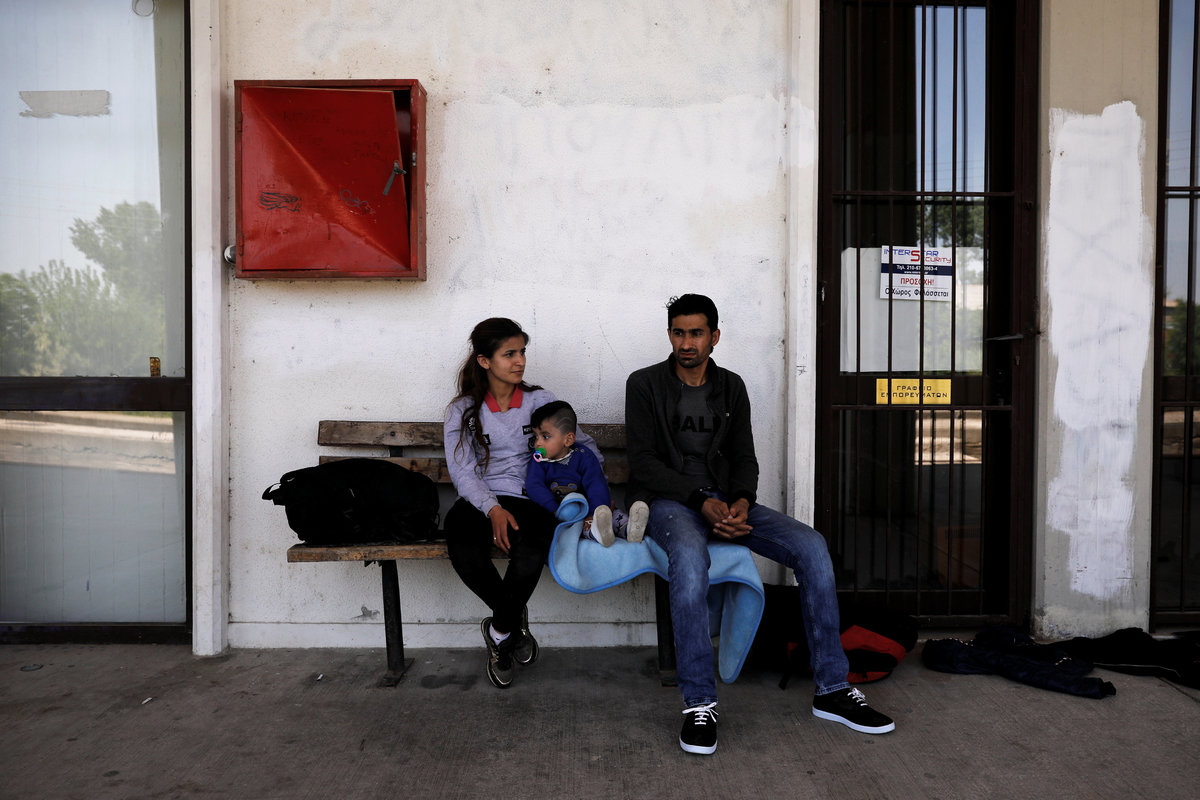
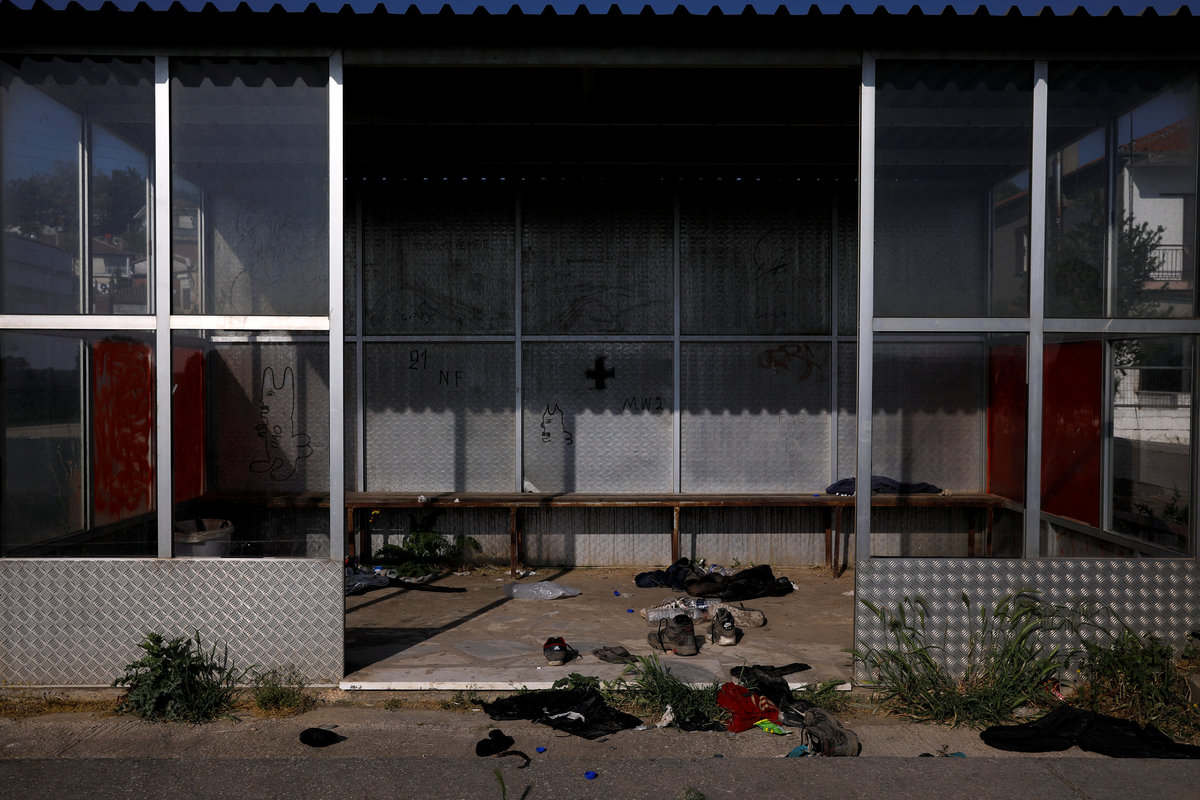
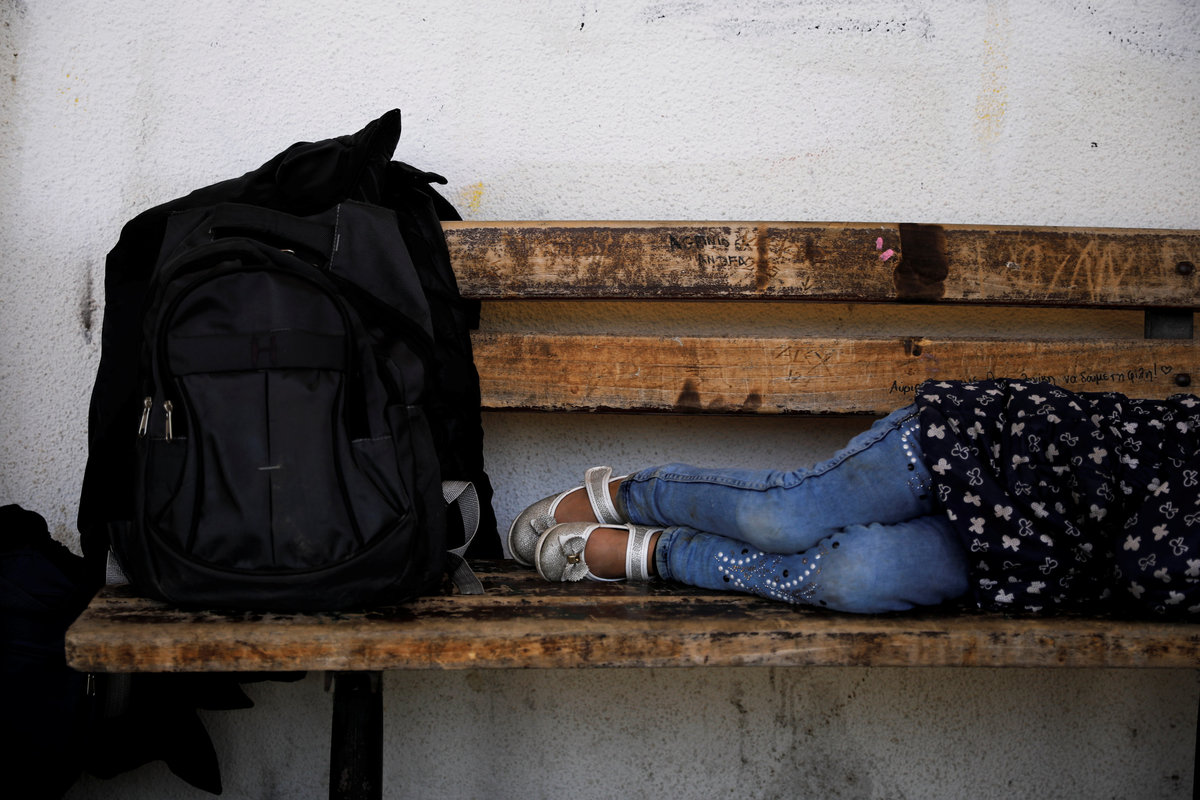
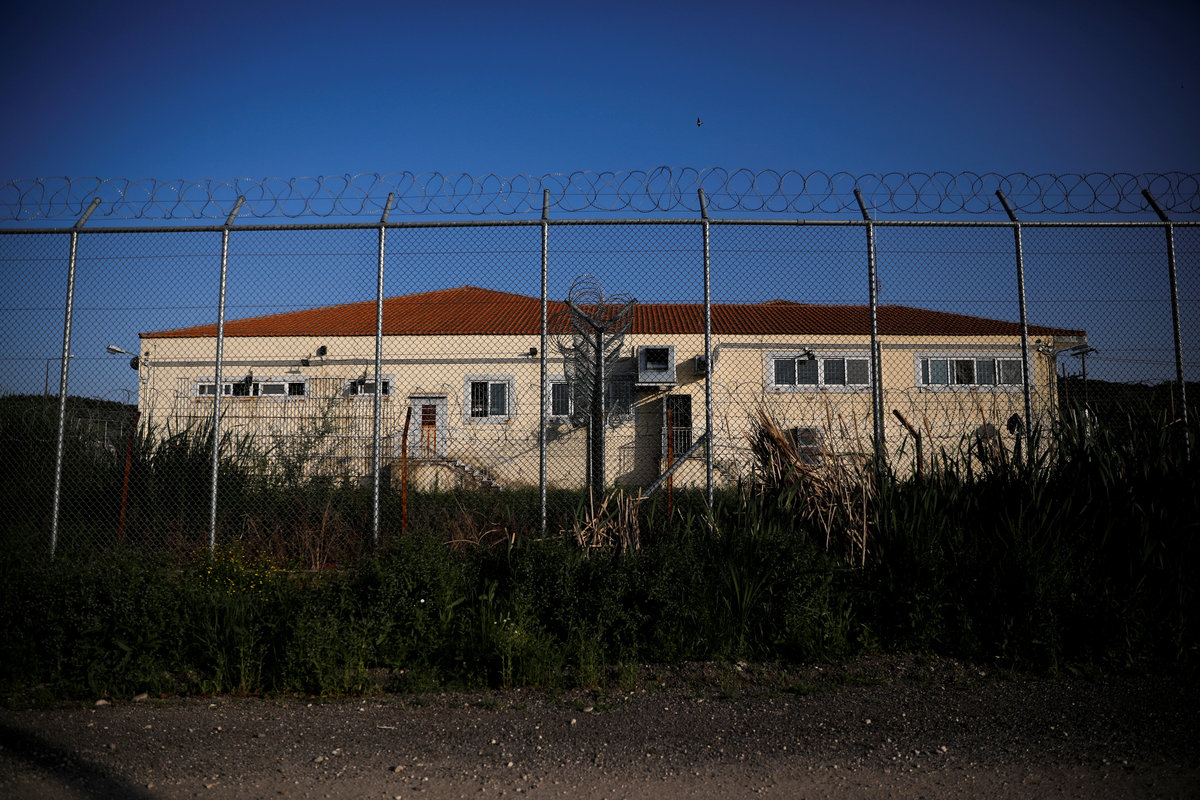
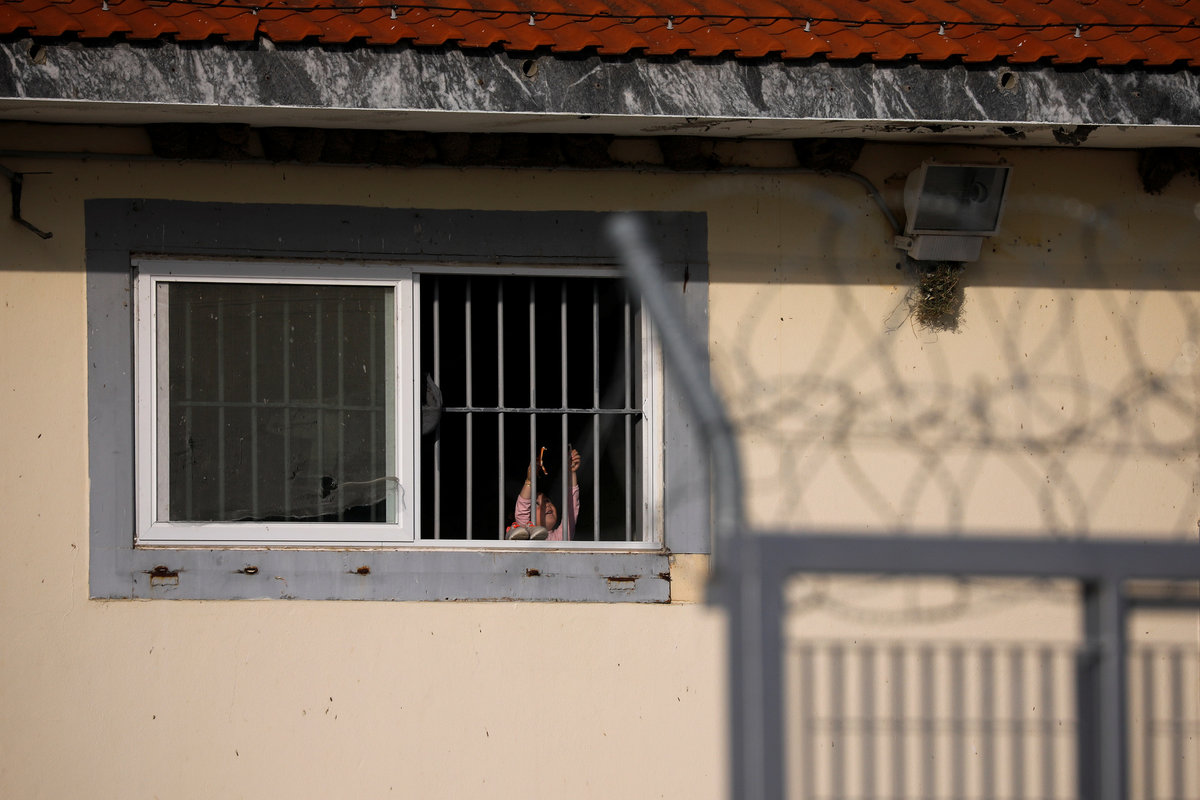
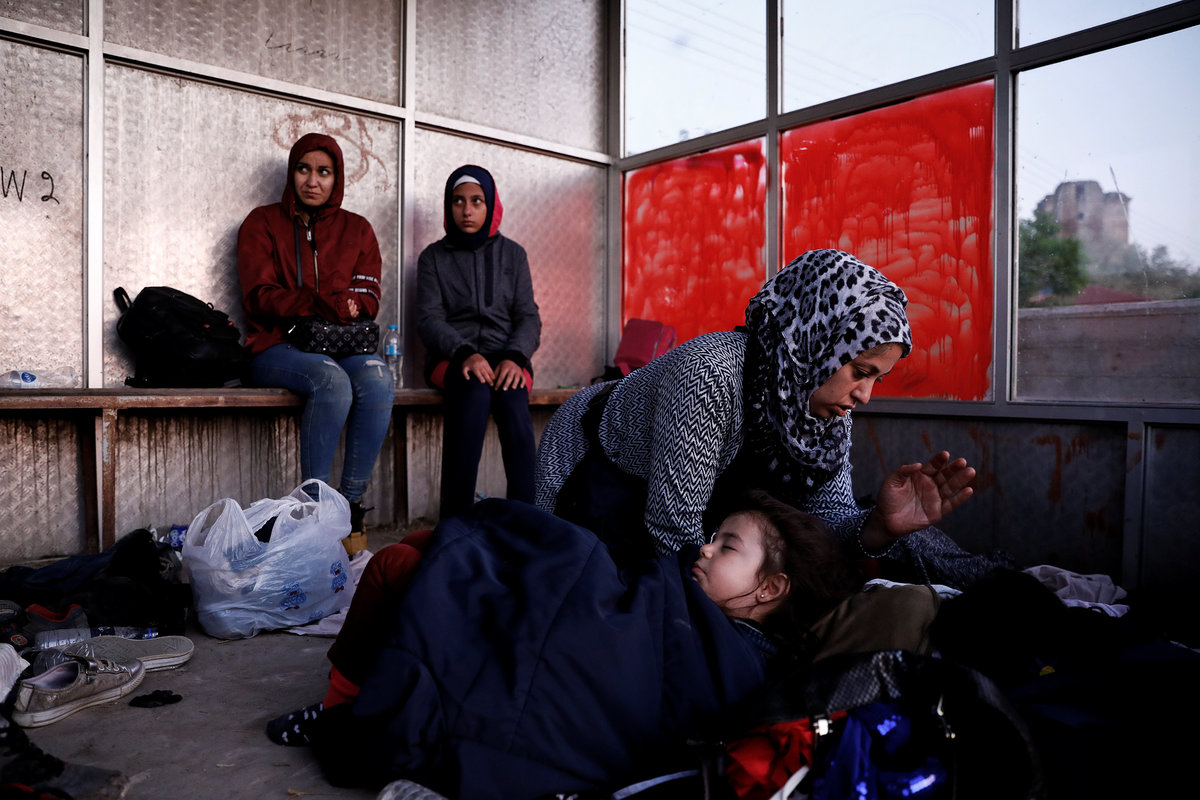
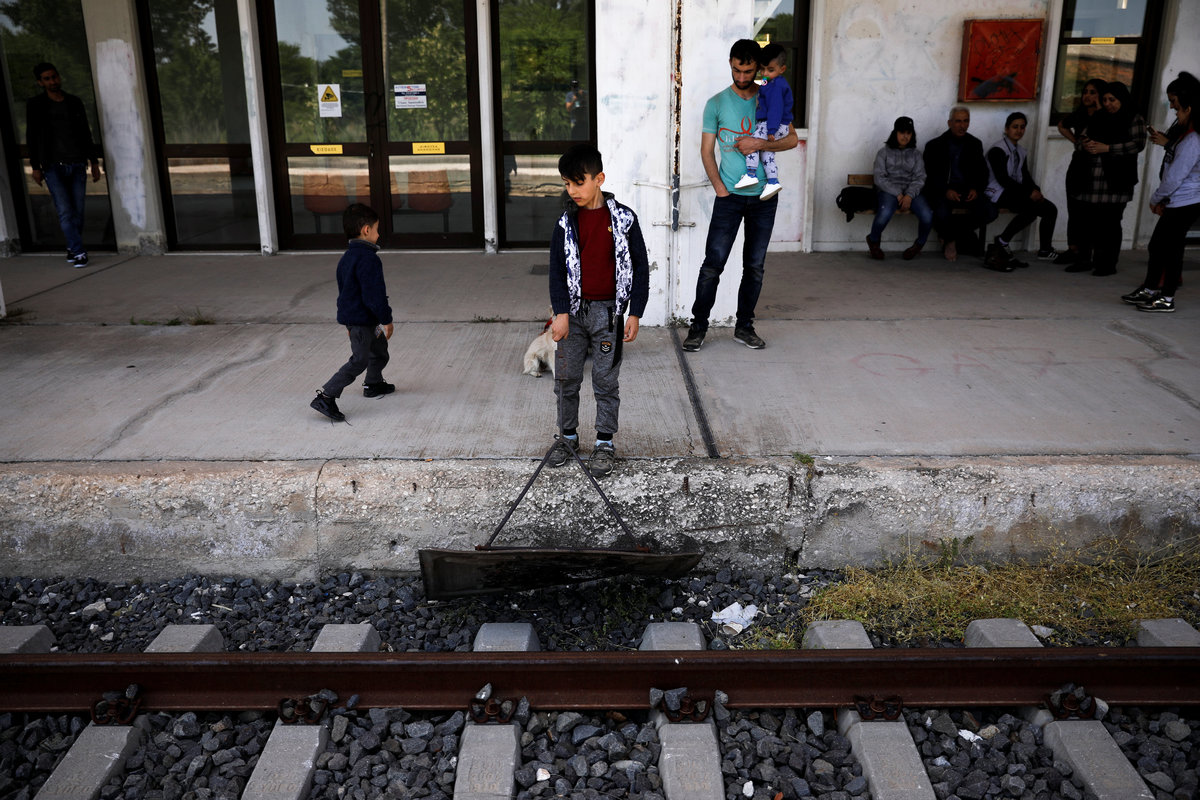
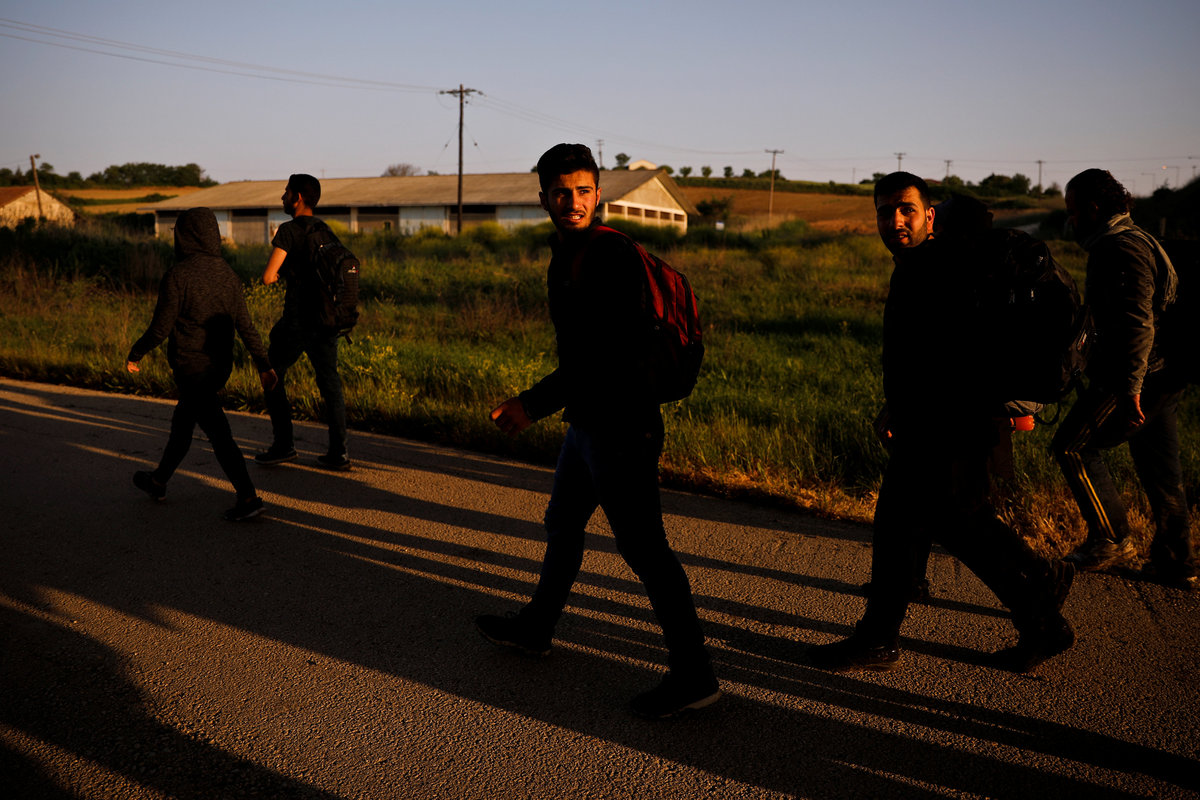
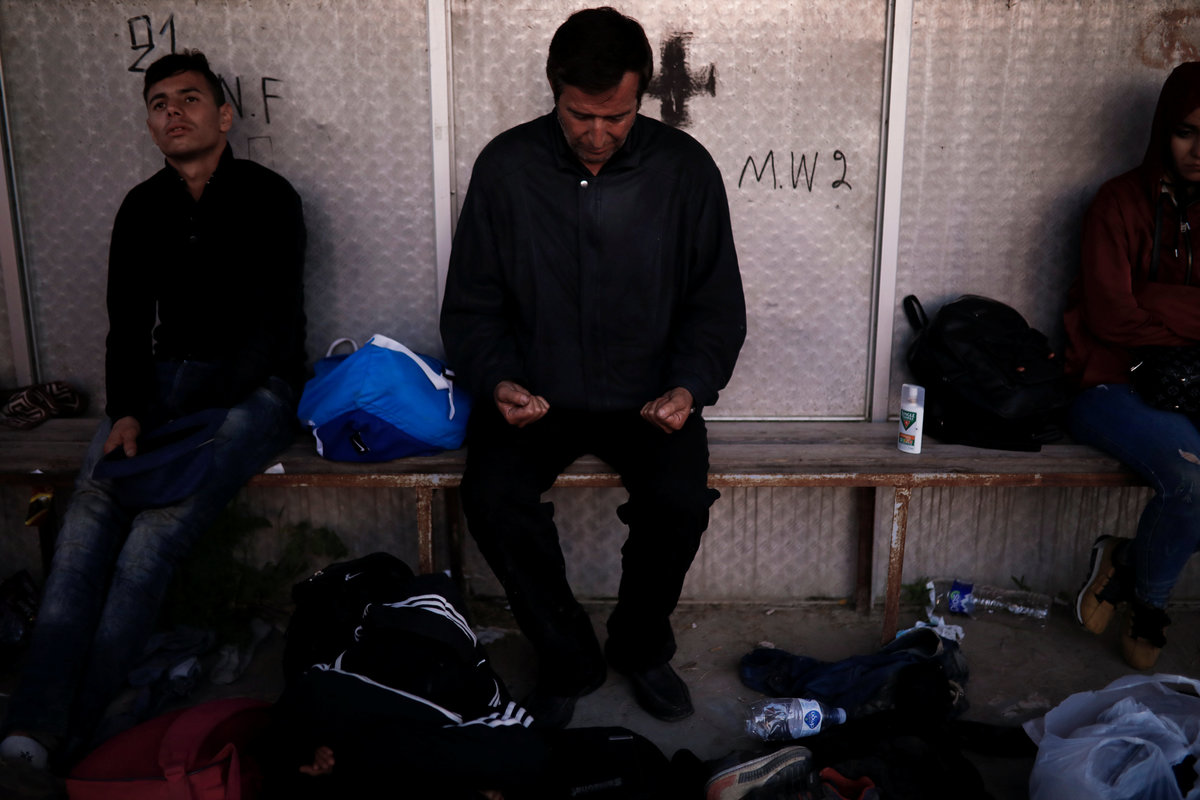
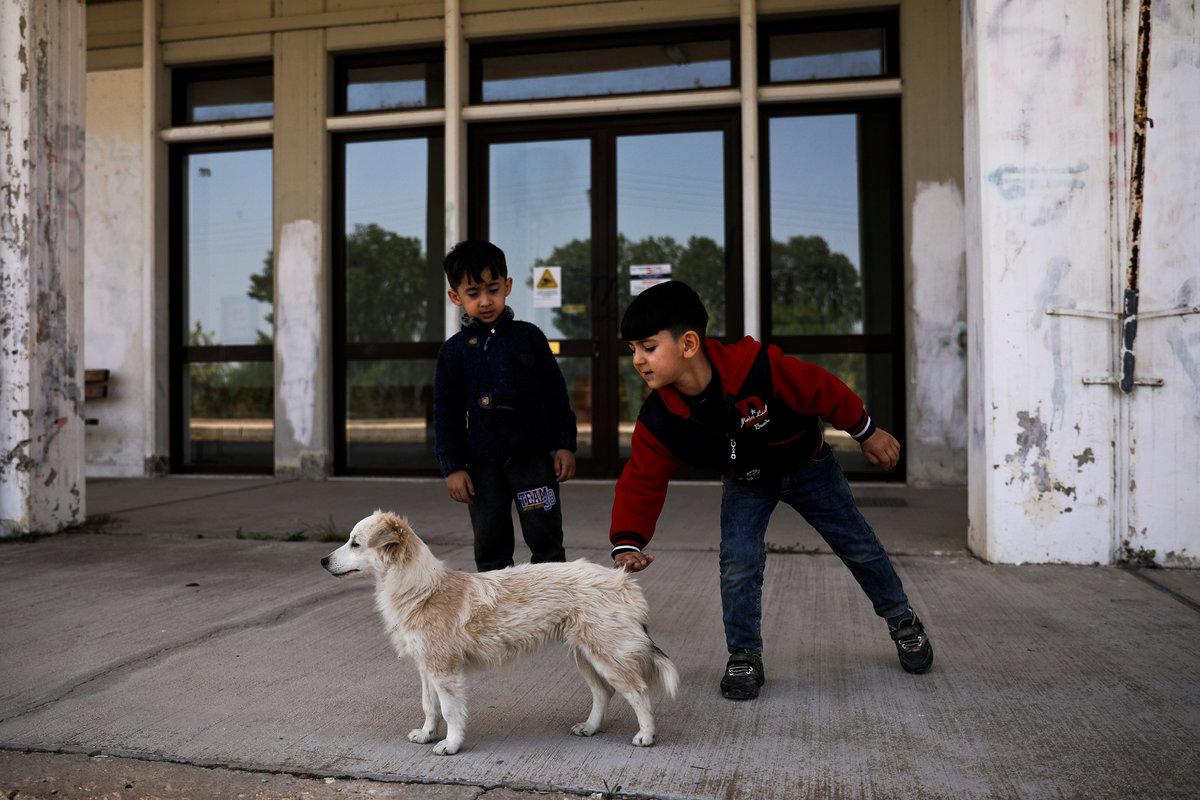
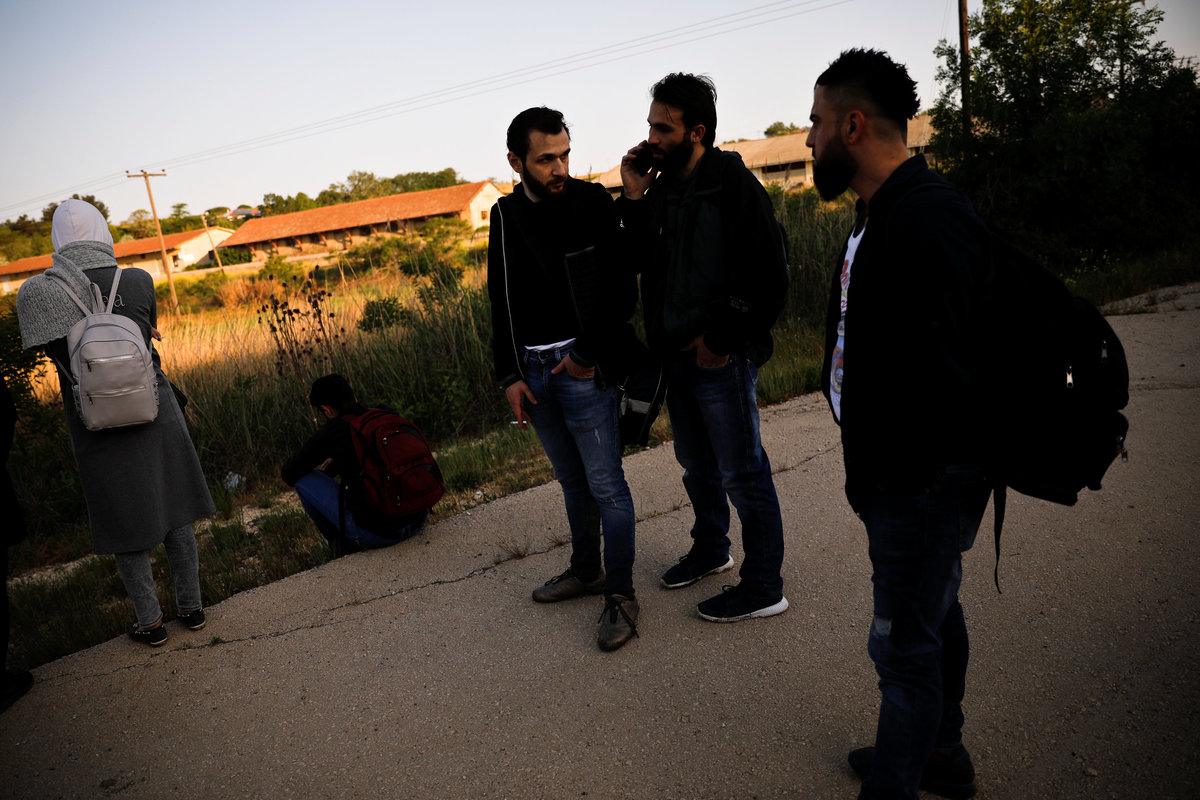
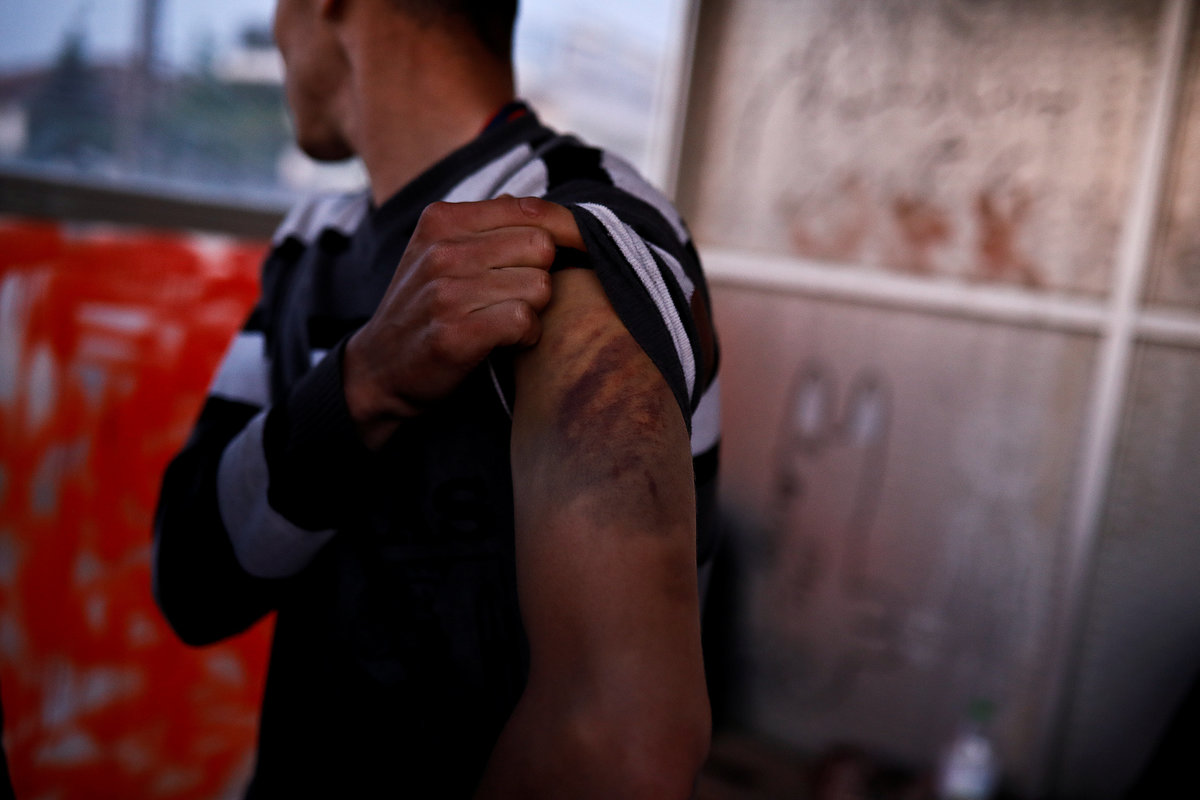
A damaged inflatable boat used by refugees and migrants to cross the Evros river, is seen at the banks of the river on the Turkish side, May 1, 2018. Picture taken from the Greek side of the border. REUTERS/Alkis Konstantinidis A path is seen near the village of Pythio, Greece, April 30, 2018. REUTERS/Alkis Konstantinidis A boy looks through a bus window as refugees and migrants who left a first reception centre board a bus to Thessaloniki, in the village of Fylakio, Greece, April 30, 2018. REUTERS/Alkis Konstantinidis Syrian refugee Zamilla Ammal (R), 39, and four of her seven children, who crossed the Evros river, the natural border between Greece and Turkey, walk towards the village of Pythio, Greece, April 30, 2018. REUTERS/Alkis Konstantinidis A Syrian refugee family from Afrin, who crossed the Evros river, the natural border between Greece and Turkey, wait at the train station of the city of Orestiada, Greece, April 30, 2018. REUTERS/Alkis Konstantinidis Clothes and shoes left behind by refugees and migrants that crossed the Evros river, the natural border between Greece and Turkey, are seen scattered at a train stop in the village of Pythio, Greece, April 30, 2018. REUTERS/Alkis Konstantinidis A Syrian refugee girl from Afrin, who crossed the Evros river, the natural border between Greece and Turkey, sleeps on a bench at the train station of the city of Orestiada, Greece, April 30, 2018. REUTERS/Alkis Konstantinidis A first reception centre for refugees and migrants stands in the village of Fylakio, Greece, April 30, 2018. REUTERS/Alkis Konstantinidis A migrant girl plays near a window at a first reception centre for refugees and migrants near the village of Fylakio, Greece, April 30, 2018. REUTERS/Alkis Konstantinidis Syrian refugee Zamilla Ammal, 39, protects her sleeping children from mosquitos as they sleep at a train stop in the village of Pythio, Greece, May 1, 2018. REUTERS/Alkis Konstantinidis Syrian refugees from Afrin, who crossed the Evros river, the natural border between Greece and Turkey, wait at the train station of the city of Orestiada, Greece, April 30, 2018. REUTERS/Alkis Konstantinidis A group of Syrian refugees who crossed the Evros river, the natural border between Greece and Turkey, walk towards the city of Didymoteicho, Greece, April 30, 2018. REUTERS/Alkis Konstantinidis A group of Syrian refugees walk in a field after crossing the Evros river, the natural border between Greece and Turkey, near the city of Didymoteicho, Greece, April 30, 2018. REUTERS/Alkis Konstantinidis Syrian refugee Hossam Eldin, 55, who crossed the Evros river, the natural border between Greece and Turkey, with his family, prays at a train stop in the village of Pythio, Greece, May 1, 2018. REUTERS/Alkis Konstantinidis Syrian refugee children from Afrin, who crossed the Evros river, the natural border between Greece and Turkey, play with a dog at the train station of the city of Orestiada, Greece, April 30, 2018. REUTERS/Alkis Konstantinidis Syrian refugee Omar Walid (C), 25, from Aleppo who crossed the Evros river, the natural border between Greece and Turkey with a group of Syrians, discusses whether they should move forward or wait for the Greek police to arrive, near the city of Didymoteicho, Greece, April 30, 2018. REUTERS/Alkis Konstantinidis Syrian refugee Hossam Eldin, 55, waves to his grandchildren after crossing the Evros river, the natural border between Greece and Turkey, near the village of Pythio, Greece, April 30, 2018. REUTERS/Alkis Konstantinidis Syrian refugee girl Zena rests rests in her mother Zamilla Ammal's arms after crossing the Evros river, the natural border between Greece and Turkey, near the village of Pythio, Greece, April 30, 2018. REUTERS/Alkis Konstantinidis A migrant who crossed the Evros river from Turkey to Greece, demonstrates his bruised arm in the village of Pythio, Greece, May 1, 2018. REUTERS/Alkis Konstantinidis Syrian refugees from Afrin who crossed the Evros river, the natural border between Greece and Turkey, walk on the road in the village of Nea Vyssa, Greece, May 2, 2018. REUTERS/Alkis Konstantinidis Syrian refugee girl Zena is carried by a fellow refugee walking on the railway tracks in the village of Pythio, Greece, May 1, 2018. REUTERS/Alkis Konstantinidis Refugees and migrants who crossed the Evros river, the natural border between Greece and Turkey, walk on the railway tracks in the village of Pythio, Greece, May 1, 2018. REUTERS/Alkis Konstantinidis Syrian refugee Ramadan from Afrin carries his one-month-old baby boy Abdu, after crossing the Evros river, the natural border between Greece and Turkey, in the village of Nea Vyssa, Greece, May 2, 2018. REUTERS/Alkis Konstantinidis Syrian refugees who crossed the Evros river, the natural border between Greece and Turkey, move towards a police truck to be transferred to a first reception centre, near the village of Nea Vyssa, Greece, May 2, 2018. REUTERS/Alkis Konstantinidis
Sign up to read this article
Read news from 100’s of titles, curated specifically for you.