Aug. 12--For months, scientists have been saying that the El Nieather pattern this winter could finally put a dent in California's four-year drought.
Given the stakes, there is likely going to be much focus Thursday when the latest El Niorecast is released.
The forecast is scheduled to be announced publicly at 6 a.m. PDT by the National Weather Service's Climate Prediction Center. Officials are to hold a conference call at 9 a.m. to discuss it.
Experts have said the evidence is growing stronger for a huge El Nihat would dump heavy -- perhaps historic -- rain in Southern California and maybe into Northern California as well.
Here is a primer on El Ni
How might El Niffect California?
There's a favorable chance that this winter will be wetter than average in much of California -- from San Diego to San Francisco.
But there's only an equal chance of a wetter-than-average rainy season north of San Francisco, where much of the state's water supply is collected and stored in giant reservoirs. California needs rain and snow up there. Snow slowly melting from the mountains is essential to recharging our reservoirs when the weather turns dry later in the spring.
How can scientists make these forecasts about the winter half a year ahead of time?
We've had experience with El Nia weather phenomenon characterized by the warming of Pacific Ocean waters west of Peru that causes changes in the atmosphere and can dramatically alter weather worldwide.
In the two strongest El Nion record, 1982-83 and 1997-98, the phenomenon has meant a series of storms pelting California.
What's the latest on how El Nis doing?
The ocean is getting hotter. On July 15, a key benchmark location in the Pacific Ocean was 3 degrees above average. It's very similar to the temperature reading on July 16, 1997, which was 3.2 degrees above average.
Interested in the stories shaping California? Sign up for the free Essential California newsletter >>
So we're matching the pace we saw in the summer of 1997?
Yes, at least for ocean temperatures along the equator. The summer of 1997 was the precursor to the strongest El Nin the modern record.
What are other reasons scientists are so interested this year?
Winds along the Pacific Ocean at the equator typically move east to west. That's why ocean water enjoyed by tourists on Indonesian beaches is so warm. Winds move warm water west, and the eastern Pacific's surface along the equator is chilled as deep ocean water wells up.
In big El Niears, so-called trade winds weaken, allowing the eastern Pacific to warm up more -- making El Niven stronger.
Why do very strong El Nibring more rain to California?
An El Nian bring something to Southern California called the subtropical jet stream.
This current of air usually runs over the jungles of southern Mexico and Nicaragua, a reason Central America has rain forests, said Bill Patzert, climatologist with NASA's Jet Propulsion Laboratory in La Ca Flintridge.
This subtropical jet stream has already shifted to the north, and is somewhat responsible for the devastating storms that pelted Texas and Oklahoma this spring and pushed those states out of drought, Patzert said.
"If it continues to warm up in the eastern Pacific, as we get into fall and winter, the subtropical jet stream could move across the southern tier of the United States," Patzert said.
Only the south? What about Northern California?
El Nieeds to be particularly powerful to affect Northern California.
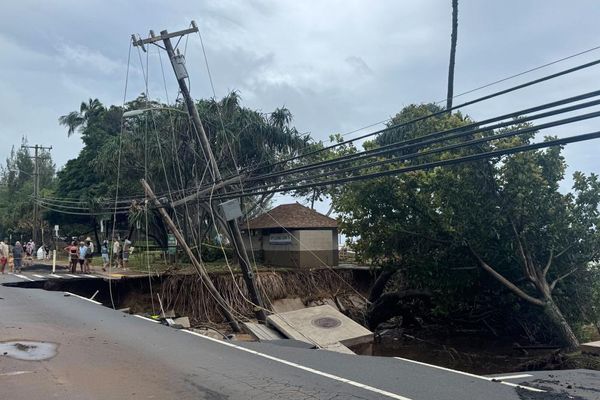
"This is not strong enough yet," Patzert said. "The really big El Ni-- we're not there yet -- can soak the whole state. But right now, it's possible to get a lot of flooding and mudslides in the south. In Northern California, you could get below-normal rainfall and snowpack.
"So that's why I'm not calling this a drought-buster yet," Patzert said.
Where did the term El Niome from?
The name El Nias first used by Peruvian fishermen who noticed warmer ocean water around Christmastime and gave the occurrence a Spanish name meaning "The Little Boy" that refers to the baby Jesus. It was only in the 1960s that scientists realized that the phenomenon wasn't just something that affected the Peruvian coast, but a broad swath of the Pacific Ocean, according to William Kessler, an oceanographer with the National Oceanographic and Atmospheric Administration.
MORE ON THE DROUGHT:
Over 65 years, El Nias affected California rainfall levels
Californians cut water usage by 27% in June, but officials remain wary
Treasures revealed as California drought drains lakes