At least 285 people have died as a result of Colombia's earthquake, according to the latest count from the National Unit for Disaster Risk Management, known as UNGRD. The figure published in the morning of August 14 is still climbing four days after the 7.4-magnitude quake struck the country's coffee-growing region and Pacific coast.
The Numbers Behind the Headline
That same UNGRD announcement also put the injured count at 3,975, with 379 people still unaccounted for and 354 pulled from wreckage alive. More than 86,000 homes have been damaged or destroyed, and 121 buildings have collapsed outright. Five cities — Cali, Pereira, Quibdó, Manizales and Armenia — remained under red alert as of Thursday.
The death toll has been climbing steadily since De la Espriella gave a first count of roughly 111 dead hours after the quake hit.
LatinTimes is treating UNGRD's rolling count as the lead figure because it is Colombia's official disaster-response agency, and because its numbers are tied to confirmed identifications from the national forensic institute, Medicina Legal. As of the same Aug. 14 announcement, Medicina Legal had received 250 bodies and formally identified 227 of them. Earlier international tallies largely reflected preliminary field counts from remote areas rather than confirmed identifications, which explains why they lagged or diverged. UNGRD has said repeatedly that the toll will keep climbing as rescue crews push into isolated stretches of Chocó reachable only by boat or helicopter — meaning the 285 figure should not be treated as final by the time this story is read.

Colombia's Strongest Quake in Decades
The earthquake struck at 7:34 a.m. local time on Aug. 10, centered near San José del Palmar in Chocó — one of Colombia's poorest departments, and one where much of the terrain can only be reached by boat or small aircraft. Colombia's Geological Service measured the rupture's depth at 103 kilometers and classified it as the strongest seismic event recorded in the country this century. The shaking reached Bogotá, Panama, Ecuador and Venezuela.
Outside Chocó, the worst damage sits in Colombia's coffee belt. Dozens of buildings have collapsed, including the towers of a historic cathedral in Manizales, along with hundreds of schools and health centers. Authorities suspended commercial flights at six airports — in Pereira, Manizales, Quibdó, Armenia, Cartago and Buenaventura — to allow structural inspections.
A Government Barely a Week Old
De la Espriella was sworn in on Aug. 7 in Cali — the first Colombian inauguration ever held outside Bogotá — after narrowly defeating Iván Cepeda in a June runoff. The earthquake hit just three days later, and Colombian press quickly framed it as the new administration's first real test of governance.
De la Espriella canceled his schedule, traveled to Quibdó and pledged to personally direct the response, saying he would crisscross the country "without rest". In Chocó, he promised the region would never again be treated as forgotten territory.
But the response has drawn criticism on two separate fronts. Footage that circulated before his first casualty briefing showed him smiling, waving and blowing kisses to cameras, which opposition lawmaker Jennifer Pedraza and other critics said projected a troubling distance from the scale of the tragedy. Separately, Colombian outlets reported that UNGRD itself went nearly 48 hours without a confirmed director, because several transition-era appointments had not yet been finalized when the quake struck. That gap has since closed: geologist David Tamayo was sworn in as the agency's director on Aug. 12 and has continued delivering its official updates through Aug. 14.
Comparisons to Venezuela's deadly June earthquakes have circulated widely in wire coverage; the Associated Press noted that Colombia's government stood up an emergency command post and had cranes on the ground within hours, a faster start than Venezuela's acting government managed. The Economist took a different angle, arguing in an analysis published this week that the disaster has exposed a longstanding gap between wealthier Colombian cities and neglected regions like Chocó, and criticizing De la Espriella's decision not to join the formal transition process with the outgoing government before taking office.
A Family's Search Ends in Cali
The quake's human cost is still surfacing in individual stories, including one that has reached South Florida. Diana Espinosa, a Miami-area resident, told CBS News Miami that her cousin, his wife and their 23-year-old triplet daughters were trapped when their Cali apartment building collapsed. "It's an indescribable sadness," she said.
Colombian outlets have since reported how that search ended. One triplet, Ana María, was pulled out alive the day of the quake and remains hospitalized recovering from pelvic surgery. Her sister Sofía was found dead the next night. Their parents were located, deceased, in the rubble the following morning. The last of the three sisters, Isabella, was found dead on the evening of Aug. 13 — four days after the collapse, and four members of one family lost to it.
South Florida's Colombian Community Mobilizes
Miami-Dade County is home to more than 105,000 Colombian-born residents, one of the region's largest immigrant communities. Within a day of the quake, the Doral-based nonprofit Global Empowerment Mission had become a central relief hub, flying supplies to Pereira and Cali. Community leaders say donations can also be routed through Servientrega locations in Kendall, a shipping company specializing in service to Colombia, while in Broward County the group Semillas Colombia has organized its own collection drives.
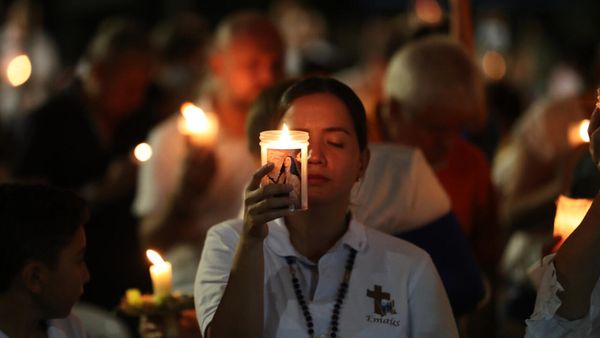
Grief has also brought the community together in prayer. Members gathered this week at Our Lady of Lourdes Catholic Church in Southwest Miami-Dade, where Colombian-born priest Father Freddy Yara led prayers for victims and their families.
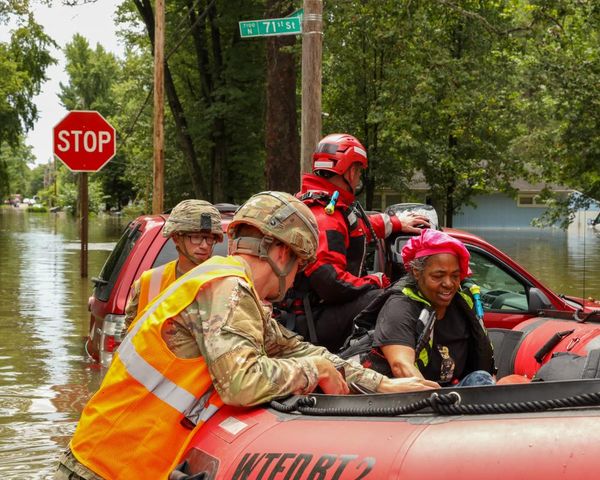
Search-and-rescue work continues across the hardest-hit departments, and officials caution that both the death toll and the number of people still unaccounted for are likely to keep changing in the days ahead.