
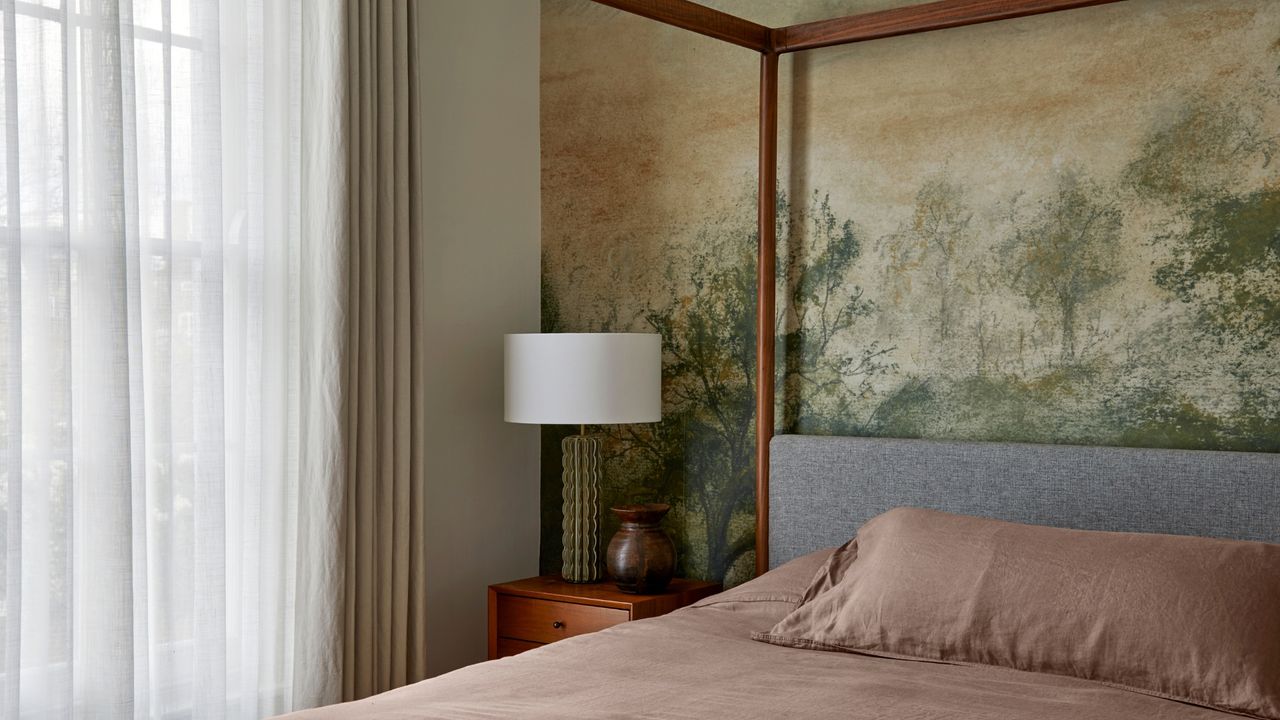
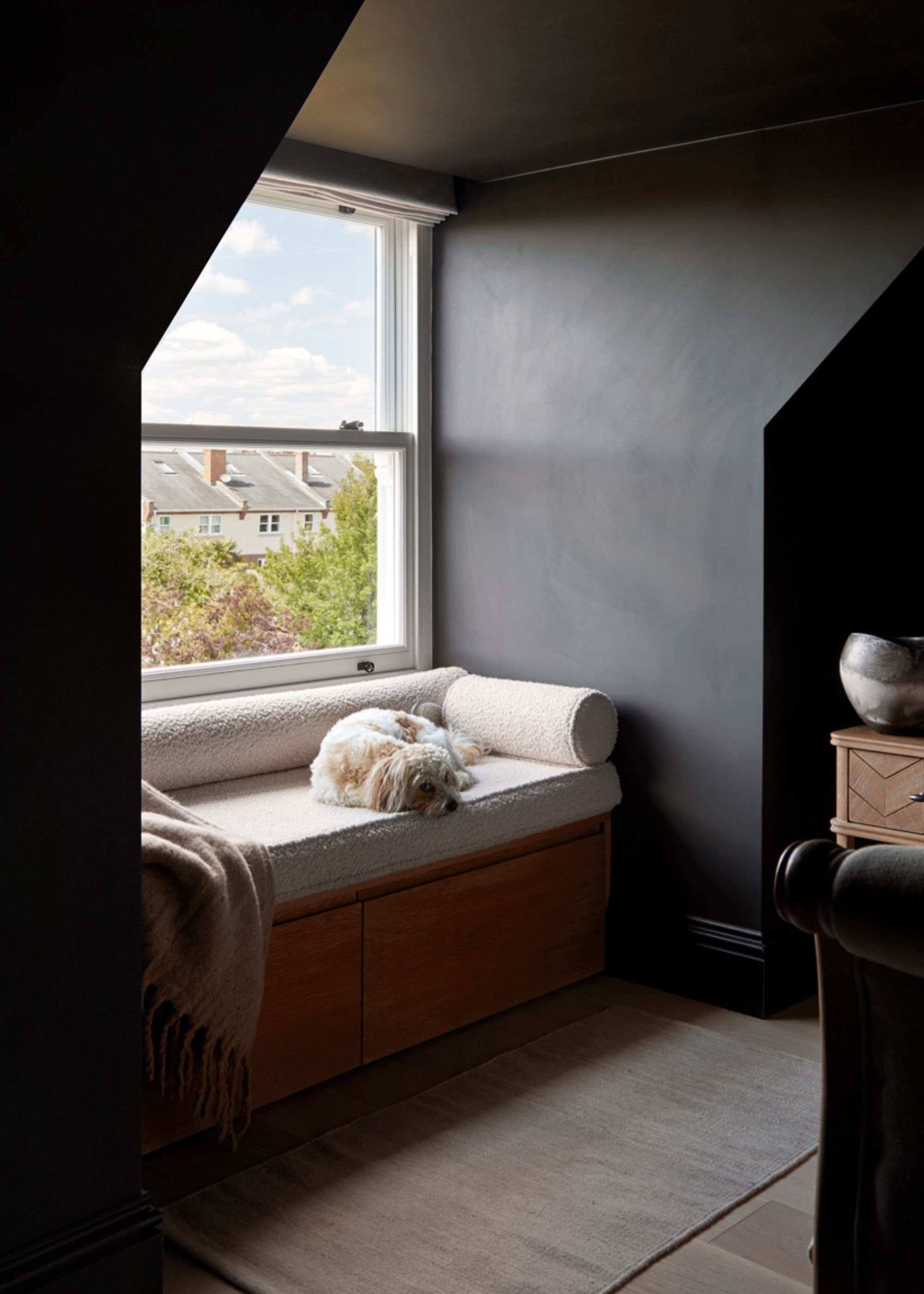
When we redesigned a family home in Surrey, I suggested making the master bedroom pitch-dark. I offered a softer version alongside it, as I usually do. But ultimately, the clients chose the dark one, and they now tell me it was the best decision of the whole project. And the reason it always works? A bedroom asks something different of us.
It is the one room in a house built around a state we are not awake to experience, and almost everything that determines whether it works — the air, the darkness, the quiet — is invisible. Taking inspiration from Japanese bedrooms, these are the five things I have come to treat as non-negotiable.
They might come across as small foundational changes, but each of these principles makes an impactful difference to the way this space feels. Now, let's explore the why that governs these design decisions.
1. Orientation First, Decoration Second
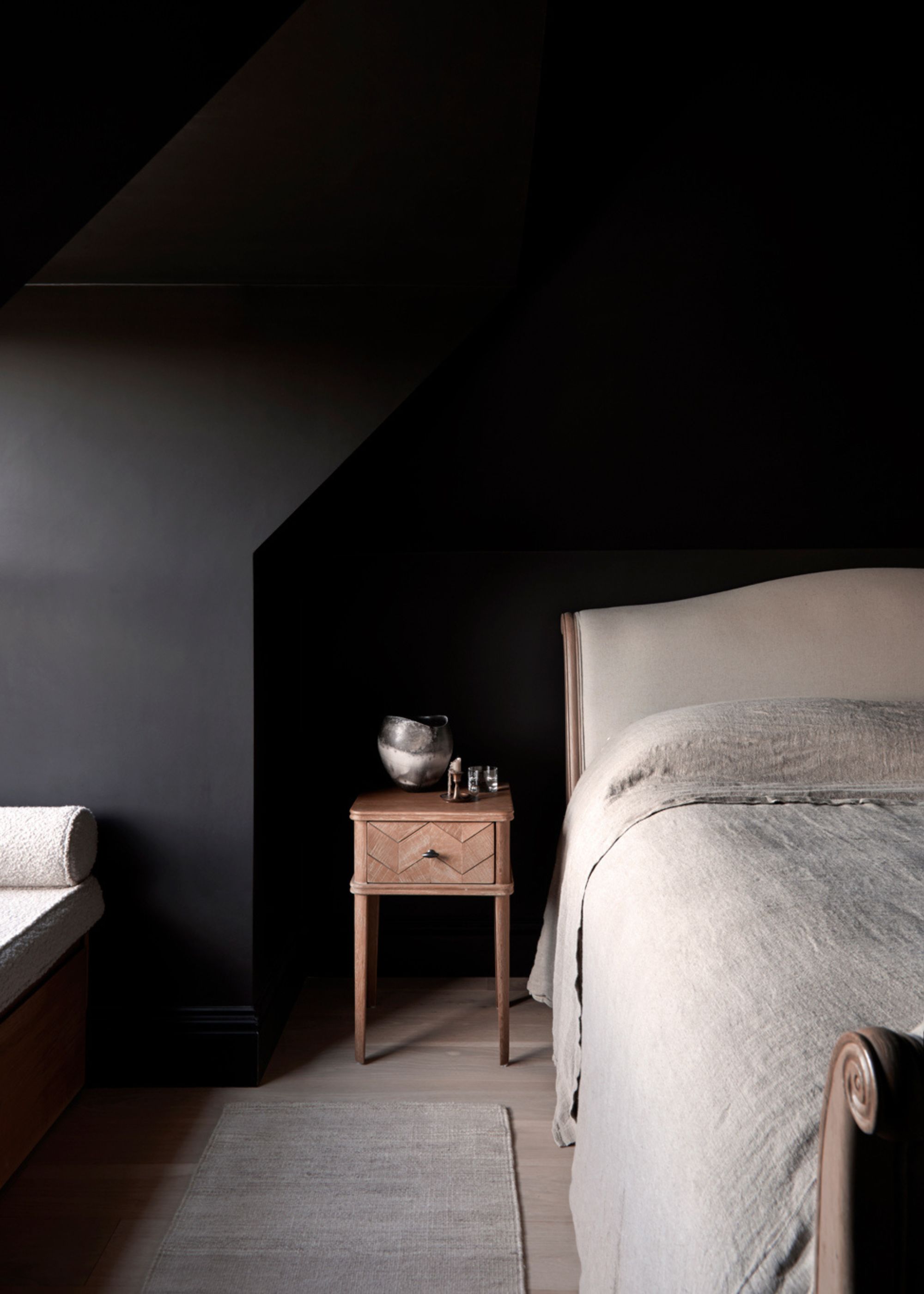
The first decision is which way the room faces, and it is the least reversible. In that same Surrey house, the master bedroom originally sat at the front, above the main bus road. We moved it to the rear, overlooking the garden.
Nothing specified afterwards — no bed, no palette, no lighting scheme — would have compensated for a bedroom facing traffic. Where a floor is being reconfigured, I place sleeping rooms on the quiet side and give the noisier elevation to rooms where noise matters less. Where walls cannot move, shifting a bed away from a party wall helps.
These simple bedroom layout considerations save you from long-term regrets that disrupt the most important downtime of your day.
2. Free Flowing Ventilation
Close a bedroom door on two sleeping adults, and carbon dioxide climbs past 2,000 parts per million by morning. Field studies comparing ventilated and unventilated bedrooms find better sleep quality and clearer concentration the next day.
Japan has required continuous mechanical ventilation in all new homes since 2003; there is still no equivalent rule here. In a city, an open window is rarely the answer, admitting traffic noise and pollution along with the air.
I find that quiet, continuous extract, trickle vents, genuinely left open, and, where budget allows, heat-recovery ventilation all do the work far more gracefully. And when hot summers come around, much like the moment, poor ventilation planning will be one of the things making your bedroom feel hotter at night. So take note now, for better sleep later.

3. Layered Window Treatments
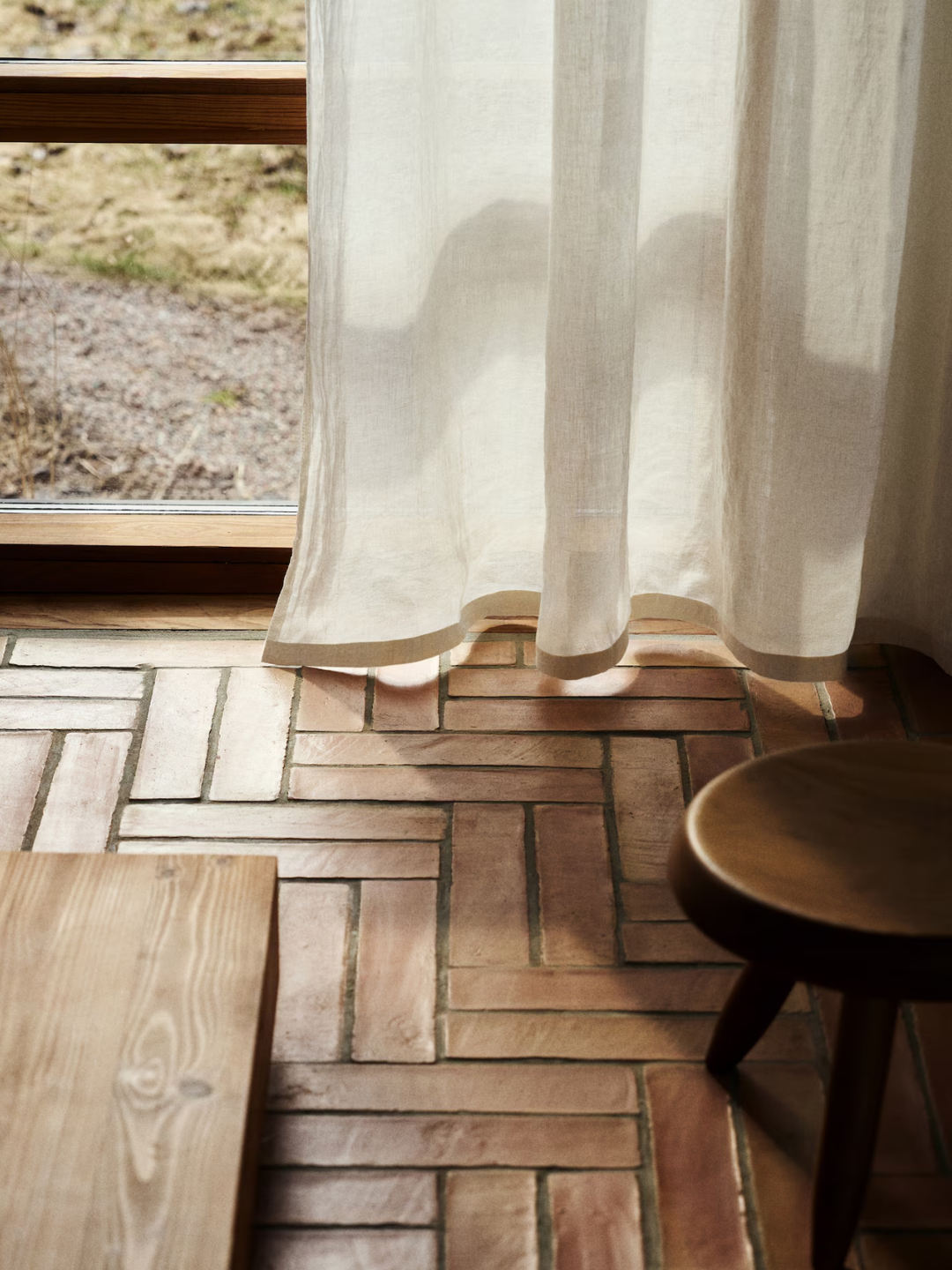
Thoughtfully stacked layers are one of those things in Japanese homes that make so much sense. A shoji screen transmits roughly half the light falling on it. It does not darken a room so much as soften it, turning hard sunlight into an even glow.
Darkness was achieved separately, with amado — solid wooden or metal shutters slid across the outside at night. That separation is worth borrowing. I specify a sheer linen or voile blind to diffuse daylight much as washi paper does, so a room is bright without glare and private without feeling closed.
Follow this with a genuine blackout layer in front of it. This window treatment layering formula is what makes the dark bedroom in Surrey work. Nothing filters in at four in the morning, and nothing is lost during the day.
So, consider pairing these Stripe Sheer Voile Panel Slot Top Curtains from Laura Ashley with these Brushed Eyelet Blackout Thermal Curtains from M&S.
4. Minimalist Tendencies
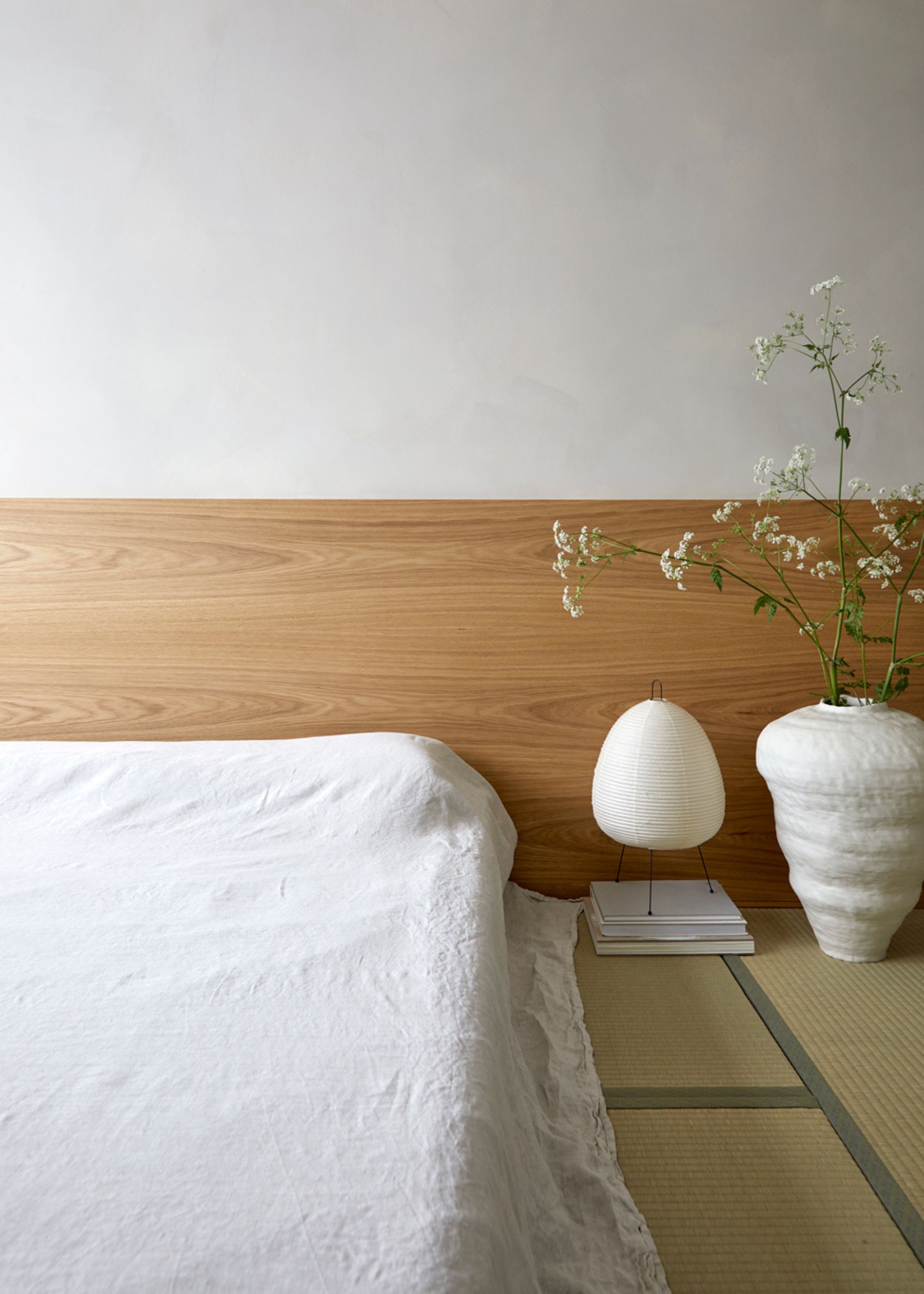
This is the criterion the other four answer to. Think a tech-free bedroom with no television, and as little furniture as the room can manage. A bedroom is also where a house quietly deposits its overflow — the drying laundry, the exercise bike, the desk that fitted nowhere else — each asking something of you at the moment you are trying to stop.
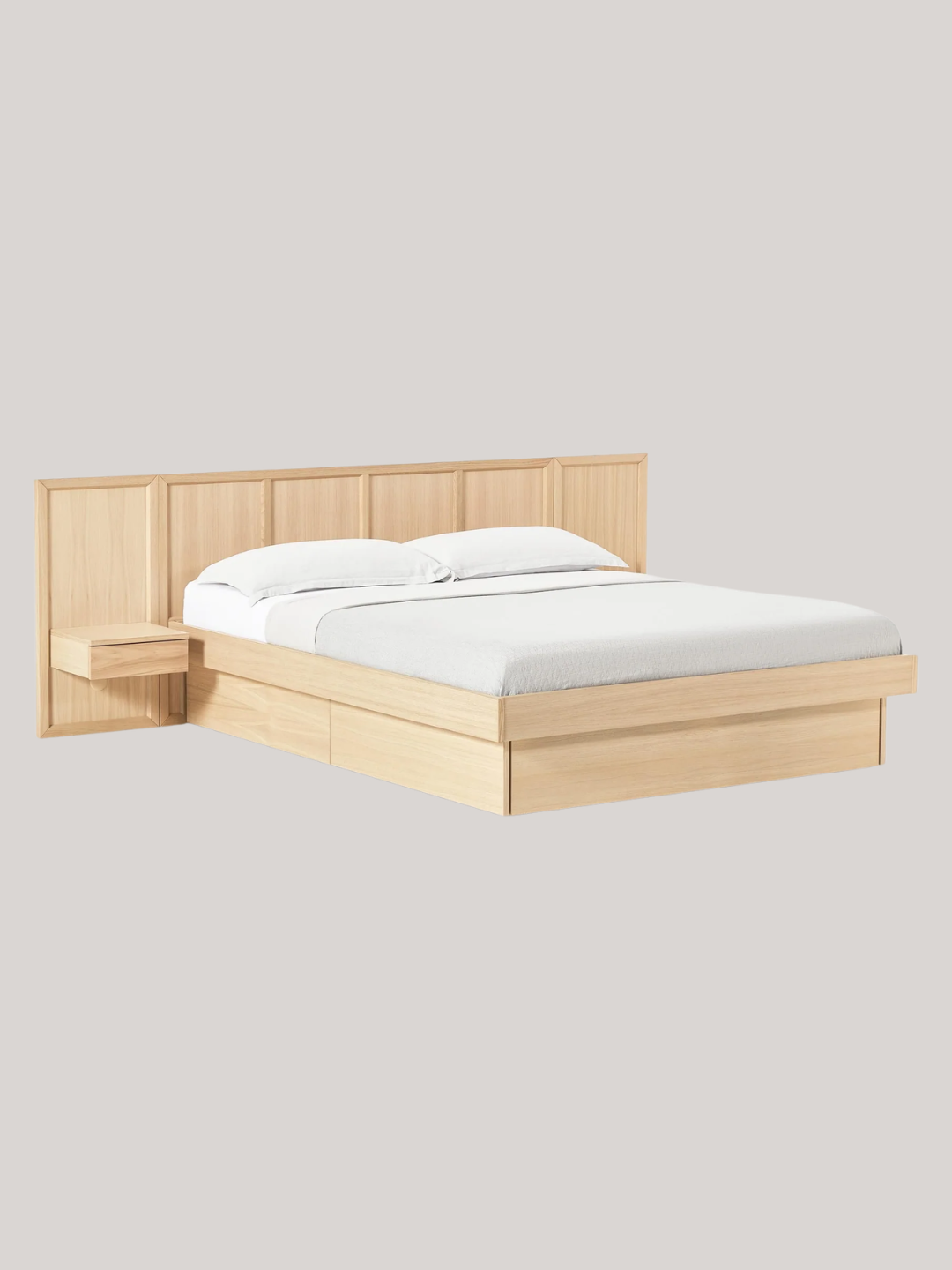
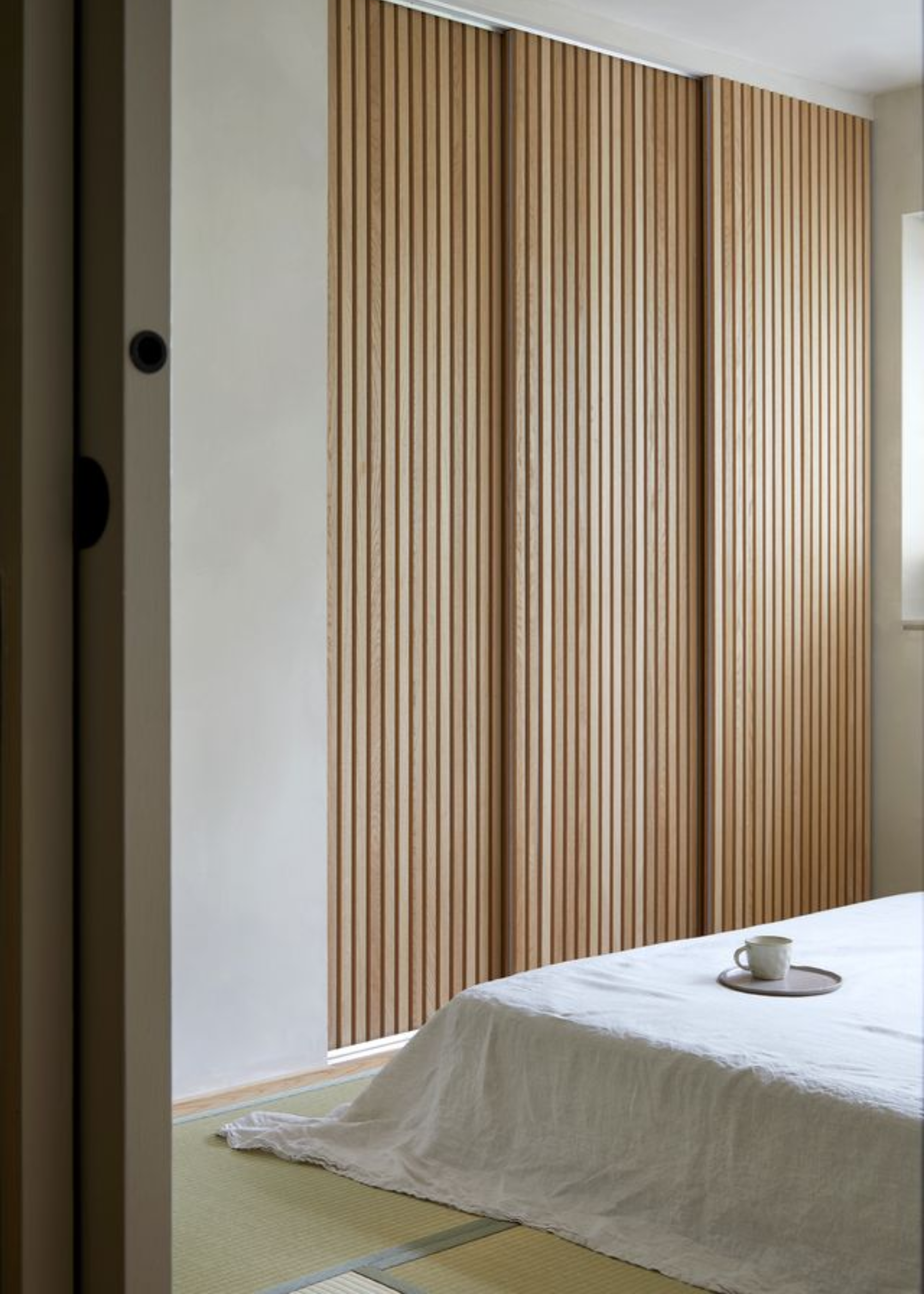
In an Ealing house for a couple who practice Japanese floor sleeping on tatami, the bedroom holds a wall-to-wall oak headboard and very little else. It is the most restful room there because nothing competes for attention. The Japanese word yutori (ゆとり) captures this latitude, slack, room to breathe, used up space, time, and mind alike.
5. Materials that Regulate
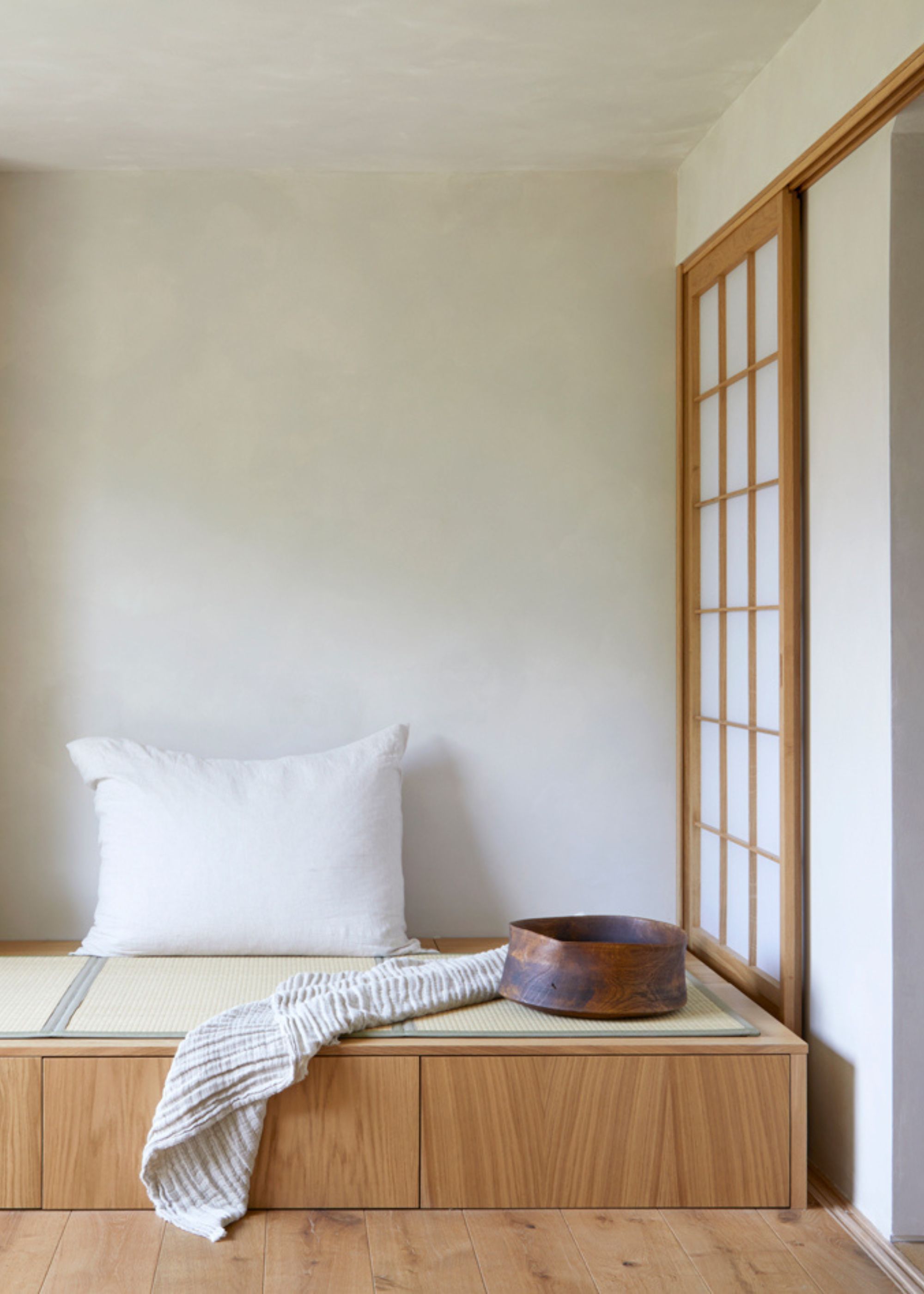
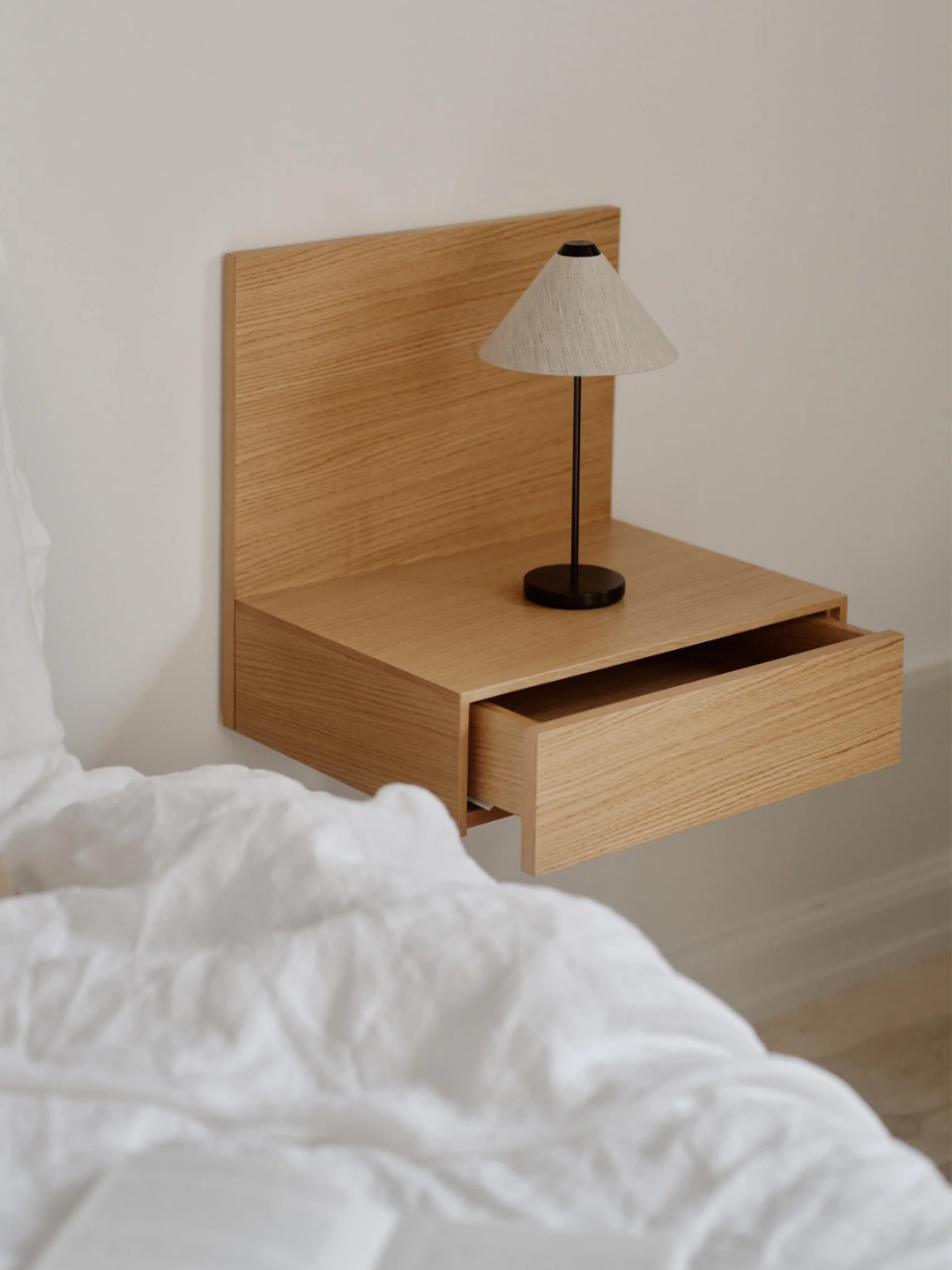
I also had a client who had developed a severe dust allergy after moving to the UK, which shaped every decision — hard surfaces rather than fabric, slatted timber for acoustics rather than upholstery.
It taught me something I now apply more widely, which is that soft furnishings are the easiest thing to add to a bedroom and the hardest to keep clean. Clay plaster absorbs and releases close to twice the moisture that lime does, buffering the humidity that builds overnight.
Remember that timber, clay, paper and wool all moderate a room. Meanwhile, vinyl and foam simply sit in it.
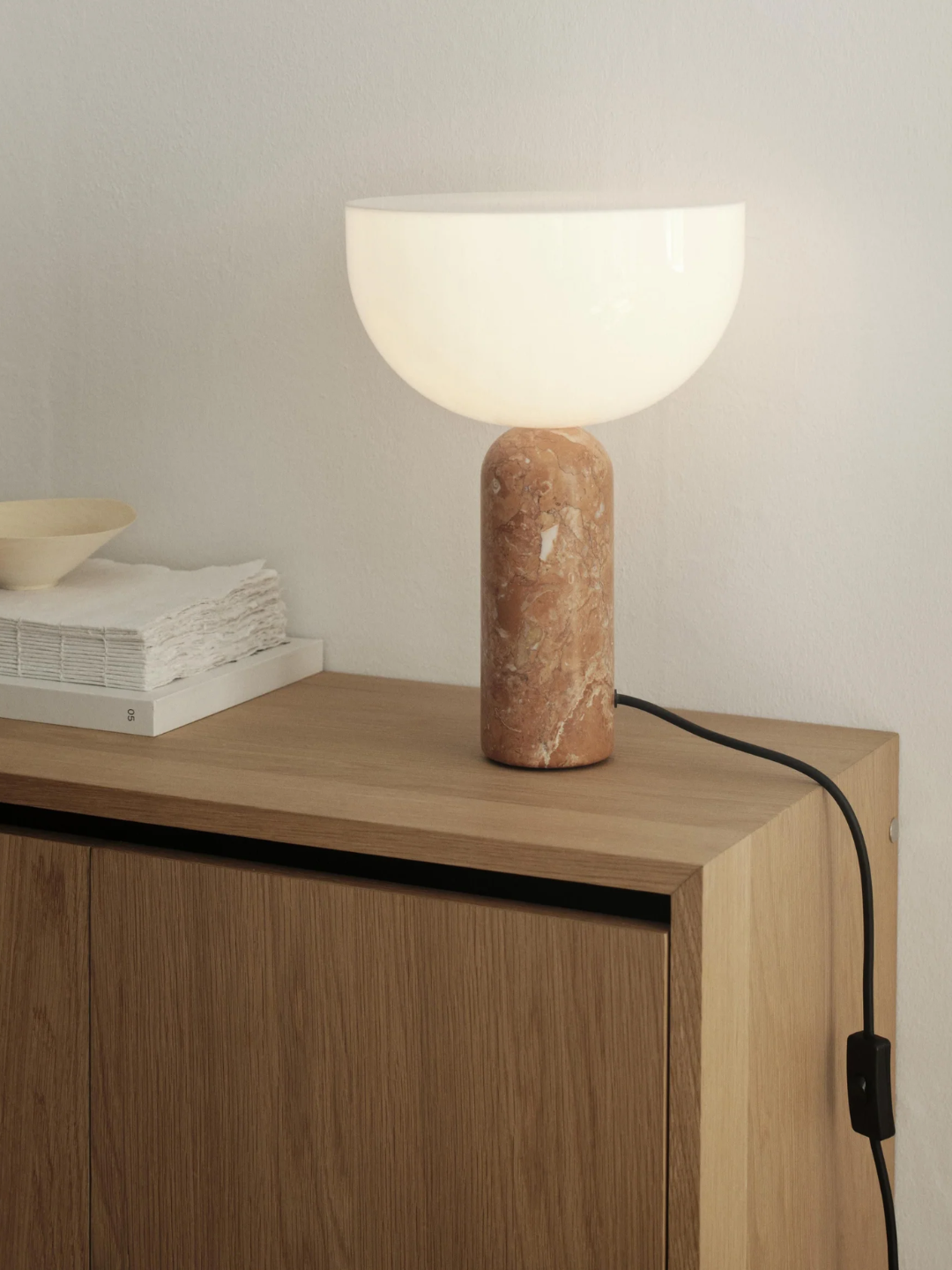
None of this is restraint for its own sake. A bedroom is the room we return to at the end of every day, and it can either help us wind down for sleep or quietly ask us to keep carrying it. Getting the air, the darkness, and the quiet right is what lets everything else be gentle.
If your bedroom feels far from soothing, sign up for the Livingetc newsletter for more home wellness design tips.