As 200,000 evacuate, anti-virus measure limit shelter capacity
By Ken Nakao and Akiko Tsuruta / Yomiuri Shimbun Staff Writers
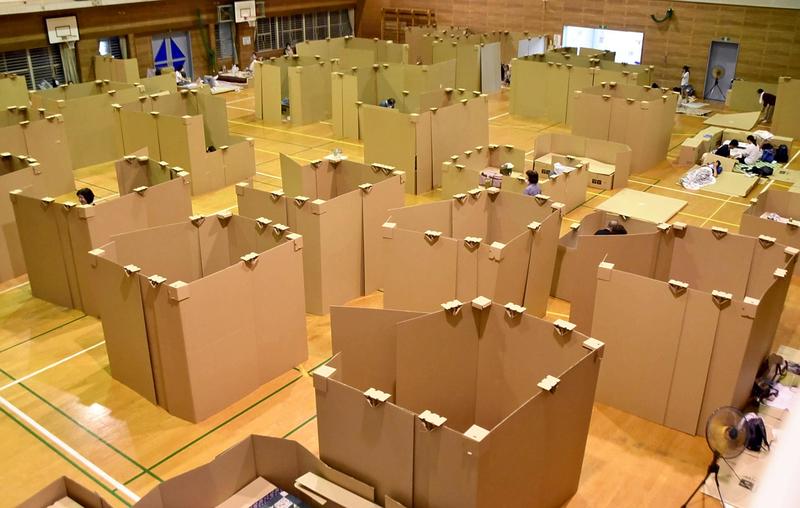
NAGASAKI/KAGOSHIMA -- In preparation for Typhoon No. 10, which was expected to be one of the strongest typhoons ever to hit Japan, some 200,000 people evacuated to shelters in the Kyushu region at one time. Since shelters cut capacity due to the spread of the novel coronavirus, many shelters were overcrowded. There were cases in which evacuees needed to move to other shelters, while some shelters accommodated people in excess of their virus-adjusted capacity. With the full typhoon season approaching, measures need to be taken quickly to address these issues.
Unusual preparation
"If I had stayed at home, I would have been injured. It was good to evacuate to the shelter," said a 71-year-old woman who lives on Fukue Island, one of the Goto Islands in Nagasaki Prefecture. She expressed relief about being safe while looking at the outer wall of her house, torn off by the storm's winds.
After seeing a news report that the typhoon would be as powerful as the 1959 Isewan typhoon, in which over 5,000 people were lost, she decided to take refuge at an evacuation shelter for the first time. While she had been worried about her house, she said, "I felt secure because I could stay with many people I knew at the shelter."
Since Sept. 2, the day after Typhoon No. 10 was identified, the Japan Meteorological Agency had taken unusual measures in its calls for evacuation, such as issuing several press releases every day. The agency emphasized the need for evacuation with such statements as, "There will be unprecedentedly strong winds" and "Phenomena beyond our expectations could happen."
Municipalities concerned took quick actions. The village of Toshima, Kagoshima Prefecture, which comprises remote islands, began evacuating residents to outside the islands Friday, transporting elderly people and others by helicopter to Kagoshima City. In places other than remote islands, more and more shelters opened.
As the typhoon neared, municipalities issued evacuation orders and advisories at an early stage. The Yomiuri Shimbun learned that, as of 9 a.m. Monday, about 7.73 million people were under evacuation orders and advisories in all seven prefectures on the island of Kyushu, and about 195,000 took refuge at shelters. Hotels in various parts of the region were fully booked, and quite a few people are believed to have evacuated to other places, such as relatives' homes.
More evacuees than in '19
Since April, the central government has asked municipalities to take such measures as increasing the number of shelters and using hotels and ryokan inns because their existing shelters need to significantly cut capacity to avoid the Three Cs (closed spaces, crowded places, and close-contact settings) as part of measures against the coronavirus.
The Kurume municipal government in Fukuoka Prefecture reduced the number of people its shelters would accommodate while increasing the number of shelters from 50 to 63. In addition, it more than doubled the number of officials in charge of measuring body temperature and other tasks. Since Sunday, some 5,000 people have visited shelters in Kurume, which is nearly 20 times as many as when Typhoon No. 17 hit the region in September last year. The municipal government opened one more shelter while guiding evacuees to nearby shelters. However, 14 shelters reached capacity and the number of inquiries from citizens surged, according to the government.
There were issues concerning the acceptance of residents.
In Amami, Kagoshima Prefecture, nine of 75 shelters were overcrowded Saturday. Shelters that cut capacity by half refused to accept more people when the number of evacuees reached 70 and municipal government officials announced available shelters in the neighborhood. In Kagoshima Prefecture, some shelters in the cities of Aira and Hioki neared capacity and evacuees were guided to nearby shelters.
In Kagoshima City, where up to about 5,000 people evacuated, 13 shelters accommodated more people than capacity, as they reportedly considered it would be dangerous to make people move to other shelters in strong winds.
Kagoshima Gov. Koichi Shiota said Monday: "There could be mismatches between estimates on the number of evacuees and the number of shelters we prepared. We would like to discuss future measures."
Municipalities have been reviewing their disaster prevention plans and other measures in order to prevent complex disasters created by the coronavirus and natural disasters. However, they are still seeking ways due to a lack of locations appropriate for shelters and an insufficient number of accommodation facilities.
Read more from The Japan News at https://japannews.yomiuri.co.jp/