What can you tell me about Sadler’s Wells and your role there?
At Sadler’s Wells our aim is to be the world’s leading dance house, presenting a vibrant year-round programme of every kind of dance – from hip-hop to flamenco, ballet to Bollywood and of course, cutting-edge contemporary dance. We aim to bring the best of international and British dance to as large an audience as we can, via our three theatres in London and through national and international tours. We commission and produce original work, and tour productions to major cultural venues around the world. Above all, we aim to champion the public’s enjoyment and understanding of dance as well as supporting artists and the creation of exciting new work.
My role is incredibly varied; no two days are the same. As director of artistic programme, I work closely with my programming and producing colleagues to identify work and position the shows within our overall artistic plan, while making sure the finances and budgets work. I also link up with our creative learning team to see how our participatory work ties in with the programme and its objectives.
Where do you find inspiration for the programme?
We present work from so many dance styles, which means there are many sources of inspiration. We work very closely with our 16 associate artists, with whom we commission or produce and present their work. Each artist is on their own creative journey, so we support and respond to that. Their inspiration becomes ours.
Another area for new ideas is our role in the development of existing dance genres. For example, we regularly programme tango companies in both the Peacock theatre and Sadler’s Wells, but we wanted to develop the form artistically. So we matched a contemporary choreographer from outside the tango world, Sidi Larbi Cherkaoui, with tango dancers to create and bring a fresh perspective, which was the genesis of the m¡longa project, which we presented in June.
We sometimes use a moment in dance history to create work or a season, which was the case with the Ballet Ruses season, In the Spirit of Diaghilev. Or we take inspiration from a geographical region, which inspired our Out of Asia season in 2011 and Northern Light season in 2014. We also find inspiration from our audiences.
Can you tell me a bit about your personal programming process?
Initially, it’s about seeing as much work as you can. I’m fortunate enough to have a number of colleagues who are part of the programming process, so we all share our thoughts, ideas and feedback on work we’ve seen. Then we look at the context of the work and decide if it fits into some of our key strands, whether artistic, geographic or economic.
I try to follow a few key principles. First, it is about quality: trying to find the best of whatever genre for which I’m programming. Second, what does it mean for our audiences? As we generate 75% of our income via ticket sales, we need to think about our audience, who are central to our economy. Is it new, different, challenging or exciting? What does it mean for dance as a whole? Is it the right length and balance? How does the work look in our different theatre spaces? How does it work technically? We have to ask all of these questions as well.
To what extent should a programme reflect current and popular culture?
While I agree a season such as Northern Light, which focused on Nordic choreographers, is very much of the moment, on the whole I don’t think a programme should necessarily reflect current culture. We need to remain true to the artform. For choreographers and makers, their inspiration might come from many different sources – for example, current political, social or fashion themes – but it could equally be abstract, which is just as valuable to new work. Some work is popular and current, and there are artists who excel in connecting with audiences in a meaningful way, such as Matthew Bourne and Kate Prince’s ZooNation. Other work is more esoteric and might not be dance as some know it.
What we remain true to is diversity in our programming, so we strive to embrace all dance forms. What’s great about dance is that is speaks to lots of people on lots of levels and is a universal artform; people can engage at different points and we try to celebrate and reflect how people experience and access it.
What career tips would you give a young dance professional who sees their future behind the scenes of an organisation like yours?
Wherever possible, start working in the dance or more general performing arts sector as much as you can. There are many ways to build up your skills and experience, whether through apprenticeship schemes, freelancing for independent production companies, volunteering on a festival, or working in a venue in a non-programming capacity, such as the box office or café. Any kind of exposure will give you an insight into how programmes are put together, how shows are managed, how a venue works and so on. It’s always good to develop teamwork skills; dance is very collaborative. On a personal level, try to see as much as you can, so you can develop your own sense of what speaks to you artistically.
Is this an exciting time for dance, creatively?
In a word, yes! Television has been a great help in popularising dance. In the UK we have some of the finest world-renowned artists and choreographers, who have developed an international reputation. The UK has been at the forefront of a wealth of innovative new works by choreographers including Christopher Wheeldon, Wayne McGregor, Akram Khan and Hofesh Shechter, to name a few.
We’ve seen a growing popularity for dance forms like hip-hop, plus a wave of new creators making work that is accessible to large numbers of audiences, such as ZooNation and Boy Blue. We’ve seen a growth in new collaborations across artforms and dance styles, and a new wave of contemporary choreographers coming through with fresh ideas, such as Wilkie Branson, Ivan Blackstock and Eva Recacha.
Above all, on a participatory level, there is no denying the benefits of dance for young and old. Participating in dance brings social and personal benefits, confidence, team building and self expression. Dance has a huge impact on life in the broadest sense.
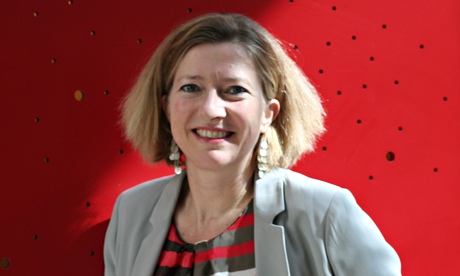
Katy Arnander is director of artistic programme at Sadler’s Wells
More like this
• Stopgap Dance Company’s Lucy Bennett on diversity in dance
• Career tips for young dance and stage professionals
• Probe’s Antonia Grove on dance funding and gender issues
Join our community of arts, culture and creative professionals by signing up free to the Guardian Culture Pros Network.