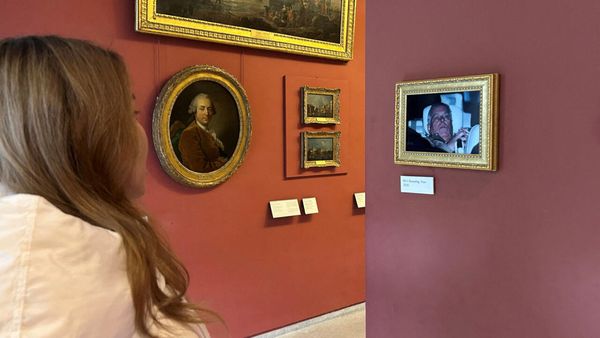
Experimenting with technology in art is nothing new, says the artist who goes by the name Quayola. But the way he is using technology is used to view the art itself just might be.
Quayola, an Italian-born, London-based artist who studied at the University of Arts, began working on audiovisual performances and video installations around 2006. Since the beginning of Quayola's career, code and algorithms have been his biggest creative tool, for a process that is largely based around the understanding that his prints, videos and sculptures are more documentations of that process, rather than an end result.
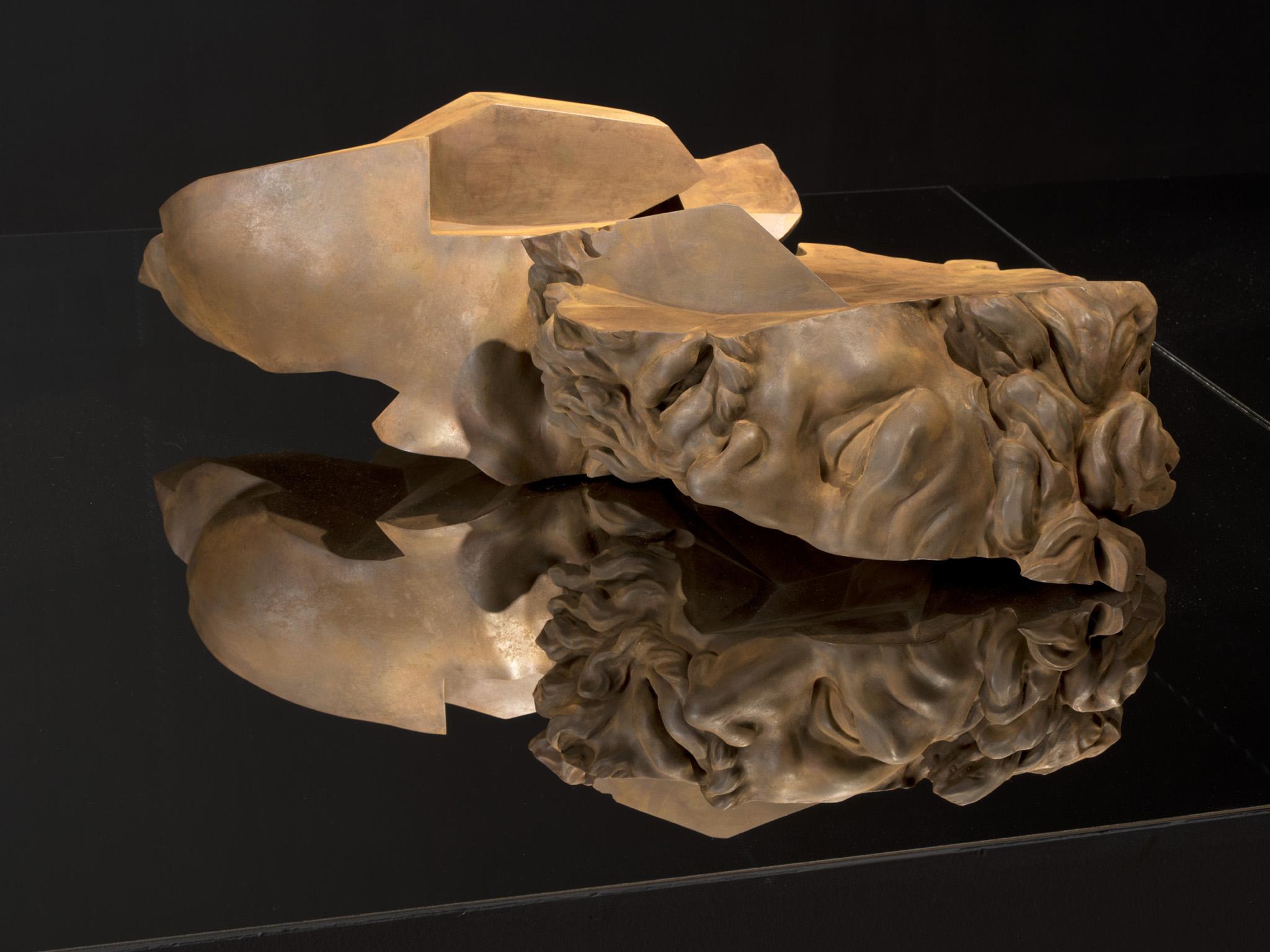
Rather than using a chisel, Quayloa is making sculptures with a robot, which he has programmed with algorithms to recreate some of the most revered works of classical sculpture – or rather, an incomplete, and therefore unique, version of the original.
Quayola’s use of computational methods, therefore, allows him to produce works through “a completely different logic – a different pair of ‘eyes’”, which then provide opportunities to discover new aesthetics.
“I am fascinated by how computer-vision systems and algorithms can provide alternative views on very familiar subjects,” he tells The Independent. “I am interested in the tensions and equilibrium between these different ways of seeing and perceiving the world around us.
“My work explores the space between radically different languages and tries to find some harmonious points in between.”
This is where his latest work, Laocoön, comes into play. When the Hellenistic masterpiece, Laocoön and his Sons, was unearthed from a Roman hillside in 1506, it sparked worldwide academic debate and has been called "the prototypical icon of human agony" in Western art.
According to Virgil, Laocoön was a priest who was killed – along with his two sons – by two serpents sent by the gods he had angered, for attempting to expose the warriors hiding inside the legendary Trojan Horse.
Quayola’s sculpture, then, takes on a kind of meta-narrative, with its creator unearthing life from beneath the apparently solid, inanimate block of stone. The end goal is to realise its seemingly limitless possibilities.
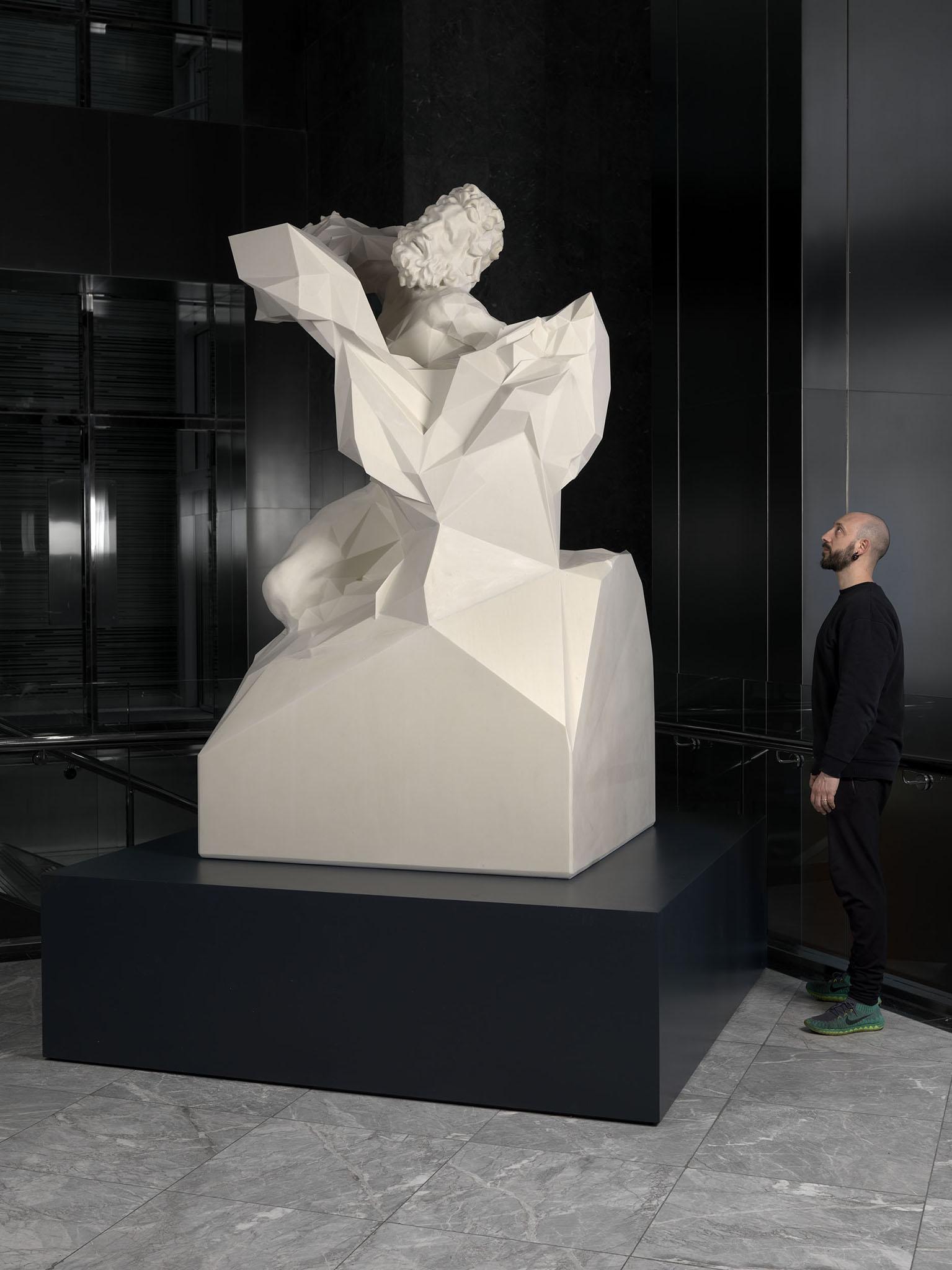
Adriano Aymonino notes in his essay on Quayola’s work how, for Michaelangelo, the sculptor had the singular task of revealing the form already contained in the marble. Quayola, by contrast, believes that artistic creation is the result of “a single choice among an infinite number of possibilities”.
Quayola is uninterested in the debate around the line that falls between art and technology, referring to the latter as a sort of “active collaborator”, with whom he can explore new visual languages and, ultimately, “new ways of looking at the world”.
“Today there is really no debate or meaningful boundary between analogue and digital music, photography, etc,” he says. “The boundary between physical and digital in general is getting really blurred, and for me that is a very interesting ground to explore.”