
Mysterious man-made islets found in lochs on Scotland’s remote Outer Hebridean islands may be thousands of years older than previously realised, a study has revealed.
The artificial structures, which are typically between 10 and 30 metres in diameter, are known as crannogs and are now usually covered with vegetation as no grazing animals can reach them.
There are numerous examples of crannogs on Scotland’s rugged west coast and on the islands of the Outer Hebrides. They are frequently made of timber and stone and are occasionally built on existing rocky structures.
While it had been thought they dated from no earlier than the Iron Age – around 1400 – 500BC – new research indicates crannogs were a common feature in bodies of water during the Neolithic epoch, which covers the time period from around 4000 to 2500 BC.
But the late 20th Century discovery that the crannog of Eilean Dòmhnuill on the Outer Hebridean island of North Uist dated from around 3700BC prompted speculation among historians that the age of many other Scottish crannogs could have been severely underestimated.
Now, mounting evidence suggests other crannogs in the area are equally as old.
In 2012, a former Navy diver named Chris Murray discovered numerous examples of well-preserved pottery made in a style dating from the Neolithic period while diving at a crannog on the nearby Outer Hebridean Isle of Lewis.
After the find, he teamed up with Dr Duncan Garrow from the University of Reading and they found further Neolithic pots at other Outer Hebridean crannogs.
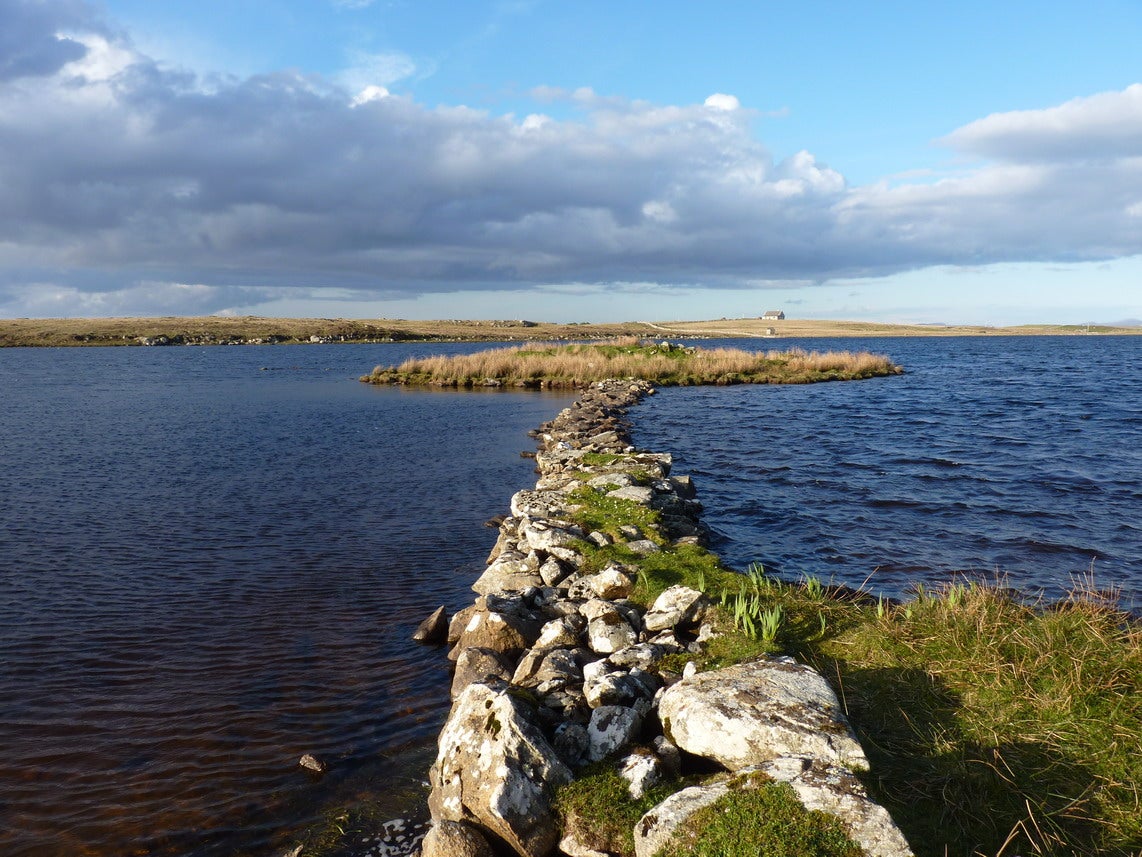
Since 2012 hundreds of pots have been found in the waters around the artificial islands, many of them well preserved.
Eight radiocarbon dating measurements were taken from the structural timbers used in the building of four crannogs on the Isle of Lewis, with six falling within the Neolithic era ranging from 3640–3360BC.
The research also reveals for the first time that the pots were likely to have been intentionally placed in the water around the crannogs – though it is not yet known why.
The paper says: “The quantities of material now identified around several sites, and the position of these vessels in relation to the islets, suggests that pots were intentionally deposited into the water. Many vessels had substantial sooting on their external surfaces, and some had internal charred residues; they had clearly been used before deposition. The large fragment sizes of these vessels suggest that at least some, and possibly all, of the vessels were complete when they entered the water.”
Recent scholars assessing the original function of the crannogs “have suggested that they could have been special places associated with social gatherings, ritualised feasting and commensality (eating together),” the study says.
“They would have required a huge investment of labour to build and probably remained significant places for a long time. Such islets may well have represented substantial symbols for, and of, the communities that constructed them,” Dr Garrow writes.
“These islets could also have been perceived as special places, their watery surroundings creating separation from everyday life.”
The study is published in the journal Antiquity.