An artificial intelligence has been created that can generate images based on what a single person finds attractive.
Researchers at the University of Helsinki and the University of Copenhagen were investigating whether a computer could identify facial features that a person would find attractive.
Brain signals were collected from participants, and combined with a brain-computer interface that would generate the artificial matches - with the researchers comparing the user interactions to Tinder.
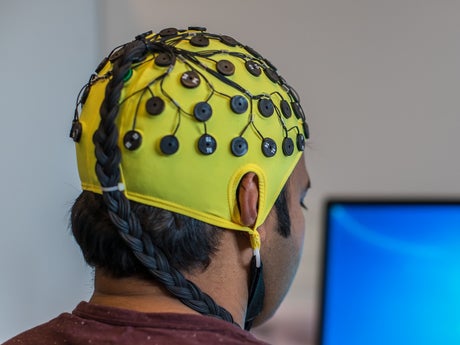
Like the popular dating app, users would indicate when they found a face created by the generative adversarial neural network (GAN) - although rather than swiping left or right, they would have to pay attention to the face while their brain’s response was collected by monitoring electrical signals via an electroencephalograph.
That brain-computer was then able to interpret opinion on attractiveness based on the images, and generate an entirely new face by merging data from the previous faces.
Researchers then generated new portraits for each participant in order to test whether the model worked, and found that the new images matched the preference of the subjects with an 80 per cent accuracy rating.
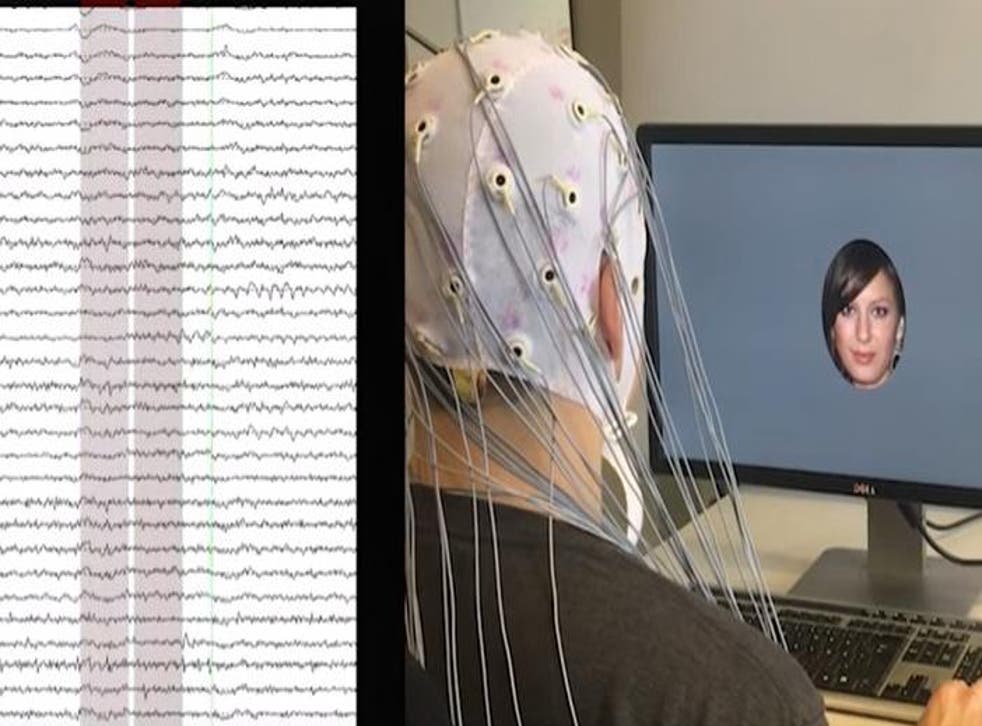
“The study demonstrates that we are capable of generating images that match personal preference by connecting an artificial neural network to brain responses. Succeeding in assessing attractiveness is especially significant, as this is such a poignant, psychological property of the stimuli”, says Senior Researcher and Docent Michiel Spapé from the Department of Psychology and Logopedics at the University of Helsinki.
“Computer vision has thus far been very successful at categorising images based on objective patterns. By bringing in brain responses to the mix, we show it is possible to detect and generate images based on psychological properties, like personal taste.”
The study may allow computers to learn and understand subjective preferences, which could eventually build into studying other topics such as perception and decision-making - as well as spotting stereotypes or implicit bias.
“In our previous studies, we designed models that could identify and control simple portrait features, such as hair colour and emotion. However, people largely agree on who is blond and who smiles. Attractiveness is a more challenging subject of study, as it is associated with cultural and psychological factors that likely play unconscious roles in our individual preferences”, Spapé also said.
“Indeed, we often find it very hard to explain what it is exactly that makes something, or someone, beautiful: Beauty is in the eye of the beholder.”