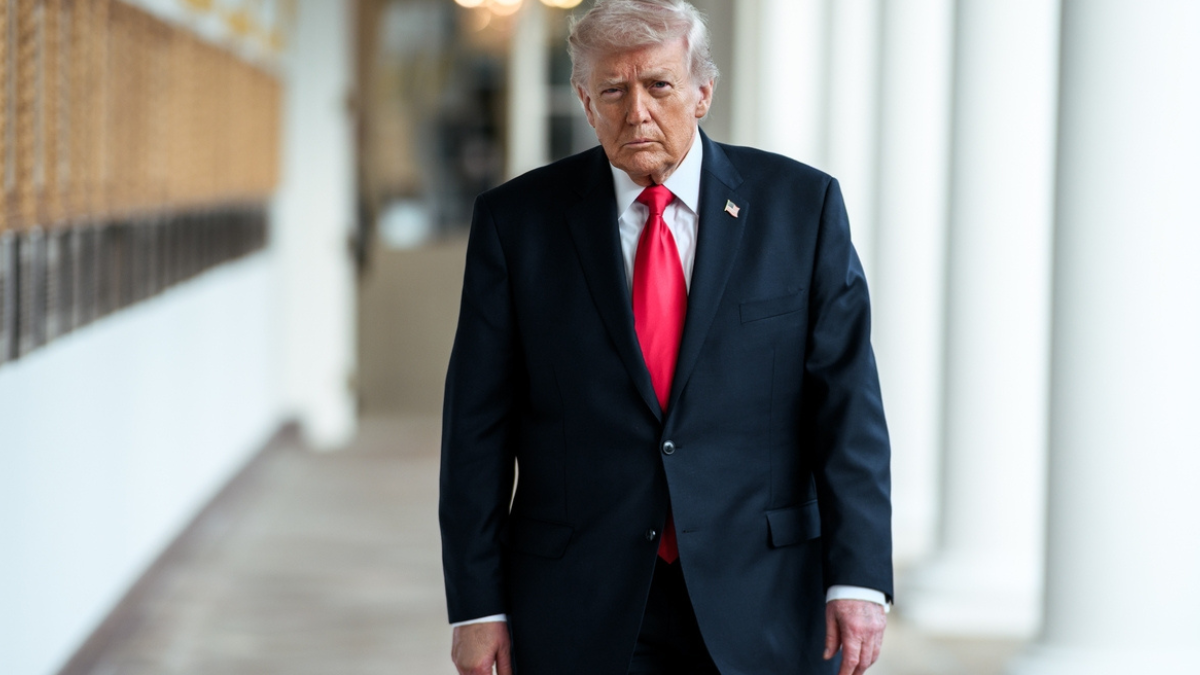
The status of the war in Iran is ever shifting, to the point that it’s still impossible to give an assessment that will stand the test of time. However, as it has become increasingly clear that what Donald Trump’s administration is ostensibly negotiating is a return to the core elements of the Barack Obama-led 2015 JCPOA deal, some are already asking if this is all the author of The Art of the Deal had to offer.
Thousands have died, and economies in Asia, Europe, and Africa are now dealing with shifting prices as a result of Trump and Benjamin Netanyahu’s war in Iran. And despite Trump saying that gas prices in the US are “not very high,” people are driving for as much as an hour to reservations just to get a much-needed reprieve from skyrocketing fuel costs.
Q: How much longer will American continue to see these high gas prices?
— Aaron Rupar (@atrupar) April 16, 2026
TRUMP: Well, they're not very high
Q: $4 a gallon still
TRUMP: That's what ABC says, but the stock market is up. Everything is doing really well. pic.twitter.com/yIxHXKqXII
So if you’re wondering what this was all for… the answer, at least for now, appears to be not much. Even the previously fragile ceasefire and subsequent agreement remain up in the air, as Iran has just announced that it will close the Strait of Hormuz again. This comes mere hours after Trump declared that Iran would never be able to shut it down.
BREAKING: Iran has announced it is again closing the Strait of Hormuz. The military says the US must lift its blockade of Iranian ports before the Strait is opened again. pic.twitter.com/Gm8bNIfmwo
— Al Jazeera Breaking News (@AJENews) April 18, 2026
At this point, even the oil markets seem to be responding more to Iran’s leadership than to Trump—whom Wall Street has rather brazenly dubbed “TACO.” After a war that has killed civilians, damaged the infrastructure of Gulf allies, and allegedly depleted US military supplies, the outcome so far appears to have elevated Iran’s leverage on the global stage rather than diminished it.
Popular liberal commentator Brian Krassenstein took to X to claim that the administration is now considering paying the Iranian government $20 billion in unfrozen assets as part of a deal. He questioned whether a war reportedly costing $55 billion has achieved anything beyond circling back to the same framework it once abandoned.
Trump is reportedly negotiating a deal which would stop Iran from producing a nuclear weapon in exchange for $20 Billion in Iranian assets being unfrozen.
— Brian Krassenstein (@krassenstein) April 17, 2026
Note that The Iranian Nuclear agreement (JCPOA) that Obama signed, that Trump tore up, did the same thing. It halted their…
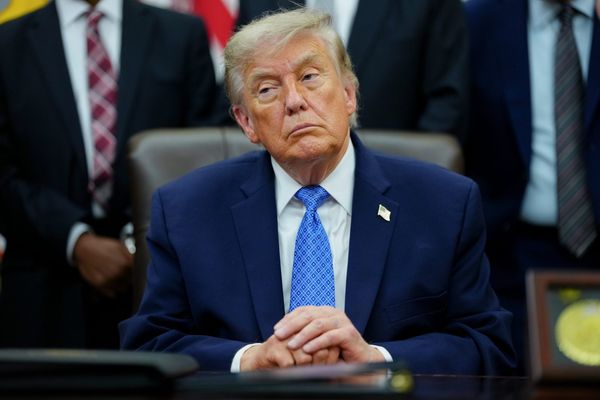
In interviews yesterday, Trump swung between celebrating the end of wars and threatening further escalation if Iran does not agree to terms aligned with his demands. Those demands have shifted repeatedly, but his latest insistence — that Iran surrender its enriched uranium to the US or an ally — echoes provisions that were already addressed under the original JCPOA framework.
Meanwhile, the administration is reportedly reaching out to companies like Ford Motor Company to potentially repurpose factory lines for munitions production. So while negotiations continue, the possibility of further escalation — at a significant cost to the global economy — remains very much on the table.
April 22 now looms as the deadline for the current ceasefire, and with nothing formally signed, the pressure is mounting. There is measured optimism in Washington, but also a growing recognition that the administration’s credibility — and perhaps its political future — depends on securing a deal that restores some level of stability.
Trump, for his part, is still searching for an outcome that doesn’t come at the expense of his pride. But a deal has to be made. At this stage, the global economy carries far more weight than any one leader’s reputation — and on some level, even this administration must understand that.