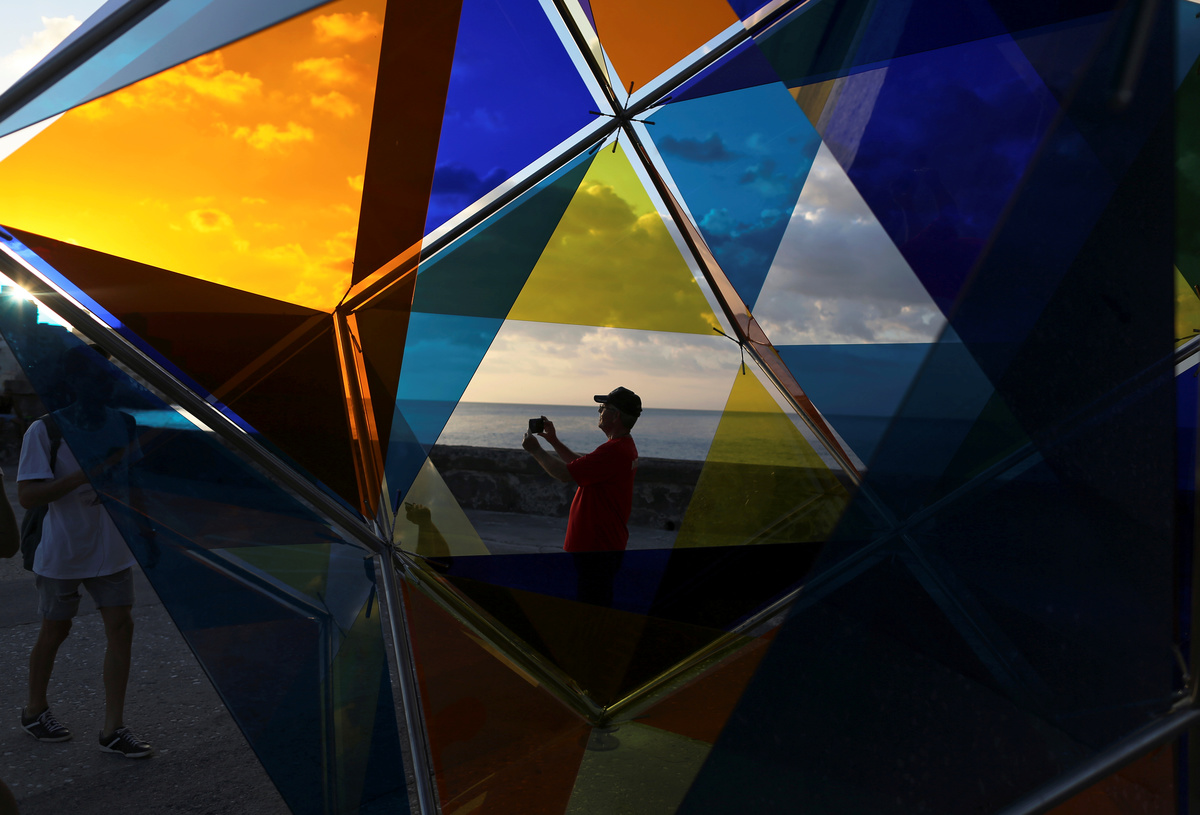
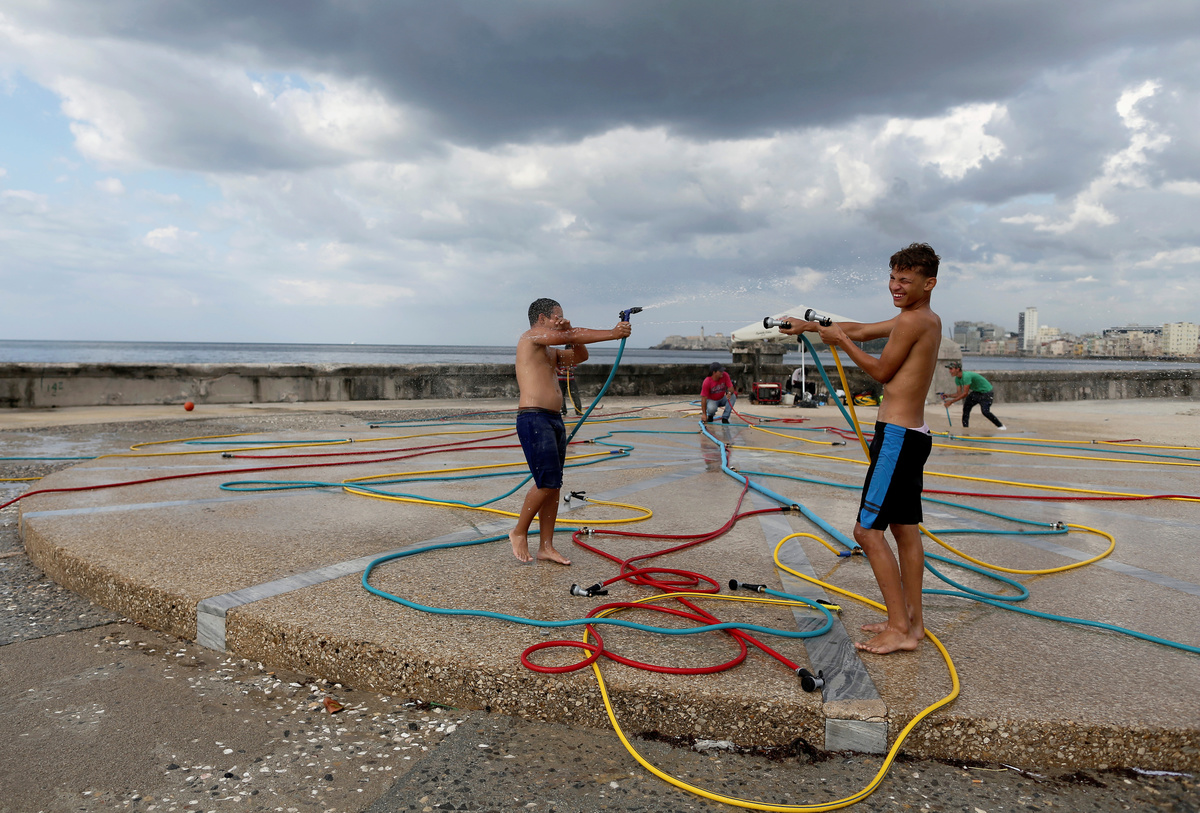
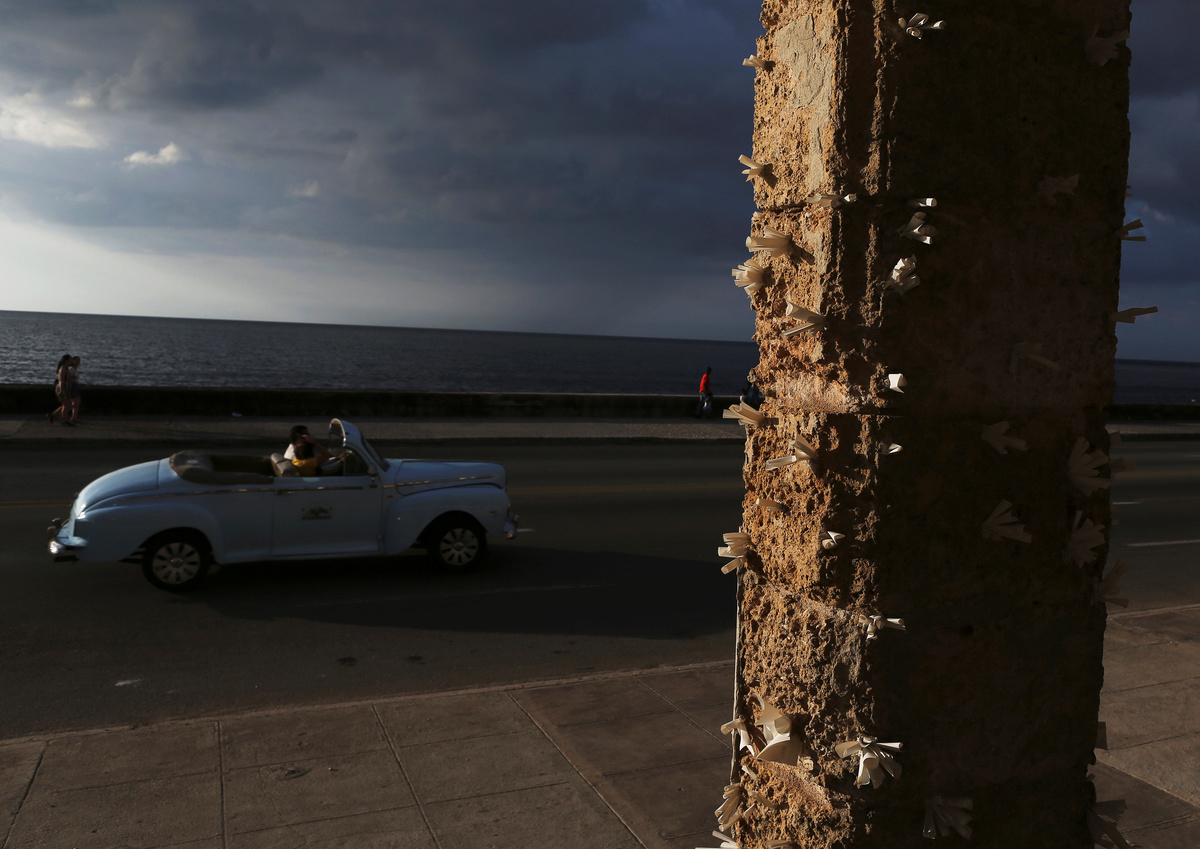
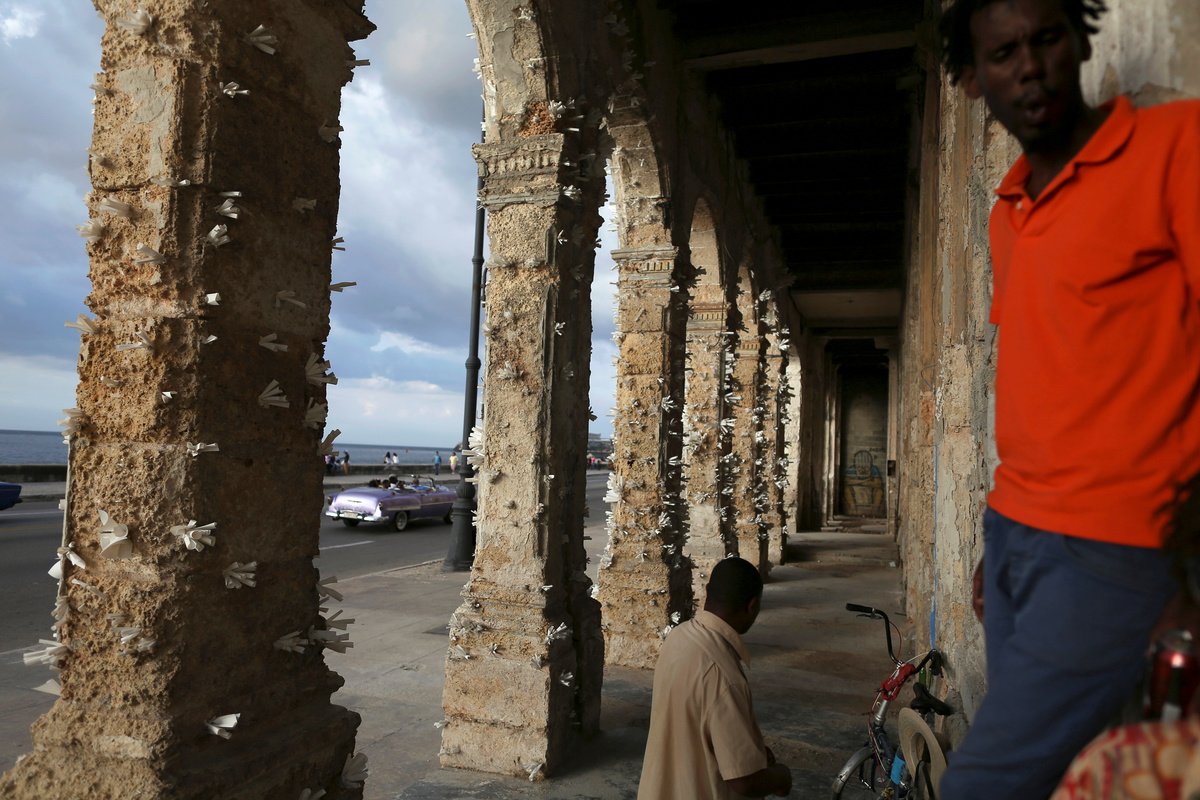
HAVANA (Reuters) - Cones of white paper sprout from the seasalt-eroded pillars of one colonial building along Havana's seafront, elaborately painted curtains cascade from another while out front children play with an installation of multicolored hoses.
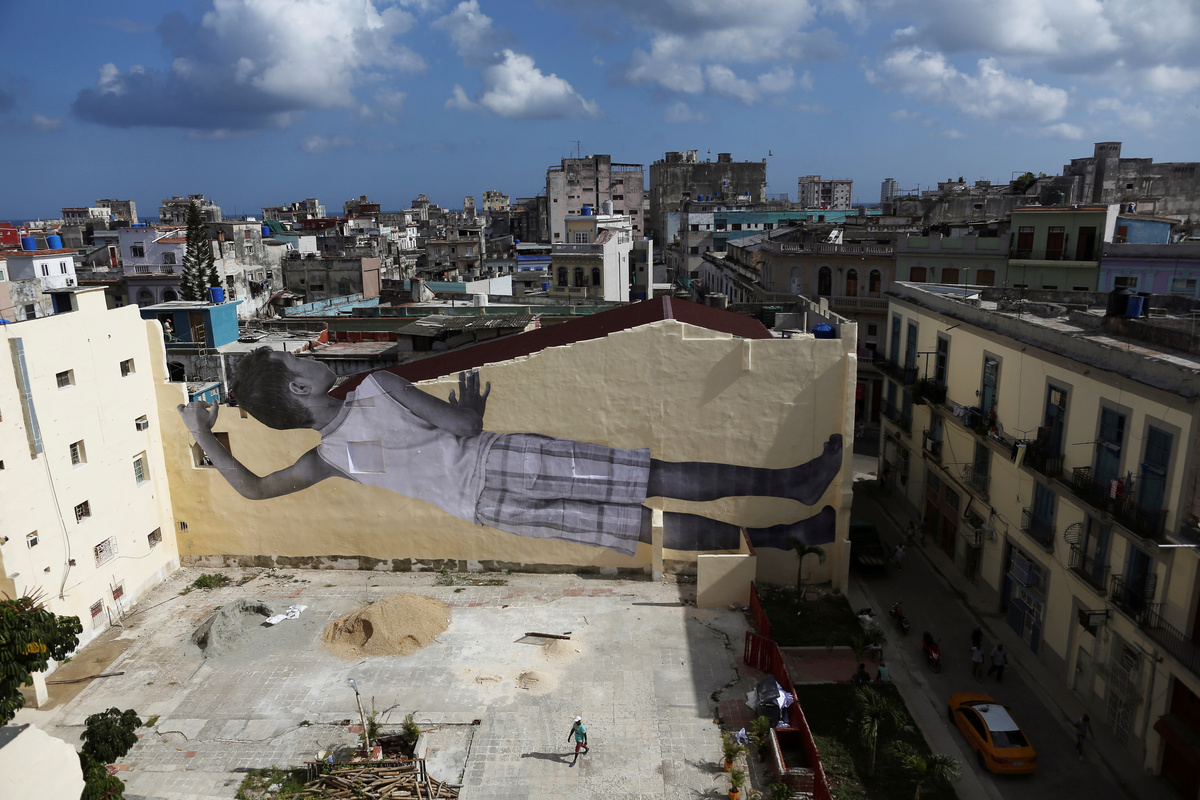
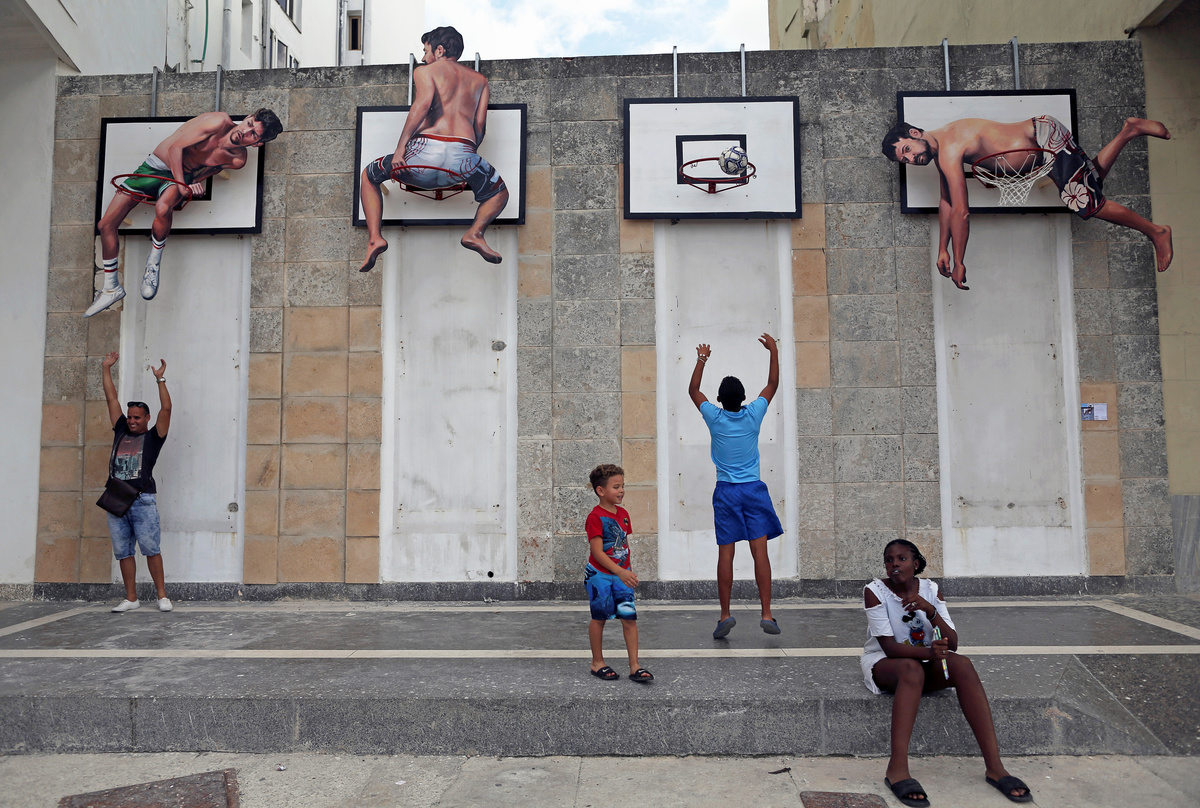
Havana's 13th Biennial kicked off this weekend with works by more than 300 contemporary artists from 52 countries taking over the city's museums, galleries and open-air spaces, and many more collateral exhibits.
"They turned my home into an artwork," said Silvia Perez, smiling at the paper sprouting from the colonnade of her home, a piece by Cuban artist Elio Jesús Fonseca. "The artist said it meant peace."
The transformation of the Malecon seafront boulevard into an open-air, interactive gallery, has become one of the most popular venues of Cuba's most important arts event.
Along the sidewalk this year are smooth boulders encased in volcanic slabs by Mexican artist Jose Davila, while a swirling light installation by Peruvian artist Grimanesa Amoros protudes from a building.
Cuba's Communist government, which has heavily promoted the arts since the country's 1959 leftist revolution, created the Havana Biennial in 1984 to promote artists from the developing world, especially Cuban ones.
This year, 80 Cubans will exhibit their work, including a performance on Monday by Manuel Mendive, considered the Caribbean island's top living artist.
Still, it also includes a large contingent of European and U.S. artists including Cuban-Americans like Enrique Martínez Celaya and Emilio Perez.
Biennial Director Jorge Alfonso said it had been a challenge to stage the biennial given Cuba's difficult economic situation - authorities postponed it half a year - but that it had succeeded underscored the importance Cuba placed on culture.
"Not even in the most difficult moments have we ever given up on staging one of these kind of events," he told Reuters.
"The slogan of this year's edition, 'the construction of the possible', is related to our ideal that a better world is possible."
Some artists who are critical of the government however have subverted that slogan.
In one piece on the Malecon called "Potemkin Village", Cuban-born artist Juan Andres Milanes Benito who lives in Norway has propped what appears to be the perfect facade of a building on another that is falling into disrepair.
"It fits a lot with the Cuban government these days and how the system is working - there is a lot of facade," he said. "Inside it is not so perfect."
Originally he had wanted to replicate the facade of a renovated government building but authorities would not allow him, he said.
Some Cuban artists feel the Havana Biennial itself is a facade papering over simmering tensions between them and authorities.
Artist Luis Manuel Otero Alcantara, who led a campaign against a controversial new decree on the cultural sector last year, was arrested last Friday after staging a small yet politically charged performance in his neighborhood.
His whereabouts remain unknown, his friends say. Asked by Reuters about the arrest in a news conference, the head of Cuba's National Council of Visual Arts, Norma Rodriguez, said "as far as I know he is an activist not an artist".
Cuba considers dissidents to be mercenaries in the pay of the United States trying to subvert the government.
The Havana Biennial runs until May 12.
(Reporting by Sarah Marsh; Editing by Lisa Shumaker)