Bloodshed and savage acts of brutality marked bitter fighting between troops and anti-government protesters on the third successive day of massive popular demonstrations in the city.
Troops opened fire on demonstrators 15 times yesterday, Burma Radio reported. Tens of thousands of marchers poured into the streets, ignoring the inevitable consequences of renewed confrontation with large numbers of troops deployed in the city.
The growing anger of demonstrators at the harsh measures unleashed against them brought a bloody retaliation. The radio reported that three policemen - two corporals and a sergeant - were beheaded during fighting in the Rangoon suburb of Okkalapa.
Angry mobs burnt down several police living quarters, tore up railway lines and burnt government vehicles, the radio said. Diplomats in the capital said several police stations were in the hands of demonstrators.
The demonstrators have been stripping the stations of their weapons and it is only a question of time before they are turned on the security forces.
'They have seized guns from the police. They are armed now,' one diplomat said.
Burma Radio said that 33 people were killed and 59 wounded in Rangoon alone, but a reliable assessment of the casualties was impossible amid the turmoil and confusion of street battles.
The US announced yesterday that it had temporarily closed its embassy in Rangoon. A State Department spokeswoman, Ms Phyllis Oakley, said the US deplored the shooting of unarmed demonstrators by Burmese security forces. She expressed concern about reports that troops were seeking out groups of protesters and firing on them and said 'casualty numbers appear substantial'.
Huge demonstrations and violent clashes were reported yesterday in 26 other towns and cities. Diplomats estimate the number of people killed at more than 100.
The state radio, however, said troops had started shooting in self-defence when they were attacked as they guarded an ambulance carrying injured personnel to the hospital.
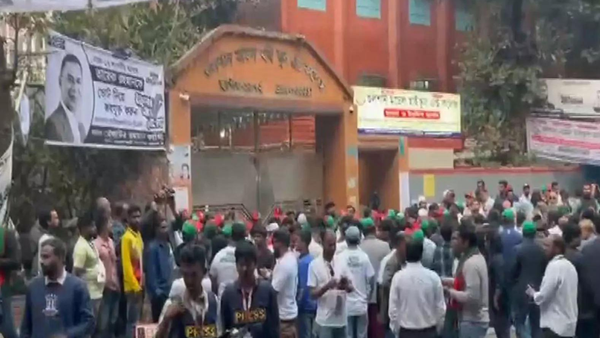
Sporadic shooting erupted intermittently around Rangoon throughout the day as troops attempted to break up crowds of demonstrators reported to have been drawn from a broad cross-section of the population.
Groups several thousand strong formed, broke up and reformed beneath red and black flags. 'The streets are full of people. They are of all ages - parents, students, teachers,' a resident said.
Diplomats in Rangoon said residents had barricaded some neighbourhoods against the military.
The extent of the violence in other parts of the country is unclear. Burma Radio said one policeman was killed in the southern town of Moulmein after police opened fire on a protest march. The crowd set on the police, seizing their weapons.
Demonstrators later surrendered the arms to Buddhist monks who intervened to try to prevent the conflict from escalating.
The willingness of a once-submissive population to meet force with force has exposed the vulnerability of a regime that is politically and economically bankrupt after 26 years of authoritarian rule built round the former ruler, General Ne Win.
It has also focused attention on the critical issue of the regime's ability to depend on a military establishment which is now the only significant bastion of the government.
Diplomats insisted up until Tuesday that the discipline of the troops showed no sign of cracking. But they questioned the ability of the armed forces to maintain their cohesion when confronted with demands to open fire, not merely on student protestors, but on crowds made up of people from all walks of life.
Government radio yesterday broadcast an appeal by Burma 's Supreme Buddhist Patriarch for restraint on the part of both the public and the authorities.
His move might reflect some awareness within the leadership of the limitations of using soldiers against a mass uprising.
General Sein Lwin's reputation for brutality has been balanced in recent weeks with a rare show of pragmatism in promoting reforms, but no hint has yet been given that the government is contemplating an experiment with conciliation where the use of military strength has stalled.
Foreigners arriving in Bangkok from Rangoon yesterday quoted a diplomat as saying the government had brought in army units recruited from minority Chins. They have been renowned in the past for their willingness to open fire on demonstrators in situations which might have strained the obedience of other troops.