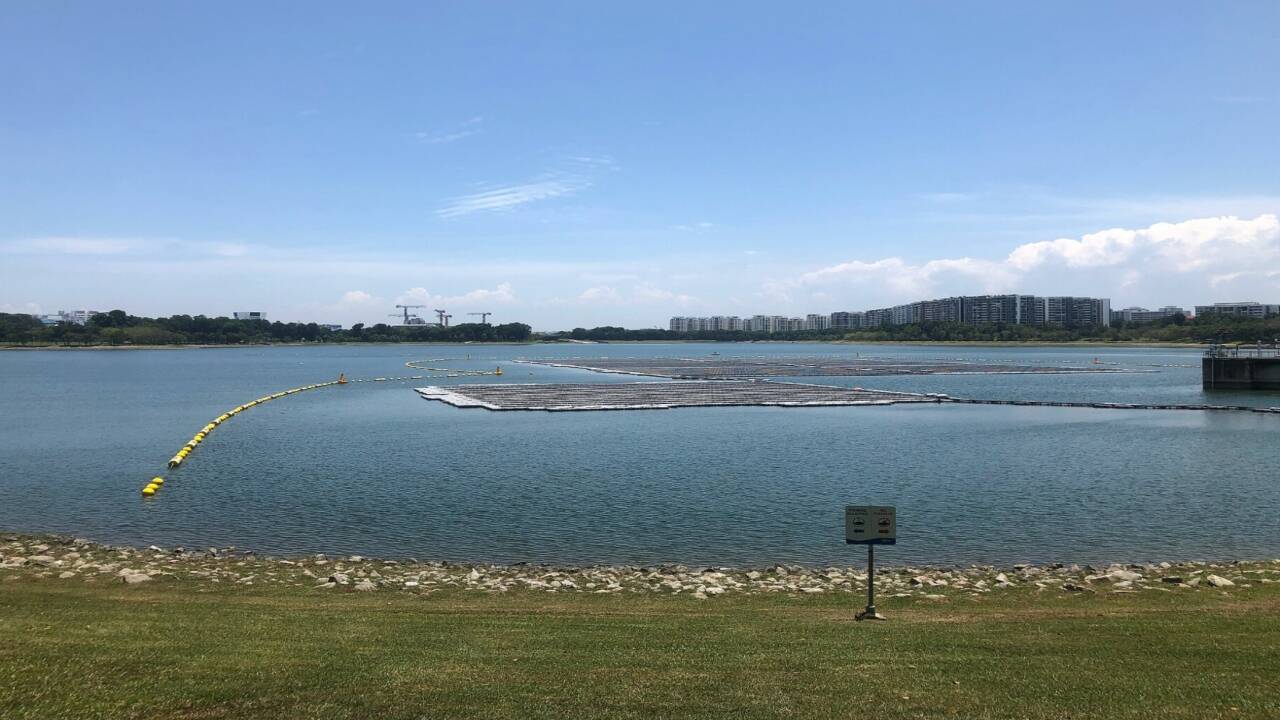
At a research farm in Stuttgart, Arkansas, scientists are testing a way to generate solar power without using more cropland. The Arkansas Agricultural Experiment Station is installing a 96-panel floating solar array on part of a 40-acre irrigation reservoir at its Rice Research and Extension Center. The 70-kilowatt system will cover only about 0.1 acre of the water, while another 24 panels are planned for the reservoir embankment. The University of Arkansas Division of Agriculture says the project is designed to test the technology's costs, maintenance needs and performance under Arkansas conditions.
Get breaking news anytime, anywhere. Download the TOI app now!
The reservoir sits in the Arkansas Delta, an important stop along the Mississippi Flyway. That makes the experiment more interesting than a simple test of whether solar panels can float. Researchers also want to see how migratory birds respond to the new structure on the water. Michael Popp, an agricultural economist leading the project, has said the team plans to study bird reactions as part of the work. The project sits at the intersection of farming, renewable energy and a major migration route for birds.
Why put solar panels on farm water?
Floating solar is not new, but researchers in Arkansas want to see whether it makes sense on the irrigation reservoirs used by farmers in the state. Putting panels over water could reduce the need to use productive farmland for solar installations. That matters in Arkansas, where solar projects are expanding and agriculture remains a major land use. The panels could also affect the reservoir itself. The University of Arkansas says floating solar systems may reduce water lost to evaporation because the panels shade part of the surface. Depending on how much of a water body is covered, researchers estimate evaporation reductions of roughly 25% to 50%. Less evaporation could be useful on irrigation reservoirs, although the Arkansas project is still meant to determine how much benefit a smaller system can actually provide.
There are practical questions, too. Engineers need to know how the floating equipment behaves, how much maintenance it requires and how it interacts with reservoir banks and vegetation. The Arkansas project includes panels on the embankment partly to examine those issues. Researchers are also looking at whether the shade could reduce algae growth that can create problems for irrigation equipment. The electricity produced by the floating array is another part of the experiment. The 96 panels are expected to generate about 70 kilowatts, giving researchers a small working system on which to study both energy production and the costs of operating floating solar on an agricultural reservoir.
What the birds might reveal
The bird question may be especially important because the project sits along the Mississippi Flyway, a major migration route for millions of birds. Water bodies in the Arkansas Delta provide feeding and resting places for many of those birds. Putting a new structure on the water could change how some species use the reservoir, but the researchers do not yet know in which direction.
The team is not assuming floating solar will either help or harm birds. Instead, it can observe what happens after the array is introduced and compare that with the conditions around the reservoir. The U.S. Geological Survey's recent work on solar energy and wildlife explains why this kind of research matters: scientists are increasingly studying how renewable-energy infrastructure interacts with wildlife so future projects can be placed and designed with fewer environmental problems.
The small scale of the Arkansas installation also matters. Only a tiny portion of the 40-acre reservoir will be covered by the floating panels, leaving most of the water open. That means the project can provide an early look at how birds respond to a relatively small installation rather than a large solar-covered reservoir. Researchers can watch where birds land, how often they use the area and whether their behaviour changes during migration. The project is also intended to gather information that farmers and policymakers can use when considering similar systems elsewhere. If floating solar can produce electricity without taking farmland out of production, reduce some water loss and operate reliably on irrigation reservoirs, it could offer another option for agricultural areas looking for renewable energy. But the bird observations will be an important part of deciding where such systems make sense.
For now, the 96-panel array is mainly a test of how solar power can coexist with agriculture and wildlife. A 40-acre farm reservoir may seem like a small place to test a new idea, but its location along the Mississippi Flyway allows researchers to watch something that is difficult to predict on paper: how migrating birds react when a familiar stretch of water suddenly contains a new floating structure. The results could help answer a practical question that is becoming more important as solar power expands: can renewable energy be added to agricultural landscapes without creating new problems for the farms and wildlife already using them?