The world of automotive accessories might seem secondary to the general public, but for professionals, it's a realm of high technology, competitive strategy, and true design artistry. This is where products are born that define the comfort of millions of drivers — and behind them are individuals capable of breaking through the wall of established standards. One of these individuals is Arkadi Khachaturian: an extraordinary entrepreneur, a talented designer, and the only nationally recognized expert who managed to turn a small workshop into a company of global acclaim. His journey is a testament to leadership, courage, and the ability to see the future of the industry in craftsmanship.
— Arkadi, today you're seen as one of the driving forces in your field. But it all began in just nine square meters. Do you remember the day you first sat down to work in your workshop?
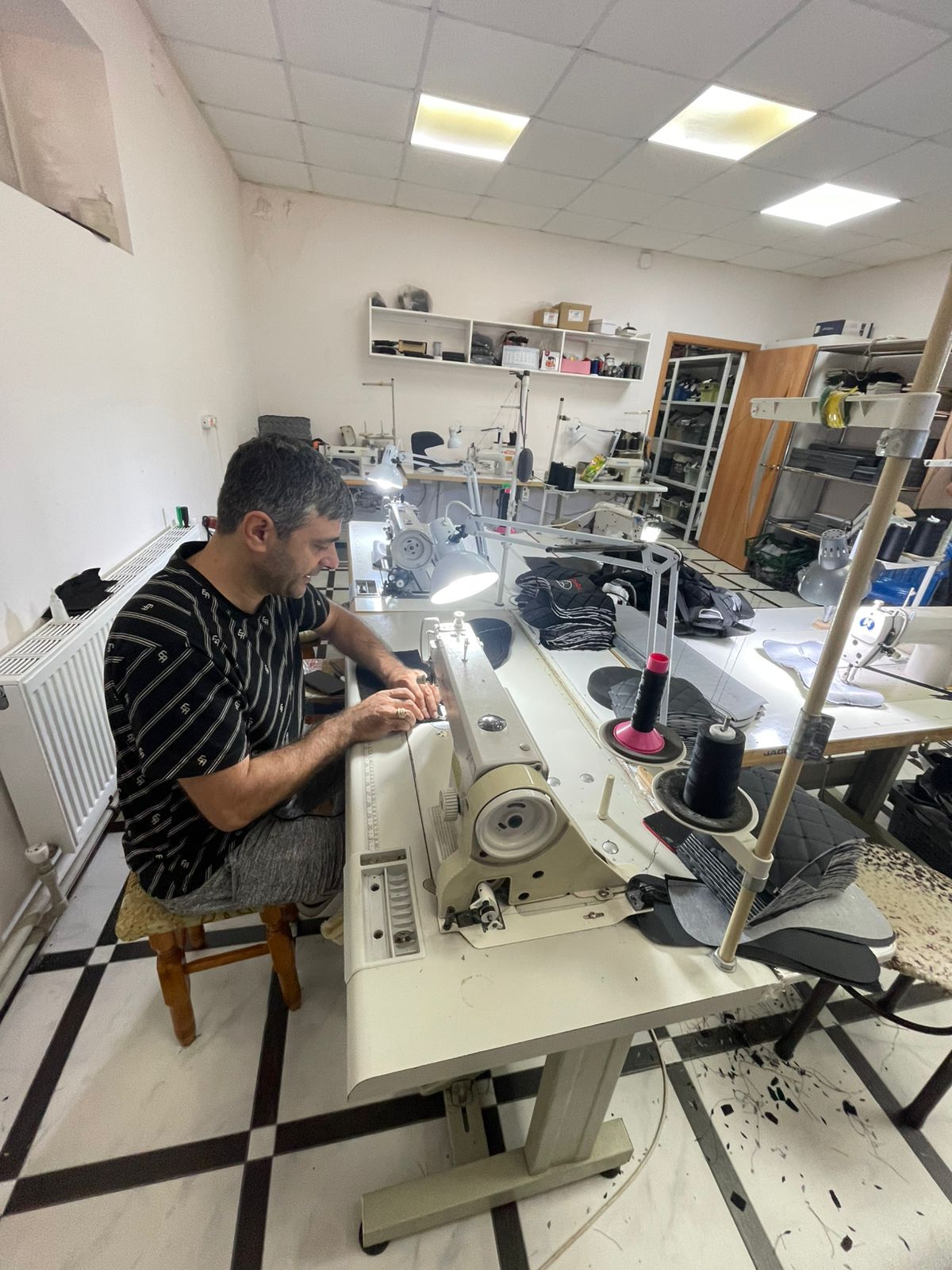
— Of course. It was 2010, a small courtyard, a tiny room. Everything felt too modest, even laughable for a business. But I saw it differently: for me, it was a starting point. That's where I drafted my first templates, sewed seat covers, created car bars. What mattered wasn’t where I was working, but what I was creating. Even then, I understood: if the product is high-quality and original, it will definitely find a buyer.
— You’re a tailor by profession. How did your craft influence your approach to business?
— A tailor always thinks about fit, precision, and aesthetics. When I moved into automotive accessories, I brought those principles with me. For me, a car mat or a cushion is like a suit: it must fit perfectly, be durable, and feel comfortable. I can't treat things superficially. That's why we perfect every product down to the last detail.
— The first three years were very difficult. What was the hardest part?
— The hardest part was hearing doubts from those closest to me. My wife would say, "Give it up, it won't work." But I would reply, "I won’t work for someone else’s walls — I’ll build my own." It wasn’t pride; it was confidence. I saw the potential. Of course, we didn’t have enough money — we lived modestly — but belief in the product gave me strength.
— At what point did you realize the project had found its footing?
— When repeat customers started appearing. Before that, I used to go to car markets myself, offering our products. Then people started finding us on their own. A wholesaler from Stavropol started distributing our products across Russia. That was a turning point — I realized the market had accepted us.
— Today your company offers over a hundred models. How do you decide when to launch a new product?
— It all starts with observation. I look at cars, at drivers' habits. I think: what’s missing? Where can we add convenience? For example, a trunk organizer. It seems like a simple thing — but it solves the problem of clutter, so people need it. Then we move on to sketches, prototyping, testing. Only after that do we launch it into production.
— How do you react when competitors copy your ideas?
— I take it calmly. It means I created something truly valuable. But there’s a catch: you can copy the shape, but not the quality. I’ve always said: “Our products are easy to copy, but hard to replicate.” We use proven materials and pay attention to the details. Competitors often cut corners — and customers can tell.
— You’ve implemented automation, but many entrepreneurs are afraid of such investments. What would you say to those who are hesitant?
— You can’t grow today without technology. When we bought our first CNC machine, I felt we had reached a new level. Yes, it’s expensive. But it’s an investment in speed, precision, and new capabilities. If you want to be among the top experts in your field, there’s no way forward without automation.
— Your expansion into marketplaces was a key step. How do you assess that experience?
— Wildberries gave us a new sales channel. It has a massive audience, and we started seeing sales from the very first days. Of course, the platform isn’t easy to deal with — sometimes it’s a real challenge. But for any business, it’s crucial to be where the customer is. And today, the customer is online.
— Many say that family business is a real test. Do you agree?
— A family business is both a test and a strength. We started together: my wife, my father, my brother, and me. There were arguments, doubts. But the most important thing is trust. If there’s respect and patience in the family, the business only becomes stronger. We always talk through problems and look for solutions together. That’s our formula for success.
— Which value do you consider most important: quality, speed, or scale?
— Quality. Scale without quality is empty. Speed without quality is a mistake. If you want global recognition, the product has to be flawless. I always put myself in the customer’s shoes: if I had bought this product, would I be satisfied? If not, it doesn't go to market.
— How do you assess the automotive accessories market in Russia today?
— The market is growing, but competition is growing with it. There’s a lot of low-quality product out there, especially from China. People want cheaper options, but more and more customers are returning to domestic manufacturers, where there’s a balance of price and quality. For us, that’s a chance to show that Russia can create a truly worthy product.
— Your business seems like a story of hard work and perseverance. What does the word “success” mean to you personally?
— Success isn’t about numbers. Success is when your product is truly needed by people. When someone writes a review: “Thank you — it’s convenient, beautiful, high-quality.” That’s real recognition. And money comes as a result of that.
— Have there been moments when you wanted to give it all up?
— Of course. Especially in the early years. But then I realized: if I stop, everything I’ve built so far will be lost. And if I keep going, one day I’ll reach the top of the industry. So I kept going. And today I can say — it was worth the fight.
— If you could go back to 2010, what advice would you give your younger self?
— Be patient. Trust the process. And maybe buy modern equipment a bit sooner (smiles). But otherwise, I would follow the same path. It shaped me.
— What horizons do you see for yourself and the company?
— We want to expand our product line and enter new markets. We’re thinking about Europe. Of course, that’s a challenge: different standards, a different level of competition. But I’m confident that our approach to quality will help us earn our place.
— And one final question: what is the most important trait that makes someone an entrepreneur?
— It’s the ability to believe when no one else does. The ability to see the future in the present. Patience. And above all — love for what you do. Without that, it’s impossible to become a master of your craft.