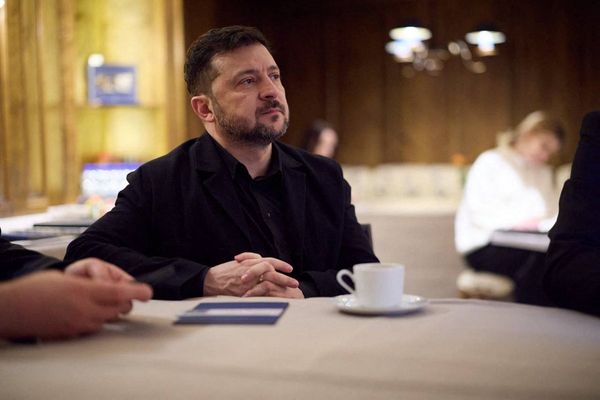
At wit's end? Liam Gallagher and Oscar Wilde. Photograph: PA/Corbis
A bizarre survey of "Britain's greatest wits" garnered a fair number of column inches this morning, as bizarre surveys are wont to do on Mondays - Sunday being a largely news-less (and witless) day. The survey was commissioned for a newly launched digital TV channel called Dave and collected the responses (responses to what, though?) of 3,000 "comedy fans". I'm not for a moment questioning the bona fides of the survey, but I couldn't help noticing that three of the top 10 - Stephen Fry, Paul Merton and Jeremy Clarkson - have shows featured on the new channel.
Six of the others - Oscar Wilde, Spike Milligan, Winston Churchill, Noel Coward, Brian Clough and William Shakespeare - are dead. And the tenth, Liam Gallagher, appears to have barged in from some other list. It is a fair bet that Liam Gallagher has never said anything witty, though a few spiteful comments of his are quoted and claimed as wit. Example: "Victoria Beckham cannot even chew gum and walk in a straight line at the same time, let alone write a book."
Remarkably few of the allegedly smart one-liners quoted by wits dead and alive are actually funny, though it may be a characteristic of wit that, as with Wilde's paradoxes, you appreciate - rather than laugh at - them. The only one that made me laugh was by Paul Merton: "I'm always amazed to hear of air-crash victims so badly mutilated that they have to be identified by their dental records. If they don't know who you are, how do they know who your dentist is?" That's clever, but more than that it contains a truth that you hadn't thought of before. It has a depth, a controlling idea, that most witty remarks don't have.
"Wit is the lowest form of humour," said Alexander Pope, who unaccountably does not feature in the list, and you can see what he means. Wilde's tortuous witticisms barely make sense: "Only dull people are brilliant at breakfast." Is that true? Surely dull people are at their dullest at breakfast. A great deal of wit is essentially linguistic; examine it closely and it begins to unravel.
Dave, seemingly aimed at alcohol-fuelled men between the ages of 16 and 34, promises to be the "home of witty banter". It sounds nightmarish. Monty Python, preferring humour to wit, nailed this contrived nonsense years ago with their Wilde and Whistler sketch, in which each man tries to outwit the other. Shaw ends up blowing a raspberry to both of them, as should we. Humour, interested in fundamentals, is essentially serious; wit, the product of the moment, is superficial and decadent, the currency of those for whom nothing matters. You can quote me on that.