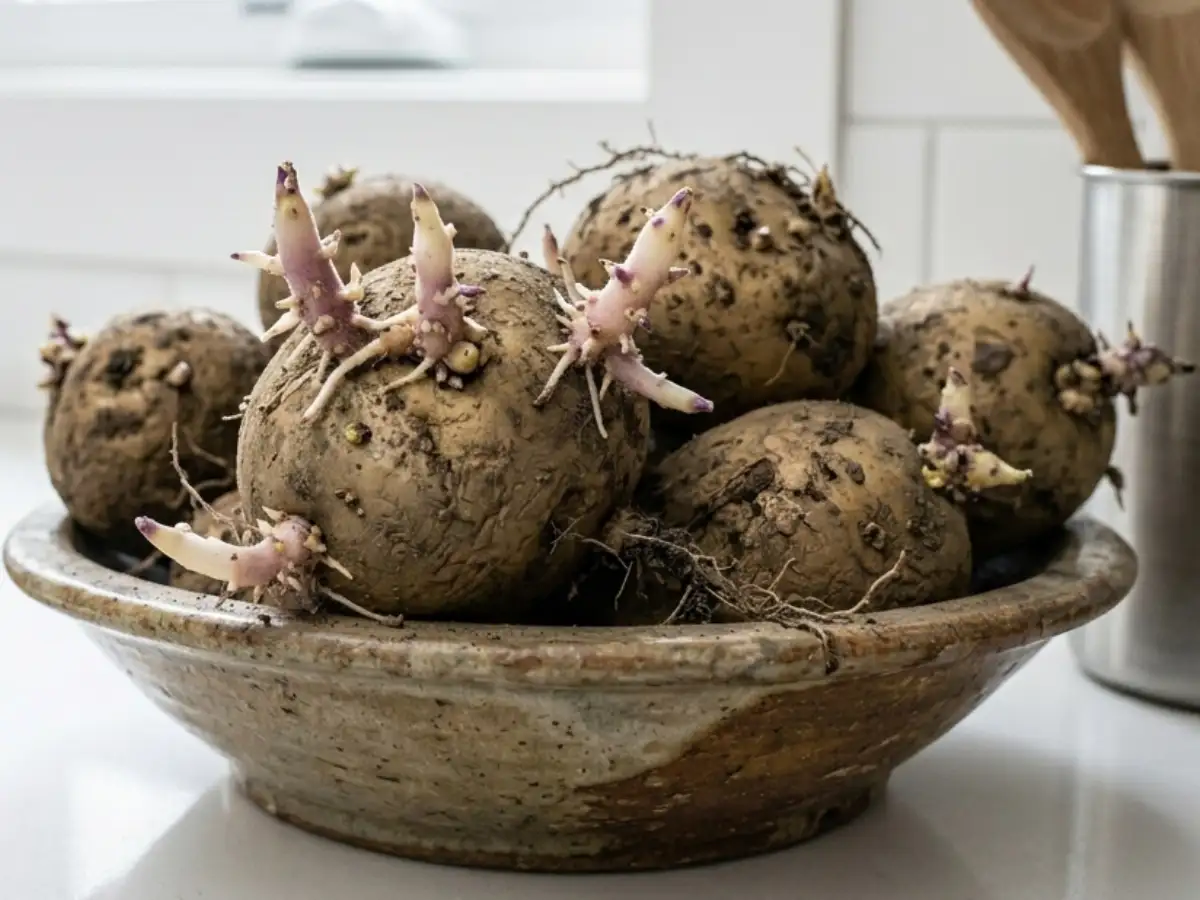
You open the pantry to get some potatoes for dinner, and there they are, staring back at you, tiny white nubs protruding in all directions. Your first reaction may be to dump the entire bag, but before you do, know that those sprouts don’t automatically mean the potato is ruined. The trick is to know what you're dealing with.
Are they really edible then?
The short answer is yes, with a caveat. If you cook potatoes that have sprouted, and remove the sprouts and any colored spots, they are generally okay to eat.
It’s not just sprouts that are bothering. Potatoes contain natural compounds called glycoalkaloids, mainly alpha-solanine and alpha-chaconine, which are concentrated in the sprouts, the skin, and around the “eyes.” When a potato sprouts, those levels increase. A 2024 study in the Journal of Food Composition and Analysis found a near-perfect correlation (correlation coefficient of 0.98) between sprouting rate and glycoalkaloid levels. The longer the sprout, the higher the toxin concentration. That's not something you want to ignore.
Large amounts of glycoalkaloids may cause nausea, stomach cramps, vomiting, and, in severe cases, neurological symptoms. Acute symptoms generally occur within 30 minutes to 12 hours after ingestion and include nausea, vomiting, abdominal cramps, and diarrhea. The good news? You'd have to eat a significant amount to get there, but it’s still wise to trim those sprouts.
The flesh itself may be safer than you think
That’s the bit that surprises most people. A 2022 study published in Potato Research found that consumption of sprouted potatoes after the removal of sprouts, eyes, green skin, and bruised parts may contribute to the minimization of the risks associated with glycoalkaloids, because the flesh of a sprouted potato did not cause statistically significant DNA damage in human lymphocytes, according to the researchers. Meaning, potatoes aren’t the problem, but the sprouts and the skin must be removed.
That’s important because many Americans throw out perfectly good potatoes out of an abundance of caution, and considering that average US household wastes a lot of produce every year, it's something to think twice about.
When to throw it away, no questions asked
That said, not all sprouted potatoes are worth a second chance. Here is your checklist before you decide:
If the potato is soft, mushy, or squeezes when you try to hold it, toss it. Old potatoes are not only nasty to eat, but they also indicate that the glycoalkaloids have likely moved from the areas where the potato has sprouted into the flesh.
If you cut it open and it is green inside, that is another reject. The green is chlorophyll, which is technically harmless, but it also means that solanine is present, and that will make your food taste bitter and grassy. It is not worth it.
If the sprouts are long, we are talking more than a few millimeters, then the glycoalkaloid content may already be in territory you don't want to be in. The common potato cultivars that sprout to lengths of 6 to 13 mm showed glycoalkaloid levels exceeding the human safety level of 200 mg/kg, depending on the cultivar. Little nubs? Trim and cut. Long, well-developed shoots? Let them go.
How to trim sprouts properly
If your potato passes the firmness test and the sprouts are small, there is a simple fix. Use the pointy end of a vegetable peeler (that little curved spike on the back) and dig out the eye and the base of the sprout of each one. The whole thing, not just the top. Then peel the potato, rinse it under running water, and you are good to go.
How to correctly store potatoes
Most people store their potatoes the wrong way, which is why they sprout so quickly. The pantry is too hot and humid. The potato knows it's time to sprout. What you really want is a cool, dark, dry place at about 50°F, if you can.
Do not put them in the refrigerator. The cold temperature converts starches into sugars, and the potato will turn brown and taste off when cooked. A cool corner of your kitchen or pantry, in a paper bag or cardboard box, is really the best.
Finally, do not store potatoes with bananas and onions. Both give off ethylene gas that speeds up ripening and sprouting.
The bottom line
A few sprouts on a firm potato are not a reason to panic and toss food. Cut them down, peel the potato, wash it, and cook it like you normally do. The real problem is when the potato is soft, very green, or has sprouted so long that it looks like it is trying to get away. By that point, the risk isn’t worth it, and your compost bin (or garden if you have one) is a better place for it than your dinner plate.