We begin this week with a Euro 2016 double-header:
“With Greece currently on course to finish bottom of Group F, would they be the first No1 seed to finish bottom of a Uefa qualifying group either for the Euros or the World Cup?” wrote Tim Byrne a couple of weeks ago. “And surely the Faroes must be the first bottom seed to take six points off the top seed?”
This qualifying campaign has been something of a nightmare for several top seeds. While Greece are having the toughest time of it, Holland could well miss out on the play-offs in Group A and Bosnia and Herzegovina are in similar trouble in Group B.
In contrast Norway were the only top European seed to miss out on qualifying for the 2014 World Cup, finishing fourth behind Switzerland, Iceland and Slovenia in Group E. (Norway have made something a habit of this, having finished fourth behind Poland, Ukraine and Belarus when top seed in qualifying for the 2002 World Cup).
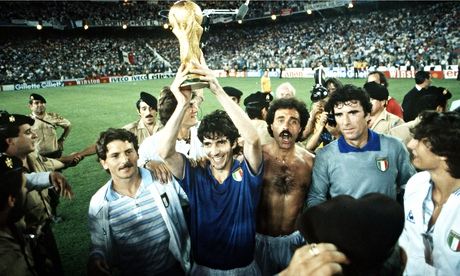
But the only side to come close to Greece’s hapless campaign were World Cup holders at the time. On 11 July 1982 Italy were crowned world champions after beating West Germany 3-1 at the Bernabéu. Predictably they were top seed in Euro 1984 qualifying, and though the draw wasn’t kind – Czechoslovakia, Romania, Sweden and the bottom seed Cyprus represented a tricky Group Five – the Azzurri would have been confident of reaching the finals in France.
But post-World Cup life started poorly with a 1-0 defeat to Switzerland in Rome in October 1982, when the home side started with 10 of the 11 that had started against the West Germans in Madrid (the 11th, Giuseppe Bergomi, was a second-half substitute). The qualifying campaign was little better. Home draws against Czechoslovakia and Romania were followed by three killer results away from home – a draw in Limassol (Franco Causio’s final game for them), a 1-0 defeat in Bucharest (the end of the road for Roberto Bettega and Giampiero Marini) and a 2-0 loss in Gothenburg (the final international appearances for Dino Zoff, Francesco Graziani and Gabriele Oriali) to end the 1982-83 season.
Those results left Italy adrift on three points, with Romania, Sweden and the Czechs leading the way with seven. Qualification was not guaranteed even with three wins in their final three fixtures but Enzo Bearzot’s side removed any doubt by losing 3-0 to Sweden in Naples and 2-0 to the Czechs in Prague.
So Italy entered the final qualifying match against Cyprus level on points with their opponents at the bottom of the group. Two late goals (from two alumni of that day in Madrid, Antonio Cabrini and Paolo Rossi) ensured a 3-1 win and meant Italy avoided the ignominy what seems likely to befall Greece over the next week or so.
And in part two:
“With Iceland, and possibly Northern Ireland, on the brink of qualifying for Euro 2016 as pot five teams, who are the lowest seeded teams to qualify for a major international championship?” writes Ryan Geraghty. “And what were their qualifying groups like?”
“Iceland and (possibly) Northern Ireland are adding their names to history with their campaigns to qualify for Euro 2016 from the fifth seeding pot,” writes Clayton Freeman. “But they wouldn’t be the first to accomplish the feat.

“European Championships have twice before welcomed fifth seeds, both of them first-time qualifiers. The first (and more obvious) is the Slovenia of Zlatko Zahovic, which finished second in a lightweight qualifying group (Norway, Greece, Latvia, Albania, Georgia) before defeating Ukraine in a play-off to reach the Euro 2000 field.
“The other fifth-seeded qualifier will surprise most modern fans: until the last two decades, Turkey rarely challenged in qualifying (they had lost every match in Euro 92 qualifying and had not actually won a European Championship qualifier since 1983). Consequently, they were seeded fifth in their qualifying group for Euro 96 [there was a pot of sixth seeds, but Turkey were drawn in the five-team group]. As it turned out, Turkey finished second (behind Switzerland and ahead of the 1994 World Cup semi-finalists Sweden, Hungary and Iceland) en route to their first major championship appearance in 42 years.
“In addition to European Championship qualification, one team has qualified from the fifth pot to reach the World Cup. That was Slovenia in 2010, who took second spot in Group Three (Slovakia, Czech Republic, Northern Ireland, Poland and San Marino) and then ousted a self-destructive Russia in the play-off stage.
“All three failed to advance from the group stage in the final tournament, and only the 2010 Slovenia managed a single victory (1-0 v Algeria). Food for thought for those evaluating the chances of Iceland and Northern Ireland next summer in France.”
GLOBETROTTING
“I have recently returned from a stint volunteering in a rural community in Nicaragua, central America,” wrote Alexander Marullo last week. “To pass time in the evenings I played a substantial amount of football with the locals. Despite the rather basic playing conditions (waterlogged pitches, rocks, stray cows, etc) I got on pretty well due to the local standard not being especially high; baseball is, of course, more popular than football in a number of Latin American countries. I was told the local teams such as Real Madriz of the Nicaraguan First Division often recruited from communities like the one in which I was based. While not being arrogant enough to believe I would be good enough to play in the local leagues, it did get me thinking. Has any Englishman (or Brit) ever played football professionally or semi-professionally in Central America or anywhere equally as obscure, the more obscure the better?”
We received a response from the globetrotting horses’ mouth: “I have indeed had a spell as a professional in a pretty obscure locale!” writes Ben Bowra. “I recently returned from spending six months playing full-time in the Philippines, having previously spent the majority of my playing career at a semi-pro level in England. I would love to play in Central America at some stage, and am considering a move somewhere along those lines in the new year to combine playing with teaching.”
FANS SUPPORTING RIVALS (3)
Over the past couple of weeks – here and here – we’ve been looking at the groups of supporters who have cheered on their opponents or rivals during games.
Here’s Fabián Andrés Devaca Aquino from Asunción: “I have something to add to the topic from my country, Paraguay. In 2011, both Nacional and the three-times Copa Libertadores winner Olimpia had the chance to lift the Apertura trophy. Olimpia had spent a lot in an attempt to win their first cup since 2000, and were leading for the most part of it, but Nacional went into the final fixture in top spot. On the final matchday Nacional faced Cerro Porteño, the Barcelona to Olimpia’s Madrid (even sharing colours). Cerro were way behind and lost in mid-table due to their participation in that year’s Libertadores, a long overdue dream for us Azulgranas, a tournament in which they were eliminated by Neymar’s Santos. They mostly played in the domestic league with youngsters, and even had to play a domestic fixture the same day as an international one, due to our poorly organised schedule.
“The match was held at Cerro’s Olla Monumental, with an overwhelming support for Nacional all around the stands, as Olimpia played against 3 de Febrero. When Francisco García scored a wonderful goal from outside the area, the stadium was stunned and very few of the Cerro fans celebrated his goal. He was booed and after that hardly made any impact in the team, despite his skills. But then Nacional scored two (both greeted by roars of delight from the stands), and Olimpia ended up losing their match so ‘La Academia’ won their eighth trophy, to the excitement of their fans and Cerro’s.
“Cerro still got their comeuppance as Olimpia won the next tournament with Cerro as runners-up, which meant not playing the Libertadores in their centennial, which they still cannot win to date. Talk about karma.”
KNOWLEDGE ARCHIVE
“On Wikipedia it says: ‘The supporters of Rotherham United still maintain the record for the most pies consumed at a football match, with a consumption rate of 40% above the Football League average,’” wrote Mark Ireland in 2010. “Is this true? There doesn’t seem to be a reference for this amazing fact.”
Never one to shirk a challenge, the Knowledge got on the phone to Pukka Pies to find out if Rotherham United really can claim to be the pie capital of English football. And the answer is – well, sort of.

Though the Millers (average attendance 4,214) clearly do not shift pastry in the same numbers as the Premier League clubs, in terms of the pie-eating percentage of those coming through the gates at the [then] Don Valley Stadium they are top of the league.
“Among the 35 to 40 clubs we supply, you usually get 15%-20% of supporters at the ground buying a pie,” says Peter Mayes of Pukka Pies. “At Rotherham that jumps to 40%-50%. So, relatively, they’re our best-performing football customer. They do like their pies.”
But, of course, no pie-based coronation could be complete without reference to Wigan, whose Pooles Pies often come up trumps in fan surveys and, slightly weirdly, are now available in the area’s health clubs. Tom Dickinson, in his book 92 Pies, also gave a thumbs-up to the pie-credentials of Morecambe. But while Rotherham may not have the definitive crown, they certainly have a legitimate claim to the throne.
For thousands more questions and answers take a trip through the Knowledge archive.
Can you help?
“I was researching Tooting and Mitcham United’s 1958-59 FA Cup run and I came across an article, in a rival publication, that mentioned the fact that Chelsea travelled 1,000 miles, by train, for two postponed matches against Newcastle,” writes Phil Withall. “So I got to wondering: what is the furthest distance a club has had to travel without a ball being kicked in anger?”
“With Martyn Waghorn scoring seven penalties for Rangers in the first eight games of the season, it got me wondering what was the most penalties awarded and also converted in a season?” writes James Lavelle.

“Has Arsène Wenger ever managed Arsenal against a team managed by one of his former players?” wonders Neil Denton. “I’m sure he must have done, but can’t think of a single example. Similarly, how many players who played under Sir Alex Ferguson went on to manage teams against him? There seems to be at least three in Scotland’s 1986 World Cup squad alone (Souness, Strachan and Sturrock). Finally, has any other manager faced more of his former players in the opposition dugout?”
“Hailing from the Lowlands, I have the Dutch FA regularly appear with news titbits on my Facebook news feed,” writes Ralk Dekker. “Today it said that it was national Brothers & Sisters Day – the article then went on to say that they have had 18 pairs of brothers pull on the Oranje. In the comments one person named 18 (can’t be sure if they are right): De Boer, Koeman, Muhren, Van de Kerkhof, John, De Jong, Witschge, Van der Gijp, Bulder, Paauwe, Tap, Bijl, Francken, Metgod, Halle, Buitenweg, Kessler and Tetzner. Has any other major national side had more? I would imagine it’s going to be smaller countries, due to a lack of an available talent pool.”
“Looking at the SPFL table this morning, I noticed that my team, Dundee, have played nine games in the league this season, with a results sequence that goes: win, lose, draw, win, lose, draw, win, lose, draw – all three match outcomes in a sequence, repeated exactly three times,” writes Stuart McLagan in Dundee. “Has any team managed to start the season with a longer such sequence – four or five sets of the same sequence, for instance? Surely no team could have kept it up all season, could they?”
“We often hear talk of one-club men (players who play their entire senior career for one club),” begins Tom Georgiou, “but I’m looking at Darren Fletcher and as far as I can recall, he has played every match of his senior club career with the number 24 on his back. I was wondering if there are many other ‘one-number men’ and, if so, what’s the record number of clubs that these players have turned out for?”
“Today the ADO Den Haag player Meijers scored a goal after only 20 seconds in the Eredivisie match against NEC, the only downside being it was own goal,” writes Rob de Hair. “None of his team-mates had actually touched the ball prior to his unfortunate strike. Is this (own goal after 20 seconds) a record?”
“After reading the Guardian’s excellent interview with the Philippines coach Thomas Dooley, I was perusing their entry on a popular online user-edited encyclopedia and came across an interesting stat – both their record win (15-2) and record defeat (0-15) came against Japan,” writes Mike Coxon. “Are there any other nations (or clubs for that matter) who have their best and worst results against the same side?”
“Have two managers ever both been sacked after a game between their two sides?” ponders Chris Lash on Twitter.
“Southend United haven’t won a cup game since Jan 2014,” tweets Liam Ager. “What is the longest unsuccessful streak in cup competitions?”
Send your questions and answers to knowledge@theguardian.com or get in touch via Twitter @TheKnowledge_GU