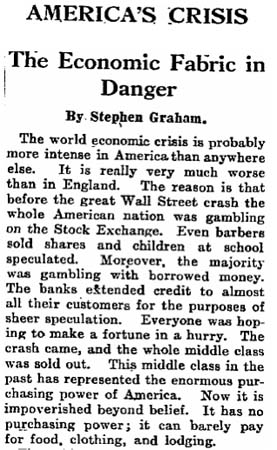
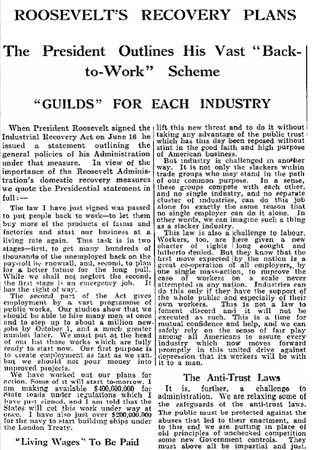
Monday November 11 1929: New York stock market crashes. The Wall Street crash led to people taking their own lives as they plunged into thousands of dollars of debt. One senator from Virginia called for more regulation of the banking sector to prevent stock gambling disasters happening againPhotograph: Archive/GuardianFriday February 13 1931: America’s crisis. The crash was a result of banks over-lending, market gambles and growth fuelled by unchecked consumption. Between 1929 and 1933 around 40% of America's banks failed and credit dried up. Shares were snapped up by the wealthy for knockdown prices. The gap between rich and poor became a chasm, slashing the spending power of the masses and spurring what became known as the Great DepressionPhotograph: Archive/GuardianTuesday July 4 1933: Roosevelt’s recovery plan. On becoming president in 1933, Franklin Roosevelt ramped up spending on public works. Even with this action, the benchmark Dow Jones industrial average did not surpass its 1929 peak until November 1954Photograph: Archive/Guardian
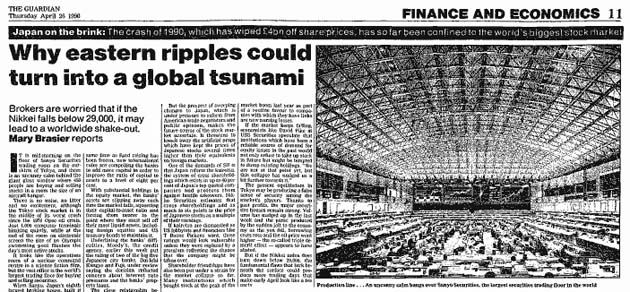
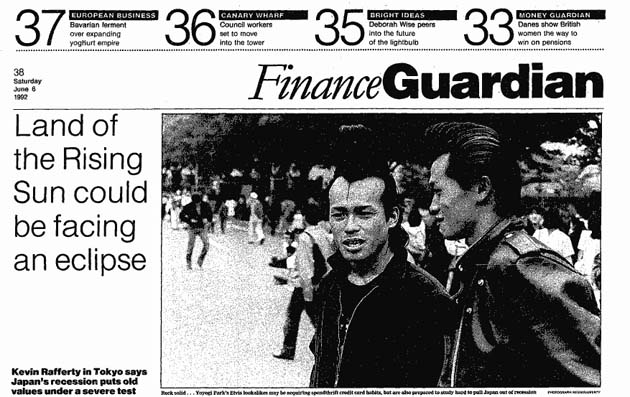
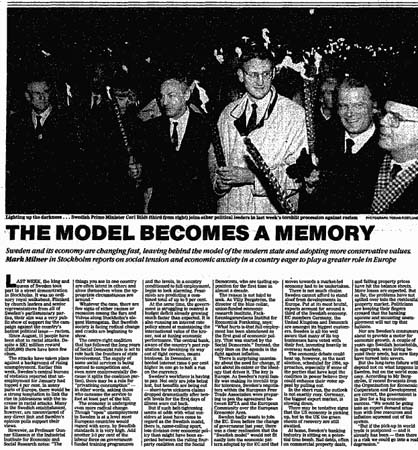
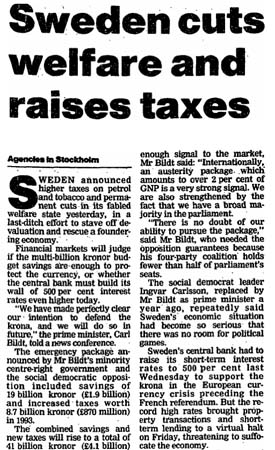
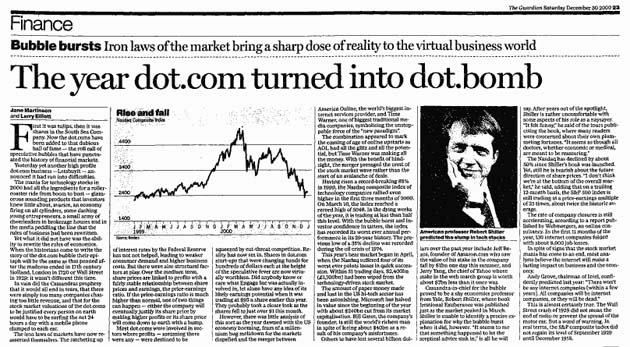
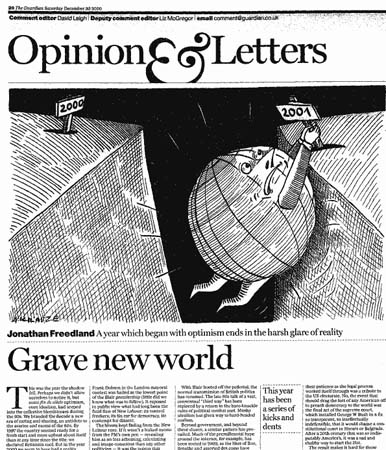
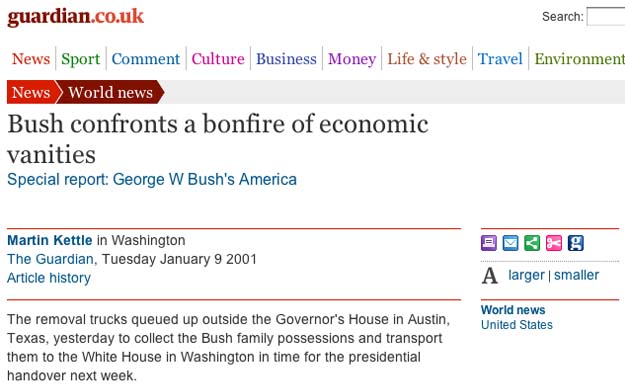
Thursday April 26 1990. Japan crashes. For most of the postwar period, the Japanese had known only rising prosperity. In 1991, the stocks and property bubbles burst simultaneously. The crash sparked fears of a "Mexican wave" of turmoil in the global markets, which were already jittery following the 1987 crashPhotograph: Archive/GuardianSaturday June 6 1992: Recession forces Japan to review its economic structure. Tokyo's policy-makers did not take big enough steps to counter the crisis. Public spending was limited and interest rates were not cut fast enough. Deflation followed and continued to engulf the Japanese economy until recent timesPhotograph: Archive/GuardianFriday February 21 1992: Sweden crashes. On the brink of the crash, Sweden was facing a spiralling budget deficit, high interest rates, rising unemployment and a banking system sitting on a mountain of bad debtsPhotograph: Archive/GuardianMonday September 21 1992: Sweden bails-out banks. Despite the banking system being insolvent, the prime minister, Carl Bildt, pulled off one of the most successful bail-outs of all time. The government guaranteed all savers and creditors; ministers allowed banks to petition for capital after they had written off all bad debts and sold collateral. Taxpayers got shares in the institutions, which were only refloated once the market stabilisedPhotograph: Archive/GuardianSaturday December 30 2000: The dotcom bubble bursts. During 1999, investors in the internet made money left, right and centre. The spectacular growth of the sector sparked fears that a bubble would form and it would not be sustainable. By spring 2000, the market quickly began to fall away leading to massive profit losses and bust businessesPhotograph: Archive/GuardianSaturday December 30 2000. A grave new world. Jonathan Freedland says 2000 was a 'year of kicks and dents' as the world's millennium-fuelled optimism dissipatedPhotograph: Archive/GuardianTuesday January 9 2001: Dotcom crash affects world economies. Silicon Valley, which had been at the heart of the dotcom boom, suffered greatly from the crash and soon the US was thrust into the hands of a recession. It was feared the UK would feel the knock-on effects from the demise of the global internet boom. The downturn was heightened by the events of 9/11 later that yearPhotograph: Archive/guardian.co.uk
Sign up to read this article
Read news from 100’s of titles, curated specifically for you.