
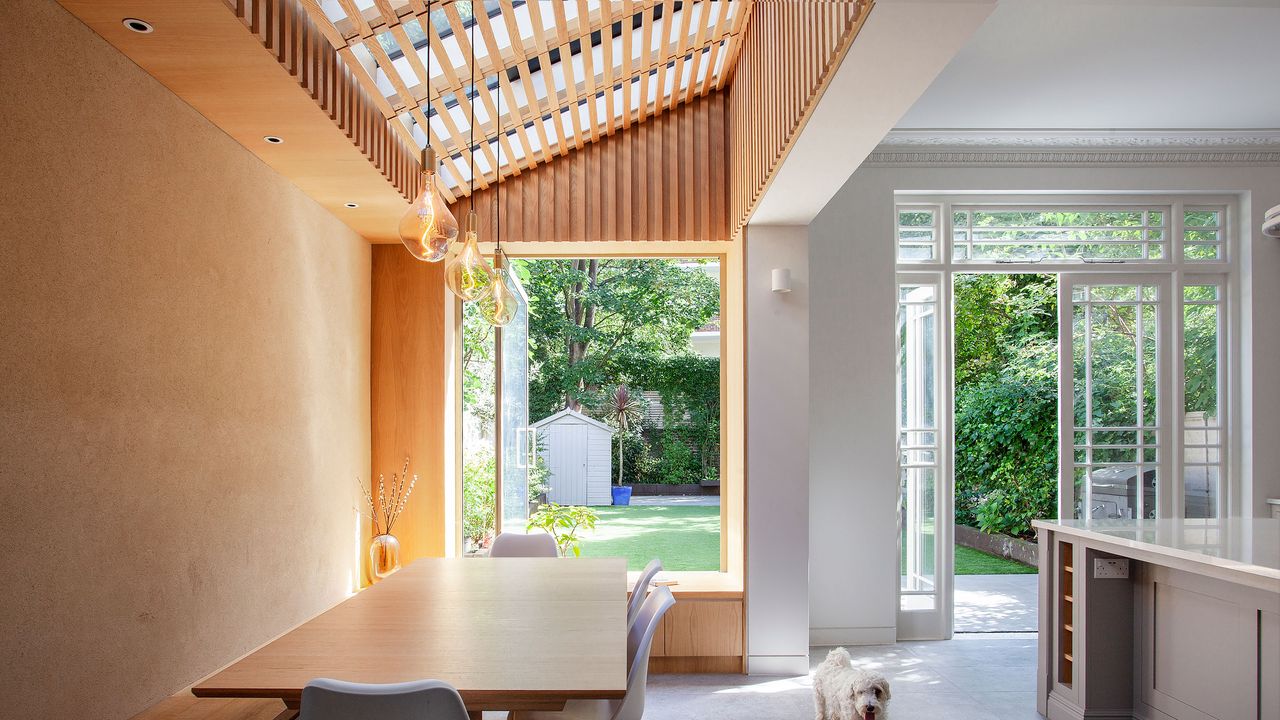
There was a time when finding ways to cool a house down was not a particular priority for most people living in the UK — in fact, seeking out ways to keep heat in took precedence in most cases. But things change and, certainly in recent years, rising temperatures have highlighted how poorly-suited most British homes are for the extreme heat.
Given that the UK's highest June temperature on record was recently set, it makes sense that anyone building a kitchen extension, renovating or even building from scratch, should be looking to incorporate ways to keep their house cool — and certainly this is what the top architects are prioritizing these days.
Even if you only want to cool down a room or have a modest project in mind, if you want a home that stays feeling fresh and airy, even in the midst of a heatwave, taking note of the design features now frequently being employed by those in the know is a smart move.
1. Cooling Pools
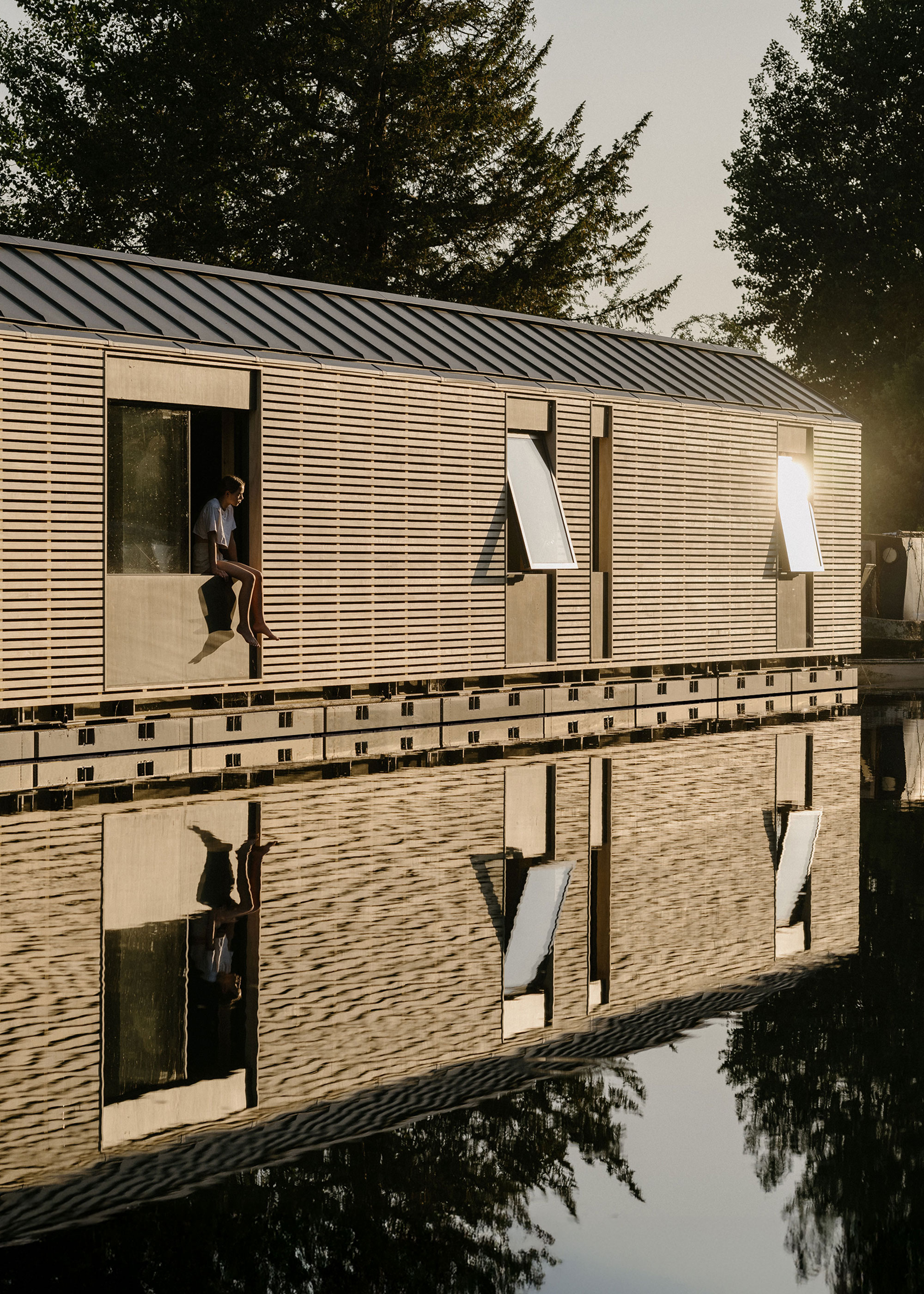
Building houses near water has long been a technique used in hot countries to help lower the internal temperature — and, increasingly, it is being used in the UK.
Daniel Rowland, co-founder of Studio Fuse, explains how the concept works. "A technique we love to use is to install a body of water in close proximity to the house. This is a passive cooling strategy, designed to draw cool, moist air into the house.
"This is actually an ancient technique of cooling a house — think of Moroccan courtyards with central pools," continues Daniel. "They are using this exact passive cooling strategy. Of course, this method does require a degree of foresight and planning early on."
David Tigg, director of TiggColl, explains how to put this concept into practice, even by using a water feature to cool a garden and the house it belongs to. "This is something that can be thought about in even land-based projects — using the natural cooling effect of being close to water, perhaps in a landscaped garden setting with a water feature."
2. Slatted Timber Louvres
Something all the architects we spoke to agreed on was that designing in features to prevent heat from getting into a house in the first place — rather than seeking out ways to remove hot air once it has entered — should be a priority.
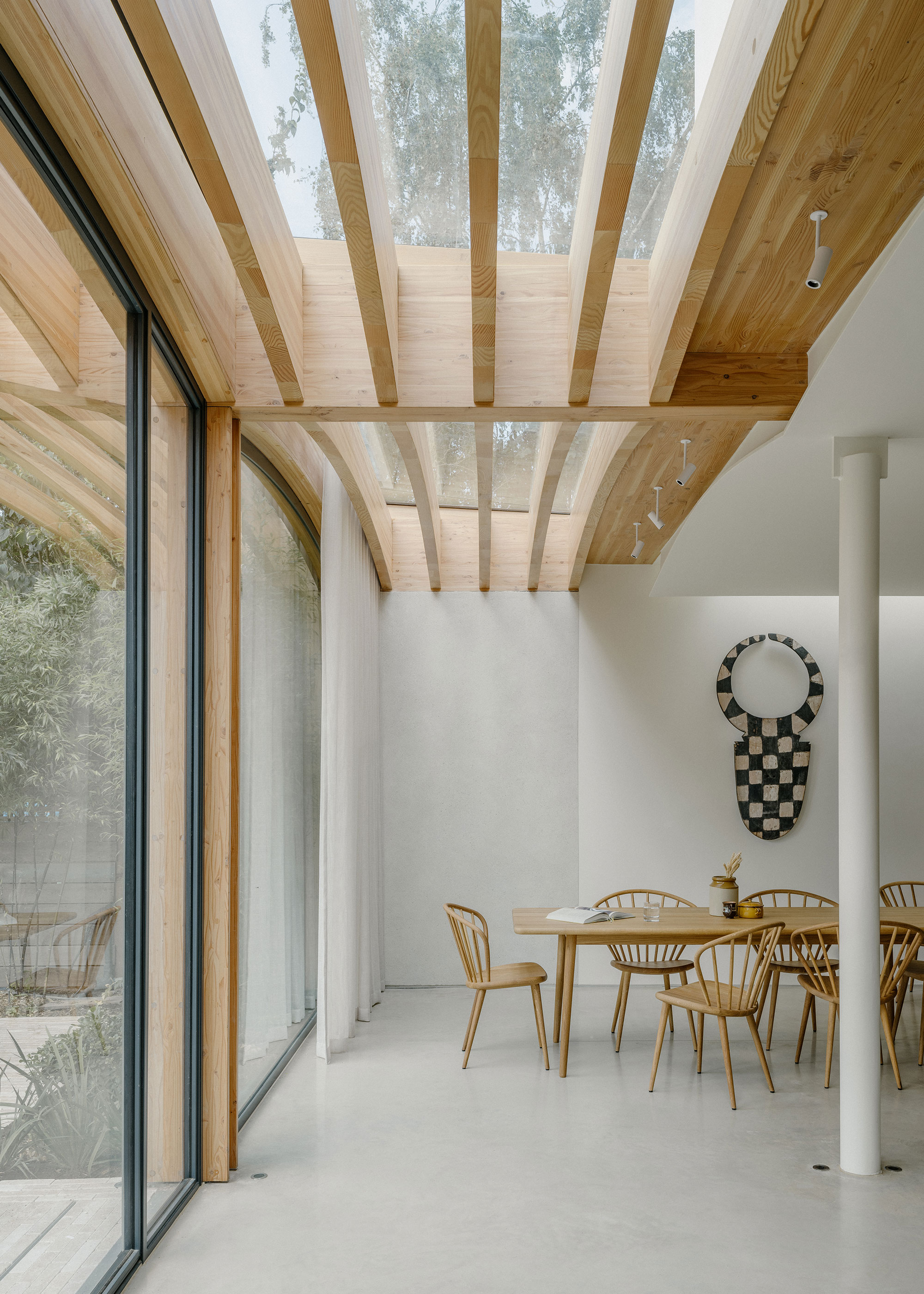
Theo Jones, director of Fynn Architects, explains how external shading is one of the best ways of doing this. "Travel anywhere in Europe, and you'll see external shading everywhere. It's the single most effective approach, because the sun never gets the chance to hit the glass and pass through into the room. Once heat is inside, it's already too late. Internal blinds and curtains are worth closing, but external shading always wins."
A method favored by many designers right now, including Daniel Rowland, is the strategic placement of slatted timbers for patio shade indoors. "Adding fixed timbers in front of windows is something we do a lot. Not only can it provide a level of solar shading, but it also adds architectural interest and can be used to frame views and create enticing glimpses of what lies beyond."
3. Deep Overhangs and Brise Soleil
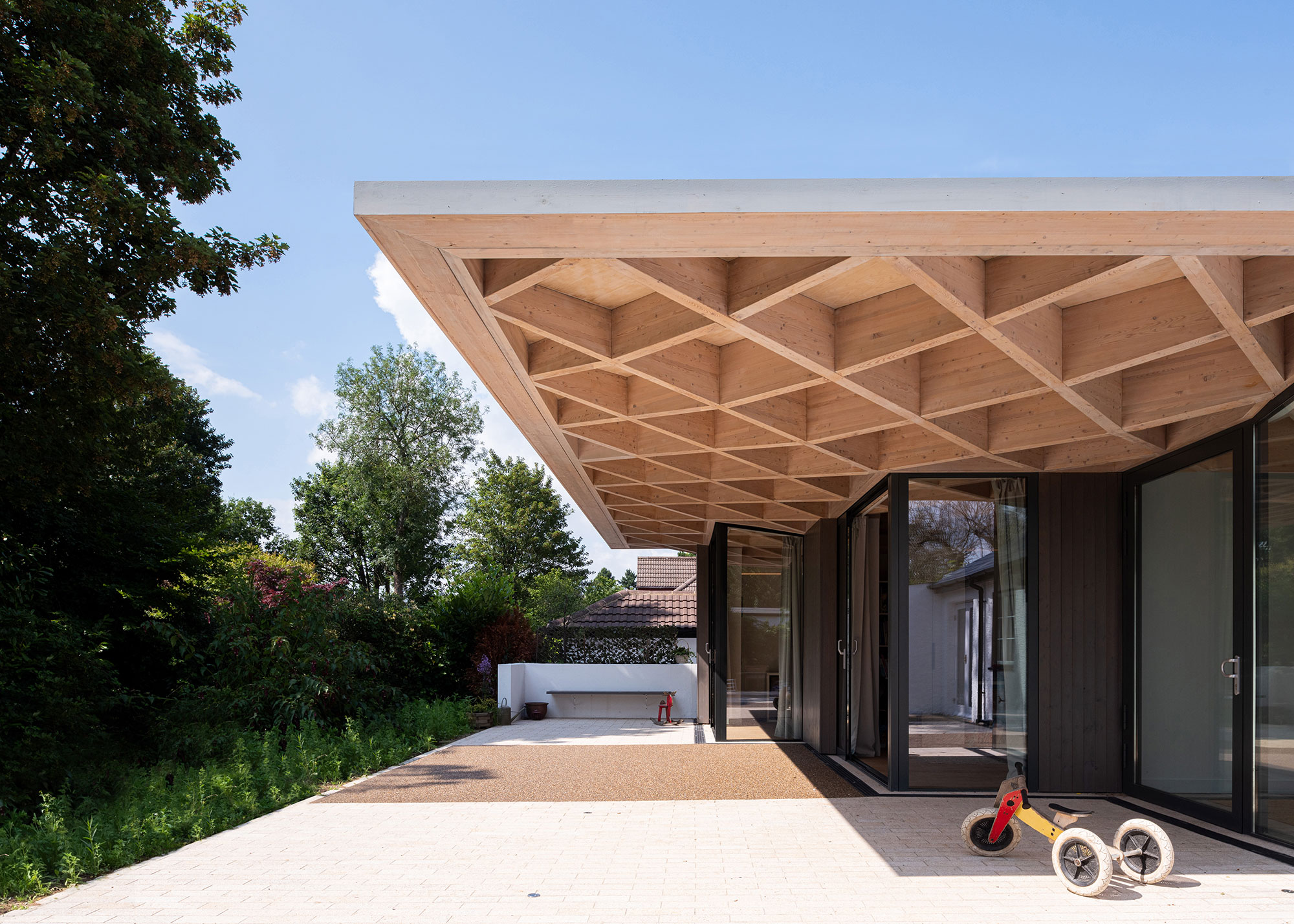
Where deep overhanging roofs and gravity-defying cantilevers were once seen as the reserve of only futuristic self-builds or super modern extensions, these days they are fast becoming essential features in the battle against the heat of the sun.
Simon Graham, director at YARD Architects, is a big fan of these kinds of features. "A good way to ensure any south- or west- facing windows are protected is to build shading into the design, with a large roof overhang or brise soleil, for example. If carefully designed, the low winter sun will still be allowed into the room but the summer sun will be partially blocked out, keeping the space cooler."
These methods of preventing overheating are also one James Munro, architect at Pace Architecture, frequently employs. "The biggest shift for us has been moving away from relying on glazing specification alone and designing shading into the building itself. On a recent Art Deco project in Sussex, we used a brise soleil across the new upper storey to control solar gain on the south-facing glazing — it does the work that blinds or low-G glass alone can't, because it stops heat reaching the glass in the first place rather than just filtering solar gain once it's already inside."
4. External Shutters
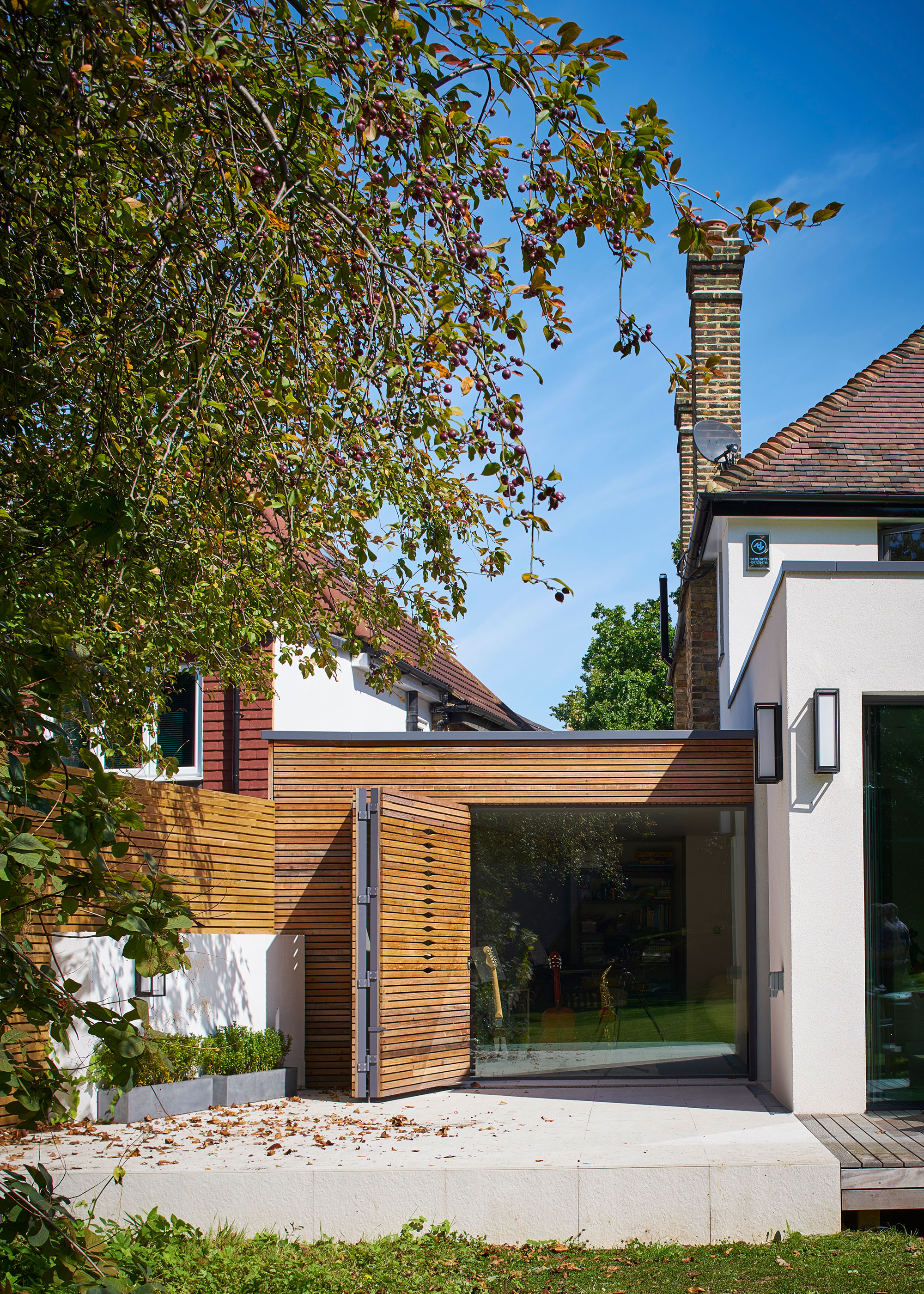
In some cases, a more flexible form of external shading might be more suitable than something fixed — which is where external shutters or window treatments can come in handy, particularly in the case of south-facing kitchen extensions, which can be especially prone to overheating in summer.
"These are really common in Europe but don’t seem to have caught on in the UK," points out Simon Graham. "There are many options on the market, from external curtains and awning blinds to built-in roller shutters, which also have an added security benefit. Blinds on the outside of the window are much more effective than those on the inside. Velux makes external solar blinds for rooflights that are very easy to fit retrospectively."
Richard Dudzicki, director of RDA Architecture and Interiors, explains the role external shutters had in a recent project undertaken by his practice. "At RDA's Wood House project (above), we incorporated large sliding timber shutters to provide adaptable external shading to the southwest-facing façade. The shutters allow the homeowners to respond to changing weather throughout the day, filtering harsh afternoon sun while maintaining natural ventilation, daylight, and views to the garden. During cooler months, they slide away completely, allowing valuable winter sunlight to warm the interiors naturally.
"What makes this approach particularly successful is that it combines environmental performance with architectural quality," adds Richard. "The shutters become part of the character of the house, adding texture, movement, and warmth to the façade while improving comfort inside. Rather than relying on mechanical cooling, they offer a simple, passive solution that reduces overheating and helps lower energy demand."
Richard goes on to explain the importance of taking a holistic approach when responding to the changing climate. "Thoughtful orientation, high-performance glazing, cross ventilation, and external shading should all work together to create comfortable living environments that remain resilient throughout the year."
5. Landscaping Techniques
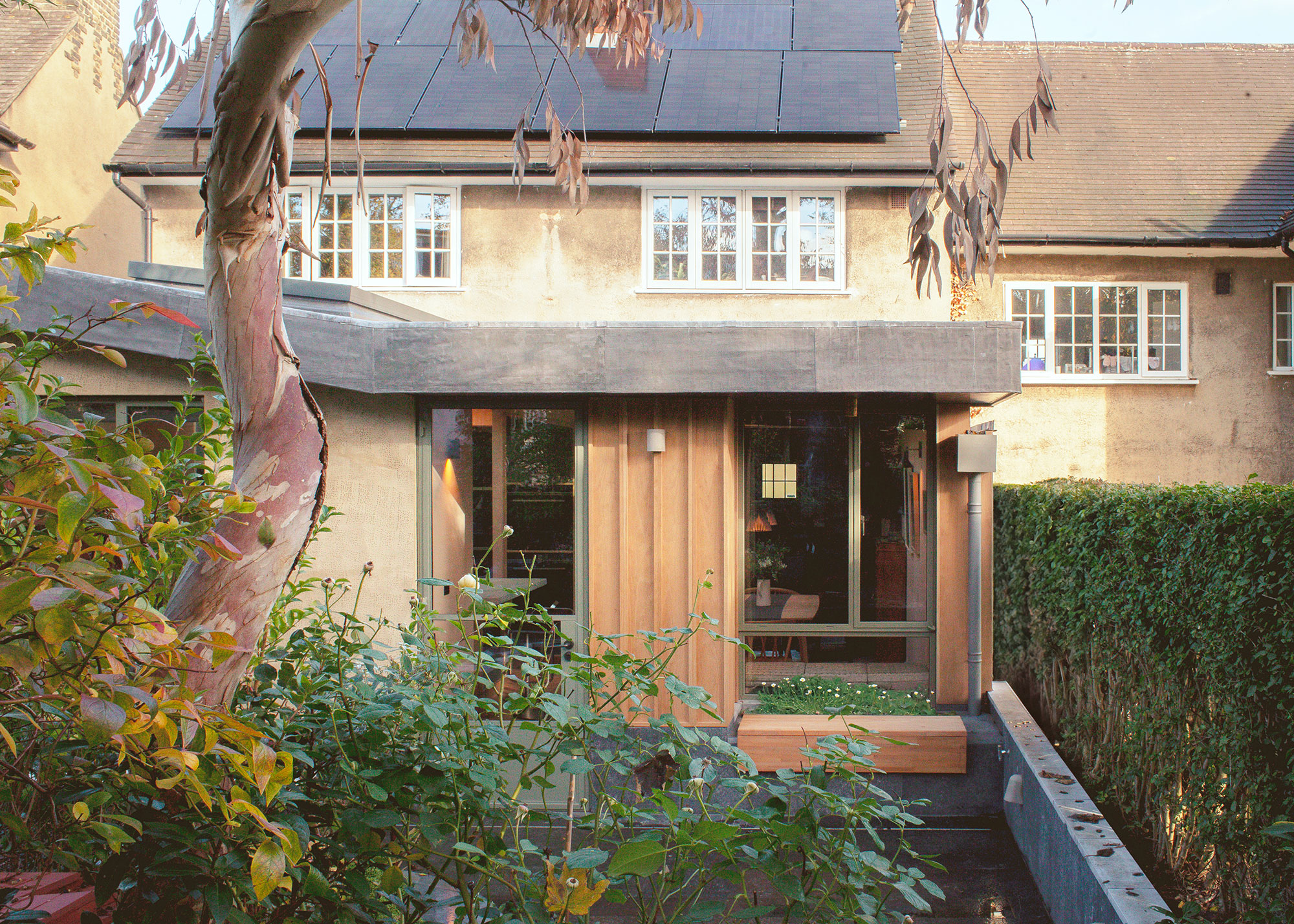
There was a time when landscaping tended to get left until last, something to be addressed should there be sufficient funds left in the pot, or to get around to once the dust had settled on an extension or renovation.
These days, however, modern gardens are being designed to work alongside the architecture of the house in order to make it a more comfortable place to spend time, as James Munro explains. "Landscaping needs to be seen as part of the cooling strategy, not just the finishing touch. Planting beds and climbing structures close to glazing for natural shading, and avoiding large expanses of hard paving that radiates heat back into the house is crucial."
Rhys Owen, founder of Pensaer, explains how this concept of designing houses and landscapes together was implemented at the practice's Casino Avenue project (above). "The landscape was considered just as carefully as the building itself. The extension is centred around a covered bench overlooking the clients' productive garden. It provides a shaded place to sit during the hottest part of the day and creates a gentle threshold between house and garden, encouraging outdoor living without full exposure to the sun. Beneath the bench sits a rainwater harvesting tank, collecting water from the roof to irrigate the vegetable beds during dry spells. As rainfall becomes less predictable, designing for water retention feels increasingly important, not only as a sustainable strategy, but as a practical one for everyday life."
6. Natural Ventilation Strategies
Air conditioning is becoming a far more common feature in British homes these days and, when installing it in an extension, it can be designed to be almost invisible, avoiding the need for any bulky white boxes stuck to the wall — plus there are some pretty stylish portable air conditioning units on the market these days too.
That said, there are plenty of ways of bringing in cool fresh air that don't involve any mechanical intervention — and these natural methods are what many architects are now designing into homes as standard.
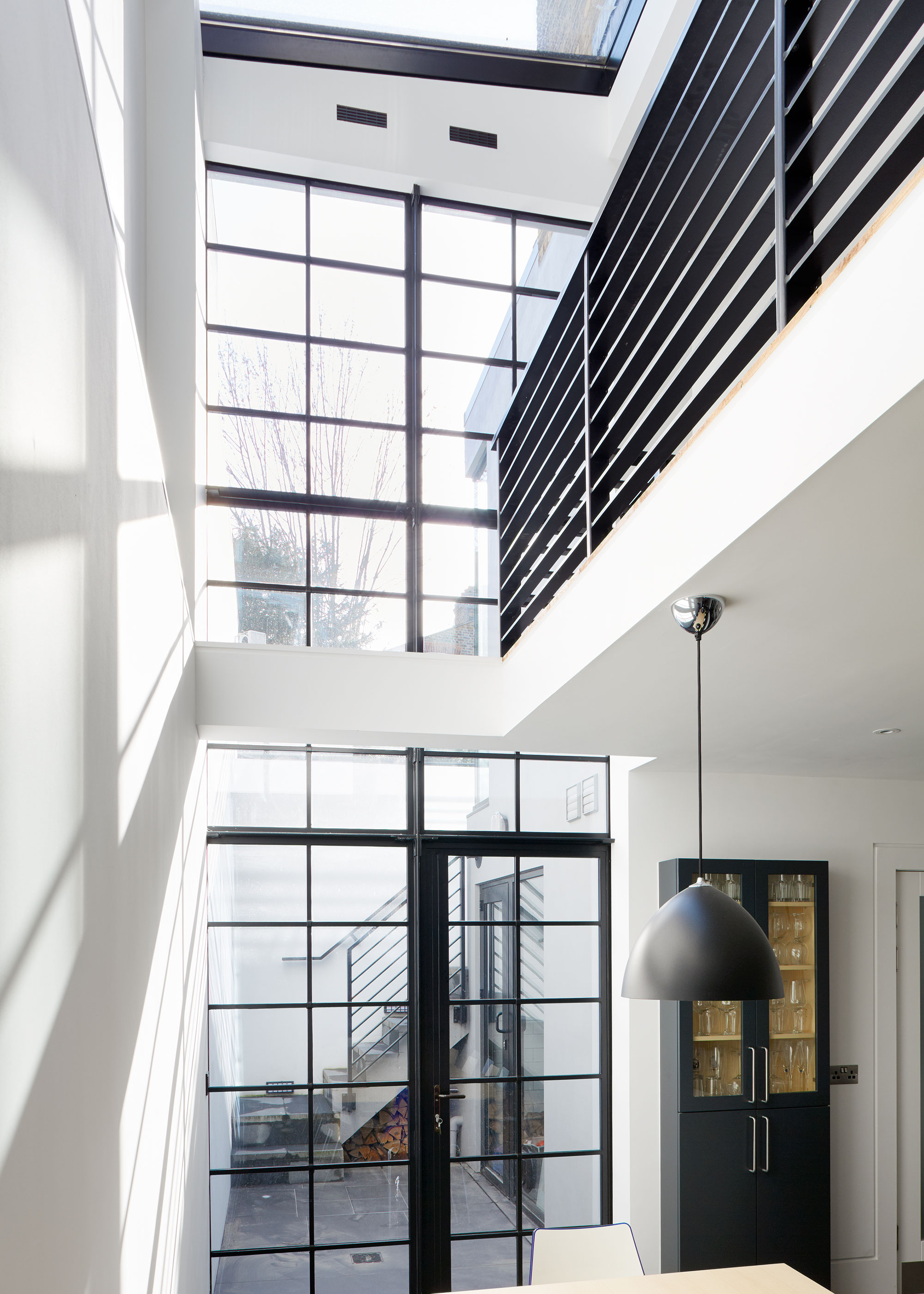
"We implement a ventilation strategy at the design stage," picks up James Munro. "This might include openable rooflights paired with windows on the opposite elevation so heat can stack and escape, rather than relying on mechanical cooling after the overheating has occurred."
Daniel Rowlands likes to take a twofold approach towards ventilation, combining automated and passive systems. "Use the height of the house, for example a double height or three-storey section, to allow hot air to rise, then fit automated windows at the top of the space. These will open when they reach a certain temperature, releasing the built-up heat."
Finally, Rhys Owen, is keen to stress the importance of thoughtful glazing in the battle against overheating. "We often deliberately resist the temptation to maximize glazing. There can be an assumption that more glass automatically creates a better connection to the garden, but in reality, large expanses of unprotected glazing often come with a significant overheating penalty. Instead, we carefully position openings to frame views, bring in generous daylight and encourage cross ventilation through the house. Natural airflow remains one of the simplest and most effective ways of improving comfort during hotter periods."
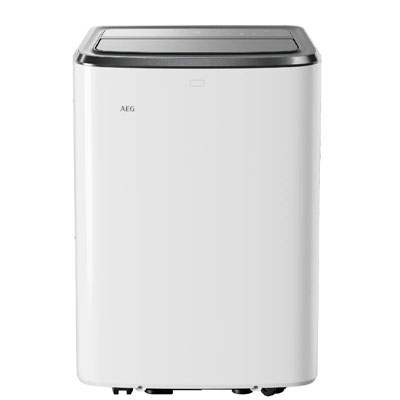
Portable air conditioners have really improved in terms of appearance, and this model from AEG offers a pleasingly unfussy look combined with powerful cooling.
7. Automated Cooling Systems
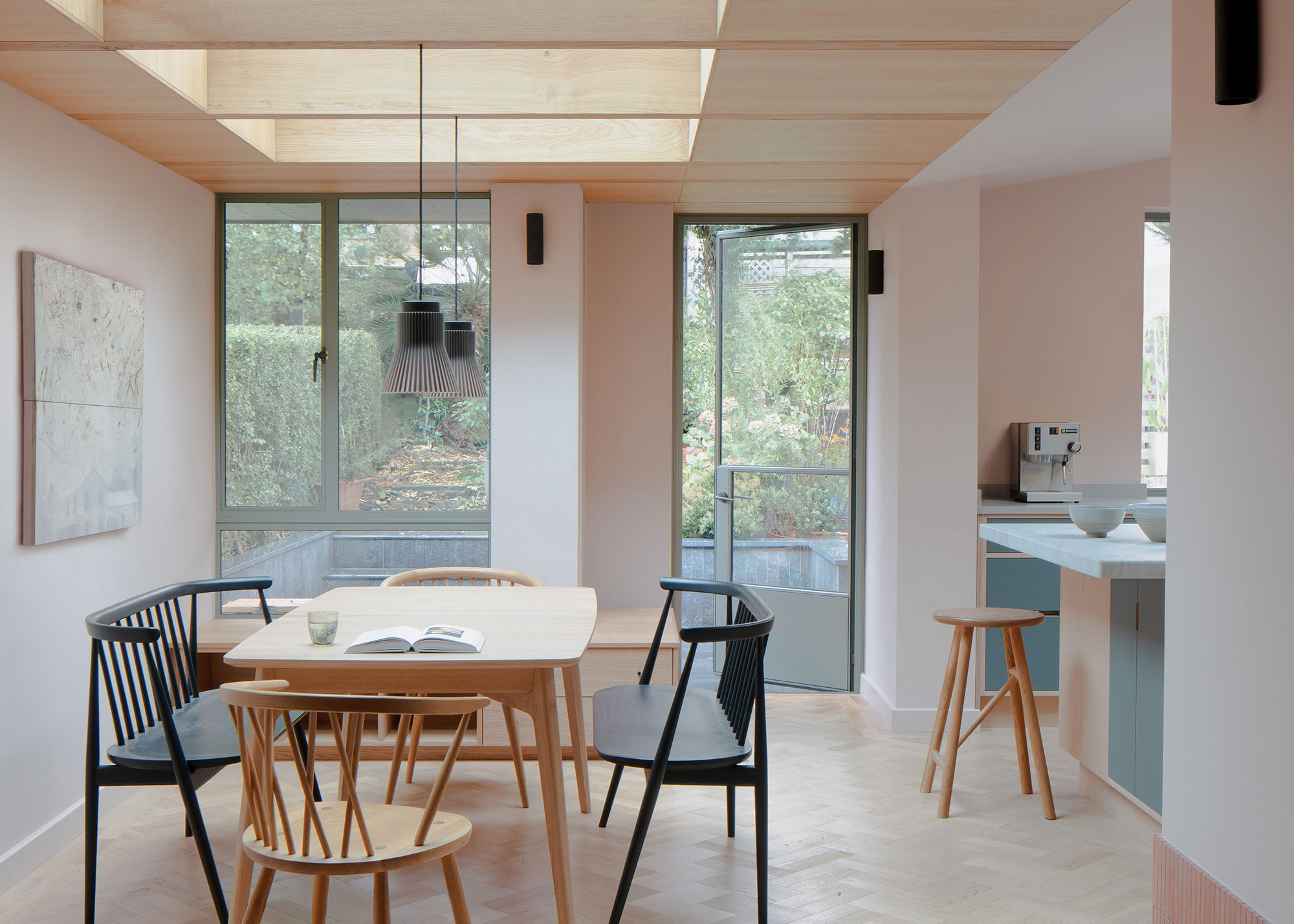
Finally, not all of the features being used by house designers to prevent your kitchen extension from overheating are necessarily obvious from a visual perspective. Some just quietly work away in the background doing their thing.
Mechanical Ventilation with Heat Recovery (MVHR) is one of them. While MVHR does not, on its own, cool a house, it can be designed to work alongside passive systems, such as cooling pools, when designed with care. Usually, stale air is removed by these units, and fresh air is brought in, passing over a heat exchanger. However, many systems have summer bypass modes that simply bring in fresh, unheated air.
Some also have 'night purge ventilation ', which works by trapping warm air and replacing it with cool night air, meaning you wake to a cool house in the morning.
FAQs
Which Types of Window Treatments Prevent Overheating?
It isn't just grand architectural statements that can help keep a house cool — sometimes simpler solutions can be just as useful. While not necessarily as effective as some of the external shading methods, modern window treatments, when designed into a scheme with care, can make a huge difference.
"We often incorporate at least two types of window treatments over glazed openings — usually electronic," reveals Daniel Rowland. "One acts to fully black out all light, while the other is sheer, allowing light through but still preventing solar gain."
Be on the lookout for thermally insulated blinds and curtains and choose designs in light colours. You want a multi-layered fabric to prevent solar radiation — and lighter shades will reflect light away and be less likely to absorb heat than darker versions.
Many people are unaware that underfloor heating can be used to cool a house — if you have a wet system, you could be missing out on its cooling benefits so make sure you read up on how to use UFH in this way.
For more inspiration for your home this summer, sign up to the Livingetc newsletter.