n the evening of 9 October 2017, around midnight, Howard Booster got a call from his neighbour. There’s a fire, Booster was warned – so he went outside and had a look. And yes, there was a fire, but no flames. All he could see was a dim red glow over the ridge, skipping north to south across the dark California sky. But Booster lived further east – safe, he thought, from the roiling cauldron over the hill. “Somebody’s going to have big problems,” he told his wife as they watched. And in a sense, he was right.
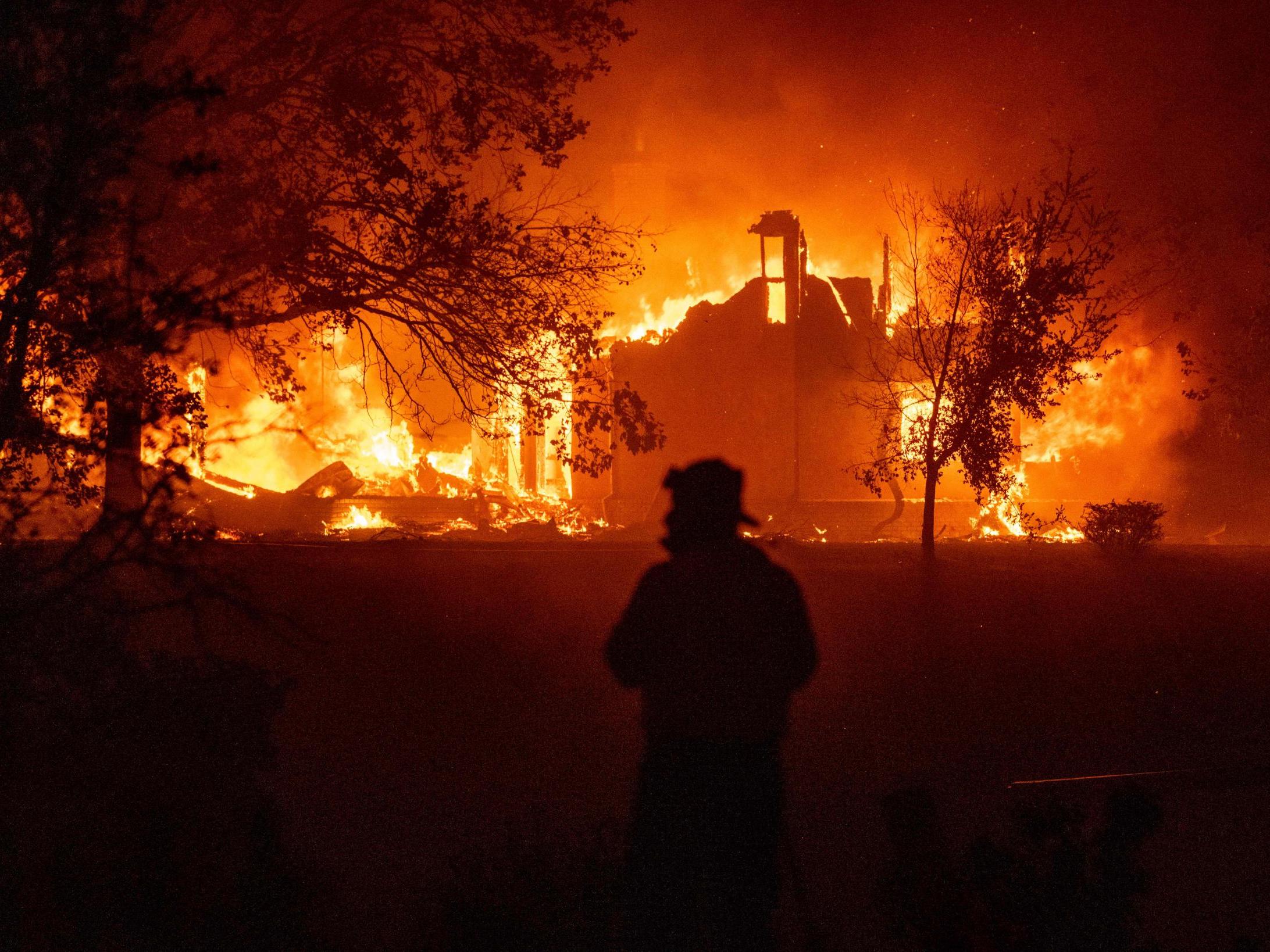
At about one in the morning, the wind shifted east, launching the fire towards Booster and his eight-acre property, the place he’d called home for 35 years. He acted fast, bundling his wife and her 97-year-old father away to safety at a nearby church. But Booster stayed – and what he witnessed next is impossible to forget. He saw flames, tumbling over one ridge, then another, faster than he could run, urged along by 95mph winds. He remembers the houses in its path weren’t so much burning as exploding: the air around was so hot that they disintegrated the moment the fire arrived.
It was time to go, Booster knew, but time was short. So he grabbed his fiddles (in happier times, he plays in two bands), threw them in his pickup, and left to check on his wife. When he returned the following day, there was nothing left, save some rubble and a pair of red-brick chimneys. Booster, unfortunately, was far from alone. The inferno that took his home near Santa Rosa, about 60 miles north of San Francisco, was just one of the 250 wildfires that ravaged northern California in October 2017 – and which altogether burnt more than 200,000 acres of land, caused $14.5bn (£11.2bn) of damage and killed 44 people.