Get all your news in one place.
100’s of premium titles.
One app.
Start reading

Archaeologists unearth room shedding light on slave life in ancient Pompeii

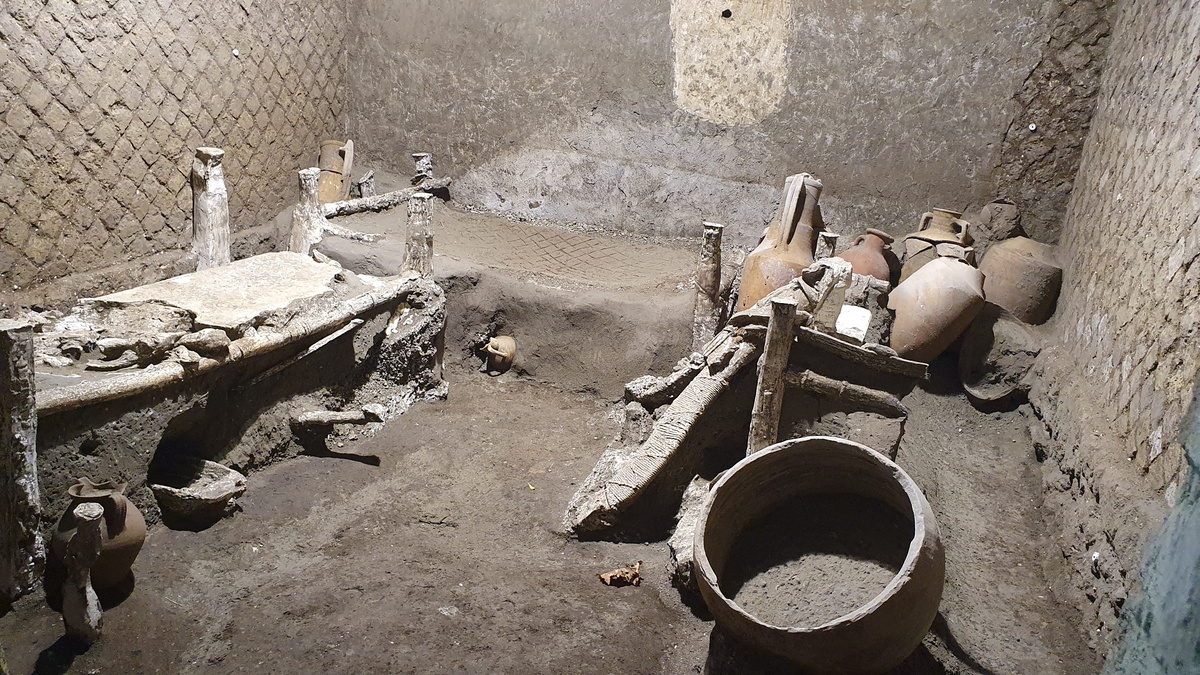
A "slaves room" at a Roman villa, containing beds, amphorae, ceramic pitchers and a chamber pot is discovered in a dig near the ancient Roman city of Pompeii, destroyed in 79 AD in volcanic eruption, Italy, 2021. Pompeii Archeological Park/Ministry of Cultural Heritage and Activities and Tourism/Handout via REUTERS

Archaeologists have uncovered a room at a villa just outside Pompeii containing beds and other objects that shed light on the living conditions of slaves in the ancient Roman city buried by a volcanic eruption.

The room, in an excellent state of preservation, contains three wooden beds and a series of other objects including amphorae, ceramic pitchers and a chamber pot.

"This new important discovery enriches our understanding of the everyday life of the ancient Pompeians, especially that class in society about which little is still known,” Italy’s Culture Minister Dario Franceschini said.
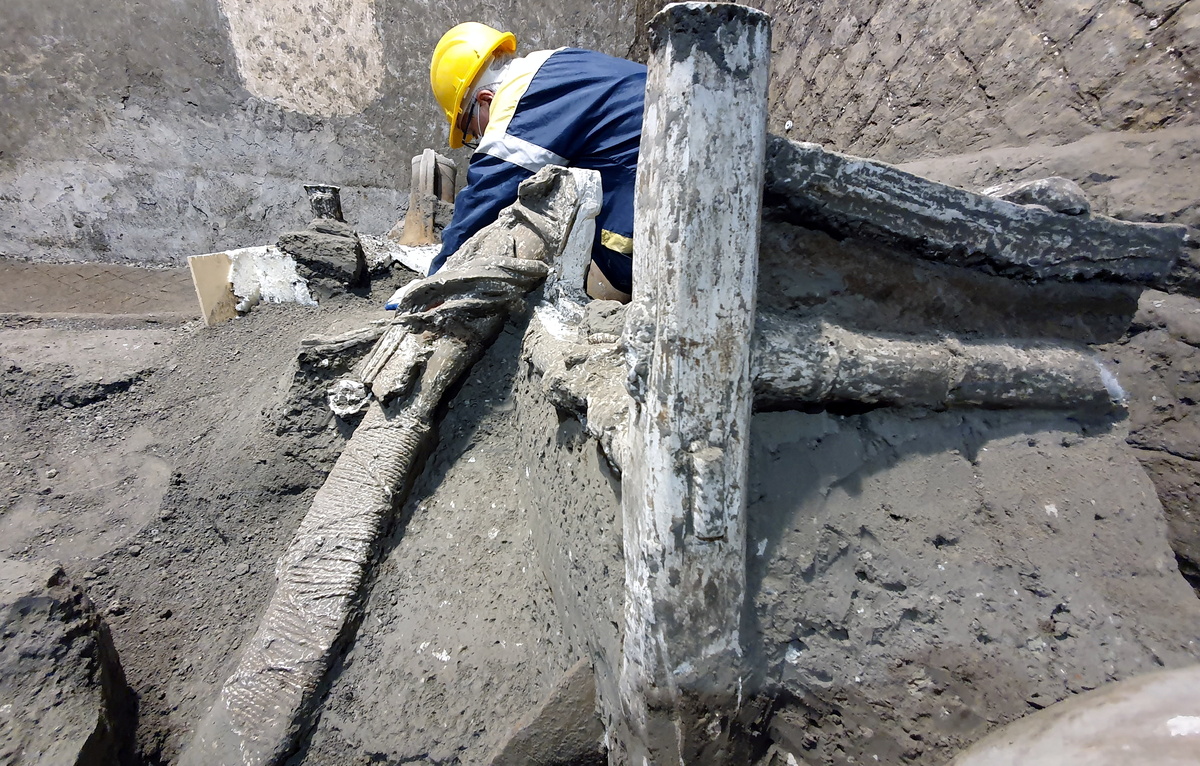
An archaeologist works inside a "slaves room" discovered at a Roman villa near the ancient Roman city of Pompeii, destroyed in 79 AD in volcanic eruption, Italy, 2021. Pompeii Archeological Park/Ministry of Cultural Heritage and Activities and Tourism/Handout via REUTERS

Under Roman law slaves were considered property and had no legal personhood. 

The "slaves’ room" is close to where a ceremonial carriage was uncovered earlier this year, near the stables of an ancient villa at Civita Giuliana, some 700 metres north of the walls of ancient Pompeii.

On top of the beds, archaeologists discovered a wooden chest containing metal and fabric objects that could have been part of the horses’ harnesses while on one bed a carriage shaft was found.
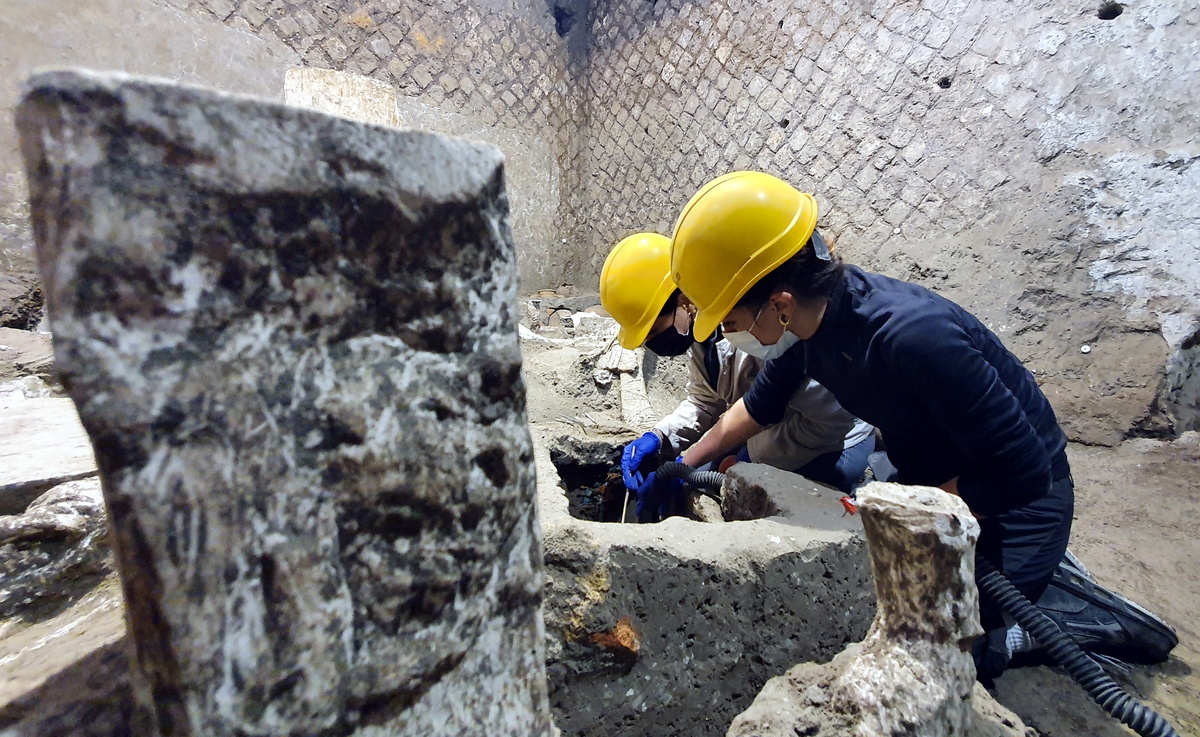
Archaeologists work inside a "slaves room" discovered at a Roman villa near the ancient Roman city of Pompeii, destroyed in 79 AD in volcanic eruption, Italy, 2021. Pompeii Archeological Park/Ministry of Cultural Heritage and Activities and Tourism/Handout via REUTERS

Two of the beds were 1.7 metres long while the third was just 1.4 metres indicating the room might have been used by a small slave family, the culture ministry said

The 16 square-metre room, with a small window high up, also served as a storage space, with eight amphorae found tucked into the corners.

Pompeii, 23 km (14 miles) southeast of Naples, was home to about 13,000 people when it was buried under ash, pumice pebbles and dust as it endured the force of an eruption in the year 79 AD equivalent to many atomic bombs.
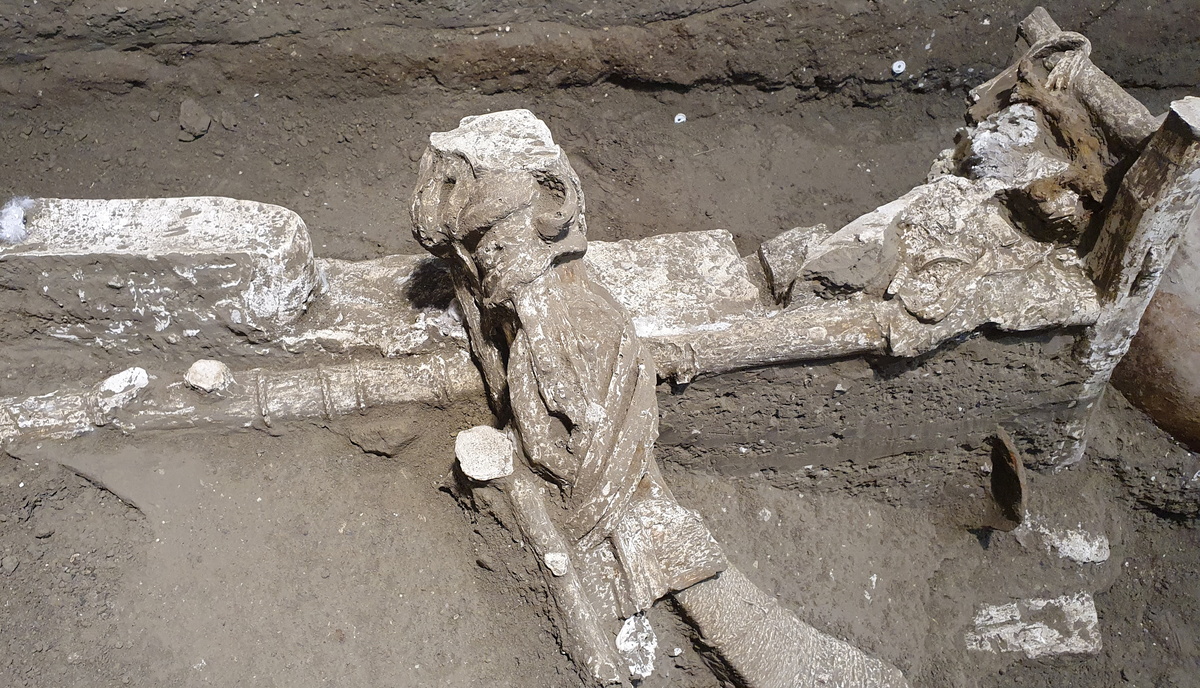
A "slaves room" at a Roman villa, containing beds, amphorae, ceramic pitchers and a chamber pot is discovered in a dig near the ancient Roman city of Pompeii, destroyed in 79 AD in volcanic eruption, Italy, 2021. Pompeii Archeological Park/Ministry of Cultural Heritage and Activities and Tourism/Handout via REUTERS

The site, not discovered until the 16th century, has seen a burst of recent archaeological activity aimed at halting years of decay and neglect.

(Reporting by Stephen Jewkes; Editing by Giles Elgood)
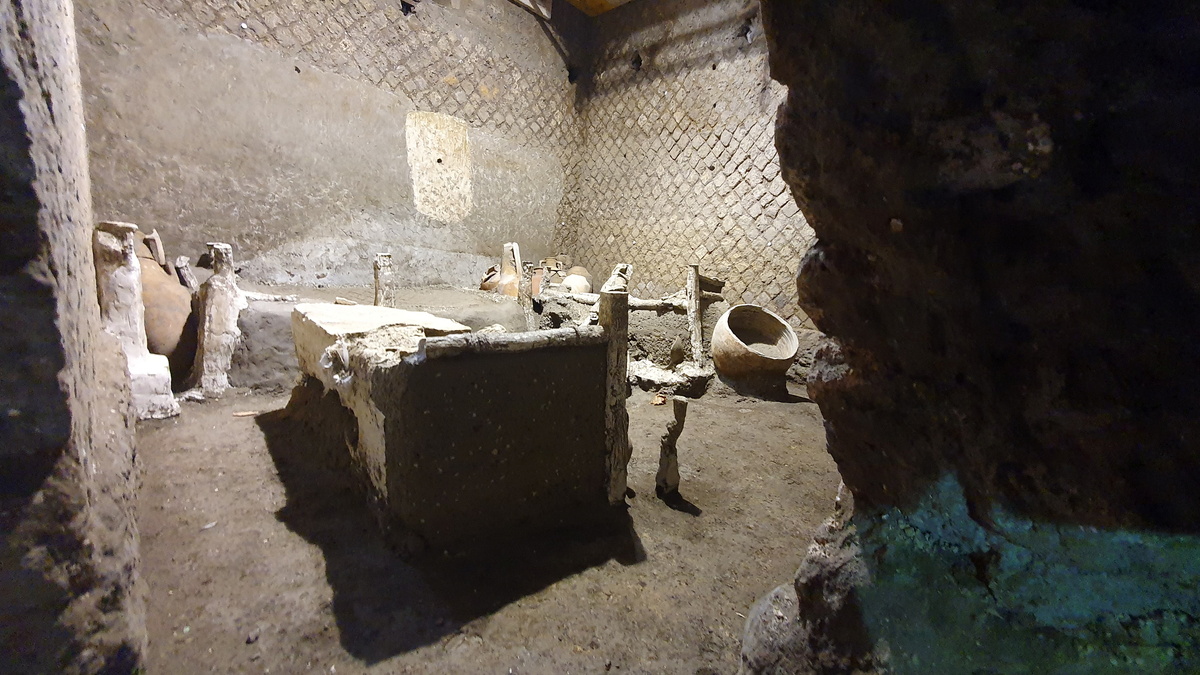
A "slaves room" at a Roman villa, containing beds, amphorae, ceramic pitchers and a chamber pot is discovered in a dig near the ancient Roman city of Pompeii, destroyed in 79 AD in volcanic eruption, Italy, 2021. Pompeii Archeological Park/Ministry of Cultural Heritage and Activities and Tourism/Handout via REUTERS
Sign up to read this article
Read news from 100’s of titles, curated specifically for you.
Already a member? Sign in here
Related Stories
Top stories on inkl right now
One subscription that gives you access to news from hundreds of sites
Already a member? Sign in here
Our Picks
Fourteen days free
Download the app
One app. One membership.
100+ trusted global sources.