A Bronze Age burial site in Britain is raising new questions about how prehistoric communities treated their dead after archaeologists identified unusual stone objects shaped in ways that may resemble human bodies. The discovery comes from research into the Coëby cemetery, a prehistoric burial landscape in Lincolnshire that contains a series of burial mounds dating back thousands of years.
Get breaking news anytime, anywhere. Download the TOI app now!
The unusual stones are among several features that make the site difficult to interpret. Rather than being ordinary pieces of naturally occurring rock, some appear to have been deliberately selected or modified and placed in contexts associated with prehistoric burials.
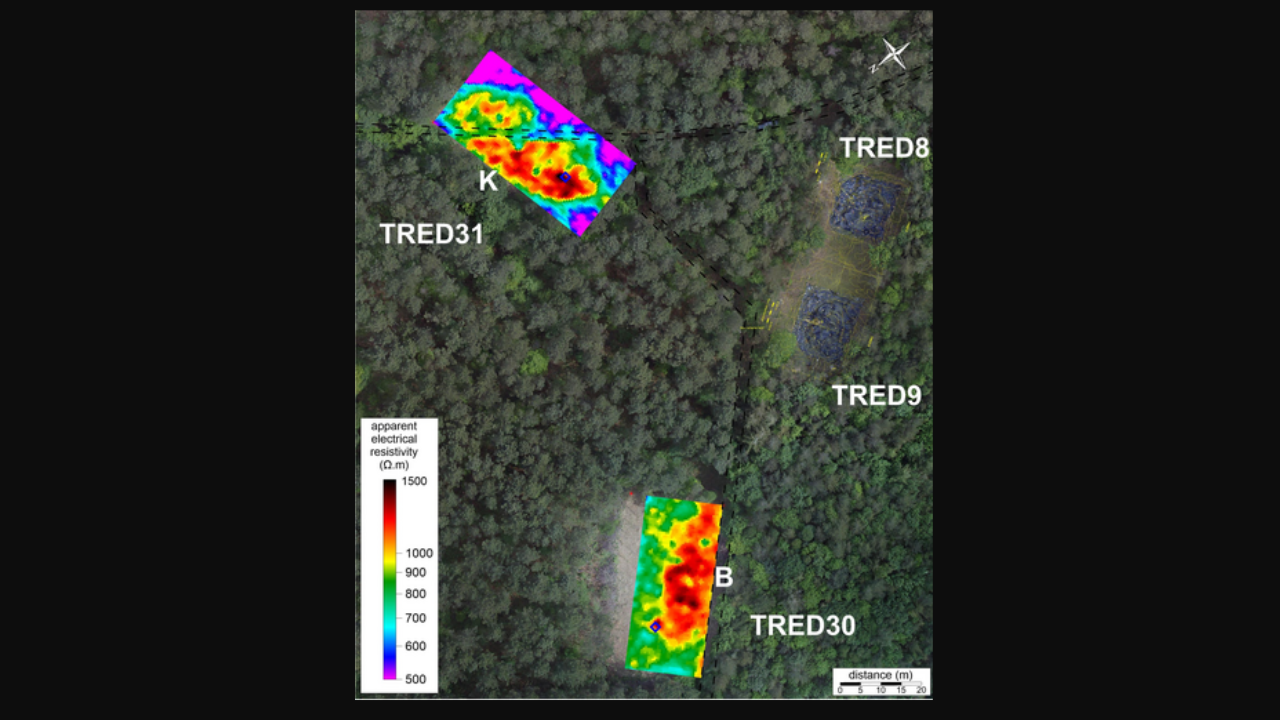
A study titled ‘ Atypical Long Barrows in the Cöeby Neolithic Cemetery (Trédion, Morbihan, France)? The Contribution of Electrical Surveys ’ examined the site using archaeological and geophysical evidence, adding another layer to the mystery surrounding Coëby and the practices of the people who used the cemetery.
How a strange discovery is changing what researchers know about Coëby cemetery
Coëby is part of a wider prehistoric landscape in Lincolnshire containing monuments and burial sites created during the Bronze Age. Burial mounds were an important feature of prehistoric Britain, but the people who constructed them did not always treat the dead in the same way.
Some individuals were buried with objects, while others were cremated and their remains placed in vessels or pits. Across Britain, archaeologists have also found evidence that burial monuments were repeatedly modified, reused and incorporated into later landscapes.
The Coëby cemetery provides an opportunity to examine these changing practices because its remains preserve evidence of several prehistoric activities within the same landscape.
The recent study, published in Archaeological Prospection, used archaeological investigation to reassess features associated with the cemetery and explore what they might reveal about how the site was constructed and used. The research adds new evidence to the continuing investigation of Coëby's prehistoric remains.
The human-shaped stones are what make the site particularly unusual
Among the most intriguing discoveries are stones whose shapes appear to evoke human forms. Such objects are potentially important because deliberately shaped stones can provide clues about how prehistoric communities represented people, the dead or the human body.
However, their interpretation requires caution. A stone that resembles a human figure does not necessarily represent an intentional sculpture. Natural weathering, erosion and the shape of the original stone can sometimes produce surprisingly recognisable forms.
This is why archaeologists examine not only an object's appearance but also its archaeological context. Where was it found? Was it deliberately placed? Does it show evidence of modification? Was it associated with a burial or monument? And are similar objects found elsewhere?
These questions are particularly important at Coëby because the stones cannot be understood separately from the wider burial landscape.
What the cemetery reveals about Bronze Age ideas of death
Bronze Age burial monuments were not simply places where bodies were deposited and forgotten. Across prehistoric Britain, burial sites appear to have been spaces where communities returned repeatedly, altered monuments and interacted with the remains of earlier generations.
The presence of unusual stones at Coëby may therefore point towards a more complicated relationship with the dead. If the stones were deliberately shaped or selected to resemble human figures, they could potentially have played a symbolic role in ceremonies or commemorative practices.
But archaeologists have not established a single explanation for their purpose. The evidence allows several possibilities, and further research will be needed to determine whether the human-like appearance was intentional.
Why technology is helping archaeologists revisit ancient landscapes
Modern archaeological investigations increasingly combine traditional excavation with non-invasive techniques that allow researchers to investigate buried remains without disturbing them.
At prehistoric burial sites, this can be especially valuable. Geophysical surveys can reveal buried ditches, pits, mound boundaries and other features that are difficult to see from the surface. Researchers can then compare those results with excavation records and previously recovered objects.
The research published in Archaeological Prospection demonstrates how reassessing older archaeological landscapes with modern methods can produce new questions even when the monuments themselves have been known for decades.
Rather than treating a prehistoric cemetery as a collection of isolated graves, archaeologists can now examine how its different features relate to one another and reconstruct how people may have moved through and interacted with the landscape.
The mystery of Coëby is far from solved
The human-shaped stones are intriguing precisely because they raise more questions than they answer. If prehistoric people intentionally selected or shaped them to resemble human forms, their presence could provide rare evidence for how Bronze Age communities represented the human body outside conventional figurative art.
If their shapes are instead the result of natural processes, they still demonstrate how easily modern observers can project familiar forms onto ancient objects.
For now, Coëby remains a landscape where the physical evidence offers tantalising clues but few definitive answers. The burial mounds, unusual stones and other archaeological features together suggest that the site had a complex history of use.
The new research does not close the mystery. Instead, it makes the cemetery even more interesting by showing how much may still be hidden beneath and around Britain's prehistoric burial monuments.