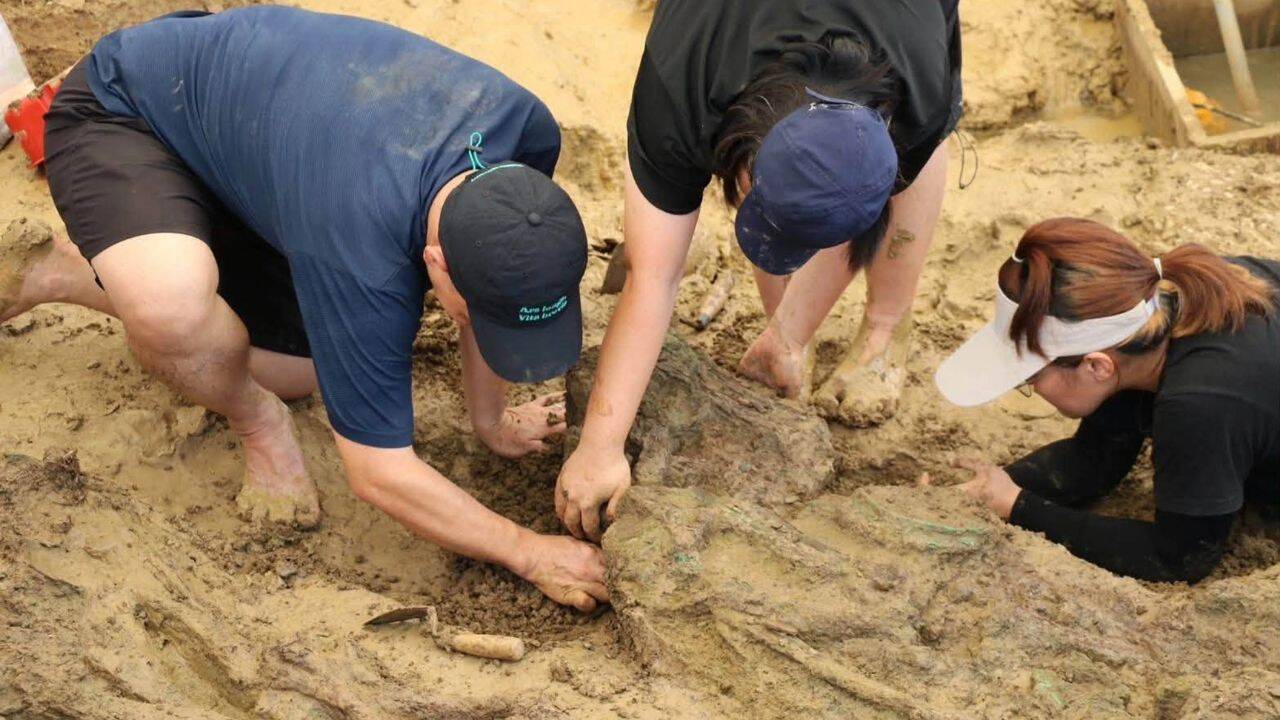
In a quiet stretch of farmland in western Thailand, a set of excavations that began almost casually has started to reshape how archaeologists think about life in the region two millennia ago. What started with fragments of old bronze drums pulled from a rice field has turned into something more layered, with burials, ornaments and traces of long-distance cultural contact emerging from the soil. Among the most recent finds are two gold rings recovered beside human remains, their age estimated at roughly 2,000 years, as reported by the Associated Press (AP). One is plain, unmarked and worn smooth with time. The other carries an engraved inscription that links it to an ancient script used across parts of South Asia. Together they sit quietly in a broader picture of trade, status and belief systems that once reached into what is now modern-day Thailand, long before borders or modern settlements took shape.
Get breaking news anytime, anywhere. Download the TOI app now!
Archaeologists uncover ritual graves and jewellery at Don Yai Thong burial site in Phetchaburi, Thailand
Reportedly, the rings were uncovered during ongoing work at the Don Yai Thong site in Phetchaburi, a province not far southwest of Bangkok. The excavation team had already been moving through a cluster of graves that appeared to belong to people of relatively high standing in their community. Eight skeletons have been identified so far, each accompanied by objects that suggest care in burial rather than hurried disposal.
There was pottery placed with intention, fragments of bronze, and pieces of jewellery that point towards access to wealth or specialised craft networks. The two rings came from one of these graves, resting close to human remains as if they had once been worn rather than stored or traded separately. Nothing about the arrangement feels accidental. Even the spacing of objects in the soil hints at ritual behaviour, though the exact meaning remains open to interpretation.
Brahmi inscription and the cultural reach of Early South Asia
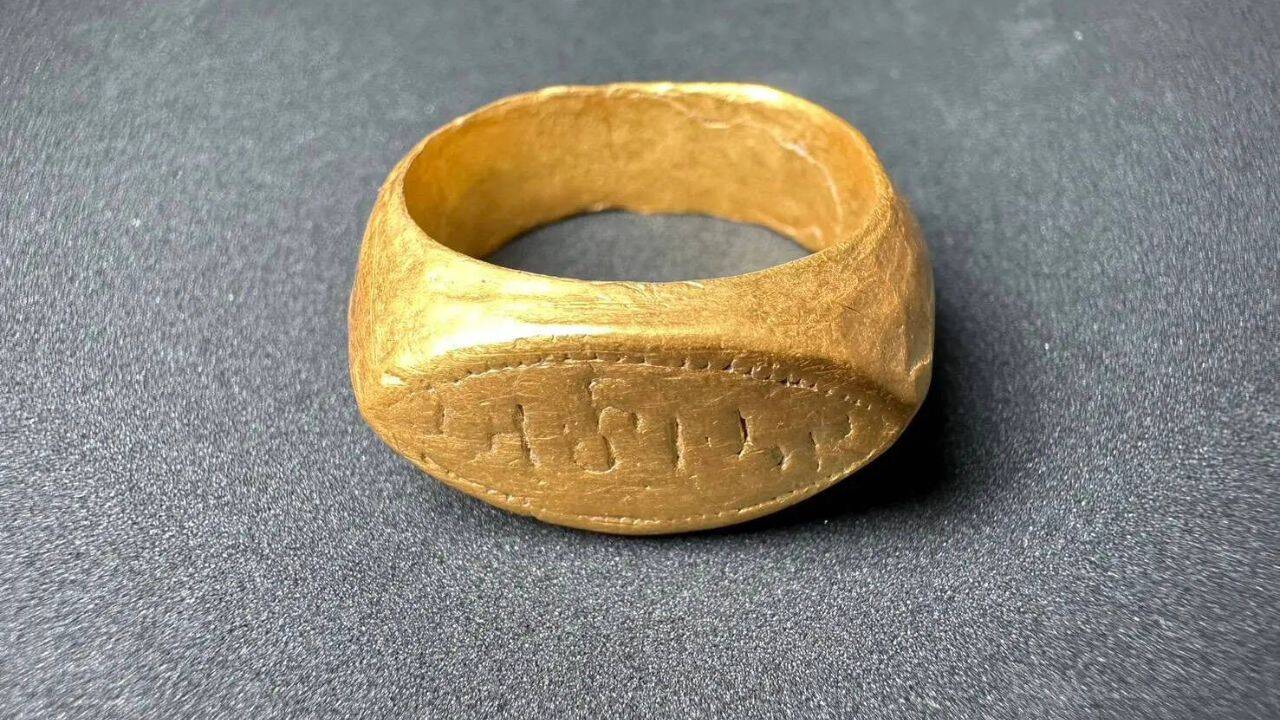
One of the gold rings carries an inscription that has drawn particular attention. AP reported, experts examining it have identified characters linked to Bhrami script, an early writing system that spread widely across ancient South Asia. The inscription appears to read something interpreted as “pusarakhitasa”, a phrase associated with auspicious timing in relation to the Pushya constellation in Indian astronomical tradition.
It is a small detail etched into metal, but it suggests movement far beyond a single settlement. Whether the ring was made locally under cultural influence or brought in through trade routes is not yet clear. Either way, it reflects a world in which language, belief and ornamentation were already crossing distances that feel surprisingly large for the period.
The second ring, found in the same burial context, is unembellished. No markings, no decoration, just a simple band of gold. Its plainness does not make it less significant; if anything, it sits in contrast with the inscribed piece, raising quiet questions about identity, status and choice.
Social status and emerging clues from the burial context
Archaeologists working at the site have suggested that the individual buried with the rings may have been part of a wealthier stratum of society. The combination of gold jewellery and carefully placed grave goods tends to point in that direction, though nothing is being described with certainty.
There has also been cautious reference to ideas drawn from the Indian caste system, particularly the merchant class known historically as Vaishyas. That interpretation rests largely on the presence of imported cultural markers, rather than direct evidence of identity. Still, it hints at the possibility that trade networks were not only moving goods through the region but also carrying social ideas along with them.
The burial does not stand alone. Across the site, similar patterns are emerging, suggesting that this was not an isolated grave but part of a wider community with shared practices and access to external connections.
How a routine day in the fields revealed ancient history
The discovery of Don Yai Thong itself began unexpectedly earlier this year when residents came across fragments of ancient bronze drums while working in a rice field. What might have been dismissed as scattered metal quickly drew the attention of officials, leading to a more systematic excavation.
Since then, the area has revealed a steady stream of material from what is believed to be the Iron Age in mainland Southeast Asia, a period spanning roughly 1,500 to 2,500 years ago. The terrain, now largely agricultural, once held communities that were engaged in complex burial practices and likely participated in regional exchange networks.
The proximity of the site to present-day Bangkok, around 130 kilometres away, places it within a landscape that has been continuously inhabited and reshaped. Yet beneath the modern fields, layers of earlier life remain relatively undisturbed, waiting for slow uncovering.