Archaeologists discover Aztec ball court in heart of Mexico City
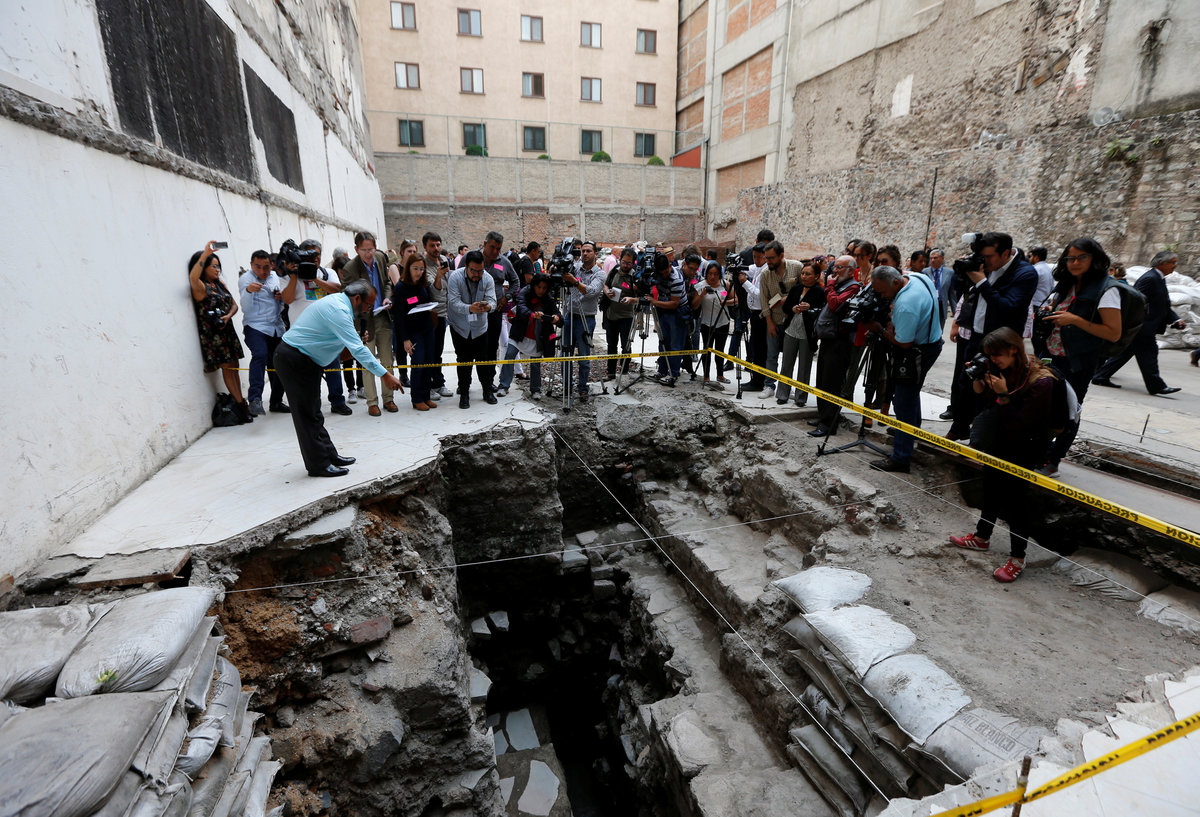
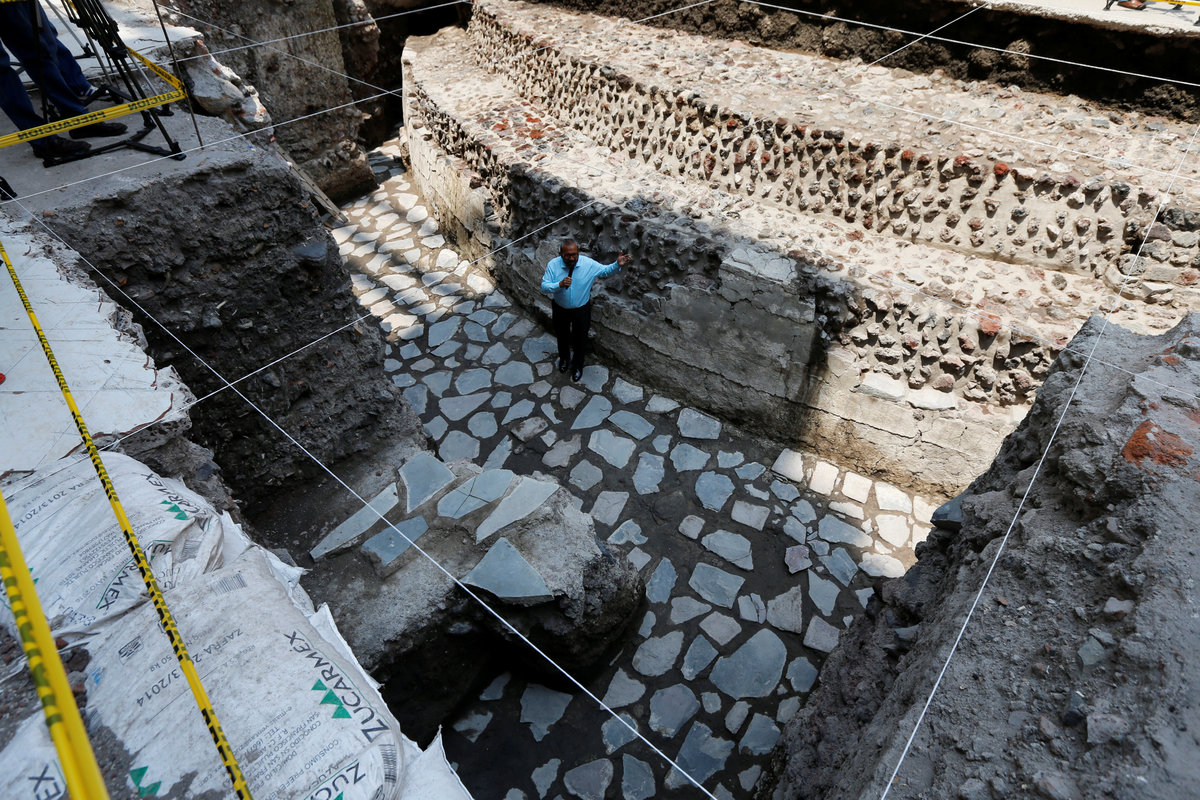
Raul Barrera, an archaeologist from the National Institute of Anthropology and History (INAH) speaks to the media about new Aztec discoveries including the main temple of the wind god Ehecatl, a major deity, as well as an adjacent ritual ball court, located just off the Zocalo plaza in the heart of downtown Mexico City, Mexico June 7, 2017. REUTERS/Henry Romero
MEXICO CITY (Reuters) - The remains of a major Aztec temple and a ceremonial ball court have been discovered in downtown Mexico City, shedding new light on the sacred spaces of the metropolis that Spanish conquerors overran five centuries ago, archaeologists said on Wednesday.
The discoveries were made on a nondescript side street just behind the city's colonial-era Roman Catholic cathedral off the main Zocalo plaza on the grounds of a 1950s-era hotel.
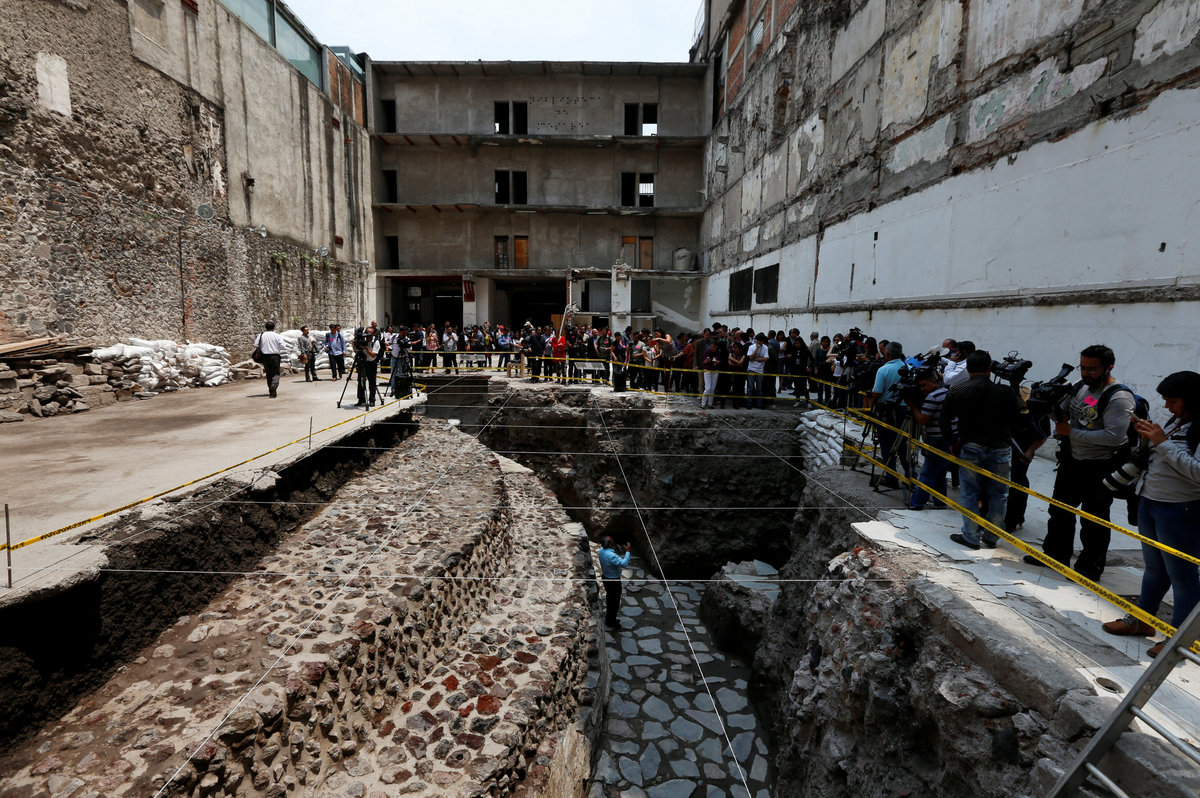
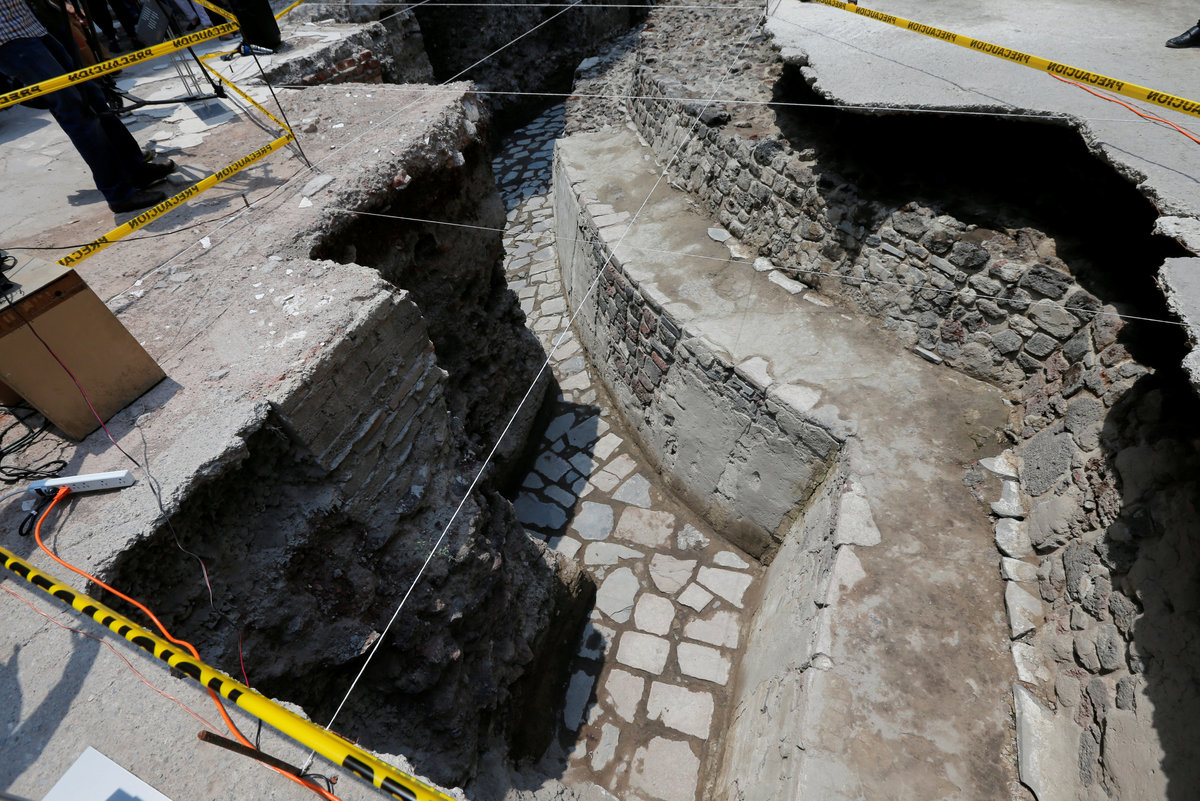
Raul Barrera, an archaeologist from the National Institute of Anthropology and History (INAH) shows to the media a new Aztec discovery a ritual ball court, during a tour of the area, located just off the Zocalo plaza in the heart of downtown Mexico City, Mexico June 7, 2017. REUTERS/Henry Romero
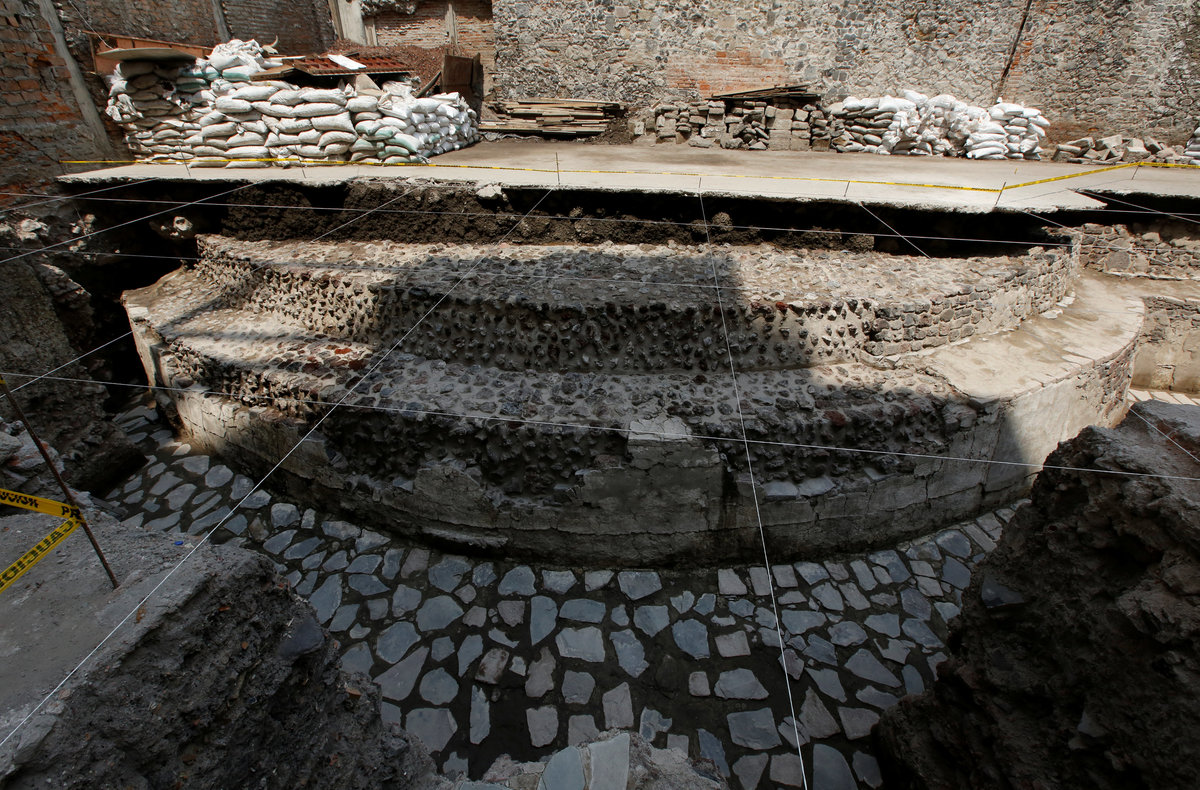
The underground excavations reveal a section of what was the foundation of a massive, circular-shaped temple dedicated to the Aztec wind god Ehecatl and a smaller part of a ritual ball court, confirming accounts of the first Spanish chroniclers to visit the Aztec imperial capital, Tenochtitlan.
"Due to finds like these, we can show actual locations, the positioning and dimensions of each one of the structures first described in the chronicles," said Diego Prieto, head of Mexico's main anthropology and history institute.
Archaeologists also detailed a grisly offering of 32 severed male neck vertebrae discovered in a pile just off the court.
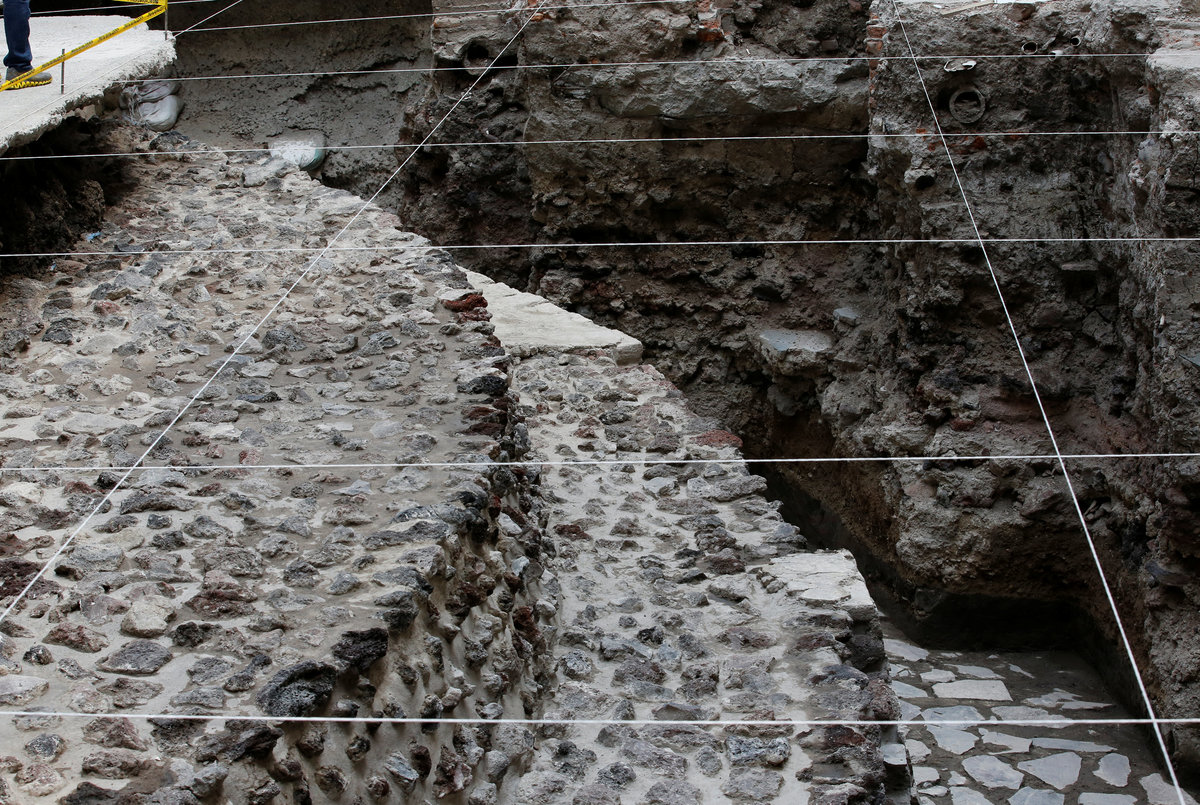
A new Aztec discovery of the remains of the main temple of the wind god Ehecatl, a major deity, is seen during a tour of the area, located just off the Zocalo plaza in the heart of downtown Mexico City, Mexico June 7, 2017. REUTERS/Henry Romero
"It was an offering associated with the ball game, just off the stairway," said archaeologist Raul Barrera. "The vertebrae, or necks, surely came from victims who were sacrificed or decapitated."
Some of the original white stucco remains visible on parts of the temple, built during the 1486-1502 reign of Aztec Emperor Ahuizotl, predecessor of Moctezuma, who conquistador Hernan Cortes toppled during the Spanish conquest of Mexico.
Early Spanish accounts relate how a young Moctezuma played against an elderly allied king on the court and lost, which was taken as sign that the Aztec Empire's days were numbered.
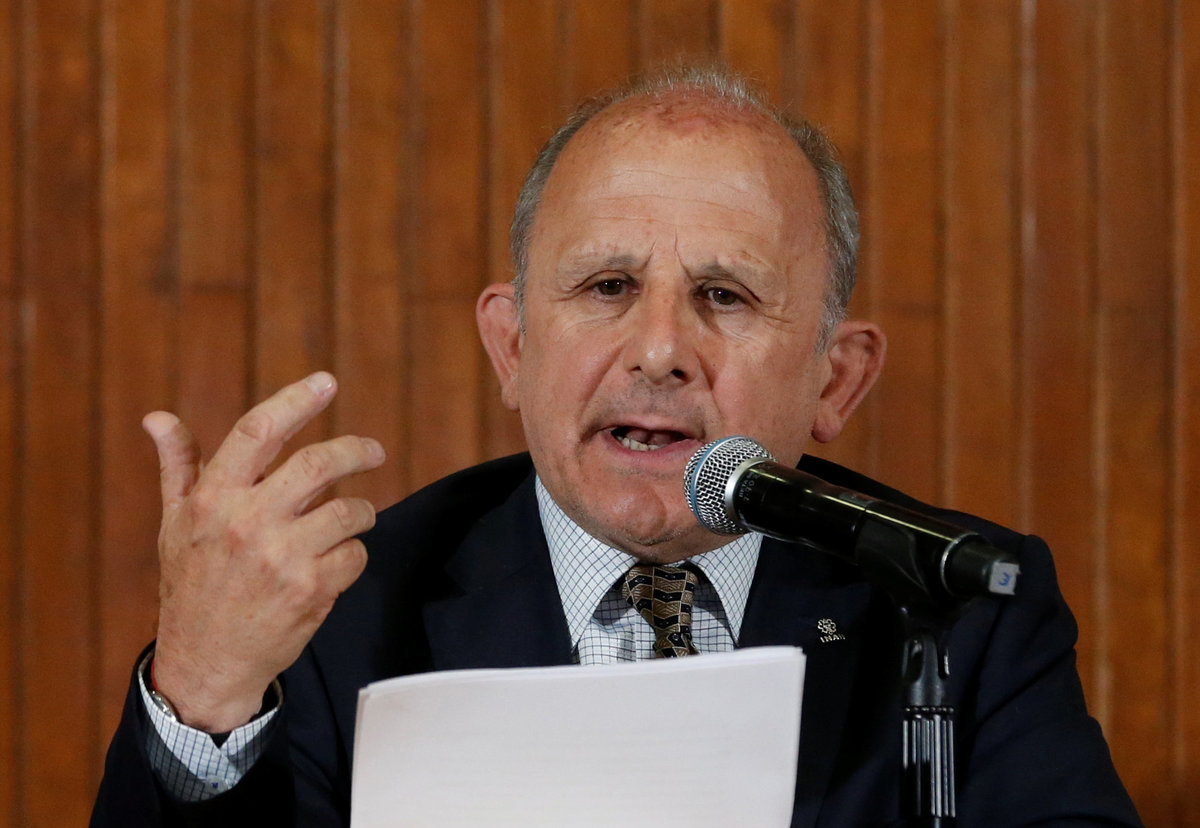
Diego Prieto, director of the Institute of Anthropology and History (INAH) speaks to the media during a news conference about new Aztec discoveries including the main temple of the wind god Ehecatl, a major deity, as well as an adjacent ritual ball court, located just off the Zocalo plaza in the heart of downtown Mexico City, Mexico June 7, 2017. REUTERS/Henry Romero
The building would have stood out because of its round shape among the several dozen other square temples that dominated the Aztecs' most sacred ceremonial space before the 1521 conquest.
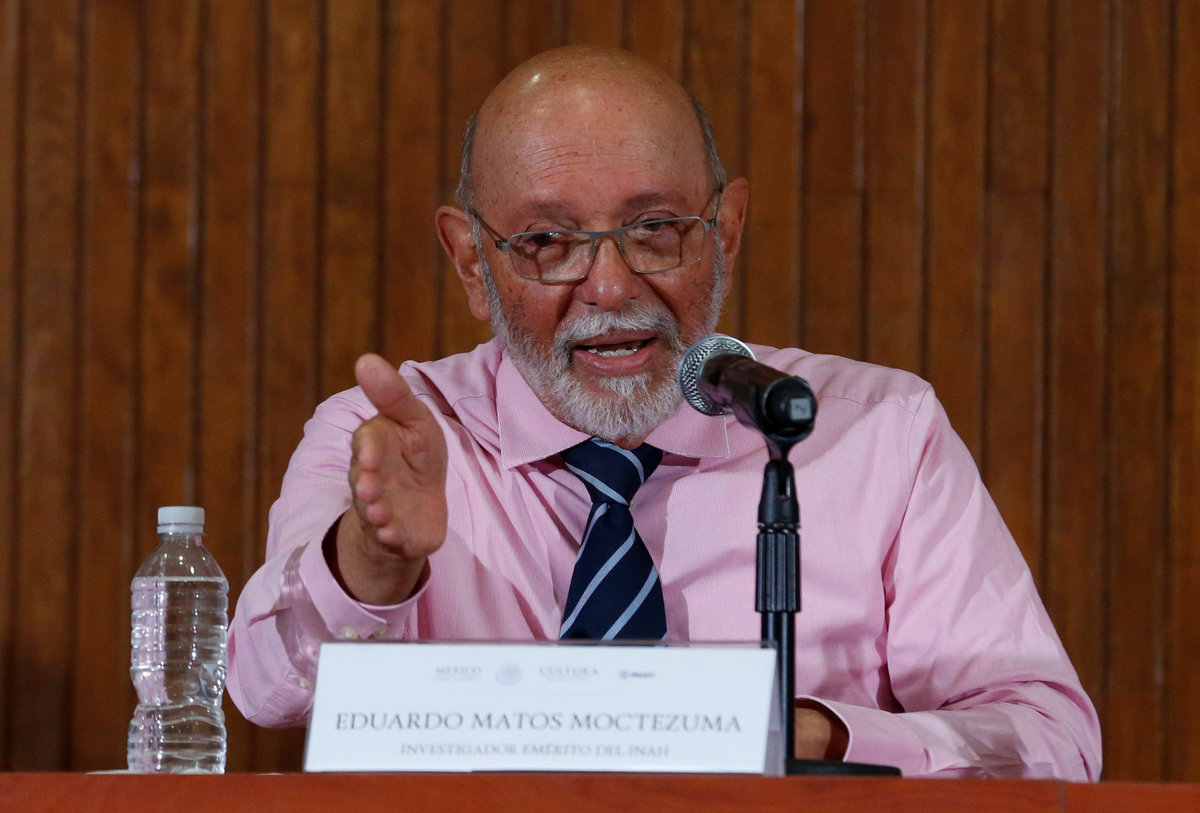
Aztec archaeologist Eduardo Matos said the top of the temple was likely built to resemble a coiled snake, with priests entering though a doorway made to look like a serpent's nose.
Once excavations finish, a museum will be built on the site, rubbing shoulders with modern buildings in the capital.
A new Aztec discovery of the remains of the main temple of the wind god Ehecatl, a major deity, is seen during a tour of the area, located just off the Zocalo plaza in the heart of downtown Mexico City, Mexico June 7, 2017. REUTERS/Henry Romero
Mexico City, including its many colonial-era structures with their own protections, was built above the razed ruins of the Aztec capital, and more discoveries are likely, Matos said.
"We've been working this area for nearly 40 years, and there's always construction of some kind ... and so we take advantage of that and get involved," he said.
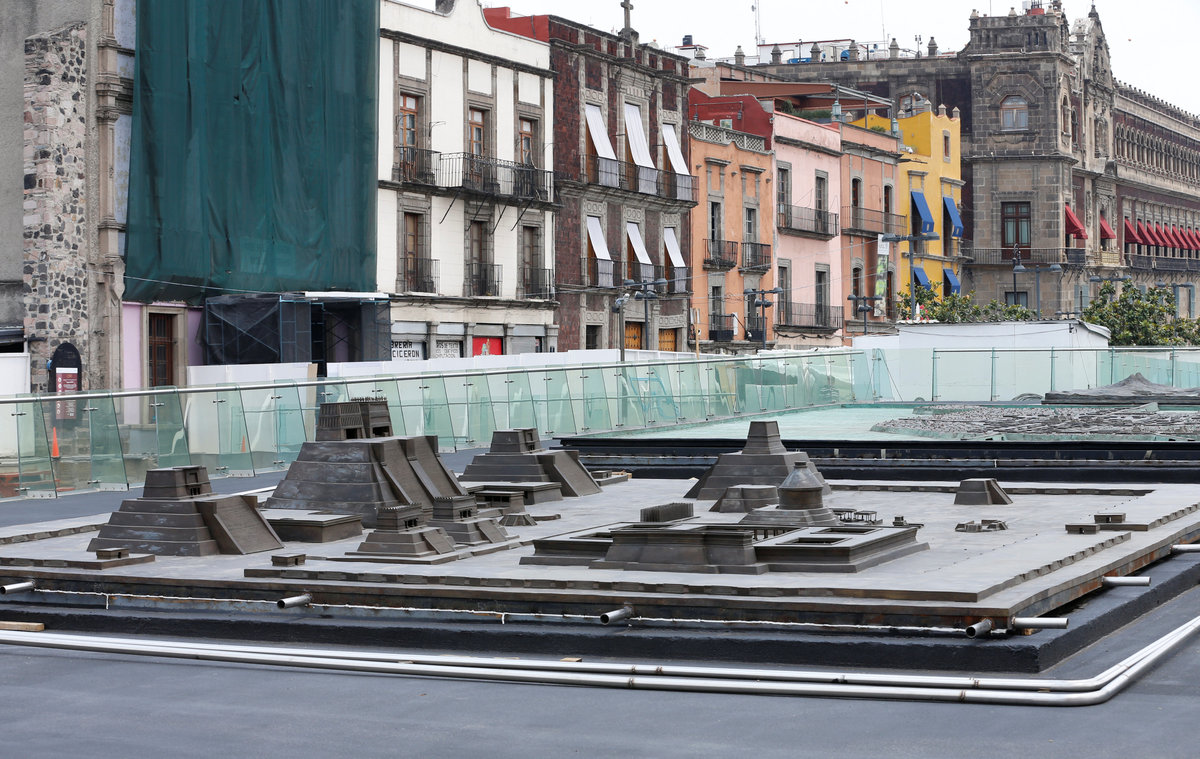
A model of the major structures of the ceremonial precinct of the Aztec capital of Tenochtitlan, including the temple to the wind god and ball court, as seen outside the ruins of the Templo Mayor in downtown Mexico City, Mexico June 7, 2017. REUTERS/Henry Romero
(Editing by Dave Graham and Leslie Adler)
A new Aztec discovery of the remains of the main temple of the wind god Ehecatl, a major deity, is seen during a tour of the area, located just off the Zocalo plaza in the heart of downtown Mexico City, Mexico June 7, 2017. REUTERS/Henry RomeroRaul Barrera, an archaeologist from the National Institute of Anthropology and History (INAH) speaks to the media about new Aztec discoveries including the main temple of the wind god Ehecatl, a major deity, as well as an adjacent ritual ball court, located just off the Zocalo plaza in the heart of downtown Mexico City, Mexico June 7, 2017. REUTERS/Henry RomeroEduardo Matos Moctezuma, an archaeologist from Mexico's National Institute of Anthropology and History (INAH) speaks to the media during a news conference about new Aztec discoveries including the main temple of the wind god Ehecatl, a major deity, as well as an adjacent ritual ball court, located just off the Zocalo plaza in the heart of downtown Mexico City, Mexico June 7, 2017. REUTERS/Henry Romero
Sign up to read this article
Read news from 100's of titles, curated specifically for you.