
If you missed the recent news, Arcam has decided to build on the success of its Radia hi-fi and, more recently, home cinema electronics by launching an entire range of speakers.
It consists of six new models and includes a couple of bookshelf models, a pair of towers, a centre channel and a dedicated subwoofer.
That’s right, you now have the option of building a complete Arcam hi-fi or home cinema system, should you want the satisfaction of having your complete set-up from one brand.
And I completely get the appeal. In years gone by, I’ve heard my fair share of one-make systems and carried out group and super tests to see which brand, if any, offers the perfect package.
Maybe it’s the OCD part of me talking, but there’s something strangely satisfying about having one brand name and a consistent theme on display.
What’s interesting about this move in particular is that Arcam has aimed its new speaker range squarely at the European market. It does make complete sense, though, given that Arcam’s parent company, Harman, already has a speaker brand that does well in the US and Chinese markets.
We have reviewed Revel speakers over the years, and even given Awards to the likes of the Revel Concerta2 M16; but the brand simply doesn’t resonate as strongly in Europe.
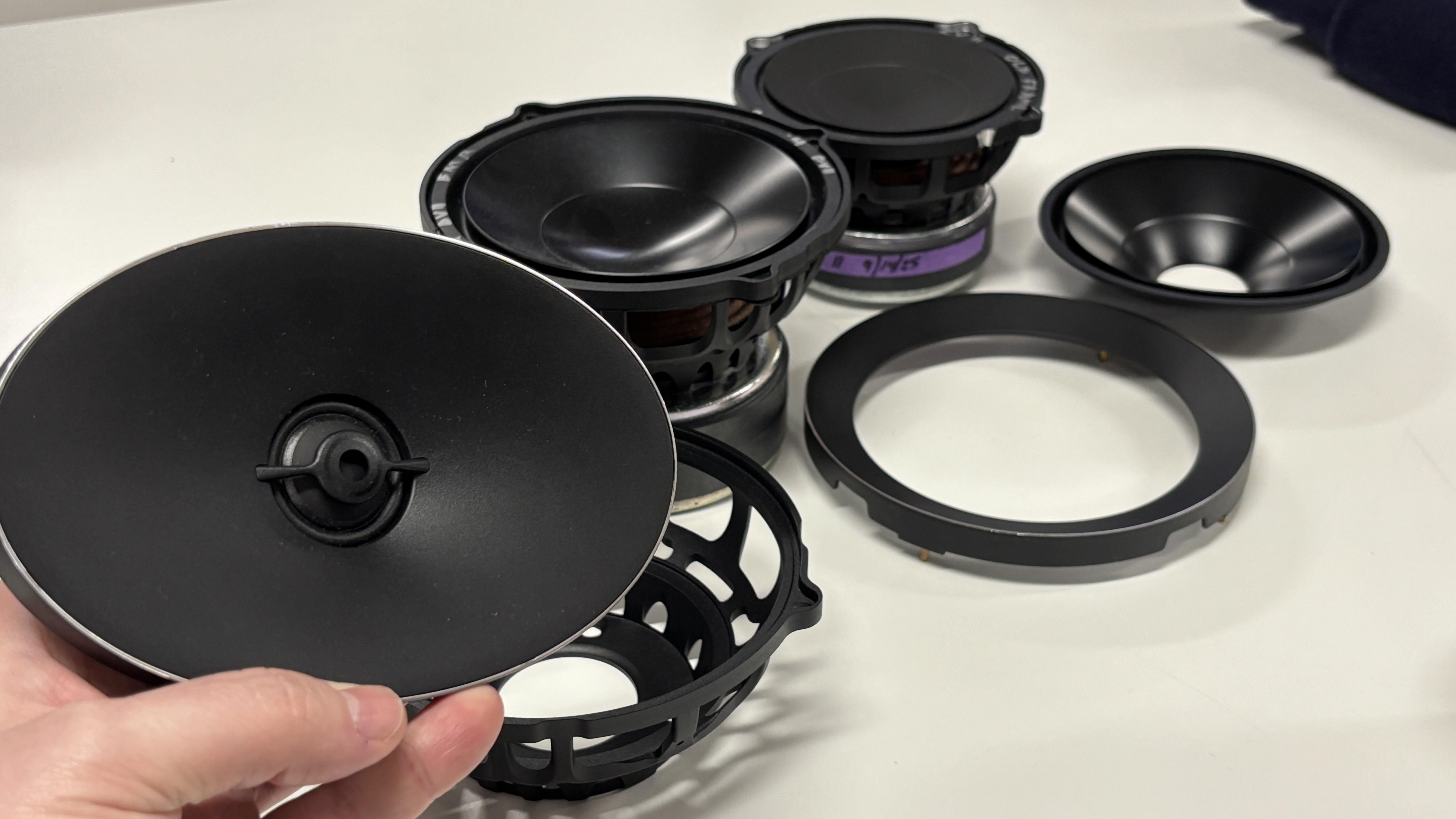
Arcam does admit, however, that its Radia speakers do leverage a lot of the speaker technology used in its sister brand, including dome tweeters with acoustic lens waveguides, plus its MMC (Micro Ceramic Composite) and DCC (Deep Ceramic Composite) materials, which are used in varying configurations across the mid/bass and bass drivers.
The key difference here is that these are all-new speaker designs, and there has been a huge amount of voicing done using the speakers with Arcam’s own electronics.
On a recent trip out to Los Angeles to visit the company, I was able to spend some time with the flagship floorstander from the Radia range and get a taste of what’s in store.
Design and build
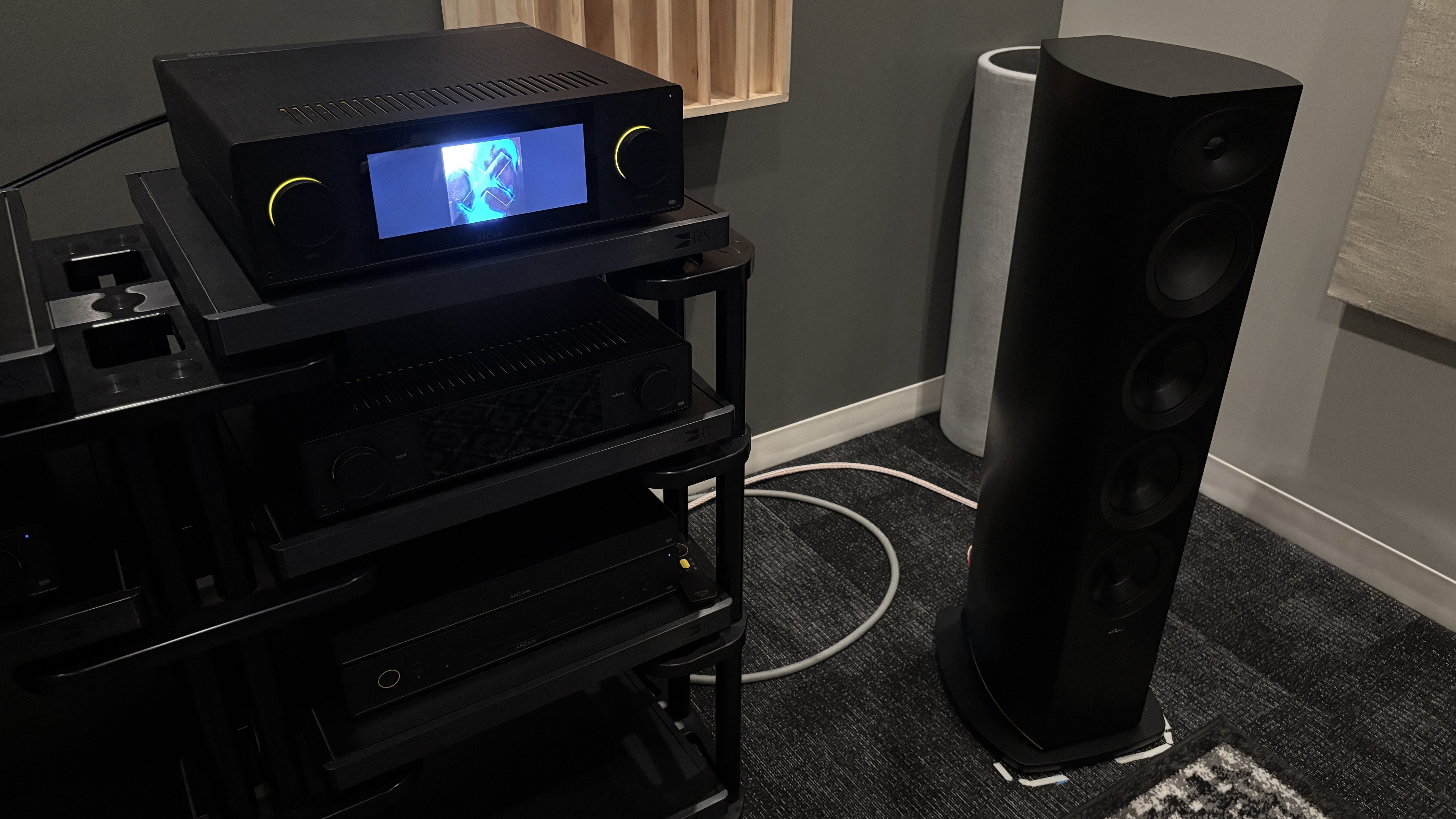
In the flesh, Arcam’s Radia 45 towers look quite the sight. These bi-wired, rear-ported floorstanders are dressed from head to toe in a black walnut finish and give me the impression that they’re the sort of dark, moody-looking speakers Batman might be attracted to.
The finish of the three 6.5in/165mm MCC woofers, single 6.5in/165mm DCC mid/bass driver and 1in/25mm DCC dome aluminium tweeter completes the stealthy look. As stealthy as a 112cm tall, 40KG, £5998 / €7000 pair of speakers can appear, at any rate.
The only hint of colour is a small yellow accent which wraps itself around the base of the speaker – this is now a Radia trademark and matches the yellow accents you see on electronics such as the Award-winning Arcam A15+ stereo amplifier.
The drive units include new inverted surrounds, dust caps and a modified basket taken from the Harman Pro side. They have been chosen because they are light, rigid and well ventilated.
The seventh-generation waveguide used on the speakers uses advanced modelling to help control directivity and get high-level excursion which exceeds any of Revel’s previous designs.
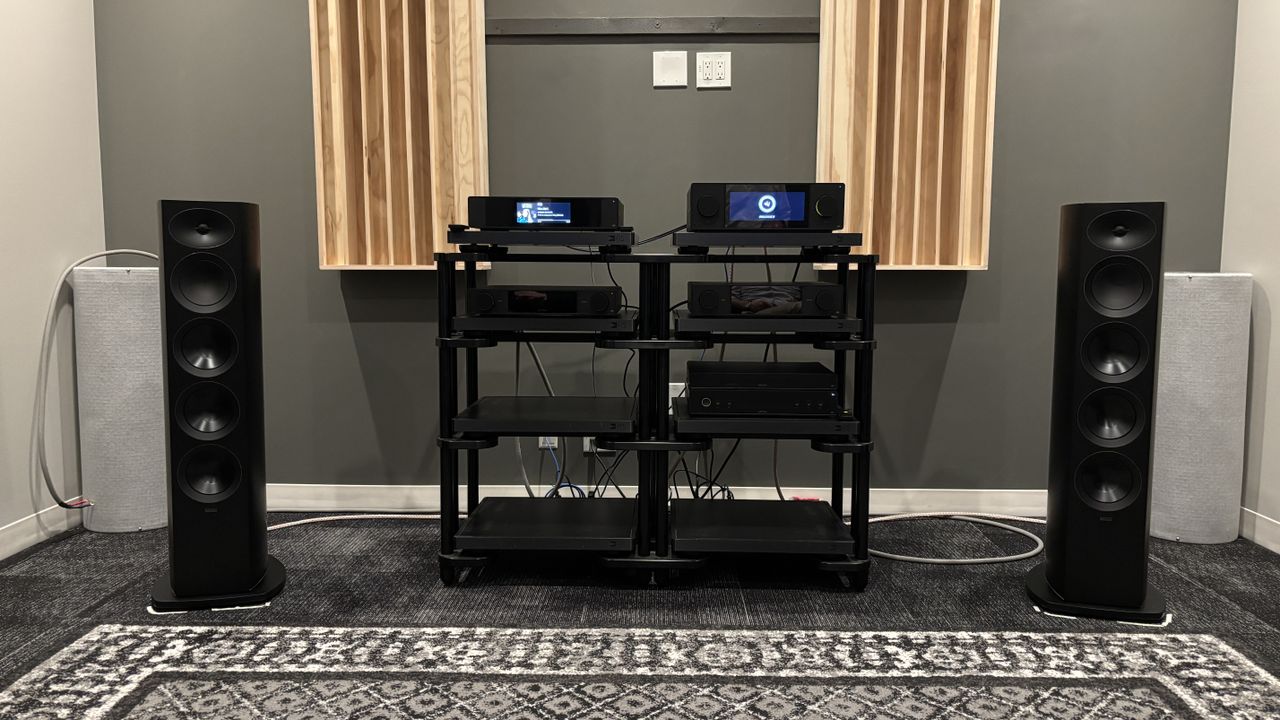
In the demo room, the R45 speakers were being used with Arcam’s Radia SA45 streaming system, and the black-on-black pairing looked particularly imposing yet sophisticated.
Although I didn’t get to experience it during this demo, the processing in some of Arcam’s electronics (the SA35 and SA45 all-in-one streamers and the new Radia home cinema amplifiers) allows them to go one step further and use DSP to match them with a Radia loudspeaker.
This special ‘anechoic EQ’ setting fine-tunes the sound quality for your speaker/electronics combination and is based on testing done in Arcam/Harman’s own anechoic chambers.
Features

Now it’s always tricky forming a quick opinion on a product the first time you have a listen. And it’s made even trickier when you’re listening in a room of which you have no prior experience, and of which you don’t know the characteristics.
Harman’s demo room sounded a bit livelier than our dedicated test rooms in Reading, UK, but I was able to jot down a few first impressions from hearing a handful of songs using Arcam's SA45 streaming all-in-one as source and amplifier.
My first track was Florence and the Machine’s recording of Cosmic Love live at the BBC Proms. Listening to the grand performance from the full orchestra and choir, the strings seemed precisely drawn, with a solid sense of dynamics.
There's a decent flow to the deliberate plucking of the harp during the start of the track, with good definition to each note
The Arcams seem big and powerful, capable of conjuring up an impressive sense of scale, revelling in those big, orchestral climaxes, but also making the most of quieter moments when the action simmers down.
I switched to Eminem’s Stan and there appeared to be a good dose of detail on display as Stan fervently writes his letter. The edges of his scribbles sounded pronounced, but also textured and not too harsh.
The speakers also seemed to communicate with energy and vigour the rainfall that introduces the track and the thunderclap which penetrates your stereo image. Bass seems weighty and powerful with a good sense of drive.
Speaking of imaging, this was a little trickier to nail down because of the rack of electronics positioned between the towers, but from what I could tell, there seemed to be decent separation of instruments in the soundstage.
Initial verdict
As always, we will have to wait to get the speakers into our own test rooms to give the definitive What Hi-Fi? verdict, but the fact Arcam has gone down the route of launching its own Radia speaker range is an extremely interesting move – and one that I can’t wait to explore further.
MORE:
See our pick of the best floorstanding speakers you can buy
Arcam's new Radia loudspeaker range could be the perfect match for its Award-winning electronics
Arcam’s Radia AV line of home cinema amps promises serious movie magic