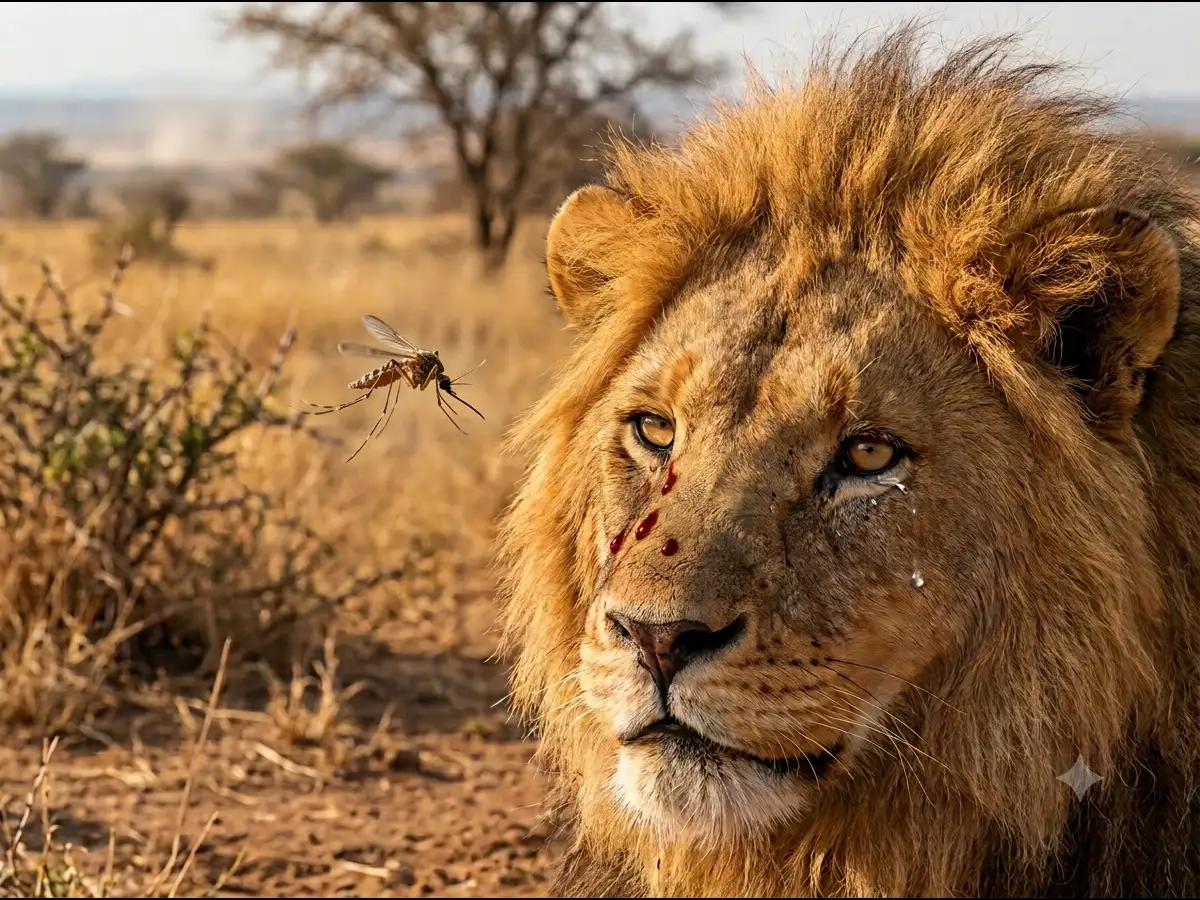
Arabic proverb of the day: ‘A mosquito can make the lion’s eye bleed’ carries a message about power, weakness and human behaviour. The proverb compares a mosquito with a lion to show how something small can affect something much larger. A lion represents strength and power, while a mosquito represents something that may appear weak or unimportant. Yet a mosquito can cause pain to the lion. The saying therefore asks people to look beyond size when judging a person, problem or opponent. It also teaches humility. A person may have power, money, authority or influence, but that does not remove every weakness or danger.
Arabic proverb of the day and its meaning
Arabic proverb today is,
“A mosquito can make the lion’s eye bleed.”
The proverb is also expressed in Arabic as “Inna al-ba’ūda tudmī muqlata al-asad.” Its central message is that a small or weak person, force or problem can cause harm to someone who appears powerful.
The comparison between the mosquito and the lion is important. A lion is much larger and stronger than a mosquito. However, the mosquito does not need to match the lion in physical strength to cause discomfort or injury. The proverb uses this contrast to explain a wider point about life.
A small problem can affect a large organisation. A person with little authority can expose a weakness in a powerful system. A minor mistake can create a major problem. A person who appears weak can also respond in a way that causes trouble for someone who has more power. The saying therefore warns people against judging power only by size, position or appearance.
What the proverb teaches about power?
The proverb presents several lessons about power and vulnerability.
Size does not equal power
Physical size does not always determine the effect a person or force can have. A mosquito is small, but its bite can cause pain. In the same way, a small problem can affect a person, business, institution or government. Power can depend on timing, knowledge, persistence and access to a vulnerable point.
Small actions can have a large impact
A small action may not seem important when it happens. But repeated actions can create a larger result. This applies to daily life as well as organisations. A small mistake that is ignored can become a larger issue. A minor disagreement can grow when it is not addressed. The proverb reminds people to pay attention before a small matter becomes difficult to control.
Strength does not remove vulnerability
The lion represents strength, but the proverb gives the lion a weak point. This is one of the central lessons. Even people who appear strong have areas where they can be affected. A leader may have authority but still depend on other people. A successful business may have resources but still have weaknesses. A person may appear confident but still be affected by criticism, mistakes or unexpected problems. Strength and vulnerability can exist at the same time.
Life lessons from the proverb
The saying can be applied to relationships, workplaces, leadership and personal decisions.
Some of its key life lessons include:
- Do not underestimate small rivals: A person with fewer resources can still create a problem if their actions reach a weak point.
- Stay humble: Power does not make anyone free from mistakes or risks.
- Remain alert: Ignoring small dangers can allow them to grow.
- Respect other people: A person should not be judged only by status, wealth, position or appearance.
- Recognise persistence: Repeated small actions can produce a result over time.
- Protect weak points: A strong position can still fail if its vulnerable areas are ignored.
- Think beyond size: Influence is not always connected to physical strength or social position.
Small beginnings can lead to big results
The proverb also connects with the idea of small beginnings. Many major changes start with something that appears small. A single decision can affect future choices. A small error can affect a larger process. A minor concern can become serious when people continue to ignore it.
This does not mean every small problem will become a major one. The lesson is about awareness. People should examine small warning signs instead of assuming that they do not matter.
The same idea applies to personal development. Small actions repeated over time can create change. Learning a few words each day, saving small amounts of money or developing one useful habit can produce a larger result.
The role of persistence
Persistence is another lesson connected with the saying. A mosquito does not need the strength of a lion to disturb it. Its effect comes from being able to reach the lion despite the difference in size. This can be compared with problems that continue to appear.
A small issue may be ignored once. If it keeps returning, however, it may demand attention. The lesson is therefore not simply that small things can hurt large things. It also shows that repeated action can matter.
Vulnerability can exist behind strength
The lion is used as a symbol of strength, but the proverb does not present strength as complete protection. This idea is relevant to leadership. People in positions of power may believe that their authority protects them from criticism or opposition. Yet a small weakness can affect their position.
The same can happen in organisations. A company may have many employees and large resources, but one overlooked process can cause disruption. For individuals, the lesson is similar. Confidence should not become carelessness.
English equivalents and related expressions
Several sayings express a similar idea.
One commonly cited expression says:
“If you think you are too small to make a difference, you haven’t spent a night with a mosquito.”
Another related saying is:
“When spiders unite, they can tie up a lion.”
The idea also appears in the expression:
“Even the lion protects himself against flies.”
These sayings use different images but share a central message. A person should not assume that a smaller opponent or problem is harmless. The Arabic proverb focuses on the effect of a mosquito on a lion. The other expressions use spiders and flies to make a similar point about size and power.
Why the proverb remains relevant today?
The proverb remains relevant because people continue to make decisions based on appearances. A person may be ignored because they have less authority. A small complaint may be dismissed because it seems unimportant. A warning may be overlooked because the source does not appear powerful. Such decisions can create problems.
In workplaces, a junior employee may notice an issue that senior managers do not see. In relationships, a small disagreement can point to a larger concern. In business, a minor weakness can affect a larger operation. The proverb asks people to pay attention to these possibilities.
Its lesson is also useful in leadership. A leader should understand that authority does not remove vulnerability. Listening to people and identifying weaknesses can help prevent larger problems.
How the proverb can help in daily life?
The message can be used as a simple guide for decision-making. When facing a small problem, ask whether it could grow if ignored. When dealing with another person, avoid assuming that their lack of power means they cannot affect the situation.
When holding a position of authority, remember that other people can still identify weaknesses. When facing a larger opponent, remember that size is not the only measure of strength. These points can help people remain careful without becoming fearful.
Inspiring Arabic proverbs you should know
Arabic proverbs often use simple comparisons to explain ideas about human behaviour, patience, responsibility and relationships. The proverb about the mosquito and the lion is one such example. Its message can be applied to many situations because the comparison between a small mosquito and a powerful lion is easy to understand.
The central teaching is simple: never assume that something is harmless because it is small. A small issue deserves attention when it can affect something important. A person who appears weak still deserves respect. A powerful person should remain aware of their vulnerabilities. The proverb also encourages humility. No one is completely protected by strength, status or position.