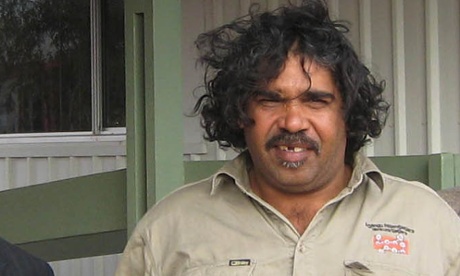
The chairman of the Anangu Pitjantjatjara Yankunytjatjara (APY) lands in remote South Australia has resigned for “family reasons” following the completion of two internal reviews into the APY’s business and financial conduct, and amid investigations into allegations of financial mismanagement.
Bernard Singer, the elected chairman of the APY executive, has stood down after 10 years in the role, following a meeting with the South Australian minister for Aboriginal affairs, Ian Hunter, the Australian reported.
The interim general manager of the APY executive, Lesley Johns, told Guardian Australia Singer was “not pushed, not forced, not asked” to resign. Singer had lost his mother and 15-year-old son in the past year but chose to remain in his role until two internal reviews into the APY were completed, she said.
“The decision was a personal one,” Johns said. “The results of the review identified a couple of areas of concern and a couple of areas of challenge for APY. Last Wednesday the minister told APY to go ahead and implement the recommendation of the reviews.”
The two reviews examined the APY cattle business and its financial systems.
“Essentially … all of the reviews we’d done found we were operating an environment that wasn’t best practice so it recommended upgrading our policy and procedures,” Johns said.
She said the financial systems review didn’t look specifically for financial mismanagement – one of the allegations levelled at the APY – but it did find “financial irregularities” within the administration arm.
“While it hasn’t come out and specifically said that there is no corruption, that the board is squeaky clean, that there is no maladministration by the board, it ... said it had uncovered some areas of concern within the APY administrative arm, and the board doesn’t have anything to do with that part,” Johns said.
The APY has been mired in controversy in recent years, going through seven general managers since 2010. Some of the departures were sackings and the South Australian auditor general has since begun an investigation.
In the last sitting week of 2014 the South Australian parliament rushed to suspend the executive board of traditional landowners and appoint an administrator in response to what Hunter described as the “ongoing and escalating concerns over the governance and administration of the APY”.
Some reported allegations relate to Singer. Court documents filed by a sacked former general manager, Bruce Deans, alleged that Singer misused public funds and that Johns would benefit from Deans’s sacking, the Australian reported in November.
Johns told Guardian Australia the allegations against Singer were “in the process of being resolved”.
A South Australian government spokesman directed questions about Singer’s resignation to the APY board, but told Guardian Australia: “A strong administration and a period of ongoing stability is needed if the APY executive is to operate as an institution that is effective and accountable to the communities they represent.”
The spokesman confirmed Hunter would meet the executive and Anangu people on the APY lands next week to discuss “the ongoing issues regarding governance and administration in the APY lands”.
Also up for discussion is the impact of the government’s decision to cease funding of municipal and essential services, which could lead to the closure of some remote communities.
A similar situation is developing in Western Australia, where the premier, Colin Barnett, has said the withdrawal of federal funding has left up to 150 remote communities “unviable” and facing closure.
The South Australian electoral commissioner, Kay Mousley, told Guardian Australia that under the APY act the state government must conduct a review of the 10 APY electorates by the end of February, before an election, which must be held by the end of May.