WASHINGTON _ The European Union on Tuesday ordered Ireland to collect up to $14.5 billion in back taxes, plus interest, from Apple Inc., after ruling that the technology giant cut an illegal deal that allowed it to pay almost no taxes from 2003 to 2014 on profits for sales throughout the 28-nation region.
The decision, which follows a two-year investigation, marks the biggest step yet in Europe's controversial efforts to crack down on multinational corporations that channel profits through foreign subsidiaries to avoid or reduce tax liabilities.
U.S. officials have criticized the European Union's push to collect additional taxes from U.S. companies, an effort that also has involved investigations of Starbucks Corp. and Amazon.com Inc.
But European officials said "selective tax treatment" of some companies gives those firms an unfair advantage over others.
"Member states cannot give tax benefits to selected companies _ this is illegal under EU state aid rules," said Margrethe Vestager, the top competition official for the European Commission, the EU's executive body.
The tax deal with Ireland, where Apple has two subsidiaries, allowed the Cupertino, Calif., company to have an effective corporate tax rate of 1 percent in 2003. The rate fell to 0.005 percent in 2014, meaning Apple paid just $50 on every $1 million in profit, the commission said.
Ireland is an attractive location for foreign subsidiaries because its 12.5 percent corporate tax rate is one of the lowest in the developed world. Conversely, the U.S. corporate tax rate of 35 percent is the highest among the 35 members of the Organization for Economic Development and Cooperation, although many companies pay less because of tax breaks.
But a 2013 investigation by a U.S. Senate panel said that Apple had made a deal with Ireland to lower its corporate tax rate even further.
The deal was part of an elaborate web of offshore subsidiaries that allowed Apple to avoid paying at least $15 billion in U.S. taxes on $44 billion in foreign income from 2009 through 2012, according to a bipartisan report by the Senate's Permanent Subcommittee on Investigations.
The report triggered the European investigation.
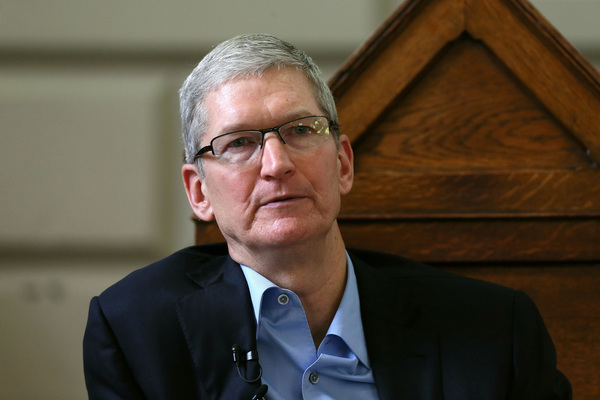
In 2013, the Senate panel called Apple Chief Executive Tim Cook to a high-profile hearing in which he insisted the company's tax arrangements were legal and fair.
On Tuesday, Cook defended the company's operations in Ireland, which date to the opening of a factory in Cork in 1980.
"Over the years, we received guidance from Irish tax authorities on how to comply correctly with Irish tax law _ the same kind of guidance available to any company doing business there," Cook said in a letter posted on Apple's website. "In Ireland and in every country where we operate, Apple follows the law and we pay all the taxes we owe."
Cook said the European Commission's action was "unprecedented and it has serious, wide-reaching implications."
"It is effectively proposing to replace Irish tax laws with a view of what the commission thinks the law should have been," he said. "This would strike a devastating blow to the sovereignty of EU member states over their own tax matters, and to the principle of certainty of law in Europe."
Cook said he was confident that the ruling will be reversed after an appeal by Ireland. Apple stock was down slightly in early trading Tuesday.
The commission ruling ordered Ireland to collect the extra tax revenue from Apple. Though it concluded that Apple has been paying "substantially and artificially lowered" taxes to Ireland since 1991, the commission is only allowed to order the recovery of taxes for 10 years before it first requested information about the arrangements in 2013.
Ireland's finance minister, Michael Noonan, said Tuesday that he would seek approval from his government's Cabinet to appeal.
"I disagree profoundly with the commission's decision," he said. "Our tax system is founded on the strict application of the law ... without exception."
The U.S. Treasury Department issued a report last week critical of the European Union's tax investigations, saying they could lead to lost tax revenue for the U.S. government and harm cross-border investment. Treasury Secretary Jacob J. Lew has raised his concerns with the president of the European Commission.
In a statement Tuesday, the Treasury Department did not comment specifically on the Apple allegations but said U.S. officials were "disappointed that the commission is acting unilaterally."
"The commission's actions could threaten to undermine foreign investment, the business climate in Europe, and the important spirit of economic partnership between the U.S. and the EU," it said.