Apple released iOS 26.5 worldwide on Monday, bringing what the company calls six 'cool new features' to the iPhone, with updates focused on security, subscriptions and everyday quality-of-life improvements. After about a month of public and developer beta testing, the software is now available to download via the Settings app for anyone using a compatible device.
$AAPL is rolling out end-to-end encrypted RCS messaging in beta for iOS 26.5 users.
— Polymarket Money (@PolymarketMoney) May 11, 2026
The update brings stronger encryption to cross-platform messaging between iPhone and Android. pic.twitter.com/LCk8uk3Yp4
iOS 26.5 follows iOS 26.4, an update that was packed with under‑the‑radar changes and a major visual overhaul called Liquid Glass. Apple is in the middle of what it openly bills as the biggest evolution of the iPhone's software since iOS 7 almost 13 years ago, but the marquee reveal of an all‑new Siri with Gemini‑powered intelligence has been pushed back.
That system‑wide assistant is now expected to be introduced at Apple's WWDC 2026 keynote, which means iOS 26.5 is more of an incremental step than a headline act.
More Features for Messages and Maps
The most technically important change in iOS 26.5 sits inside the Messages app. Apple started testing end‑to‑end encryption for RCS chats in late February and made clear then that it would not ship in iOS 26.4. With iOS 26.5, that RCS encryption finally arrives in beta, making conversations between iPhone and Android users harder to intercept.
Once an iPhone is updated, texts with Android contacts on compatible mobile networks are labelled as encrypted, indicating that messages are scrambled while they travel between devices and cannot be read in transit.
The feature is still in testing and limited to carriers that support the upgraded RCS standard, but it marks a sharp turn in Apple's once‑frosty relationship with the technology.
Apple's history with RCS has been awkward. In 2022, outgoing chief executive Tim Cook was asked at the Code Conference about interoperability and famously replied that a user should 'buy your mom an iPhone' rather than wait for better integration.
iOS 26.5 is now available with the following new features:
— Apple Cycle (@theapplecycle) May 11, 2026
• Suggested places in Apple Maps
• Messages adds end-to-end encrypted RCS
• Pride Luminance brings 11+ new wallpaper options
• App Store supports new in-app subscription model
• Reminders updates snoozing feature pic.twitter.com/FhNm6Z27By
A year later, Apple confirmed it would adopt RCS in 2024, and iOS 18 duly added support, allowing richer photo and video sharing and reactions between iOS and Android users. iOS 26.5 layers stronger privacy on top of that compatibility, even if true feature parity with iMessage is still some way off.
Apple Maps also moves a notch closer to its main rival. Back in March, Apple announced that Maps would begin carrying advertising as part of a broader revamp of its ad business designed to make it simpler for developers and companies to promote apps and locations across Apple's platforms.
In iOS 26.5, a new Suggested Places feature lands inside Maps, offering recommendations based on what is happening nearby, the user's recent search history and, crucially, the ads pipeline. On one level, Suggested Places is simply Apple playing catch-up with Google Maps, which already leans on Gemini as a personal assistant to recommend spots, create more tailored routes and tidy up driving instructions.
On another, it is Apple gently steering iPhone owners towards an ad-funded discovery model inside what used to be a relatively neutral navigation tool. There is no machine-learning fanfare here, just a quiet shift towards a more curated and more commercial Maps experience.
Subscriptions, 'Magic' Pairing and Regional Changes
Tucked into the iOS 26.5 beta release notes is a change that developers have been pressing Apple to make for years. The update introduces a new way to structure App Store subscriptions: an annual plan that is still billed monthly.
The idea is fairly straightforward. If an app currently charges $12.99 for a rolling monthly subscription and $100 for a year paid upfront, Apple will now let the developer offer the $100 annual price spread over 12 monthly payments, while still locking the user into a one-year commitment. The billing plan is described as a 'monthly with 12-month commitment billing plan configuration.'
In practice, that could make long-term plans more appealing to people who cannot or will not pay a lump sum in one go. The catch, made explicit in Apple's notes, is that cancelling early would either not be possible or could trigger the outstanding balance being charged at once.
iOS 26.5 is now rolling out 📲
— Apple Club (@ApplesClubs) May 12, 2026
Apple adds support for end-to-end encrypted RCS messaging (beta), a new Pride Luminance wallpaper, plus the usual bug fixes and security improvements.
Time to hit that “Update Now” button 👀🍎 pic.twitter.com/lXlkhHnRD9
Apple has not said whether this will replace any existing subscription formats or simply sit alongside them, but the direction of travel is clear: nudge users into longer commitments without making the upfront cost feel quite so painful.
Hardware accessories get a small but surprisingly useful upgrade. iOS 26.5 allows a Magic Keyboard, Magic Trackpad or Magic Mouse to be paired more easily to an iPhone or iPad.
Instead of diving through Bluetooth menus, users can now plug one of these accessories in via USB-C; once connected, it will stay linked wirelessly as long as it is in use. It is a modest change that quietly acknowledges how many people now treat their phone or tablet as a part-time laptop.
On the cosmetic side, Apple has folded new wallpapers into its 2026 Pride Collection. The latest Pride Sport Loop band is marketed as reflecting the 'unique identities that shape LGBTQ+ communities worldwide,' and the matching wallpapers adopt the same language of joy and movement, with colours that can be customised.
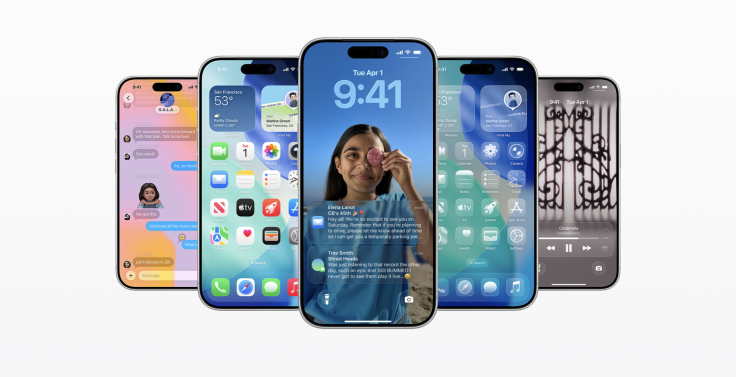
Those designs sit inside the revamped Background Settings panel Apple introduced with iOS 26.4, which organises wallpapers into collections rather than one long list.
There is also a fresh tweak for people moving off the iPhone. Building on data-transfer improvements added in iOS 26.4, iOS 26.5 gives users switching to Android more granular control over what messaging attachments they take with them. Instead of an all-or-nothing move, they can now choose a specific time range such as the last 30 days, a full year or every attachment stored on the device.
In the European Union, where the company is reshaping its platforms to comply with the Digital Markets Act, the update prepares iPhone for deeper support of third-party smartwatches. Those devices will be able to receive notifications and accept user responses in much the same way as an Apple Watch, and Apple is also opening up pairing experiences for non-Apple headphones and wearables so they feel closer to the 'AirPods-like' one-tap setup.
In Brazil, Apple is laying the groundwork for something even more sensitive: third-party app marketplaces on iPhone. A local watchdog has ordered the company to allow alternative stores, and Brazilian blog iHelpBR reports that code inside the iOS 26.5 release candidate points to Apple preparing support.
The fine print of how those Brazilian rules will compare with the EU's remains unclear, but the trajectory is unmistakable. Governments are probing at the edges of Apple's control over mobile software, and each new iOS point update now doubles as a regulatory status report.